
Why Prescription Drugs Are So Expensive in the USA

Prescription drugs are expensive in the USA mainly because drug makers have broad power to set prices, patents delay cheaper competition, middlemen shape prices through rebates, and the US uses weaker price controls than countries like Canada and Australia. In early 2026, manufacturers raised list prices on hundreds of brand-name drugs, with median hikes around 4%. At the same time, Medicare began negotiated pricing for only 10 high-cost Part D drugs, which helps some people but leaves most of the market unchanged.
If you fill a monthly prescription, none of this feels abstract. It feels like a bill that keeps showing up, even when your health depends on paying it.
Table of contents
- The short answer
- How the pricing system adds cost
- Why some drugs cost much more
- What high prices mean for patients
- What's changing in 2026
- FAQ
Key takeaways
- The US pays far more for many brand-name drugs than peer countries.
- Patents, rebates, and fragmented negotiations keep prices high.
- Specialty and cancer drugs create the biggest cost shocks.
- Patients can still lower costs, but safe sourcing matters.
The short answer: what makes prescription drugs expensive in America
America pays more because there is no broad system that caps or strongly negotiates prices for most medicines. That leaves room for high launch prices, steady list-price increases, and a supply chain that can hide the real cost from patients.
A widely cited RAND comparison of US drug prices found US prescription prices averaged 2.78 times those in other countries, while brand-name drugs averaged 4.22 times higher. That gap is the headline, but the fine print matters too: what you pay at the pharmacy may differ from the list price. Still, high list prices ripple across the whole system because they affect premiums, coinsurance, deductibles, and rebate deals.
This quick comparison shows why other countries often pay less:
| Country or region | Typical pricing approach | Effect on prices |
|---|---|---|
| United States | Fragmented negotiation, weak broad controls | Higher brand prices |
| Canada | Government review and tighter bargaining | Lower prices |
| Australia | National negotiation and value review | Lower prices |
| Many European systems | Central price setting or bargaining | Lower prices |
The big takeaway is simple: when one country bargains as a single large buyer, prices tend to fall.
Drug companies can set high launch prices with limited restraints
Brand-name manufacturers often choose a launch price with fewer guardrails than they face abroad. That starting point matters because later increases build on it.
List price is not the same as net price, and neither is the same as your copay. Even so, a high opening price acts like setting the thermostat too high in summer. The whole room gets more expensive to cool down.
The US pays more than countries that negotiate harder
Countries such as Canada and Australia often tie prices to clinical value or bargain nationally. The US, by contrast, splits bargaining across private insurers, PBMs, employers, Medicaid rules, and Medicare limits.
Research from Yale on aligning US prices with peer nations argues the gap is not just about innovation. It is also about bargaining power.
How the US drug pricing system keeps pushing costs up
Drug pricing is not a straight line from factory to patient. It's more like a pinball machine, with costs bouncing through manufacturers, wholesalers, pharmacy benefit managers, insurers, pharmacies, and then finally the patient.
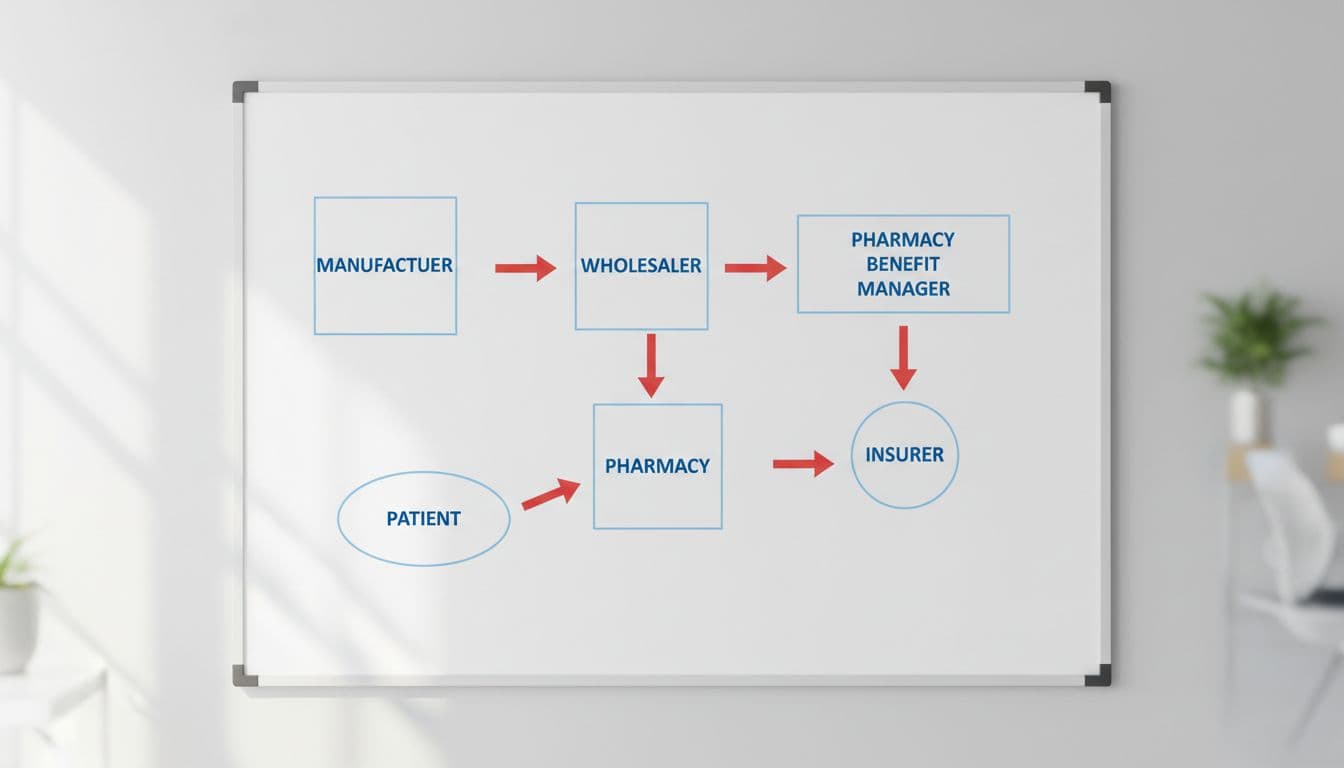
That complexity is one reason prices feel impossible to predict. A medicine can have one list price, a lower negotiated price, a different pharmacy cash price, and a very different out-of-pocket price depending on your plan.
Patents and exclusivity delay cheaper generic competition
Patents and regulatory exclusivity give brand drugs time without direct competition. That can support research recovery, but it also keeps prices high longer. Some companies add new formulations, new device designs, or legal challenges that slow down generic or biosimilar entry.
When lower-cost competition finally arrives, prices often drop. That is why generic access matters so much, especially for long-term care. For readers comparing options in cancer treatment, this guide to choosing generic vs. brand-name cancer medicines explains when each may make sense.
Rebates, middlemen, and hidden pricing add confusion
PBMs negotiate with drug makers and insurers, often using rebates. In plain English, a rebate is money paid back after the sale. Those deals can reduce net costs for plans, but they can also reward high list prices because bigger starting prices can create bigger rebate dollars.
A drug can look "discounted" on paper while still remaining unaffordable to the person standing at the counter.
That is why patients often feel trapped inside a system they never designed.
Why some medicines cost far more than others
Not all prescriptions live in the same price universe. Many common generics cost little. Specialty medicines, biologics, injectables, and rare disease drugs can cost thousands each month.
Specialty drugs often come with high research, handling, and supply costs
Cancer drugs, infused therapies, and biologics are often harder to develop, manufacture, store, and monitor. Some need cold-chain shipping. Others require close lab follow-up, clinic administration, or special handling. Many specialty drugs cost $2,000 or more per month, and some are far higher.
That does explain part of the bill. It does not explain why the US often pays much more than other countries for the same product.
Marketing, administration, and profit goals also raise the total bill
The US healthcare system also carries heavy admin costs. Billing, prior authorization, coverage appeals, and plan design all add friction. Drug companies also spend heavily on direct-to-consumer advertising, something far less common in most countries.
Many Americans see profit as a major driver. Recent KFF polling on prescription drug prices shows drug costs remain a top public concern, and many people blame drug company profits for high prices.
What high drug prices mean for patients, families, and long-term care
When medicine costs too much, people don't simply "shop around" the way they would for shoes or a phone plan. They delay, split pills, skip doses, or stop treatment.

That can mean worse blood sugar control, uncontrolled blood pressure, more hospital visits, and a lot more stress at home.
Many people ration medicine or stop treatment because of cost
Recent surveys still point to a stubborn pattern: about 1 in 4 to 3 in 10 Americans have skipped or rationed medicine because of cost. KFF's March 2026 polling also found strong public concern about affordability and financial strain.
For chronic disease patients, missed refills are not a small problem. They can undo months of steady progress.
High prices hit uninsured, underinsured, and specialty drug users the hardest
People with high-deductible plans may still face large bills before coverage kicks in. Uninsured patients often pay the full cash price. Cancer patients and people using specialty drugs can get hit the hardest because one refill may cost more than a mortgage payment.
Rural patients and caregivers also face access problems. If getting to a local pharmacy is hard, delays grow. That's why many families look at reliable online pharmacies for prescription home delivery, especially for ongoing therapy.
What is changing in 2026, and what patients can do to lower costs safely
The biggest federal change is Medicare drug price negotiation. It matters, but it is still narrow.
According to CMS negotiated price information for 2026, the first 10 selected drugs now have negotiated maximum fair prices, often at least 38% below prior list prices. Early 2026 also brought list-price increases on hundreds of brand-name drugs, which shows the wider market remains expensive.
Medicare price negotiation is helping, but only on a limited scale
This first round helps some Medicare beneficiaries starting in 2026, and more drugs are expected in later cycles. Still, it does not set prices for every prescription, every insurer, or every pharmacy. As KFF's Medicare negotiation overview explains, the program is meaningful but far from a full market reset.
Smart ways to save money without risking safety

You still have options that can lower costs safely:
- Ask whether a generic or therapeutic alternative is appropriate.
- Check your plan's formulary before each refill.
- Compare total out-of-pocket cost, not only the sticker price.
- Review manufacturer assistance or nonprofit help programs.
- Use licensed pharmacies that require a valid prescription.
If you need a mail-order option, start with the safe online ordering process and review the pharmacy shipping and prescription FAQ before placing an order. This information is for educational purposes only. Talk with a licensed healthcare provider before switching medicines, changing dose, or using a new pharmacy.
FAQ
Why are prescription drugs more expensive in the US than in Canada?
The US has weaker broad price controls and more fragmented negotiation. Canada uses tighter review and bargaining tools, so manufacturers usually accept lower prices there.
Do drug companies set their own prices in America?
For many brand-name drugs, manufacturers have major power to set launch prices. Insurers and PBMs negotiate after that, but the opening price still shapes the whole system.
Why are cancer drugs so expensive?
Many cancer drugs are specialty medicines. They often involve complex research, manufacturing, handling, and monitoring. Patents and limited competition can keep those prices high for years.
Will Medicare negotiation lower prices for everyone?
No. Medicare negotiation helps only selected drugs in the program. It can reduce costs for some beneficiaries, but it does not automatically lower prices across the full US market.
How can I lower prescription costs safely?
Ask about generics, compare pharmacy options, check formularies, and look for assistance programs. Most important, use licensed pharmacies that verify prescriptions and let you reach a pharmacist when needed.
High US drug prices are not a mystery. They come from pricing power, weak controls, delayed competition, middlemen, and a fragmented system that often puts the patient last.
If your medicine bill keeps climbing, focus on the next safe step. Compare options, ask about lower-cost alternatives, and discuss them with your healthcare provider so affordability does not become another barrier to staying well.