
Drug Coupon vs Insurance: Which Costs Less?

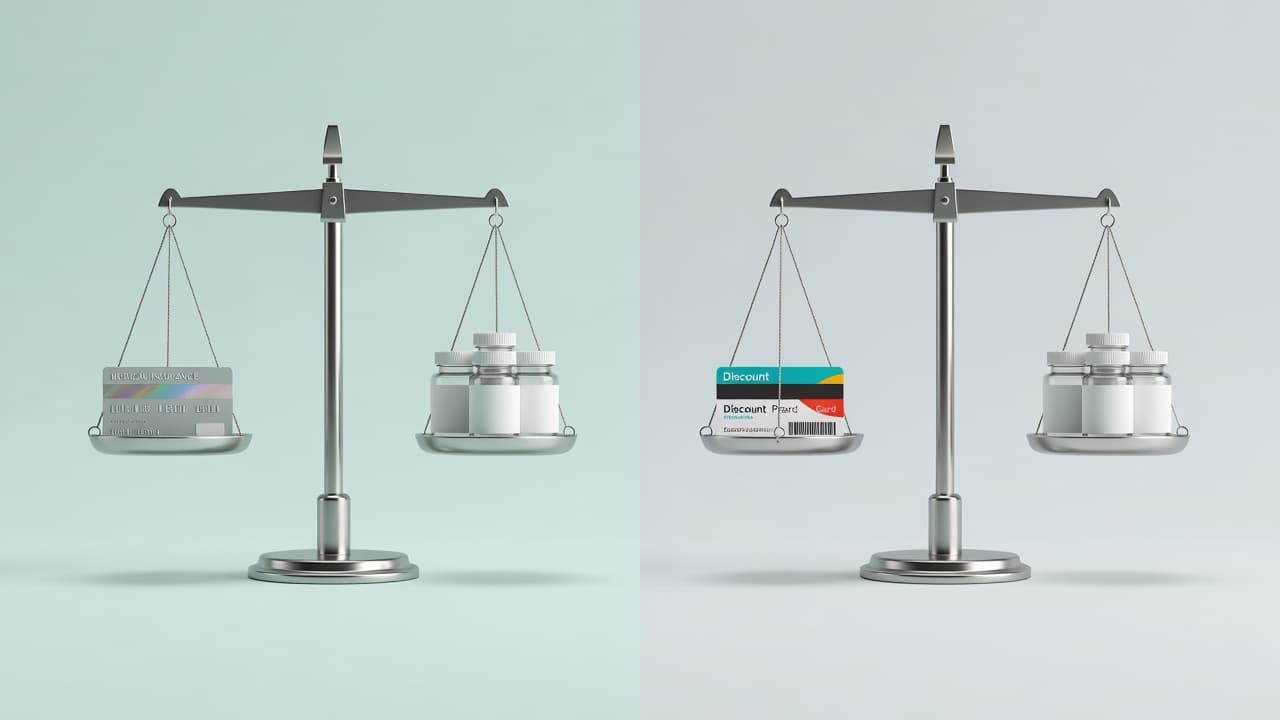
The price on the bottle is rarely the price most people pay. When navigating the drug coupon vs insurance choice, savvy shoppers often find that discount coupons offer lower prices for many generic drugs, while standard medical insurance is usually the better option for brand name and high cost specialty medicines.
This split catches many patients off guard because the most affordable option fluctuates based on the specific medication, your individual plan details, and your current progress toward your annual deductible. A small coupon might beat a standard copay for a common prescription, but a costly specialty refill can be significantly cheaper through insurance because your plan includes a cap on your out of pocket expenses.
Finding the cheapest path to your medication starts with comparing your options before you arrive at the pharmacy, rather than relying on one specific payment method every time.
Table of contents
- Key takeaways
- Drug coupon vs insurance, the quick answer
- Why coupons can beat your copay
- When insurance costs less
- How to compare the real price
- What to do when both options are expensive
- Conclusion
- FAQ
Key takeaways
- Drug coupons often provide lower prices for generic drugs, especially for pre-deductible fills and medications that your plan does not cover.
- Insurance plans usually offer more value for expensive brand name medications, specialty drugs, and long-term treatment plans.
- You generally cannot combine a coupon with insurance benefits on the same pharmacy fill.
- Purchases made using a coupon typically do not apply toward your annual deductible or your insurance out-of-pocket maximum.
- If you order medication online, compare the total price, including shipping costs and refill requirements, before finalizing your order.
Drug coupon vs insurance, the quick answer
Coupons are often cheaper for inexpensive generics and short-term fills. Health insurance is often cheaper for brand-name drugs, specialty medicines, and anything that pushes you toward your deductible or out-of-pocket maximum.
Prescription discount cards are not health insurance. While insurance uses a formulary, medication tiers, copays, deductibles, and negotiated rates to determine your costs, prescription discount cards simply lower the cash price at the pharmacy. Whether you rely on private insurance or public insurance, the way you pay for your medication depends on your specific plan design. For a plain-language breakdown, see this explanation of discount plans and insurance.
The catch is simple. In most cases, you must choose one or the other at the counter. GoodRx's insurance guide notes that discounts are used instead of insurance, not on top of it.
This quick chart shows where each option tends to win:
| Situation | Usually cheaper | Why |
|---|---|---|
| Cheap generic | Coupon | It can beat a fixed copay or coinsurance |
| High-deductible plan, early in the year | Coupon | You may still owe near-retail through insurance |
| Non-covered drug | Coupon | Insurance may pay nothing |
| Brand-name refill | Insurance | Plans often have stronger negotiated pricing |
| Specialty or high-cost drug | Insurance | Spending caps matter more than coupon discounts |
The big lesson is that there is no universal winner. The winning price changes one prescription at a time.
Why coupons can beat your copay
Prescription discount cards often shine when the medication is a common, inexpensive generic drug. Real-time pricing examples in 2025 and 2026 continue to show that these programs frequently undercut the standard copay set by your medical insurance. A short course of a basic medication, for instance, might cost $6 with a coupon but $20 when processed through your plan.
Coupons are also valuable before you reach your annual deductible. If you have a high-deductible plan, your insurer may require you to pay the full negotiated rate for months. In these scenarios, prescription discount cards can provide a lower cash price on the spot, helping you manage costs until your health benefits kick in more fully.
This strategy is especially effective for routine antibiotics, blood pressure tablets, and other generic drugs. When evaluating your options, always keep your insurance card handy to compare the plan rate against the discounted rate. Exploring generic alternatives is another smart way to maximize these savings, as the price difference for long-term chronic care really adds up over 12 refills.
Most of these programs are free to use. Services like GoodRx, Optum Perks, WellRx, FamilyWize, and America's Pharmacy offer no-cost options to help you save. While some premium versions exist, the basic models are free and often advertise savings of up to 80 percent on selected medications.
If you are currently uninsured or struggling with high retail quotes, these practical ways to reduce drug spending can help you compare prices before you head to the pharmacy.
When insurance costs less
Insurance usually pulls ahead when the medication itself is expensive. Brand name medications, specialty therapies, and many long-term treatments often cost less through your plan because insurance can cap your share and move you closer to your out-of-pocket maximum.
That matters even more with serious illness. People searching for affordable cancer medications, discounted specialty medications, or trying to buy immunotherapy drugs online often discover that a coupon trims only a small slice of a very large bill. For many advanced cancer treatment medications, the bigger savings come from insurance coverage, manufacturer coupons, or a specialty pharmacy pathway.
Understanding how your plan works is essential. Your pharmacy benefit manager negotiates rates with manufacturers, which determines your position on the plan formulary. When using private insurance, you may face coinsurance, where you pay a percentage of the drug cost rather than a flat fee. With public insurance, such as Medicare Part D or Medicare Advantage, the rules regarding how these costs are applied can be complex, often requiring you to meet a deductible before significant coverage kicks in.
Another major factor is accounting. Standard discount coupon purchases usually do not count toward your deductible. They also do not move you toward your yearly out-of-pocket limit. So, a lower price today can cost you more over several months.
There are exceptions. CVS Caremark launched Caremark Cost Saver for some eligible members in 2024, and that program can surface a lower discount price while still applying the spend to the deductible. Still, that is a plan-specific feature, not the standard rule.
For a broader comparison of how plans and cards work, this guide from HealthMarkets is useful.
How to compare the real price before you fill a prescription
Start with both numbers. Visit the pharmacy counter and ask the pharmacist for both the insurance price using your insurance card and the cash price for the exact same drug, strength, and quantity. Small changes in dose or tablet count can change which option is cheaper.
Then, check whether a 90-day fill costs less than three 30-day fills. This is especially important for maintenance drugs if you have standard health insurance or stand-alone prescription drug coverage. It also helps to ask about generic alternatives or therapeutic substitutes. A switch from brand-name medication to a generic often saves more than any coupon can.
If you plan to order prescription drugs online, add shipping before you decide. Online medicine home delivery can save time and travel, but shipping fees are part of the total price. If you are comparing an overseas source or a mail order pharmacy international option, ask for the full medicine delivery cost to USA orders before checkout.
Finally, check the long game. A cheaper coupon price may still be the wrong move if you are close to meeting your deductible or if the refill is part of a costly treatment plan.
For more help, read about buying prescription medications without insurance and how to save on expensive prescriptions.
What to do when both options are expensive
Sometimes neither choice feels affordable. This is common for those managing chronic illnesses, rare diseases, or oncology treatments. When facing high drug expenditures, the best move is to widen your search while ensuring you do not compromise on safety or quality.
If your medical insurance copay is high, reputable online pharmacies can help you compare generic alternatives and brand name medications. These digital platforms often provide tools to review refill timing, and using online medicine home delivery can sometimes reduce the total bill. This is especially helpful for patients living in rural areas or those who require a consistent refill schedule.
Beyond shopping around, look into patient assistance programs. Many pharmaceutical manufacturers offer these programs to help eligible patients cover the cost of their treatments. Additionally, price gaps between countries lead many people to compare international sources. Searches for international online pharmacy options continue to rise because U.S. prices can be significantly higher than global market rates for the same medicines.
Safety remains the top priority. Any seller offering prescription medicine without requiring a valid prescription is a major red flag. If you decide to order oncology medicines online or explore specialty therapies from abroad, always confirm that the provider requires a prescription, offers professional pharmacist review, maintains strict storage standards, and provides clear shipping timelines.
This information is for educational purposes only. Consult a licensed healthcare provider or pharmacist before changing how you pay for any medication.
Conclusion
Deciding between a drug coupon vs insurance is rarely a simple, fixed rule. Coupons often work best for low-cost generics and pre-deductible fills, while medical insurance typically provides better value once a medication is expensive, ongoing, or classified as a specialty drug.
By proactively comparing your options, you can better manage your drug expenditures and ensure you are making the most of your health benefits. Before you head to the pharmacy, check both prices, confirm whether the fill counts toward your annual deductible, and include delivery costs if you are ordering online. Taking a few minutes to compare these methods before you fill a prescription can save you significantly more money than brand loyalty ever will.
FAQ
Are drug coupons cheaper than insurance?
In the debate of drug coupon vs insurance, the answer depends on your specific situation. Coupons are often cheaper for generic drugs and short-term prescriptions, or when your plan does not cover a specific medication. However, insurance tends to be more cost-effective for brand name medications and specialty drugs, as your plan may provide a set copay and apply the cost toward your deductible.
Can I use a coupon and insurance on the same prescription?
Usually, you cannot. In most pharmacies, you must choose either the price provided by prescription discount cards or your insurance price for each individual fill. While some newer plan tools can compare both automatically, this remains the exception rather than the rule.
Do coupon purchases count toward my deductible?
Generally, they do not. If you choose to use a discount card instead of your Medicare Part D or private insurance, the amount you pay typically will not count toward your deductible or your out-of-pocket maximum. This is an important consideration if you anticipate high medical expenses later in the year, as missing those credits could leave you paying more overall.
Are coupons a good option for cancer or specialty drugs?
Sometimes, but the savings are often modest compared with the total cost. For specialty drugs, targeted cancer therapy, and immunotherapy, manufacturer coupons or formal patient assistance programs often have a much bigger impact on your final costs than a standard retail discount card.
Is it safe to order prescription drugs online?
It can be safe if the online pharmacies are properly licensed, require a valid prescription, offer pharmacist review, and clearly show their shipping, privacy, and refill policies. If a site attempts to sell medication without requiring a prescription, you should walk away.
What should I compare with online delivery orders?
You should compare the total price, shipping fees, allowed refill quantity, and delivery speed. Whether you are buying generic drugs or specialty medications, ensure the pharmacy can legally ship to your location. For international orders, always verify the full delivery cost to the USA and confirm how your prescription will be reviewed by a licensed professional.