
Eczema Creams for Flare-Ups: OTC Relief and Prescription Options

An eczema flare can feel like your skin has turned against you overnight. The itch grows claws, the redness spreads, and even a shower can sting.
The good news is that most flare-ups respond to a simple plan. Eczema creams can calm inflammation fast, but the right choice depends on how severe the rash is, where it shows up, and whether infection has joined the picture.
For most eczema flare-ups, start with a thick, fragrance-free moisturizer and short-term anti-inflammatory treatment. Small, mild patches may improve with OTC hydrocortisone. If the rash is widespread, painful, on the face, or keeps coming back, prescription treatment is often the better next step.
Table of Contents
- Key takeaways
- What helps first during an eczema flare-up
- Over-the-counter and prescription eczema creams compared
- When creams are not enough
- When eczema may be infected
- How to access treatment safely and affordably
- What matters most
- FAQ
Key takeaways
- Thick moisturizers are the first line of care during a flare, especially right after bathing.
- OTC hydrocortisone may help mild, small patches, but stronger flares often need prescription eczema creams.
- Prescription options include topical steroids, nonsteroid creams, oral JAK inhibitors, biologics, and light therapy.
- Pain, crusting, oozing, or poor healing can point to infection and need medical review.
This information is for educational purposes only. Consult a licensed healthcare provider for diagnosis, treatment, and prescription decisions.
What helps first during an eczema flare-up
Eczema, often called atopic dermatitis, is more than dry skin. The skin barrier leaks moisture, and the immune system stays on edge. That is why a flare can start with a small itch and turn into a hot, angry patch by evening.
The first step is simple and often overlooked. Moisturize right after a lukewarm bath or shower, while the skin is still damp. Thick creams and ointments work better than light lotions because they seal in water and cut down on irritation. The National Eczema Association's over-the-counter treatment guide also points to hydrocortisone and antihistamines as common nonprescription tools.
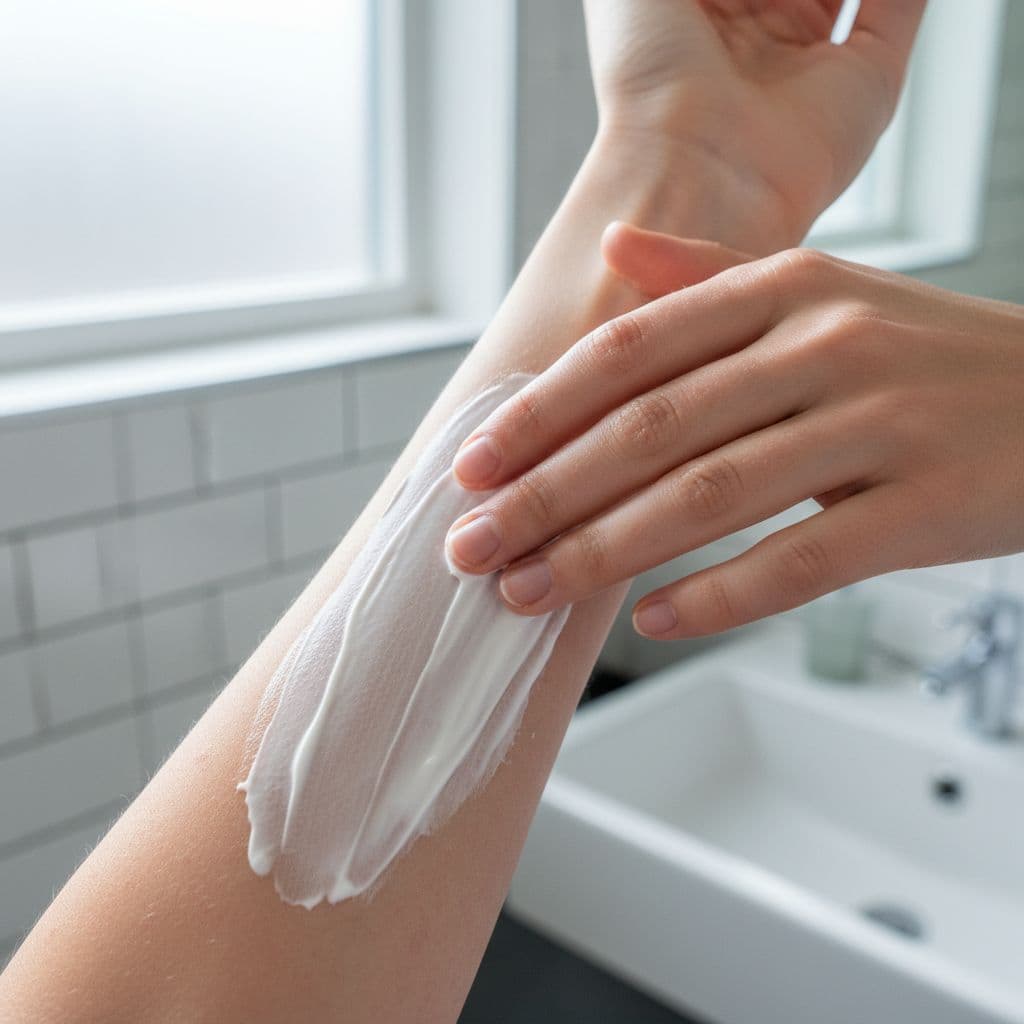
For mild flares, OTC 1% hydrocortisone can reduce redness and itch. Use a thin layer on the rash, then follow with moisturizer. Wet wraps can help when skin feels raw, especially at night. Hot water, scented cleansers, rough fabrics, and heavy scratching make the fire burn hotter, so pulling back from those triggers matters as much as the cream itself.
If the rash spreads, interrupts sleep, or does not improve within a week, it is time to move past self-care.
Over-the-counter and prescription eczema creams compared
The jump from store-bought relief to a prescription is not about failure. It is about matching the medicine to the flare.
This quick comparison makes the differences easier to see.
| Option | How it works | Best for | Main caution |
|---|---|---|---|
| Thick moisturizer or ointment | Repairs the skin barrier and locks in water | Daily care, mild dryness, flare prevention | Needs frequent use |
| OTC hydrocortisone 1% | Low-strength steroid reduces inflammation | Small, mild flares | Not ideal for long-term daily use |
| Prescription topical steroid | Stronger anti-inflammatory effect | Moderate flares, thicker plaques, stubborn patches | Overuse can thin skin |
| Prescription nonsteroid cream | Calms immune activity without steroid exposure | Face, eyelids, skin folds, long-term control | Can sting at first |
Topical steroids work by lowering inflammatory signals in the skin. Stronger products are often used for short bursts, then tapered. If your clinician prescribes mometasone, Elocon cream for eczema is one example of a prescription-strength steroid used for inflamed skin.
Nonsteroid choices matter too. Tacrolimus and pimecrolimus are calcineurin inhibitors. They dial down immune activity and are often useful on delicate areas where long steroid use is risky. Crisaborole is a PDE4 inhibitor that can help mild to moderate eczema, although some people notice burning when they first apply it. A helpful overview of mild to severe eczema treatment shows how these options fit into step-by-step care.
When creams are not enough
Some flare-ups keep coming back no matter how carefully you moisturize. Others cover wide areas, crack the skin, or steal your sleep night after night. That is when doctors may look beyond creams.
Oral and injectable treatments target the immune signals that drive eczema. Abrocitinib is a JAK1 inhibitor. It blocks part of the pathway that fuels inflammation and itch. For moderate to severe atopic dermatitis, Jabryus Abrocitinib for atopic dermatitis is one oral option that may be considered when topical care is not enough.
Biologic treatment is another path. Dupilumab, for example, targets IL-4 and IL-13 signaling, two pathways linked to eczema inflammation. Clinical studies suggest that JAK inhibitors and biologics can reduce itch and improve skin in selected patients, but they need screening, follow-up, and a clear risk discussion. Side effects vary by drug and may include acne, eye irritation, headache, infection risk, or lab changes.
Light therapy also has a role, especially for people with widespread disease who want to avoid frequent steroid use. Short courses of oral steroids are sometimes used, but many clinicians avoid them because the rebound can be rough once the medicine stops.
If your doctor has moved beyond OTC care, reviewing options through a licensed pharmacy can make refill planning easier, especially for chronic disease management.
When eczema may be infected
A flare does not always stay a flare. Broken skin can let bacteria in, and sometimes fungal disease or contact dermatitis imitates eczema so well that the wrong cream makes things worse.
Watch for yellow crusting, pus, worsening pain, fever, or skin that looks suddenly swollen and tender. If that happens, you may need treatment for infection, not more steroid alone. In selected cases, doctors may prescribe combination products such as treating infected eczema with Fourderm, but these are not routine self-treatment creams and should only be used with medical guidance.
A rash on the eyelids, genitals, hands, or large body areas also deserves closer review because those spots often need a more careful plan.
How to access treatment safely and affordably
Cost shapes eczema care more than many people admit. OTC moisturizers are usually manageable, but newer prescription medicine, specialty creams, oral drugs, and biologics can raise the bill fast. Prices also tend to run higher in the USA than in many international markets, so some patients compare licensed cross-border options.
Online pharmacy services can help with access, especially for people in rural areas or anyone who depends on regular refills. For chronic skin disease, online medicine home delivery can reduce missed doses and save repeat trips. Still, safety comes first. If you order prescription drugs online, the pharmacy should require a valid prescription, review it before dispensing, offer pharmacist support, and show clear shipping terms.
An international online pharmacy can widen access, but only if it follows prescription rules and quality checks. Medicine delivery cost to USA addresses can vary by courier speed, package size, and customs-related timing. Because of that, it helps to compare the full price, not only the tube or tablet cost. A trustworthy mail order pharmacy international service should make those details plain before checkout.
If you already have a treatment plan, checking availability through licensed partners can help you avoid gaps during the next flare.
What matters most
The best eczema treatment is the one that matches the flare in front of you. Mild patches often settle with thick moisturizers and short-term OTC care, while stubborn, painful, or repeat flares may need prescription medicine and a stronger plan.
When cost and access become part of the problem, careful use of a licensed Online pharmacy can help. Keep the standard high: real prescription review, clear delivery terms, and medical follow-up when the rash changes shape, spreads, or looks infected.
FAQ
What cream works best for an eczema flare-up?
For many people, the first step is a thick, fragrance-free cream or ointment used several times a day. If the flare is mild, OTC hydrocortisone may help. Stronger redness, swelling, or widespread rash often responds better to prescription eczema creams chosen by a clinician.
When do I need prescription eczema treatment?
You may need a prescription if OTC products fail after several days, the rash covers large areas, keeps returning, affects sleep, or appears on the face or skin folds. Moderate to severe eczema may also need oral treatment, biologics, or light therapy.
Are nonsteroid eczema creams safer for the face?
They can be a good option for delicate skin. Tacrolimus and pimecrolimus are often used on the face, eyelids, and folds because they avoid steroid-related skin thinning. They still need medical guidance, and some people feel burning or stinging at first.
How can I tell if eczema is infected?
Warning signs include yellow crusts, pus, increased pain, warmth, swelling, fever, or a rash that worsens fast. Those changes can point to infection or a different skin problem. A clinician should check it before you keep layering on stronger steroid creams.
Is it safe to buy eczema medicine online?
It can be safe if the seller is licensed, requires a valid prescription for prescription medicine, offers pharmacist review, and lists shipping and contact details clearly. Avoid sites that skip prescription checks, hide their location, or promise unrealistic results.
What affects the total cost of eczema treatment?
The price depends on the type of medicine, whether it is OTC or prescription, how long treatment lasts, and where you buy it. For online orders, shipping speed and medicine delivery cost to USA locations can add to the total, especially for repeat refills.