
Medication Out of Stock? What to Do Before You Miss a Dose

When your medication is out of stock, the clock gets loud. A missed refill can throw off blood pressure, blood sugar, pain control, transplant care, or a cancer treatment schedule.
Start with the pharmacy, not guesswork. Ask when the prescription medicine will return, whether you can get a partial fill, and whether another store can fill the same strength and form. Then call your prescriber before you switch, stretch doses, or stop treatment.
Quick answer: If your medicine is unavailable, ask the pharmacist for a restock date, partial fill, nearby stock checks, and safe alternatives. Confirm any change with your clinician, check insurance coverage, and use a licensed pharmacy if you need a different refill path.
Table of Contents
- Key takeaways
- What to do first when your medication is out of stock
- How to find a safe refill or substitute
- When specialty, cancer, or chronic medicines are affected
- How to reduce the chance of the next refill crisis
- Conclusion
- FAQ
Key Takeaways
- Act fast, because waiting a day or two can shrink your options.
- Don't skip doses or invent a backup plan on your own.
- Ask about partial fills, transfers, and same-class alternatives.
- Use an online pharmacy only if it requires a valid prescription and pharmacist review.
- Build a refill buffer, especially for chronic, specialty, or time-sensitive drugs.
What to do first when your medication is out of stock
A shortage rarely starts at the counter. Supply problems can begin with raw ingredients, factory delays, shipping disruptions, or limited wholesaler allocations. If you want a clear picture of broader supply pressure, this guide on why medication availability fluctuates worldwide gives helpful context.
Still, your first move is simple. Talk to the pharmacist standing in front of you.
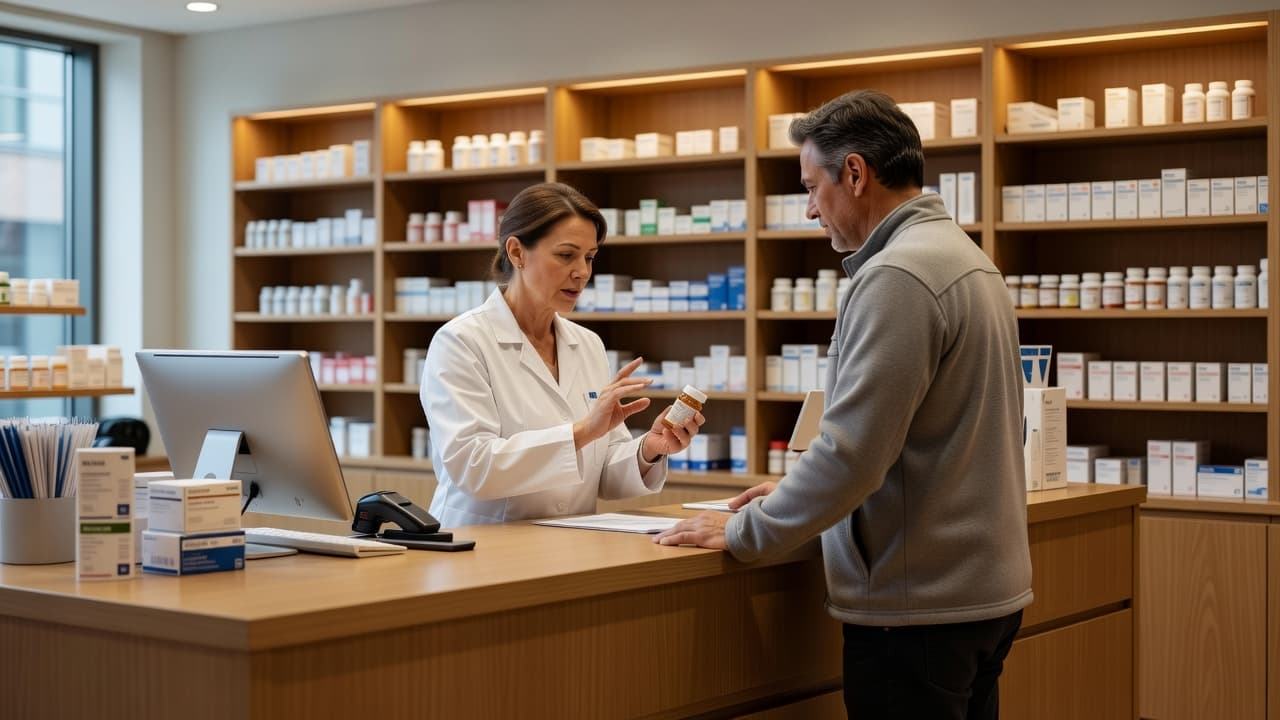
Ask four things right away: when it may return, whether they can check nearby branches, whether a partial fill is allowed, and whether the prescription can be transferred. Bring your prescription number, the exact drug name, and the dose. Ask for the same strength and dosage form if possible, because a tablet, capsule, liquid, or extended-release version may not swap cleanly.
A partial fill can bridge a short gap. That matters when you need only a few days. Controlled substances often follow tighter rules, so the answer may depend on state law and store policy.
If you don't have enough medicine to wait, call your prescriber the same day. Your doctor, nurse line, or urgent care team may help with a substitute or short-term plan. Sentara's advice on prescription drug shortages echoes this point: early calls give you more room to solve the problem safely.
How to find a safe refill or substitute
One empty shelf doesn't mean every shelf is empty. Call other pharmacies, but don't move the prescription until the new pharmacy confirms it can fill it. That one step saves time and prevents a paper chase.
This quick comparison helps you sort the safest next move:
| Option | Best when | What to confirm |
|---|---|---|
| Wait for restock | Supply returns in 1 to 3 days | You have enough doses left |
| Partial fill | You need a short bridge | State rules and insurance limits |
| Transfer to another pharmacy | Another store has stock now | Same drug, strength, and form |
| Therapeutic alternative | The drug is widely backordered | New prescription, coverage, and dose instructions |
The safest choice depends on the drug. A generic version may work well if it's therapeutically equivalent, but some switches need extra care. Extended-release tablets release medicine over time. Immediate-release versions act on a different schedule. Blood thinners, seizure medicines, insulin, transplant drugs, and many mental health medicines need a clinician-guided plan sooner, not later.
Online options can help when distance, travel, disability, or rural access makes local pickup hard. Some patients rely on online medicine home delivery when the nearest store is far away. If you order prescription drugs online, stick with pharmacies that require a valid prescription, offer pharmacist review, and provide tracking.
You can also compare their shortage guidance. For example, the Isentress product page explains out-of-stock steps, and the Brilinta page outlines backorder options. If you need broader public updates, check FDA's drug shortage database.
When specialty, cancer, or chronic medicines are affected
A shortage hurts more when the drug is expensive, time-sensitive, or hard to replace. That includes oral chemotherapy, targeted cancer therapy drugs, immunotherapy, transplant immunosuppressants, HIV treatment, and certain heart medicines.
With these drugs, a substitute may sit in the same broad class but act differently. Immunotherapy drugs for cancer, for example, do not work like standard chemotherapy. A checkpoint inhibitor has its own schedule, side effects, and monitoring needs. Targeted therapy may depend on a tumor mutation, so one pill cannot always stand in for another. That is why patients should never switch specialty treatment without a prescriber who understands the drug's mechanism and the treatment goal.
Many families start searching fast when local supply fails. They look for ways to buy cancer drugs online, compare affordable cancer medications, or try to buy immunotherapy drugs online when hospital or retail access tightens. That search becomes even more urgent when people need to order oncology medicines online or find discounted specialty medications they can still afford.
Cost adds another layer. People in the USA often compare local prices with international sources, especially when chronic or oncology therapy runs for months. A licensed international online pharmacy may widen access, and a mail order pharmacy international service can help in some cases. Still, compare the medicine delivery cost to USA addresses, refill timing, legal limits, and storage needs before you depend on shipping. Ads for cheap prescription drugs worldwide can sound tempting, but price means little if the seller skips prescription checks. An online pharmacy with global shipping should show pharmacist oversight, prescription rules, and tracked delivery.
How to reduce the chance of the next refill crisis
The best shortage plan starts before the shelf goes empty. Refill several days early, especially for chronic treatment. Many pharmacies and insurers allow a refill window before the bottle is empty, and that small cushion gives you time to react.
Keep a simple list on your phone with the drug name, strength, prescriber, pharmacy number, and prescription number. When a backorder hits, you won't need to hunt through drawers or old messages. Ask your prescriber whether a 90-day supply, an approved generic, or a pre-planned alternative makes sense for your condition.
Auto-refill can also help. So can a trusted delivery option. For patients in rural areas, for caregivers, and for people who travel often, a licensed Online pharmacy may keep treatment more stable than last-minute store visits.
Most importantly, don't ration doses to make the bottle last longer unless a clinician tells you to. Cutting tablets, skipping every other day, or saving pills for "bad days" can turn one shortage into a medical problem.
Conclusion
A medication shortage feels urgent because it is. The safest path is still straightforward: talk to the pharmacist, confirm the next step with your prescriber, and move before you miss doses.
This information is for educational purposes only. Consult a licensed healthcare provider or pharmacist before changing, skipping, or replacing any medicine.
If local stock keeps failing, check verified refill options early, before the next gap catches up with you.
FAQ
What should I do first if my prescription medicine is unavailable?
Ask the pharmacist for a restock date, nearby stock checks, a partial fill, and transfer options. Then call your prescriber if you don't have enough doses to wait. Early action matters because every hour can reduce your safe options.
Can I switch to a similar medicine on my own?
No. Two medicines may look similar but work on different schedules, doses, or release patterns. That matters even more with blood thinners, seizure drugs, insulin, transplant medicine, and cancer treatment. A licensed clinician should approve any change.
Is it safe to order prescription drugs online?
It can be safe if the pharmacy requires a valid prescription, uses pharmacist review, and provides clear contact details and tracked shipping. Avoid sellers that skip prescription checks, hide sourcing details, or promise miracle prices without basic safety steps.
Can I order prescription drugs internationally?
Sometimes, but rules vary by medicine and country. Check with your prescriber and pharmacy first, then review import rules, refill timing, and shipping conditions. This is especially important for controlled medicines, temperature-sensitive drugs, and high-risk specialty treatments.
What is the cheapest way to buy medicines during a shortage?
The lowest sticker price is not always the best deal. Compare insurance coverage, generic options, partial fills, and verified pharmacy pricing. For long-term treatment, a licensed international source may lower total cost, but only if the prescription, shipping time, and safety checks all line up.
What if my cancer or specialty drug is out of stock?
Call your oncology team or specialist the same day. Cancer, transplant, HIV, and other specialty drugs often need exact timing and careful monitoring. Your team can decide whether to delay, substitute, change the schedule, or help you access another verified supply channel.