
What Ibrutinib Is and How It Works in Blood Cancers

Ibrutinib is an oral targeted cancer medicine, sold under the brand name Imbruvica, that blocks Bruton's tyrosine kinase, or BTK. BTK helps certain B-cells grow and survive, so blocking it can slow or stop some blood cancers, including chronic lymphocytic leukemia, small lymphocytic lymphoma, and Waldenstrom macroglobulinemia.
If you're trying to understand why one pill can change a blood cancer treatment plan, this is the short answer. This article explains how ibrutinib works, who may benefit, the main risks, current cost and generic questions, and how to compare access options safely. This information is for educational purposes only and isn't personal medical advice.
Quick answer: Ibrutinib is a BTK inhibitor taken by mouth. It turns off a key survival signal in some cancerous B-cells, which can help control disease and slow progression.
Table of contents
- Key takeaways
- Ibrutinib is a targeted BTK inhibitor, not traditional chemotherapy
- How ibrutinib works inside cancer cells, step by step
- Who may benefit from ibrutinib, and what results doctors look for
- Side effects, safety warnings, and questions to ask before starting
- Cost, generics, and how to access ibrutinib safely
- Conclusion
- FAQ
Key takeaways
- Ibrutinib is a targeted BTK inhibitor, not standard chemotherapy.
- It blocks signals that help some abnormal B-cells live, grow, and move.
- Doctors use it most often in CLL/SLL and Waldenstrom macroglobulinemia.
- Common side effects are manageable for many people, but bleeding, infection, and heart rhythm problems need close attention.
- In the US, brand-name ibrutinib is still expensive, and full generic availability remains limited as of April 2026.
Ibrutinib is a targeted BTK inhibitor, not traditional chemotherapy
Ibrutinib belongs to a class of drugs called BTK inhibitors. These are targeted therapies. They don't attack all fast-growing cells the way older chemotherapy often does. Instead, they block one signal that certain cancer cells rely on.
That difference matters. Many people take ibrutinib by mouth at home, so treatment can feel less like an infusion schedule and more like a long-term daily plan. The science is still serious, but the routine often looks different.
The blood cancers ibrutinib is used to treat
The best-known uses are chronic lymphocytic leukemia (CLL), small lymphocytic lymphoma (SLL), and Waldenstrom macroglobulinemia (WM). Some readers also hear about its role in other B-cell conditions, because BTK sits in an important pathway across several related cancers. A plain-language ibrutinib monograph gives a helpful overview of those uses.
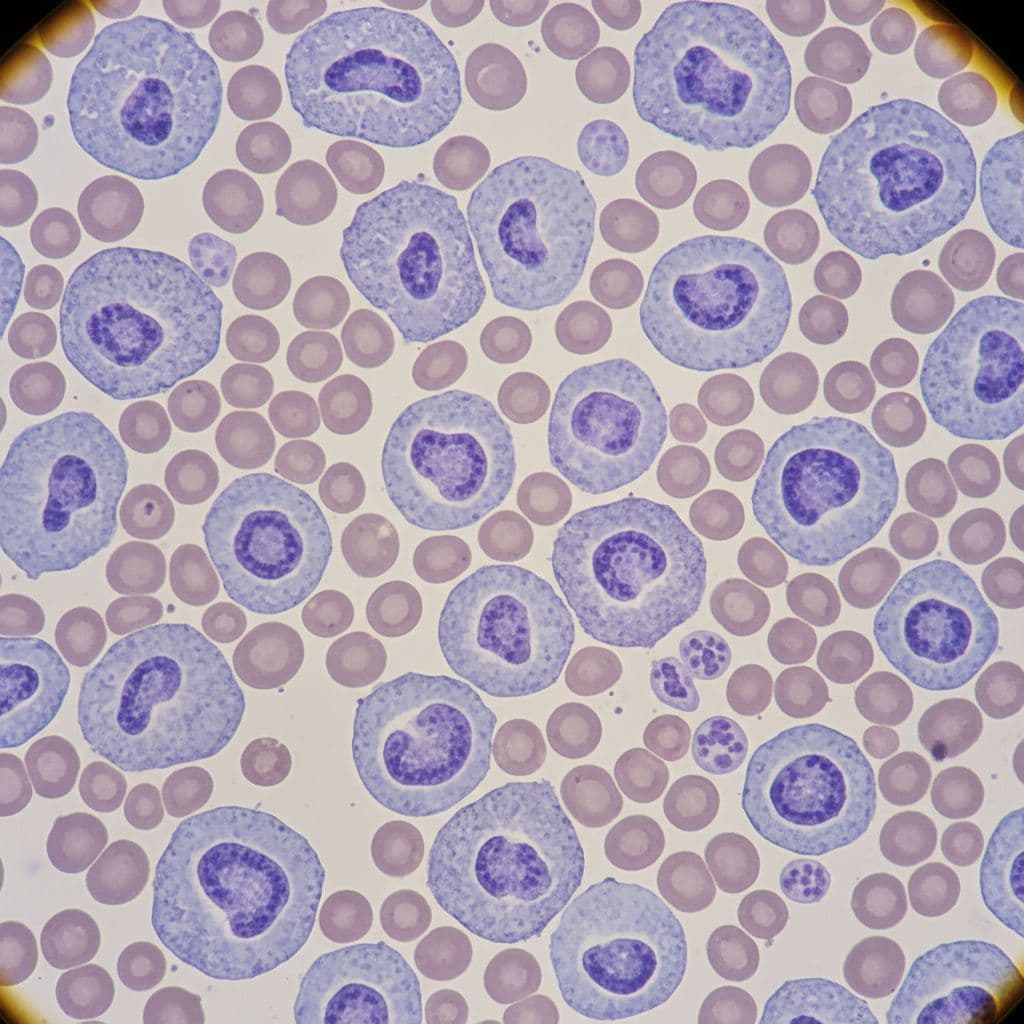 Mantle cell lymphoma is where details matter. Ibrutinib once had a larger role there, but its US indication for MCL changed after later data did not confirm enough benefit. That doesn't erase its value in CLL/SLL or WM, but it does mean current use depends on updated guidance and a hematologist's plan.
Why BTK matters in abnormal B-cells
B-cells are part of your immune system. In some blood cancers, they stop acting like disciplined defenders and keep receiving messages to survive, divide, and hide in places like lymph nodes and bone marrow.
BTK is one of the switches in that message chain. When the switch stays active, the cell keeps getting a "stay alive" signal. Blocking BTK interrupts that message before it can travel farther.
How ibrutinib works inside cancer cells, step by step
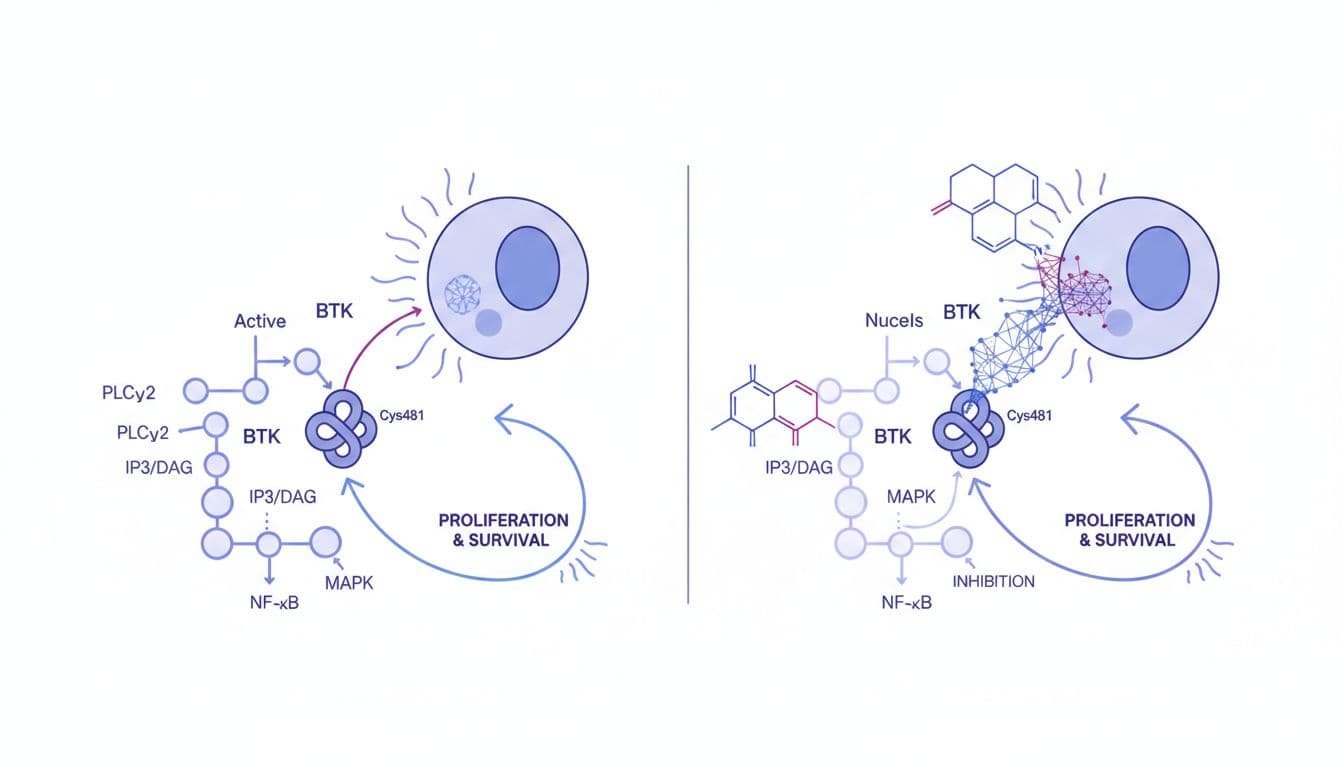
Ibrutinib works with unusual precision. According to the FDA prescribing label, it forms a covalent bond with a cysteine residue called C481 in the active site of BTK. In simple terms, it locks onto BTK and turns that protein off.
Once BTK is blocked, B-cell receptor signaling weakens. That cuts survival and growth messages inside the cancer cell. Over time, some cells stop multiplying, lose their protection, and become more likely to die through programmed cell death, also called apoptosis.
Ibrutinib also affects adhesion and chemotaxis, which are the signals that help malignant cells stick in sheltered spaces and move toward them. That matters because lymph nodes and marrow can act like safe houses for cancer cells.
 ### How blocking BTK can slow cancer growth and spread
Ibrutinib does not usually wipe out every cancer cell at once. It works more like cutting power to a room that has been running on bad wiring for too long. Without BTK signaling, many of these B-cells can't keep thriving.
Research and clinical use have shown durable responses in many patients with approved B-cell cancers. In CLL, strong trial results helped move ibrutinib into earlier treatment settings, and in WM it has produced high response rates over time.
Why some patients see lymph nodes shrink but blood counts rise at first
This point can be confusing if no one warns you. After treatment starts, some CLL cells move out of lymph nodes and into the bloodstream. So blood lymphocyte counts may rise for a while even as the drug is working.
That pattern is called treatment-related lymphocytosis. It can look alarming on paper, but it doesn't always mean the cancer is worse. Doctors read those lab changes in context, along with symptoms and node size.
Who may benefit from ibrutinib, and what results doctors look for
Doctors don't pick ibrutinib by diagnosis alone. They also weigh prior treatment history, mutation profile when relevant, age, bleeding risk, heart rhythm history, blood pressure, other medicines, and the person's goals of care.
For some patients, the main goal is long disease control. For others, it's relief of swollen nodes, fatigue, night sweats, or rising blood counts. In studies of CLL and WM, responses can last a long time, but no treatment choice is one-size-fits-all.
When ibrutinib may be used alone or with other treatments
Sometimes ibrutinib is used by itself. In other cases, it's paired with drugs that attack cancer cells through a different route. One example is ibrutinib plus venetoclax, which may be chosen in selected settings because the medicines target separate survival pathways.
If you're comparing practical supply options, some patients review both branded Imbruvica (Ibrutinib) 140mg x 120 tablets and lower-cost generic Imbruvica (Ibrutinib) 140mg tablets, while still following prescription and pharmacist review rules.
Why some patients switch to newer BTK inhibitors or other options
A switch may happen because of side effects, resistance, drug interactions, or a doctor's preference for a different safety profile. Newer BTK inhibitors such as Acabrunat (Acalabrutinib) or Calquence for CLL may be considered when heart-related concerns or tolerability issues come up. Venetoclax-based treatment is another common alternative.
Side effects, safety warnings, and questions to ask before starting
Common side effects include diarrhea, fatigue, nausea, bruising, rash, cough, headache, constipation, low blood counts, and high blood pressure. These are often manageable, but they still need reporting because dose changes or supportive care may help. Mayo Clinic's ibrutinib safety page gives a patient-friendly list of reactions and warning signs.
More serious risks include bleeding, severe infection, liver problems, tumor lysis syndrome, allergic reactions, and atrial fibrillation or another irregular heartbeat. Heart rhythm problems appear in a minority of patients, with atrial fibrillation reported in about 5 to 8 percent in some studies.
Fast reporting matters. Black stools, heavy bruising, chest fluttering, faintness, shortness of breath, or fever need prompt medical attention.
Medicines, supplements, and health conditions that can affect safety
Doctors review blood thinners, some heart medicines, and supplements that may increase bleeding risk or change drug levels. They also look at liver health, infection history, blood pressure, and any past rhythm problem before and during treatment.
Simple warning signs patients should not ignore
Call the care team quickly for fever, worsening cough, unusual bleeding, new dizziness, pounding or fluttering in the chest, or signs of infection. Everyday side effects still matter, but urgent symptoms should never wait for the next routine visit.
Cost, generics, and how to access ibrutinib safely
In the US, ibrutinib has long been expensive, often above $10,000 per month before insurance. A 2026 price snapshot reflects how high brand costs can run, although real out-of-pocket amounts vary by plan, dose, and pharmacy.
As of April 2026, no fully marketed US generic is widely available yet. However, tentative FDA approval for generic ibrutinib tablets was reported in April 2026, which may improve access after final regulatory steps. Outside the US, pricing can differ sharply by country, pharmacy rules, and supply chain.
This quick table shows what to compare before ordering:
| What to check | Why it matters |
|---|---|
| Active ingredient and strength | Confirms the same drug and dose |
| Pharmacy licensing | Helps reduce counterfeit risk |
| Prescription verification | Keeps the process legal and safer |
| Refill and shipping policy | Prevents treatment gaps |
Questions to ask when comparing brand and generic ibrutinib
Ask who made the product, what strength it comes in, whether the pharmacy requires a valid prescription, and how pharmacist review works. Also ask about refill timing, shipping details, temperature handling, and what happens if your doctor changes the dose.
For cost-sensitive patients and caregivers, safe access is about more than price. Look for transparent sourcing, clear delivery policies, and a pharmacy that checks prescriptions instead of waving them through.
Conclusion
Ibrutinib is a BTK inhibitor that blocks key survival signals in certain cancerous B-cells. That action can slow disease and help control blood cancers such as CLL/SLL and Waldenstrom macroglobulinemia.
It's also a drug that needs respect. Bleeding, infection, blood pressure changes, and heart rhythm problems all deserve careful monitoring. A hematologist and pharmacist can help you weigh whether ibrutinib, a newer BTK inhibitor, or another option fits your diagnosis, budget, and safety needs.
FAQ
What is ibrutinib?
Ibrutinib is an oral targeted cancer drug, also known as Imbruvica. It belongs to the BTK inhibitor class and is used for certain B-cell blood cancers, especially CLL/SLL and Waldenstrom macroglobulinemia.
How does ibrutinib work in blood cancers?
It binds to BTK, a protein that helps abnormal B-cells survive and multiply. By shutting off that signal, ibrutinib weakens growth pathways, reduces cell survival, and can make cancer cells leave protected spaces like lymph nodes.
Is ibrutinib chemotherapy?
No. Ibrutinib is targeted therapy, not traditional chemotherapy. Standard chemotherapy often affects many fast-growing cells, while ibrutinib focuses on a specific signaling protein that some cancerous B-cells depend on.
What are the most common side effects of ibrutinib?
Common side effects include diarrhea, fatigue, nausea, bruising, rash, cough, headache, constipation, low blood counts, and high blood pressure. Serious problems such as bleeding, infection, or irregular heartbeat need quick medical attention.
Why can blood counts rise after starting ibrutinib?
Some CLL cells move from lymph nodes into the bloodstream after treatment begins. That can cause a temporary rise in lymphocyte counts even while lymph nodes shrink and the medicine is helping.
Are there alternatives to ibrutinib?
Yes. Other options include newer BTK inhibitors such as acalabrutinib and venetoclax-based regimens. Doctors may switch treatment because of side effects, resistance, drug interactions, or concern about heart-related safety.
Is a generic version of ibrutinib available in the US?
Not widely as a fully marketed product as of April 2026. Tentative FDA approval for generic tablets has been reported, but final approval and market availability still depend on remaining regulatory and patent steps.
How can patients access ibrutinib safely at a lower cost?
Compare licensed pharmacies, confirm prescription requirements, check the exact strength and manufacturer, and review shipping and refill support. Lower price matters, but verified sourcing and pharmacist oversight matter just as much.