
Why Are Cancer Drugs So Expensive? And How Patients Save 80% Globally

Cancer drug prices can top $100,000 a year, and patients often need treatment fast. The short answer is simple: cancer drugs cost so much because research takes years, most drug candidates fail, patents block cheaper competition, manufacturing can be complex, and the US pricing system gives drugmakers more room to charge high prices. The good news is that some patients cut costs sharply through generics, biosimilars, assistance programs, legal international sourcing, and price comparison.
If you're trying to sort through options, it helps to know where the price comes from first. Then you can judge where real savings are possible, and where risk starts.
If you're comparing pharmacies and paperwork, get started ordering prescriptions online can also help you understand the basic process.
Table of contents
- Why cancer drugs cost so much
- Why US prices are often higher
- How patients save 50% to 80% or more
- How to lower costs safely
- Common questions about global savings
Key takeaways
- Patents, failed research, and complex production keep many cancer drug prices high.
- US pricing rules often lead to higher list prices and higher out-of-pocket bills.
- Generics, biosimilars, assistance, and careful international sourcing can lower costs a lot.
What makes cancer drugs so expensive in the first place?
Many of today's most expensive cancer drugs are targeted therapies or immunotherapies. These medicines may block a tumor signal, such as HER2 or EGFR, or lift immune system brakes like PD-1. That science can help the right patient, but it also raises development and production costs.
Recent research summaries note that many newer cancer drugs launched above $100,000 per year, while US spending on anticancer therapies keeps rising, as described in this Nature review on the high costs of anticancer therapies in the USA.
Drug research takes years, and many drugs fail before one succeeds
A cancer drug isn't born in a single lab breakthrough. It usually starts with years of screening, animal work, early human testing, then large clinical trials. Many candidates fail somewhere along the way.
Drug companies often point to those failures when they defend high prices. That argument has some truth. Still, critics say it doesn't fully explain current pricing, especially when drugs post strong profits and then receive repeat price hikes after launch.
Some cancers also affect smaller groups of patients. When a drug is built for a rare mutation or a narrow disease subtype, companies spread costs across fewer people. That can push prices even higher.
Patents and exclusivity keep cheaper competition out for a long time
Patents and exclusivity work like a fence around a drug. While that fence stands, lower-cost competitors can't easily enter the market.
That matters because competition is what usually pushes prices down. A generic small-molecule drug can drop sharply after patent expiry. A biologic cancer medicine may later face biosimilar competition, but that path is slower and more complex.
This is why so many patients spend years paying brand-level prices. It also explains why the first big drop often comes late, not early. Patent analysts keep watching this trend as more large drugs approach loss of exclusivity, as discussed in DrugPatentWatch's review of the coming patent cliff.
Why prices are often much higher in the US than in other countries
Science is only part of the story. The pricing system matters too, and the US system is unusually loose.
In the US, drugmakers often set launch prices with less direct government control. By contrast, countries such as Canada, the UK, and Australia often negotiate, review, or cap prices based on value. That's one reason Americans often see much higher sticker prices first.
For a quick view, this table shows the basic difference:
| Market | How prices are often set | Common result |
|---|---|---|
| United States | More market-based pricing | Higher list prices |
| Canada, UK, Australia | Negotiation or value review | Lower public prices |
| After competition arrives | Generics or biosimilars pressure prices | Bigger savings |
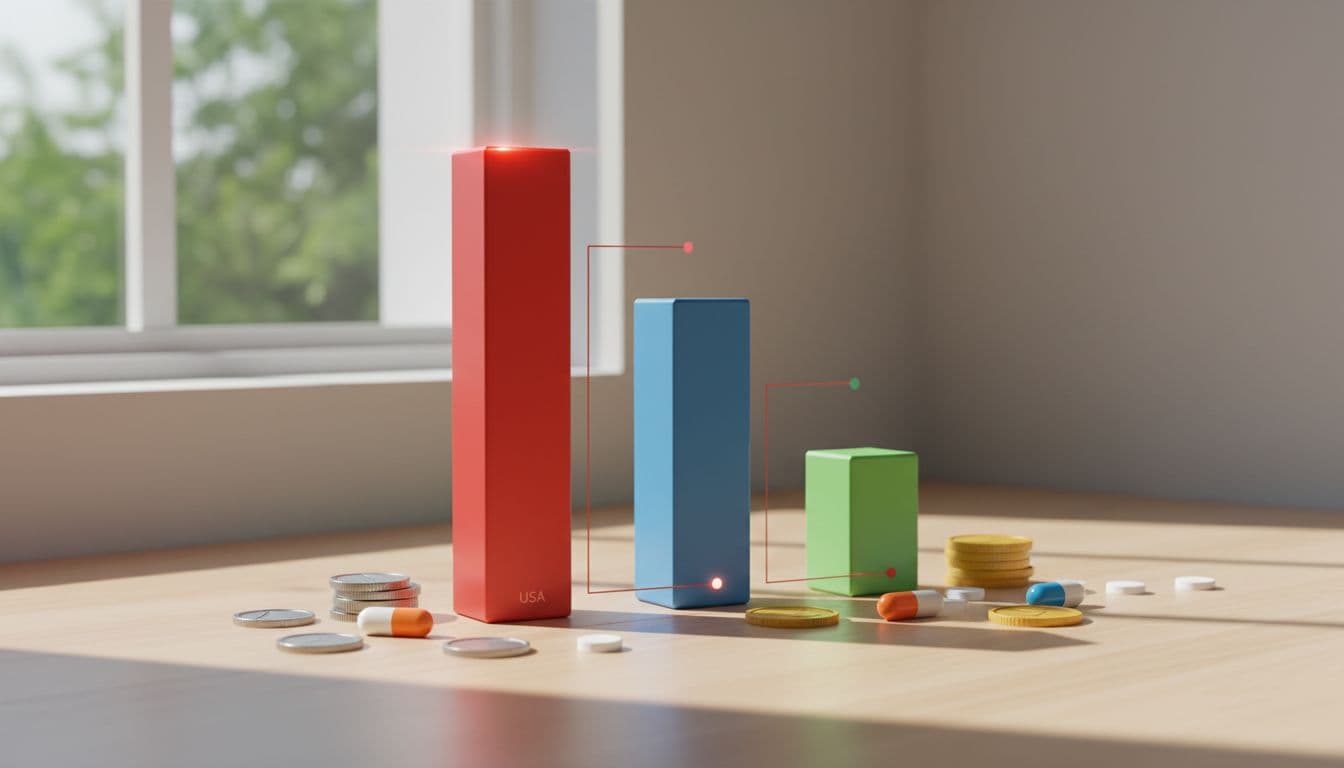
Other countries negotiate, but US patients often face list prices first
That difference sounds technical, but patients feel it fast. A person in the US may meet the list price through a deductible or coinsurance before insurance softens the blow. In other countries, public systems often push that negotiation upstream.
Early Medicare negotiation shows how much prices can move once the government can bargain. The first negotiated prices taking effect in 2026 cut selected drug prices by roughly 38% to 60%, but many cancer drugs are still waiting outside those early rounds. STAT has covered that pressure point in its reporting on how CMS can save money on cancer drugs.
Insurance helps some people, but out-of-pocket costs can still be crushing
Insurance doesn't erase the problem. Specialty tiers, deductibles, coinsurance, and prior authorization can leave patients with large monthly bills.
Recent reporting also shows repeated annual price hikes keep adding weight to the same burden. The pattern was highlighted in this Patients For Affordable Drugs analysis of cancer drug price hikes. Broader 2026 price increases across medicine were also reported by USA Today.
For many families, the result is debt, delayed refills, or skipped doses. That's not a side issue. It's part of treatment access. If you're also comparing treatment types, this guide on differences between chemotherapy, targeted therapy, and immunotherapy helps explain why costs and monitoring can vary so much.
How patients are saving 50% to 80% or more on cancer medications globally
This is the part most patients care about most. Yes, savings can be real, but they depend on the drug, the country, and the legal pathway.
The biggest savings usually come from four places: approved generics, biosimilars, patient support programs, and lower prices in other markets. Research indicates biosimilars alone generated billions in savings in recent years, and some launch at around half the price of the reference drug.
Generics and biosimilars are the biggest reason prices can drop so much
A generic is a lower-cost version of a traditional drug, usually a pill or capsule, with the same active ingredient and expected effect. Imatinib is one of the clearest examples of how prices can fall once generic competition expands.
A biosimilar is different. It's a highly similar version of a biologic medicine, often an injection or infusion made from living cells. It isn't a simple copy in the way a generic pill is, but it's reviewed to match the reference product in quality, safety, and clinical effect. Trastuzumab biosimilars are a well-known example in oncology.
If you're weighing brand versus lower-cost options, this guide to generic vs brand-name cancer medicines explains what should match, and what may look different.
International pharmacies can offer lower prices because local pricing rules are different
Countries such as India, Canada, and Mexico may have lower prices because of tougher price controls, different margins, local manufacturing, or earlier access to lower-cost versions. That doesn't mean every product is cheaper, or that every purchase route fits every patient. It means the market rules are different.
India is often part of this conversation because biosimilars and generics have expanded access there, a trend covered in ETPharma's report on biosimilars and affordable cancer care.
Savings are real, but the safest savings start with the same drug plan, the same dose, and a valid prescription.
How to lower cancer drug costs safely, without taking avoidable risks
Cost savings should never come at the price of bad treatment. The safer path is methodical.
- Ask your oncologist whether a generic or biosimilar fits your exact cancer type, stage, and biomarker results.
- Check manufacturer and nonprofit assistance before paying the full bill.
- Compare pharmacy prices, including international options when allowed.
- Confirm the dose, form, and refill timing match your prescription.
- Review shipping time, storage needs, and whether the medicine is suitable for home delivery.
- Verify that the pharmacy requires a valid prescription and offers pharmacist review.
Ask the right questions before switching to a lower-cost option
Keep your questions simple and specific. Ask whether the lower-cost option uses the same active drug, the same strength, and the same schedule. Also ask what monitoring changes, if any, you should expect.
If your treatment also includes symptom control, this overview of cancer supportive care medications can help you think about nausea drugs, pain relief, and refill planning alongside the main cancer medicine.
Use a simple safety checklist before buying from any online pharmacy
A safer seller asks for a prescription, shows contact details, explains shipping clearly, and offers pharmacist support. Warning signs include unreal prices, no prescription check, vague product details, and no clear process.
Import rules also vary by country, so patients should check local laws before ordering. This information is for educational purposes only. Treatment decisions and sourcing questions should always be reviewed with a licensed clinician and pharmacist.
Common questions patients ask about cancer drug prices and global savings
Why do cancer drugs cost more than most other drugs?
Cancer drugs often require long research, large trials, high failure rates, and complex manufacturing. Many also treat smaller patient groups or rely on patents that delay cheaper competition. In the US, companies often have more room to set high launch prices and raise them later.
Are generic cancer drugs safe?
Approved generic cancer drugs are expected to match the original drug in active ingredient, strength, quality, and clinical effect. They may look different because inactive ingredients or packaging can vary. Your oncology team should confirm that a generic fits your exact treatment plan.
What is a biosimilar?
A biosimilar is a highly similar version of a biologic medicine, such as some injectable cancer drugs. Because biologics come from living cells, a biosimilar isn't an exact copy like a standard generic pill. It still must meet strict standards for safety, quality, and effectiveness.
Can insured patients still save money?
Yes. Insurance can leave patients with deductibles, coinsurance, and specialty tier costs. A lower-cost generic, a biosimilar, a support program, or a lower pharmacy price may still reduce what you pay. Savings depend on your plan, your drug, and the pharmacy channel.
Is it legal to order from an international pharmacy?
Rules vary by country and by drug. Some patients legally access medicines from abroad with a valid prescription, but that doesn't apply in every case. Check local laws, confirm prescription requirements, and talk with your care team before making a cross-border purchase.
What should I ask my doctor before changing pharmacies?
Ask whether the new pharmacy can supply the same drug, dose, formulation, and refill timing. Also ask about monitoring, side effects, storage, and whether delays could affect treatment. That keeps a cost-saving move from turning into a treatment disruption.
Cancer drugs stay expensive because of patents, hard science, and market-based pricing, especially in the US. Still, high prices don't mean patients are out of options.
The biggest savings usually come from generics, biosimilars, assistance programs, and careful international sourcing with a valid prescription. Compare prices, confirm safety, and talk with your oncology team before making any change.