
7 types of Eczema and Fourderm: Uses, Risks, and Cost

Fourderm isn't a general treatment for every type of eczema. Understanding 7 types of Eczema and Fourderm starts with a distinction: eczema has several forms and triggers, while Fourderm combines four medicines.
Indian pharmacy listings describe the cream for certain inflamed skin conditions involving suspected or confirmed infection, but these listings don't establish an Australian-approved indication.
This information is for educational purposes only; diagnosis and treatment decisions belong with a licensed healthcare provider. The distinctions below explain why the eczema type, possible infection, and medicine's regulatory status matter.
Table of Contents
- Seven eczema types and the evidence
- Fourderm ingredients and their roles
- Diagnosis, treatment, and safety
- Access, cost, and cross-border supply
- Frequently asked questions
- Conclusion
Key Takeaways
Fourderm contains a potent steroid plus three antimicrobial ingredients. It isn't a routine treatment for uncomplicated eczema. Different eczema types need different care, and an overseas pharmacy listing doesn't establish Australian approval. Our listed price is USD $28.95 for a 20 g tube.
7 types of Eczema and Fourderm: what the evidence says
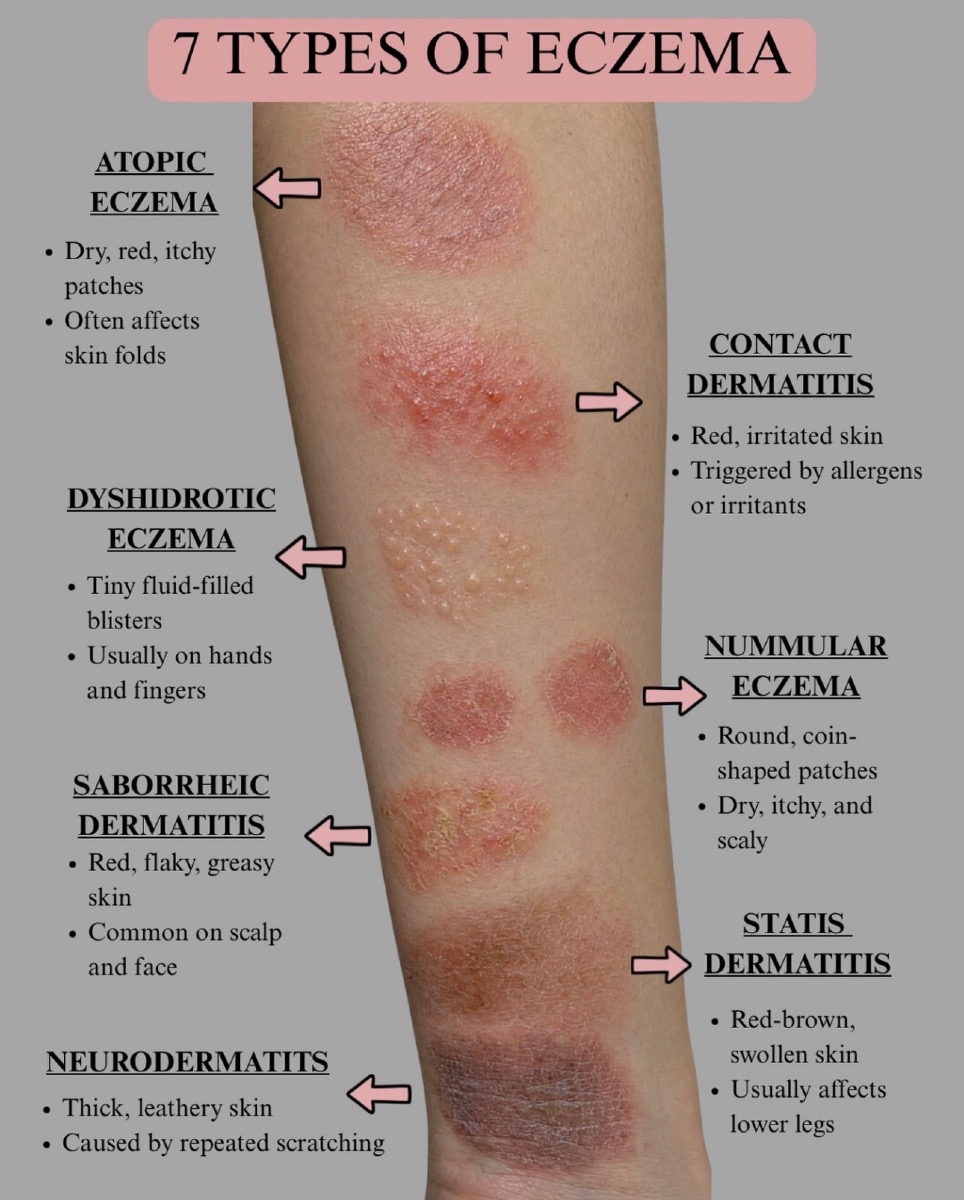
The American Academy of Dermatology's eczema categories include the seven types below. However, the National Eczema Association's classification includes seborrheic dermatitis rather than hand eczema in its seven-type grouping.
These lists organize overlapping conditions differently. There's no universally fixed set, and visible features alone don't establish a diagnosis.
Atopic dermatitis and contact dermatitis
Atopic dermatitis is a chronic inflammatory condition associated with dry, itchy skin and recurring flares. A weakened skin barrier helps explain its dryness and sensitivity, although individual triggers vary.
Contact dermatitis develops after exposure to an irritant or allergen. Soap can irritate skin directly, while nickel can trigger an allergic response. Identifying and avoiding the responsible exposure can be an important part of care.
Dyshidrotic eczema and hand eczema
Dyshidrotic eczema causes small, often intensely itchy blisters on the hands or feet. Peeling and cracks may follow as the blisters settle.
Hand eczema describes eczema by location rather than one underlying cause. Repeated exposure to water, detergents, or chemicals can contribute, and allergic contact dermatitis or atopic dermatitis may also affect the hands.
Neurodermatitis, nummular eczema, and stasis dermatitis
Neurodermatitis involves intense itching and repeated scratching that thickens affected patches. Nummular eczema produces round or coin-shaped areas that can itch, crust, or ooze.
Stasis dermatitis usually affects the lower legs when impaired venous circulation contributes to inflammation. Because circulation problems require attention beyond treating the surface rash, leg swelling, pain, or skin breakdown merits medical assessment.
What is in Fourderm cream, and why is it different from standard eczema care?
Apollo Pharmacy and PharmEasy list the following Fourderm formulation. These are commercial descriptions, not an official Australian product label.
| Ingredient | Listed concentration | Drug class |
|---|---|---|
| Chlorhexidine gluconate | 0.2% w/w | Antiseptic |
| Clobetasol | 0.05% w/w | Potent topical corticosteroid |
| Miconazole | 2% w/w | Antifungal |
| Neomycin | 0.5% w/w | Antibiotic |
The combination addresses several possible treatment targets. However, that doesn't mean every ingredient is appropriate for every rash.
How the four ingredients work together
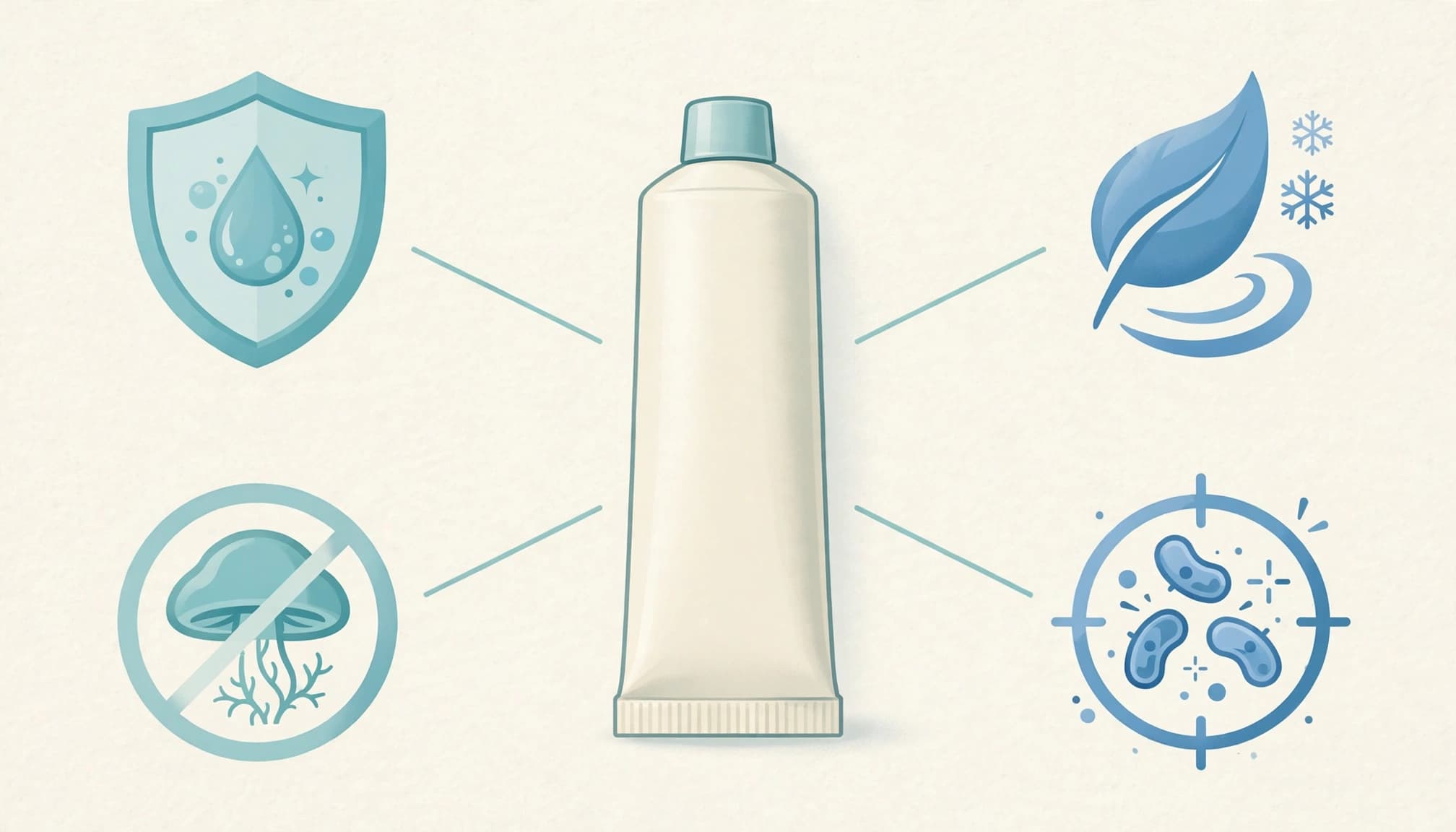
Clobetasol suppresses inflammatory activity, which can reduce redness and itching. Chlorhexidine acts as an antiseptic against susceptible microorganisms.
Meanwhile, miconazole disrupts fungal cell membranes, and neomycin interferes with bacterial protein production. Each ingredient has a different purpose; none establishes the cause of a rash.
Combining antimicrobial medicines with a potent steroid requires diagnosis and clinician oversight. Pharmacy descriptions mentioning infected eczema don't make Fourderm a routine choice for uncomplicated eczema or establish suitability across all seven categories.
Why the type and cause of a rash matter before using a combination cream
Eczema inflammation, bacterial infection, and fungal infection can produce similar-looking symptoms. Yet their treatment requirements differ, and infection can coexist with eczema.
An inappropriate steroid can suppress visible inflammation while an underlying infection persists. Prolonged use can also cause skin thinning. Unnecessary antimicrobials add risks, including irritation, allergy, and antibiotic resistance.
A cream's ingredient count doesn't establish a better outcome. The relevant question is whether its components match the diagnosed condition, body site, and required treatment duration.
Eczema treatment depends on the diagnosis, not just the appearance
General eczema care includes regular moisturizers, reducing known irritants, and clinician-guided anti-inflammatory treatment. The AAD's atopic dermatitis treatment guideline supports several treatments, including moisturizers, topical corticosteroids, and topical calcineurin inhibitors.
Treatment varies by eczema type, body area, severity, age, and possible infection. A medicine suitable for thick skin on the hands may be inappropriate around the eyes or on other sensitive sites. Stasis dermatitis also requires attention to the underlying circulation problem.
Risks and warning signs that call for medical advice
Pharmacy listings report possible burning, irritation, redness, itching, peeling, and skin thinning with Fourderm. These descriptions aren't a complete official safety profile.
Neomycin can cause allergic contact dermatitis, potentially resembling worsening eczema. Large-area or prolonged use of potent topical steroids increases exposure and can raise local and systemic risks.
Rapidly worsening redness, warmth, pain, pus, or fever requires prompt clinical assessment. A severe reaction, especially breathing difficulty or facial swelling, requires emergency care. Persistent worsening after treatment also needs reassessment.
Questions to discuss with a health care provider
Discussion should cover the likely eczema type, whether infection is present, and whether a combination product is appropriate. Any prescription should include where and how long the cream should be used, plus what to do if symptoms worsen.
Children, pregnancy, sensitive skin sites, and medicine allergies require extra caution. Warfarin use also matters because miconazole can interact with anticoagulant treatment.
Formulation matters too. The oral corticosteroids covered in our Sterapred medicine information and Orapred syrup information aren't interchangeable with topical clobetasol. Routine systemic corticosteroid treatment isn't recommended for atopic dermatitis.
Access, cost, and safe use of Fourderm across countries
Our listing prices Fourderm 20 g cream at USD $28.95. That is a product price, not evidence of a delivered price, insurance coverage, or guaranteed savings against another country's supply.
Comparable current local prices aren't established here for the USA, Australia, or UK. A meaningful comparison requires the same formulation and pack size, plus delivery charges and any applicable fees. Currency conversion alone doesn't establish affordability.
Medication-access questions can go through our Online Pharmacy. We don't dispense prescription medicines without a valid, legible prescription from a licensed physician. However, prescription acceptance and lawful importation are separate issues.
Australian registration and overseas availability
No official Australian Fourderm Product Information document or TGA listing was identified in the available evidence. This doesn't prove that no entry exists, but it provides no basis for assuming Australian registration or an approved eczema indication.
The TGA's Australian Register of Therapeutic Goods records Australian medicine status. In the USA, FDA approval information concerns the exact product and formulation. An Indian pharmacy listing establishes neither status.
What safe cross-border supply involves
International sourcing doesn't remove local prescription or import requirements. Safe supply depends on licensed dispensing, a clearly identified product, appropriate prescription review, and compliance with destination-country rules.
Product names also require care. Indian listings distinguish Fourderm from Fourderm+, which has different ingredients. Treating these names as interchangeable could result in the wrong medicine, even when both appear in similar cream packaging.
Frequently asked questions about Fourderm and eczema
Is Fourderm suitable for all seven types of eczema?
No. The seven categories describe conditions with different causes and care needs. Fourderm combines a potent steroid with antimicrobial medicines, so its suitability depends on diagnosis and possible infection. A commercial listing mentioning infected eczema doesn't establish routine use for every eczema type.
How does Fourderm cream work?
The listed formulation combines clobetasol to suppress inflammation, chlorhexidine as an antiseptic, miconazole against susceptible fungi, and neomycin against susceptible bacteria. These roles explain the combination, but they don't prove that all four ingredients are necessary for a particular rash or that the product cures eczema.
What side effects can Fourderm cause?
Pharmacy listings mention burning, irritation, redness, itching, peeling, and skin thinning. Neomycin can also cause allergic skin reactions. These descriptions aren't a complete official safety profile. Risk depends partly on treatment duration, application area, skin condition, and individual sensitivities, which require clinical assessment.
What does Fourderm cost, and is it approved in Australia?
Our listed price is USD $28.95 for a 20 g tube. Comparable USA, Australian, and UK prices aren't established here. No official Australian Fourderm Product Information document or TGA entry was identified in the available evidence, so the listing shouldn't be treated as proof of approval.
What treatments are alternatives to a combination cream?
Alternatives depend on the diagnosis. For atopic dermatitis, moisturizers and prescribed anti-inflammatory treatments are established options. The AAD's atopic dermatitis overview describes this recurring condition. Contact dermatitis also requires attention to exposures, while confirmed infection may require targeted treatment rather than an automatic four-ingredient combination.
Conclusion: eczema type and medicine status both matter
The AAD groups eczema into seven commonly listed types, while other organizations use different groupings. Those differences don't change the central point: the diagnosis determines the treatment.
Fourderm is a multi-ingredient cream described in Indian pharmacy listings for certain inflamed skin conditions involving infection. It isn't a universal eczema treatment or a substitute for assessing the rash.
Its combination of a potent steroid and antimicrobial medicines makes clinician-guided care important. Clear product identity and country-specific regulatory information remain separate requirements, regardless of where the medicine is advertised or purchased.