
Accidentally Took an Extra Dose? Immediate Safety Steps

If you accidentally took an extra dose, check for emergency symptoms first. Collapse, seizures, trouble breathing, or inability to awaken require an immediate call to 911.
Without those symptoms, seek prompt expert assessment, even if you feel well. In the USA, America's Poison Centers offers free, around-the-clock poison control guidance at 1-800-222-1222.
The response to a double dose depends on the medicine, amount, and timing. Do not change the next dose without case-specific guidance from the service.
Table of Contents
- Key takeaways
- Immediate steps after an extra dose
- Poison Control or emergency services
- Why medication and patient details matter
- Decisions about the next dose
- Affordable, safe prescription access
- Preventing another dosing mistake
- Frequently asked questions
- Conclusion
Key Takeaways
- Contact Poison Control promptly after a suspected extra dose, and don't wait for symptoms.
- Call 911 for collapse, seizures, trouble breathing, or inability to awaken.
- Keep the package available and record the strength, amount, and time taken.
- Don't induce vomiting or assume the next dose should be skipped.
- Follow medication-specific instructions about monitoring and restarting treatment.
This article is educational information, not individualized medical advice. Consult a licensed healthcare provider for personal medication decisions.
What to Do Immediately After an Accidental Extra Dose
Establish what was taken
A double dose can mean a repeated tablet, an extra injection, or two products containing the same active ingredient. The packaging helps distinguish these possibilities.
The essential details are the medication name, strength, formulation, prescribed dose, estimated amount taken, and time of each dose. For liquids, both the concentration and volume matter. For injections, the device and delivered dose matter. If you use diabetes medicine, report relevant blood sugar readings without changing your treatment.
Brand and generic names can describe the same ingredient, as with Zoloft and sertraline, Zocor and simvastatin, and Maxalt and rizatriptan. Different names don't necessarily mean different medicines.
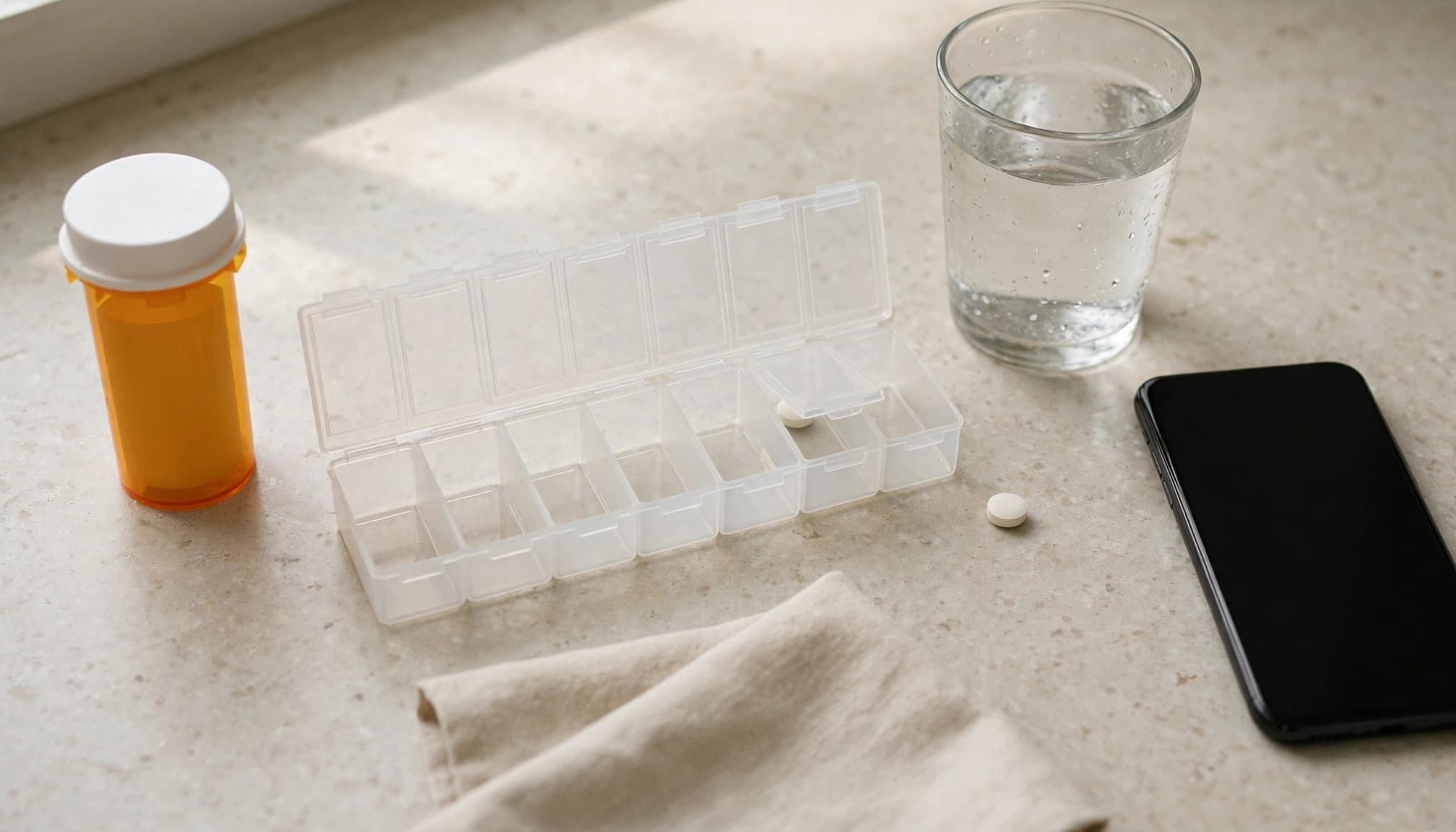
Seek guidance without trying home remedies
Poison Control's guidance on double dosing directs people to telephone or online assessment after medication mistakes. Feeling well doesn't establish that the amount was safe.
There is no universal instruction to skip, delay, or take the next scheduled dose after a medication error.
Don't induce vomiting. Food, water, and electrolyte solutions aren't antidotes. If you need to stay hydrated, ask a professional which fluids are appropriate.
Report any symptoms, including gastrointestinal symptoms or severe nausea, to the assessment service. These symptoms don't always require emergency services, but they can affect the advice you receive.
Anyone who becomes dizzy, confused, or unusually sleepy shouldn't drive. A nearby caregiver can help collect details and communicate with the assessment service.
When Poison Control or Emergency Services Is Needed
The person's condition determines which service comes first.
| Situation | Appropriate response |
|---|---|
| Collapse, seizure, trouble breathing, or inability to awaken | Call 911 immediately in the USA for emergency medical attention. |
| Suspected extra dose without life-threatening symptoms | Contact poison control promptly for assessment. |
| New or worsening symptoms after receiving instructions | Follow the escalation plan or seek emergency help if symptoms are severe. |
An online assessment must never delay emergency care. A pharmacy support message isn't a substitute for emergency services or the poison-information service.
The assessor may recommend observation at home, supportive care, further telephone assessment, or an emergency department evaluation. The recommendation depends on the exposure, not simply the phrase "double dose."
Changes in alertness or breathing are especially concerning with some drug classes. Severe dizziness and a risk of fainting also warrant prompt assessment. For example, MedlinePlus's morphine overdose guidance describes the dangers of opioid overdose. Opioids act on receptors that can suppress breathing as well as relieve pain.
Outside the USA, local emergency numbers and poison-information arrangements differ. Patients abroad need the service operating where they are physically located, rather than assuming a U.S. telephone number will connect locally.
The assessor should also know whether several medicines were involved, whether the amount is uncertain, or whether someone took another person's prescription.
Why the Medication and Patient Details Matter
Strength, drug class, and release pattern change the assessment
"One extra pill" isn't a complete description of an exposure. Tablets containing different strengths can deliver substantially different amounts of the same medicine.
Drug classes also affect different body systems. Blood-pressure medicines act through mechanisms involving blood vessels, fluid balance, or heart function, and may cause low blood pressure. Diabetes treatments, including those for type 2 diabetes, can affect blood sugar and blood glucose through several distinct pathways. These differences prevent a single observation plan from fitting every prescription medicine.
Formulation matters as well. Immediate-release and extended-release products deliver medication differently, so their names and identifying abbreviations belong in the report.
An extra dose increases exposure, but the risk is assessed in context, including the prescribed therapeutic dose. Effects don't simply double.
Clearance, health conditions, and other medicines affect risk
The body absorbs, distributes, metabolizes, and clears medicines at different rates. A drug's half life describes how long its concentration takes to fall by half under defined conditions. It doesn't establish a safe waiting period after an overdose.
Kidney or liver impairment can alter the clearance of some medicines. Age, weight, pregnancy, and existing health conditions may also affect assessment. Recent blood sugar and blood glucose readings can help explain how diabetes medicines are affecting levels.
Other prescriptions, over-the-counter medicines, supplements, and alcohol are relevant because combinations can change effects. Symptoms and side effects, including severe nausea, may also matter to an individualized assessment. The assessor needs the full medication history, including recent changes.
Patients receiving transplant medicines, cancer treatment, or complex chronic-disease regimens also need coordination with their healthcare provider and treating team. General dosing advice can't replace the treatment-specific plan.
What Happens to the Next Scheduled Dose
The next dose is often the most pressing question after the initial call. There isn't a universal answer.
The decision may depend on the medication, total amount, time elapsed, symptoms, and risks of interrupting treatment. A missed dose instruction on the package doesn't automatically resolve an extra-dose error or determine whether to follow the normal schedule.
The written plan should specify the next permitted dose and time, required monitoring, and warning symptoms. For medicines that affect blood sugar, follow the case-specific monitoring instructions. If the next dose approaches without clear instructions, contact a healthcare provider rather than guessing how to adjust the dosing schedule.

A caregiver can record the advice, including the service contacted and the time of the conversation. That record helps prevent another household member from giving a dose according to the original schedule.
If vomiting occurs, repeating the medicine without guidance can cause another dosing error because the amount absorbed is uncertain.
The dispensing pharmacist and prescribing clinician can then reconcile the ongoing schedule. Their follow-up role complements, rather than replaces, immediate poison assessment.
How to Access Ongoing Prescription Treatment Affordably
Cost concerns belong in follow-up planning, not in decisions about delaying emergency care. U.S. Poison Control advice is free, although ambulance, hospital, and laboratory charges are separate.
For ongoing treatment, a meaningful local-versus-international comparison matches the active ingredient, strength, formulation, quantity, and prescription requirements. A generic option is a discussion for the pharmacist or prescriber, not a reason to substitute products independently after an error.
An online pharmacy should require a valid prescription and provide access to a licensed pharmacist. With online medicine home delivery, the total price should include dispensing and shipping charges, including medicine delivery costs to the USA.
Global sourcing also involves destination-country rules. The USA, UK, and Australia have different prescribing, reimbursement, and import systems. Approval in another country doesn't automatically establish FDA approval for U.S. sale.
For cancer or transplant medicines, affordability discussions must preserve continuity of treatment and the clinician's dosing plan. A lower advertised price doesn't settle questions about authenticity, lawful access, or safe substitution.
How to Prevent Another Dosing Mistake
Record administration, not just reminders
A phone alarm confirms that a reminder occurred; it doesn't confirm that someone swallowed or injected the medicine.
A medication log should record administration immediately afterward. Weekly injections also need the date, dose, and device details, because a daily routine may not capture their schedule.
Pill organizers can help when the pharmacist confirms that the medicine is suitable for repackaging. Some products need their original container or particular storage conditions.
The original label and current prescription instructions should remain available even when a separate organizer is used. That information becomes especially important after a strength change or refill from a different manufacturer.
Give caregivers one shared source of information
When several relatives help with treatment, separate notes can lead to duplicate doses. One shared administration record makes the latest dose visible to everyone involved.
The caregiver arranging a refill should distinguish supply management from administration. Ordering a medicine, receiving a delivery, and giving a dose are separate events.
Secure storage also reduces confusion and access by children or visitors. Medicines shouldn't sit in shared bathroom or kitchen spaces where another person might mistake them for their own.
If a tablet, label, or strength differs unexpectedly, the dispensing pharmacist should verify the product before it enters the routine.
Frequently Asked Questions
What if there are no symptoms after an extra dose?
No symptoms doesn't establish safety. The assessor considers the medicine, amount, timing, and patient details before recommending observation or treatment. Report symptoms such as severe nausea, but don't wait for them before seeking guidance. Monitor at home only if case-specific guidance supports it.
How long can the effects of an extra dose last?
Duration depends on the medicine, formulation, amount, and how quickly the body clears it. A published peak effect or half-life isn't an all-clear time after a dosing error. The center or treating clinician can recommend an observation period and any follow-up tests.
Does the same advice apply to Adderall, lisinopril, and tirzepatide?
The initial steps are the same after a double dose: check for emergency symptoms, identify the exact product and amount, and get prompt assessment. But these medicines have different effects and schedules. Adderall is a controlled substance in the U.S.; tirzepatide may cause gastrointestinal symptoms and affect blood sugar. Advice for one medicine can't determine monitoring or the next dose for another.
What if a child took someone else's prescription medicine?
Contact the service promptly with the child's age, weight, product details, estimated amount, and timing. An adult's usual dose doesn't establish safety for a child. Collapse, seizures, breathing difficulty, or inability to awaken require emergency services, not an online assessment or pharmacy message.
How much does Poison Control advice cost?
Telephone and online poison control guidance in the USA is free and available around the clock. The service can assess whether additional care is needed. Ambulance, emergency department, testing, and treatment costs are separate and depend on the care provided and insurance arrangements.
Conclusion: The Exact Exposure Determines the Response
An accidental extra dose needs an assessment of the actual medicine and exposure. Symptoms identify emergencies, but feeling well doesn't remove the need for prompt guidance.
The strongest safeguards are an accurate medication record, case-specific next-dose instructions, and clear communication among patients, caregivers, pharmacists, and clinicians. After the immediate risk assessment, those same details help restore a reliable treatment schedule without introducing another mistake.