
Antibiotics and Birth Control: Which Ones Matter?

If you've ever picked up an antibiotic and heard, "Use backup birth control just in case," you're not alone. That warning has circulated for years, and it still causes a lot of confusion.
The short answer is reassuring: most common antibiotics do not make hormonal birth control less effective. Still, a few important exceptions exist, and being sick can create separate problems. The details matter, especially when you're filling a prescription online or in person and need a clear answer fast.
Do antibiotics make birth control less effective? Here is the short answer
Current evidence shows that most antibiotics do not lower the effectiveness of hormonal birth control, including the pill, patch, and ring. That applies to the antibiotics commonly used for sinus infections, strep throat, acne, dental infections, and many skin infections.
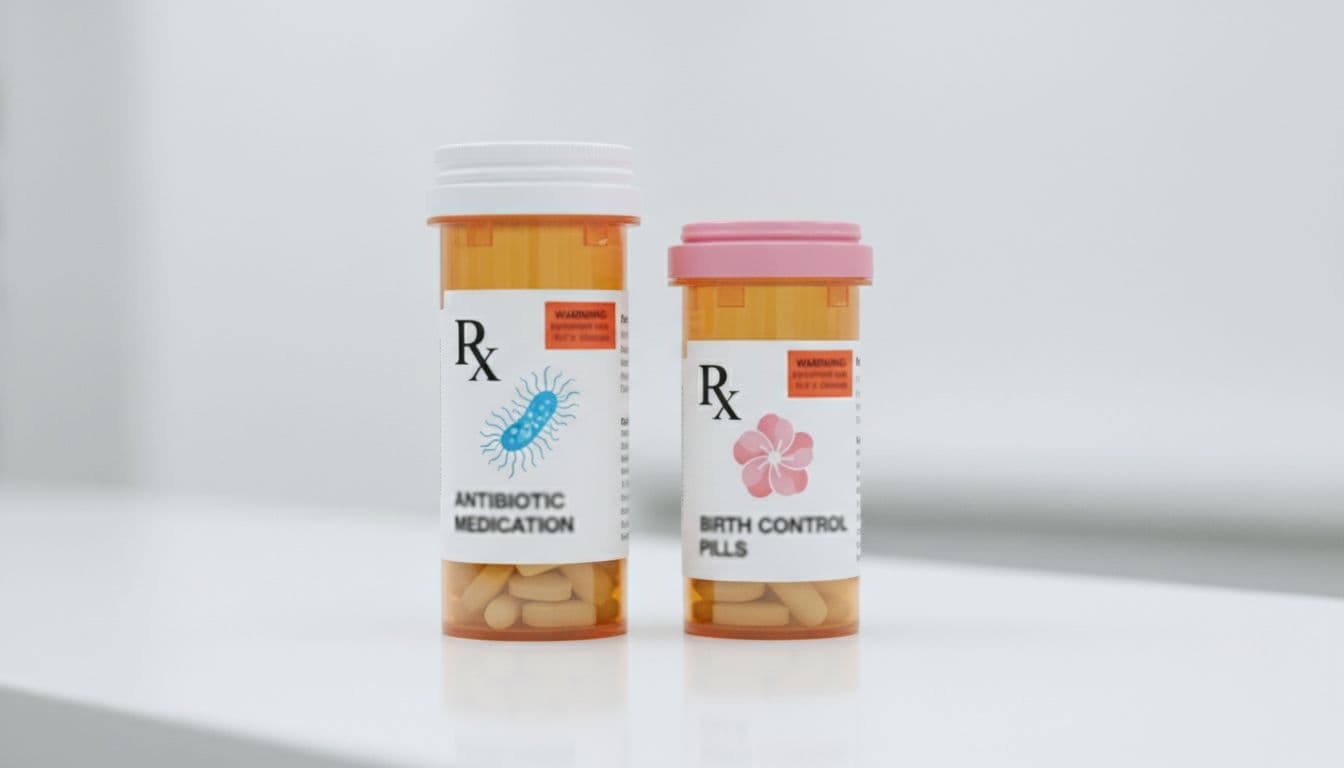
Older advice often treated all antibiotics as a concern. However, newer research and public health guidance support a narrower answer. A CDC review of rifamycin and hormonal contraception and later summaries both point to the same main finding: only a small group of antibiotics has a proven, meaningful interaction.
For most routine antibiotics, the antibiotic itself usually isn't the reason birth control fails.
Even so, every new prescription still deserves a quick check with a pharmacist. Drug interactions are rarely one-size-fits-all, and your full medication list matters.
The antibiotics that are known to cause a real interaction
The main antibiotics known to reduce hormonal birth control effectiveness are rifampin and rifabutin. These drugs increase how quickly the body breaks down birth control hormones. As hormone levels fall, pregnancy protection may drop.
These medicines are not typical treatment for ear infections or common sore throats. They are more often used for tuberculosis and certain serious infections. Because of that, many patients on routine antibiotics never encounter this interaction.
Common antibiotics that usually do not affect the pill, patch, or ring
Common antibiotics such as amoxicillin, penicillin, azithromycin, and doxycycline do not appear to cause a meaningful drop in contraceptive protection for most users. That finding has been reviewed more than once, including in an NIH-hosted review of antibiotic and oral contraceptive interactions.
Past package warnings and older counseling habits caused much of the confusion. However, current guidance is more specific. If a patient takes a standard antibiotic for a routine infection, extra contraception is usually not needed because of the antibiotic alone.
When you may still need backup birth control
This is where many people get mixed signals. Sometimes backup protection is smart, but not for the reason many expect. The issue may be the illness, missed doses, or a true interacting drug.
If you are prescribed rifampin or rifabutin
If a prescriber starts rifampin or rifabutin, use a backup method such as condoms while taking the medicine. In many cases, backup should continue for at least 7 days after the last dose, unless your prescriber gives a different plan.
Longer treatment may call for a non-hormonal method for a period of time. That can matter if therapy lasts weeks or months. In that setting, direct counseling from a pharmacist or prescriber is the safest choice.
If illness causes vomiting, diarrhea, or missed birth control pills
Vomiting and diarrhea can reduce birth control protection because pills may not absorb well. Missing doses during an illness can raise risk too. This is different from a direct antibiotic interaction, but the result may still be lower protection.
The risk is higher when vomiting or severe diarrhea lasts more than 24 hours. Follow the instructions that came with your birth control for missed pills. If you're unsure, use backup protection until you get clear advice. People managing refills online often benefit from keeping birth control options at Waldrugmart and other medicines in one account so refill timing and supplies are easier to track.
How to protect yourself and when to call a pharmacist or doctor
Good protection usually comes down to a few simple habits. Read the prescription label, review the medication guide, and ask about interactions before the first dose. In addition, using one pharmacy when possible makes it easier for medication records to be checked together.

This matters