
Biotin Blood Test Interference: Thyroid and Heart Risks

Biotin supplements can interfere with thyroid and heart blood tests, producing falsely high or unexpectedly low results. This interference affects certain laboratory methods rather than the actual hormone or cardiac-marker concentration being measured.
The greatest danger is a falsely low troponin result, which can delay recognition of a heart attack. Thyroid results can also resemble hyperthyroidism when thyroid function is normal.
The risk depends on the supplement dose, the timing of the last dose, and the laboratory's testing method.
Table of contents
- Key takeaways
- Supplement sources and doses
- How interference happens
- Affected and unaffected tests
- Thyroid and heart risks
- Stopping times
- Preparing for testing
- Costs and medication safety
- Frequently asked questions
Key takeaways
- High-dose biotin can disrupt susceptible immunoassays, even when the supplement causes no noticeable symptoms.
- Thyroid tests, cardiac-marker testing, and several hormone and tumor-marker tests can be affected, but routine chemistry tests generally aren't.
- Supplement pauses often range between 12 and 72 hours. Some circumstances require longer, and no interval suits every assay.
- Emergency care must never wait for biotin to clear. The emergency team needs the product name, dose, and last-dose time.
Where supplemental biotin comes from
Biotin, also called vitamin B7, supports normal metabolism. It isn't a thyroid medicine or a treatment for heart disease. Deficiency may require supplementation, but high-dose beauty supplements create a separate testing concern.
Nutritional amounts versus beauty-supplement doses
Daily adequate intake ranges from 5 micrograms in early infancy to 35 micrograms during breastfeeding. Daily biotin recommendations for most adults, including during pregnancy, are 30 micrograms.
By comparison, a 5-milligram supplement contains 5,000 micrograms. One milligram equals 1,000 micrograms, a distinction that matters when recording supplement doses.
The FDA has warned that some hair, skin and nail supplements contain up to 650 times the adult daily intake. These amounts greatly exceed ordinary nutritional requirements.
Labels and food sources
Labels may list biotin as vitamin B7, vitamin H, or coenzyme R. Standalone tablets, beauty gummies, multivitamins, and prenatal products can contain it.
Combination products, including breastfeeding multivitamins, belong on the medication record with their full ingredient lists.
Eggs, sweet potatoes, mushrooms, and spinach also provide biotin. Normal dietary intake doesn't usually cause this laboratory problem, so avoiding these foods isn't generally necessary.
How biotin blood test interference happens
Some immunoassays use antibodies to measure substances in blood. Their detection system relies on biotin-streptavidin binding, the strong attraction between biotin and the protein streptavidin.
Excess biotin in patient samples can disrupt this binding and compete with the test's own reagents. As a result, the instrument reports an inaccurate concentration.
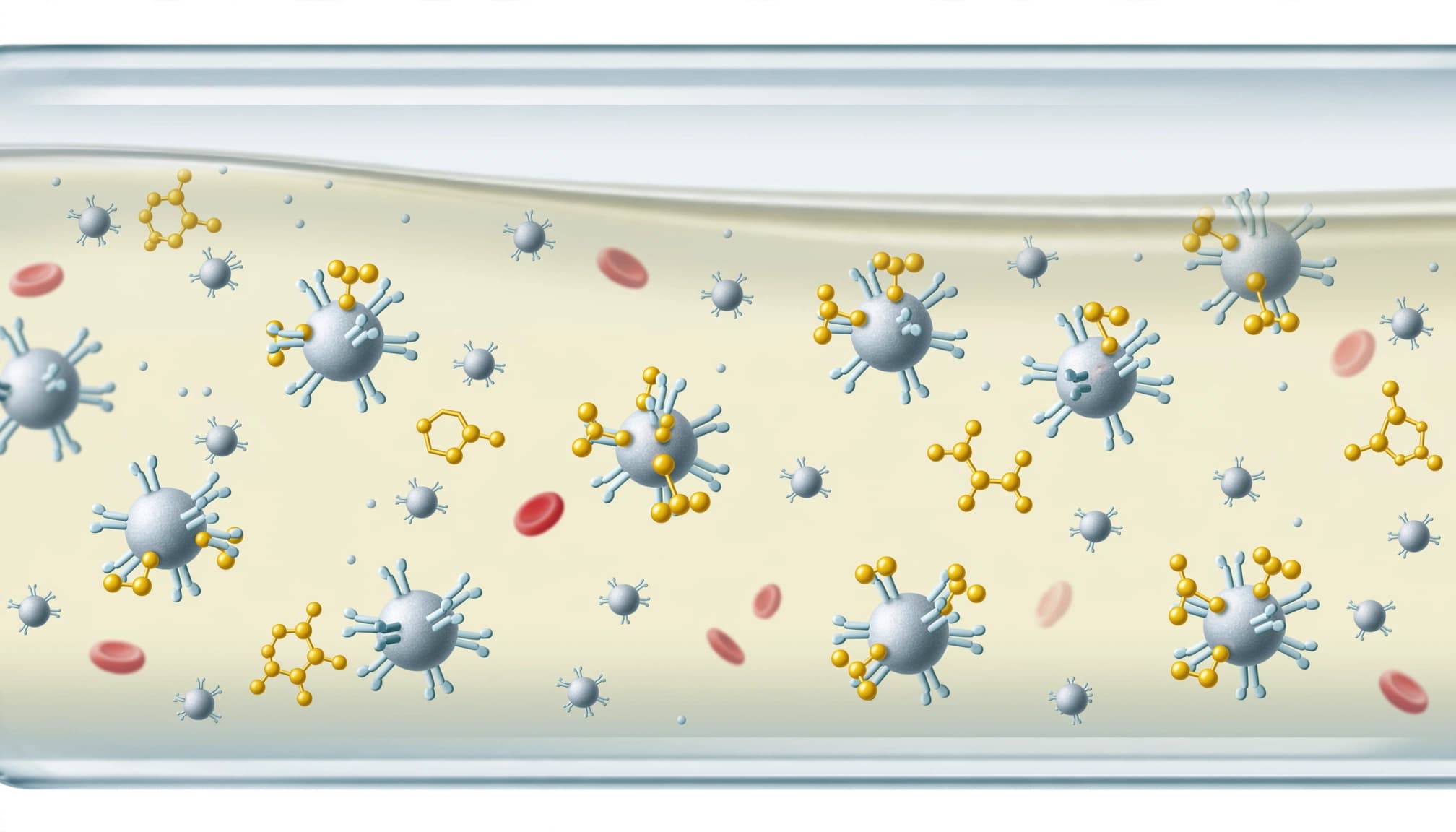
Sandwich assays can report below the true concentration
In a sandwich assay, the detection signal normally increases as the measured substance increases. Excess biotin can prevent proper capture of the antibody complex.
Susceptible TSH and cardiac-marker assays may therefore report values below the true concentration.
Competitive assays can read falsely high
Competitive assays interpret their signal differently. In these methods, biotin-related disruption can produce an apparently elevated concentration.
Free T4 and free T3 are examples. A review of biotin-sensitive immunoassays explains why the direction depends on assay design.
This interference doesn't itself establish that thyroid hormone production increased or that heart injury decreased. It is a measurement error.
Which blood tests can be affected?
The test name alone doesn't establish susceptibility because assay methods differ and can produce incorrect test results. Some manufacturers have redesigned assays to reduce interference.
The main categories compare as follows.
| Test or category | Possible effect in susceptible methods |
|---|---|
| TSH | Falsely low |
| Free T3 and free T4 | Falsely high |
| Cardiac-marker test | Can read below the true value |
| Hormone tests, including testosterone, estradiol, progesterone, and cortisol | Direction depends on assay design |
| CA 15-3 and other tumor markers | Method-dependent false results |
| Ferritin and parathyroid hormone (PTH) | Often underreported in susceptible sandwich assays |
| Blood hCG pregnancy testing | Can be reported below the true value in susceptible assays |
| Electrolytes, urea, creatinine, basic liver chemistry | Generally unaffected by this mechanism |
Routine chemistry methods generally don't use the same biotin-streptavidin system. Standard blood counts also aren't typical targets of this interference.
Normal kidney chemistry doesn't establish that a thyroid or cardiac-marker result is reliable. Each measurement requires its own method assessment.
For cancer monitoring, an unexpected tumor-marker result may require laboratory review before clinicians interpret it as a treatment response or disease progression. Biotin doesn't affect every tumor-marker test, and it doesn't invalidate an entire blood sample.
Why thyroid and heart results need special care

Thyroid results can resemble hyperthyroidism
A falsely low TSH combined with falsely high free T4 or free T3 can resemble an overactive thyroid. This pattern may prompt unnecessary investigation, misdiagnosis, or an inappropriate medication change.
The distinction matters during treatment with methimazole, which reduces thyroid hormone production, or levothyroxine, which replaces it. Clinicians use thyroid tests to adjust these medicines.
Lithium monitoring also includes thyroid testing because lithium can cause genuine thyroid dysfunction. An abnormal result needs assessment for both thyroid disease and possible assay interference.
Troponin interference can obscure heart injury
Troponin helps clinicians identify heart muscle injury. An underreported cardiac-marker result can delay diagnosis of a heart attack, particularly when clinicians don't know about supplement use.
The FDA issued a safety communication in November 2017 and updated it in 2019. The FDA safety alert described increasing adverse events associated with assay interference, including a death after an inaccurately low cardiac-marker result. A clinical report on biotin-related laboratory errors discusses the warning.
Chest pain, severe breathlessness, or other possible heart-attack symptoms require emergency assessment immediately. Biotin disclosure should happen during care, without delaying it.
Some assays for the cardiac marker resist biotin interference better than others. Emergency teams can interpret symptoms, ECG findings, and laboratory methods together.
How long should biotin be stopped before testing?
For scheduled testing, clinicians often recommend a pause of 12 to 72 hours. Advice that one day is always sufficient is too broad.
When to stop biotin before blood test collection depends on the dose and assay. The AACC laboratory guidance distinguishes between them.
| Biotin exposure | Guidance for planned testing |
|---|---|
| Ordinary dietary or nutritional amounts | Usually don't cause interference; follow test-specific instructions |
| Supplements containing 5 to 10 mg | At least 8 hours under AACC guidance; sensitive assays may require up to 72 hours |
| Therapeutic doses of 100 mg daily or more | At least 72 hours under AACC guidance, with longer intervals sometimes needed |
The eight-hour recommendation is a minimum for a defined exposure, not a universal guarantee. A 24-hour pause may work for some methods but remain inadequate for others.
Kidney impairment can delay biotin clearance. Repeated large doses and highly sensitive assays may also require several days.
The FDA hasn't established one stopping interval that guarantees accurate results across all assays. The ordering clinician and laboratory should determine the interval for the specific assay.
Anyone taking prescribed high-dose biotin should consult their treating clinician before stopping it. Urgent testing should proceed with disclosure and appropriate laboratory precautions rather than waiting through a supplement pause.
What to do before a blood draw
Preparation starts with a complete medication record, including supplements that patients may not regard as medicines.

- Record every supplement's name, biotin amount per serving, daily servings, and last-dose time.
- Tell the ordering clinician, phlebotomist, and other healthcare providers about biotin before collection. Bring the bottle or clear photographs of the supplement labels.
- Get a test-specific pause plan. Fasting and stopping biotin are separate instructions.
- Keep prescription medicines unchanged unless the treating clinician directs otherwise.
If results conflict with symptoms, previous measurements, or treatment history, the clinician can ask the laboratory to investigate. Options include repeat sampling after an appropriate interval or testing with a method that doesn't use biotin capture.
Published recommendations for managing suspected interference emphasize the mismatch between laboratory results and clinical findings. However, supplement use alone doesn't prove that an abnormal result is false.
This information is for educational purposes only. Patients should consult a licensed healthcare provider about supplement pauses, unusual results, and medication decisions.
Costs, access, and medication safety
Biotin interference can create avoidable repeat blood draws, extra appointments, and inappropriate treatment changes. Documenting supplements before testing can reduce those problems without purchasing a replacement product.
Local and international supplement prices don't establish laboratory safety. The dose and assay determine interference risk, whether a product comes from a neighborhood store or an international online pharmacy.
Our Online Pharmacy offers pharmacist consultation and prescription support. A consultation can help reconcile supplements with a prescription medicine list before laboratory testing; the testing clinician still determines the collection plan.
Global sourcing and online medicine home delivery don't change prescription requirements or the need for monitoring. Patients taking thyroid medicines, cancer treatments, or immunosuppressants should maintain their prescribed monitoring schedule.
There is no universal cost for resolving interference. Some cases need only a medication-history review; others require repeat or alternative testing. Pharmacy price comparisons can't substitute for that clinical assessment.
Frequently asked questions
Can biotin cause a falsely negative pregnancy test?
Yes, some pregnancy tests that use susceptible laboratory hCG assays can report results lower than the true value. The risk depends on the specific assay and doesn't apply uniformly to home urine tests. When pregnancy is possible despite a negative result, clinicians can select an appropriate repeat or alternative test.
Can vitamins be taken before a fasting blood test?
Fasting instructions and biotin precautions address different issues. A vitamin may contain biotin even when it has no meaningful calories. The clinician's preparation plan should cover both food restrictions and supplements. Patients shouldn't assume that fasting overnight removes biotin interference from a previous dose.
Does biotin interact with levothyroxine or methimazole?
The concern discussed here is distortion of the blood tests used to guide treatment. An apparent thyroid change doesn't justify adjusting either medicine without assessment. Combination supplements may also contain iron or calcium, which can reduce levothyroxine absorption and require a separate dose-spacing plan.
Can an abnormal result be corrected without another blood draw?
Sometimes. A laboratory may have an alternative method that doesn't depend on biotin-streptavidin binding or a validated procedure for handling interference. In other cases, clinicians need a new sample after an appropriate pause. Simply rerunning the same susceptible assay may reproduce the error.
Does everyone need to stop biotin permanently?
No. The appropriate decision depends on the reason for supplementation, dose, and planned tests. A patient treated for confirmed deficiency or another medical indication needs an individualized plan. Ordinary food intake usually doesn't require restriction, and prescribed high-dose treatment shouldn't stop without clinical supervision.
Accurate results depend on the method
Biotin blood test interference is preventable in many situations when clinicians know the supplement dose and laboratory method. Different methods can make lab test results more or less susceptible to interference, even with the same product.
The strongest safeguard is accurate supplement disclosure before testing. If a result conflicts with the clinical picture, ask the laboratory to review the assay method and help distinguish a measurement problem from a genuine change in health.