
BPH Medications: Alpha Blockers vs. 5-ARIs

Benign prostatic hyperplasia (BPH) is a noncancerous enlarged prostate. Alpha blockers ease urinary symptoms by relaxing muscle around the outlet, often within days to weeks. 5-alpha-reductase inhibitors (5-ARIs) shrink the prostate gradually and can reduce the risks of urinary retention and surgery.
These treatments aren't interchangeable. Symptoms, prostate size, blood pressure, other health conditions, sexual side effects, and personal preferences all affect the choice. The central trade-off is faster relief versus long-term control.
Alpha blockers improve urine flow without shrinking the prostate. 5-ARIs reduce prostate growth gradually and can lower the risk of progression. Some men benefit from taking both classes together.
Table of Contents
- Key Takeaways
- What BPH Medications Treat
- Alpha Blockers: Faster Symptom Relief
- 5-Alpha-Reductase Inhibitors: Gradual Prostate Shrinkage
- Choosing Combination Therapy or Tadalafil
- How to Access BPH Treatment Affordably
- When Medicines Give Way to Procedures
- Frequently Asked Questions
- Conclusion
Key Takeaways
- Alpha blockers work quickly but don't prevent prostate growth.
- 5-ARIs suit men with demonstrable enlargement and reduce progression risk.
- Combination therapy offers complementary benefits, although side effects can add up.
- Prescription choice depends on examination findings, symptom burden, other medicines, and treatment preferences.
What BPH Medications Treat
Benign prostatic hyperplasia, or BPH, is noncancerous prostate enlargement. It doesn't increase prostate cancer risk, although both conditions can occur together.
Symptoms include a weak or slow stream, difficulty starting urination, dribbling, and incomplete emptying. Waking twice or more nightly is common, but nighttime urination can also reflect sleep disorders, diabetes, or bladder problems.
According to the NIDDK's enlarged-prostate guidance, examination and test results help determine treatment. Evaluation can include a digital rectal examination, urine testing, blood tests, and a PSA test when appropriate. Urine-flow testing, ultrasound, or cystoscopy may help clarify obstruction; not everyone needs every test.
The main medication differences are straightforward.
| Feature | Alpha blockers | 5-alpha-reductase inhibitors |
|---|---|---|
| Main action | Relax prostate and bladder-neck muscle | Reduce hormone-driven prostate growth |
| Typical onset | Days to weeks | Months |
| Shrink the prostate | No | Yes |
| Reduce retention and surgery risk | Not established | Yes, in suitable patients |
Prostate size and symptom severity don't always match, so neither alone determines treatment.
Alpha Blockers: Faster Symptom Relief
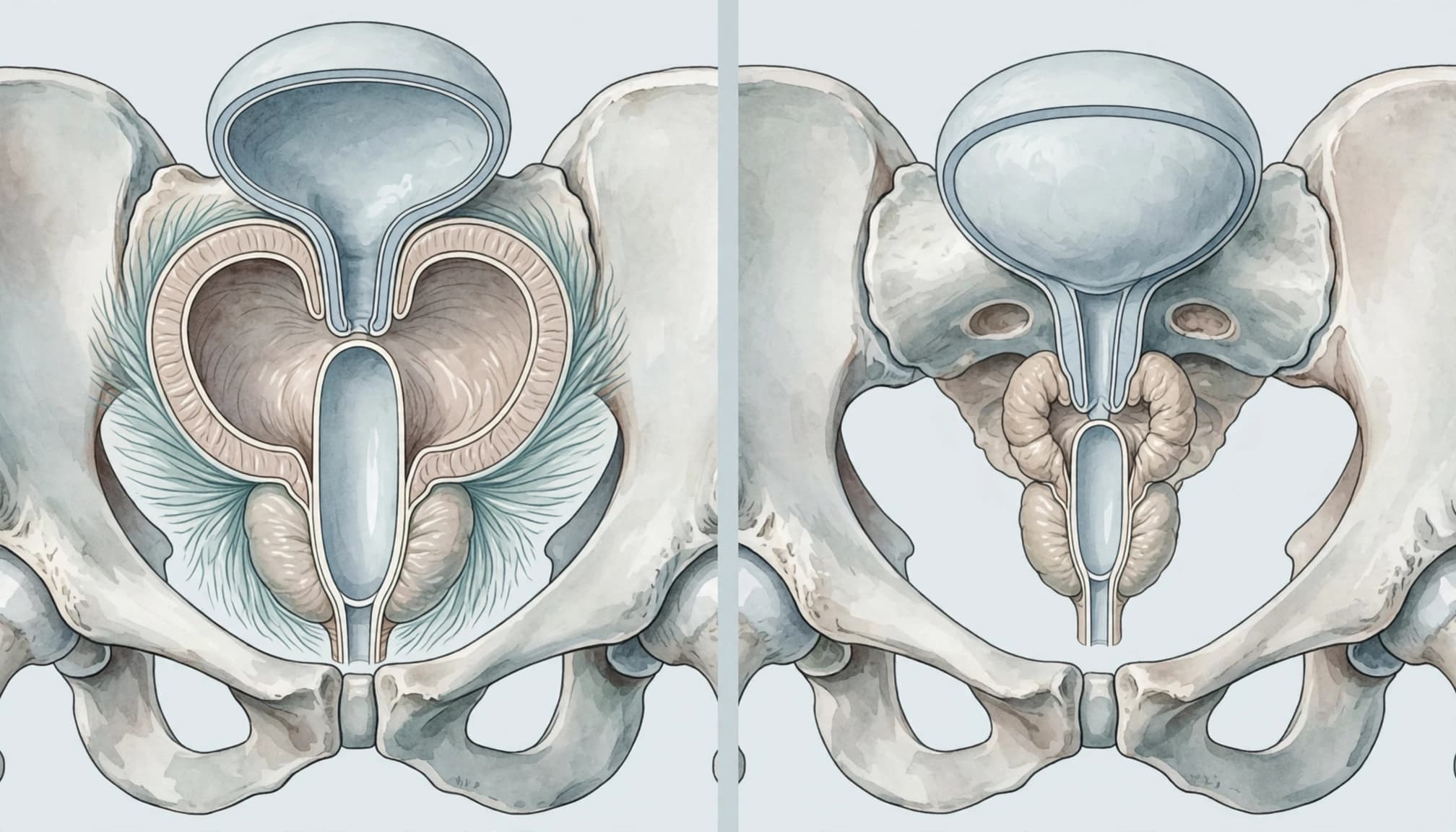
How they work and which drugs belong
These alpha-blockers reduce smooth-muscle tension in the prostate and bladder neck. This lowers resistance to urine flow without removing tissue or changing prostate size.
Examples are tamsulosin (Flomax), alfuzosin (Uroxatral), doxazosin (Cardura), terazosin (Hytrin), and silodosin (Rapaflo). Our alfuzosin medication information describes one option in this class.
Improvement can begin within several days, although a clearer response often takes two to four weeks. These BPH medications can help even when enlargement is modest, provided muscle tension contributes to symptoms.
Blood-pressure and ejaculation effects
Dizziness, lightheadedness, low blood pressure, and fatigue are important early effects. Doxazosin and terazosin generally affect blood pressure more than prostate-selective agents.
Slow position changes can reduce lightheadedness. Fainting or persistent dizziness requires medical review rather than an unsupervised dose change.
Tamsulosin and silodosin more often affect ejaculation. Changes include reduced or absent semen and sometimes retrograde ejaculation, where semen enters the bladder. These changes are generally harmless, although they can affect fertility and sexual satisfaction.
Eye surgeons also need to know about current or previous alpha-blocker use before cataract surgery.
5-Alpha-Reductase Inhibitors: Gradual Prostate Shrinkage
How hormone suppression changes the gland
Finasteride (Proscar) and dutasteride (Avodart) are 5-alpha reductase inhibitors, or 5-ARIs. They block the conversion of testosterone into dihydrotestosterone, or DHT. Because DHT supports prostate growth, reducing it can shrink an enlarged gland.
Benefits usually build over three to six months, and fuller improvement can take six to nine months. An early lack of symptom relief doesn't establish treatment failure.
The American Urological Association guideline supports these medicines when enlargement is evident, such as prostate volume above 30 grams on imaging, PSA above 1.5 ng/mL, or palpable enlargement. PSA is only one part of that assessment, not a diagnosis by itself.
Sexual effects and PSA interpretation
Reduced libido, erectile dysfunction, and ejaculation changes can occur. Breast tenderness or enlargement also warrants discussion. Report headaches or mood changes; depression or suicidal thoughts need prompt medical attention.
These drugs also lower PSA, commonly by about half after several months. Clinicians must account for treatment when interpreting results. A rise from the treated PSA baseline may need investigation, even when the laboratory labels the value normal.
Pregnant people should avoid handling crushed or broken finasteride tablets or leaking capsules of the other medicine because exposure can harm a male fetus.
Choosing Combination Therapy or Tadalafil

When two classes make sense
For bothersome symptoms and demonstrable prostate enlargement, an alpha blocker can provide earlier relief while a 5-ARI gradually changes prostate size.
The AUA's medical management recommendations distinguish symptom relief from prevention of disease progression. Combination treatment can provide greater long-term benefit for appropriately selected men, but it also exposes them to adverse effects from both classes.
Jalyn combination medication information covers dutasteride with tamsulosin in one capsule. Separate tablets are another prescribing option. Neither approach makes combination therapy appropriate for every patient.
Where tadalafil fits
Tadalafil (Cialis) belongs to a class of medicines called PDE5 inhibitors and can improve urinary symptoms and erectile dysfunction. The BPH regimen is 5 mg once daily, rather than an occasional higher dose before sexual activity. Our prescription information covers its uses.
The medicine doesn't shrink the prostate. Common effects include headache, flushing, indigestion, and back pain. Nitrates such as nitroglycerin must not be combined with it because blood pressure can fall dangerously.
Combining it with an alpha blocker requires clinician oversight because both medicines can lower blood pressure. Heavy alcohol consumption can worsen dizziness.
How to Access BPH Treatment Affordably
Generic versions generally cost less than branded medicines, but strength, quantity, insurance coverage, and dispensing fees affect the final bill.
Our listed 0.5 mg capsule option costs US$32.04 for 30 capsules. The listed dutasteride/tamsulosin combination costs US$51.00 for 30 capsules at 0.5/0.4 mg. These prices don't include delivery.
USA insurance copays, UK prescription charges, and Australian subsidized prices aren't directly comparable with international cash prices. For a meaningful comparison, use the same active ingredients, strength, formulation, and treatment duration, then include delivery charges.
Our Online Pharmacy requires a valid, legible prescription from a licensed physician. Prescription medicine should remain part of an ongoing treatment plan that includes necessary monitoring.
Safe online medicine home delivery also depends on licensed dispensing, identifiable packaging, pharmacist support, and destination-country rules. Global sourcing doesn't remove these requirements. Importing an overseas medicine into the USA isn't automatically lawful because you have a prescription. FDA personal-importation exceptions are limited.
Medicine delivery costs to the USA vary by product and order. A low advertised tablet price alone doesn't establish a lower total cost.
When Medicines Give Way to Procedures
Persistent symptoms deserve reassessment by a urologist. Missed doses, interacting medicines, infection, bladder dysfunction, or increasing obstruction may explain a poor response.
Procedures include UroLift implants, which hold tissue away from the urethra, and Rezum water-vapor therapy, which treats obstructing tissue. GreenLight laser vaporizes tissue, while prostatic artery embolization reduces its blood supply. UroLift and Rezum are minimally invasive alternatives to TURP for some patients.
Transurethral resection of the prostate, or TURP, removes tissue through a scope. It's a well-established option for substantial obstruction or severe symptoms.
Meanwhile, reducing caffeine, alcohol, and chocolate may help sensitive bladders. Limiting evening fluids and timed voiding every 1.5 to 2 hours can reduce some symptoms without replacing necessary treatment.
Inability to pass urine requires urgent care. Fever with urinary symptoms, visible blood, recurrent infections, or kidney impairment also needs prompt assessment.
Frequently Asked Questions
Can Flomax be taken every other day?
Tamsulosin is normally prescribed once daily, consistently after the same meal. Every-other-day dosing isn't the standard approved regimen and may produce less reliable relief. A prescriber may consider a different dose or medicine when adverse effects occur; patients shouldn't change the schedule independently.
How long does alfuzosin take to work?
Some men notice improvement within several days, while others need two to four weeks to judge the response. Alfuzosin relaxes muscle rather than shrinking the gland. Extended-release tablets are generally taken after the same meal daily and swallowed whole, following the prescription label.
Can BPH medications cause erectile dysfunction?
Yes. Finasteride and other 5-ARIs can cause erectile dysfunction and reduced sexual desire. Alpha blockers more often affect ejaculation than erections, although experiences vary. A PDE5 inhibitor may improve both urinary symptoms and erectile function. Sexual changes deserve discussion because another treatment may offer a better balance.
Is combining an alpha blocker with a 5-ARI safe?
The combination is established treatment for men with bothersome symptoms and demonstrable enlargement. Safety depends on blood pressure, other medicines, and tolerance of sexual effects. It isn't automatically preferable for a small prostate. Follow-up assesses symptom improvement and whether the additional treatment remains justified.
Is it safe to order BPH prescription drugs online?
Online dispensing can be appropriate when a licensed pharmacy requires a valid prescription and provides pharmacist access. Sellers offering prescription drugs without prescriptions create avoidable risks. Cross-border orders add regulatory and delivery considerations, so online availability alone doesn't establish lawful access or suitability for treatment.
Conclusion
BPH medications differ most in what they change: alpha blockers reduce muscle tension, while 5-ARIs gradually reduce hormone-driven enlargement. The appropriate choice depends on the treatment goal, alongside prostate size and tolerability.
This information is for educational purposes only. Consult a licensed healthcare provider for diagnosis and individualized prescribing; symptom relief and prevention of future obstruction require different judgments.