
Can Blood Thinners Cause Easy Bruising? When to Seek Help
Written by: Waldrugmart Editorial Team
Reviewed by: Navdeep Singh, B.Pharm — Registered Pharmacist
Last reviewed:
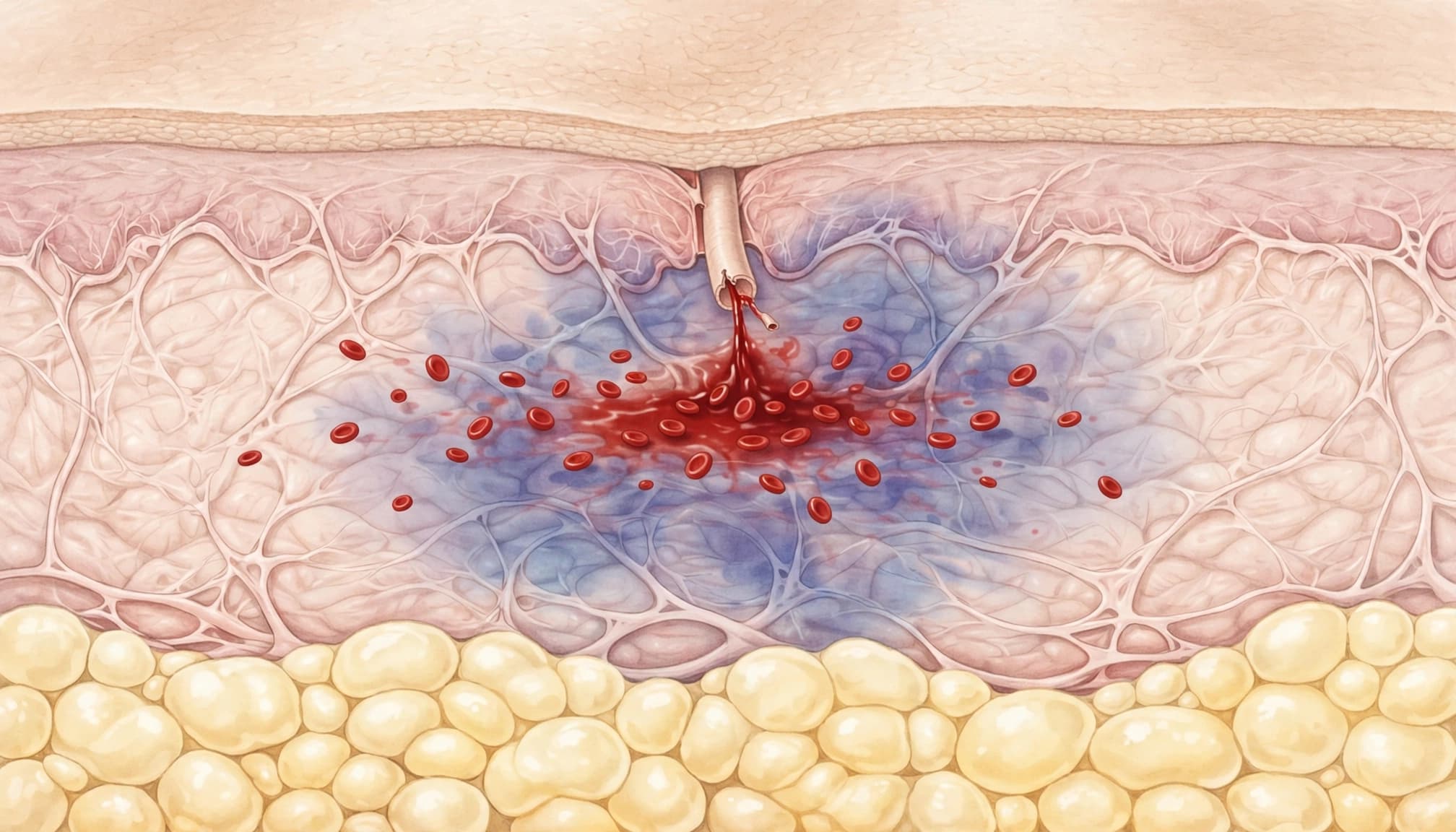
The search phrase "blood thinners bruising" reflects a common question. Yes, these medicines can cause larger, darker, or more frequent bruises because clotting takes longer. Mild bruising alone doesn't mean the medicine is too strong or the dose is wrong.
Large, unexplained, or spreading bruises need medical assessment, especially alongside other bleeding symptoms. The distinction depends on how the bruise develops and what accompanies it.
This information is for educational purposes only; new or worsening bruising warrants consultation with a licensed healthcare provider.
Table of Contents
- Key takeaways
- Why blood thinners cause bruising
- When bruising needs medical attention
- What clinicians assess
- Home care for minor bruises
- Reducing avoidable bruising
- Affordable access
- Frequently asked questions
- Keeping bruising in perspective
Key Takeaways
- Small bruises after minor bumps are common during blood-thinner treatment, but a sudden change deserves attention.
- Uncontrolled bleeding, black stools, vomiting blood, or stroke symptoms require emergency care.
- Apixaban doesn't need routine INR testing, although clinical follow-up remains necessary.
- Don't stop Eliquis or another prescribed clot-preventing medicine without the prescriber's guidance, as this can increase the risk of dangerous clots.
Why Blood Thinners Cause Bruising
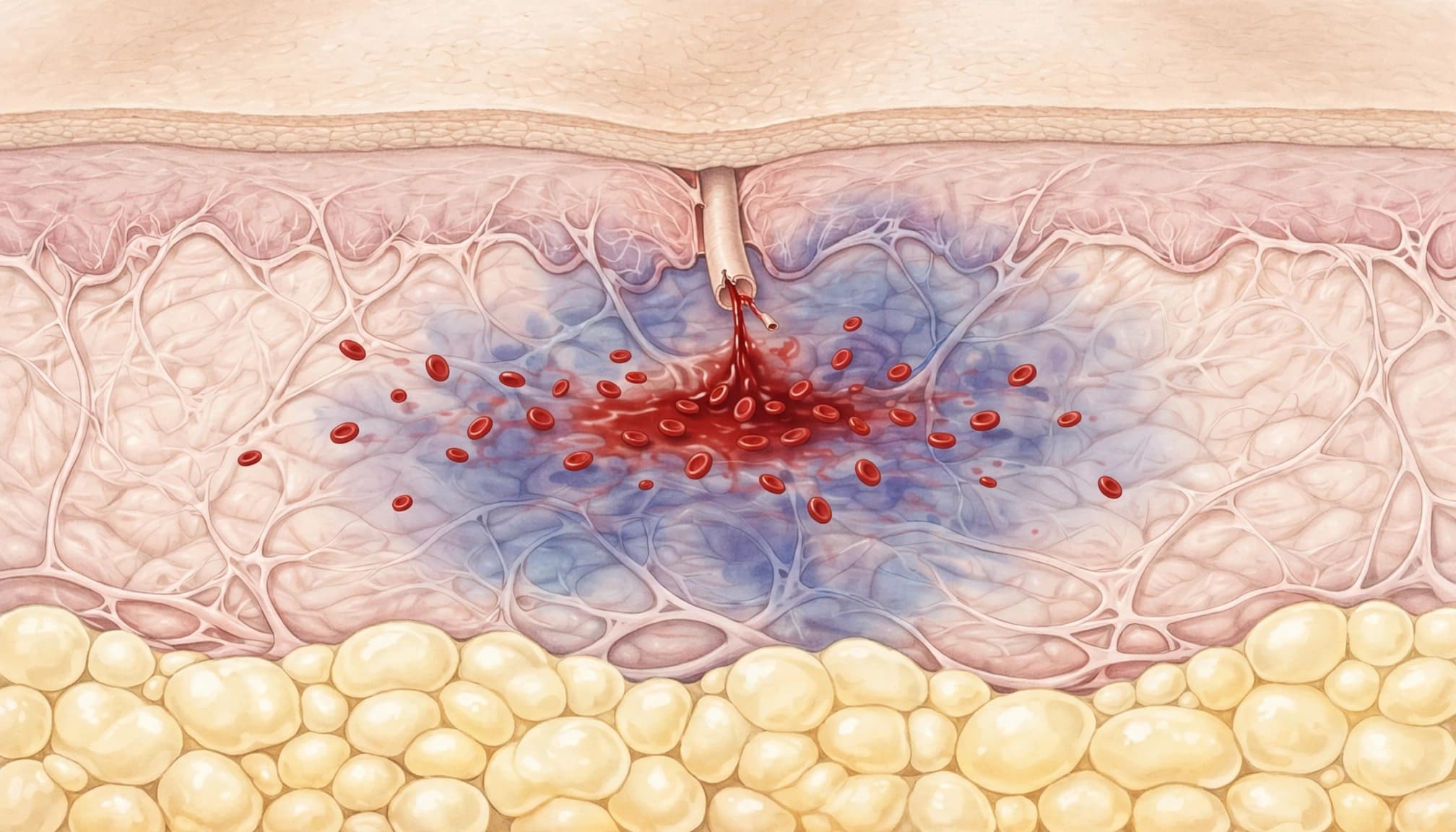
A bruise forms when tiny blood vessels, called capillaries, break beneath intact skin. Blood leaks into surrounding tissue and produces discoloration. Because blood thinners interfere with clot formation, those vessels can leak longer after a minor bump.
The term "blood thinner" covers medicines with different mechanisms. They don't literally make blood thinner.
The main differences affect both treatment and monitoring.
| Medicine | How it affects clotting | Monitoring distinction |
|---|---|---|
| Warfarin | Reduces vitamin K-dependent clotting factors | Requires INR blood tests |
| Apixaban (Eliquis) and rivaroxaban (Xarelto) | Block clotting factor Xa | Don't require routine INR testing |
| Aspirin | Reduces platelet stickiness | Doesn't use INR-guided dosing |
All can increase bruising, but they aren't interchangeable. Acetylsalicylic acid is an antiplatelet, while the vitamin K antagonist and factor Xa blockers listed above are anticoagulants.
Anticoagulants prevent strokes in eligible patients with atrial fibrillation and treat or prevent deep vein thrombosis and pulmonary embolism. Our atrial fibrillation medication guide explains how clot prevention fits alongside heart-rate treatment.
The NHS lists easier bruising among apixaban's recognized side effects. However, the expected possibility of bruising doesn't make every new bruise harmless.
When Bruising Needs Medical Attention
A familiar bruise versus a concerning change
A small bruise after a known bump, with mild tenderness that gradually improves, is usually normal bruising and can be observed with simple home care. Bruises commonly change color as the body clears trapped blood.
There isn't a single bruise diameter that separates harmless bleeding from dangerous bleeding. Progression and accompanying symptoms matter more than size alone.
Large bruises, unexplained bruises, or bruises that repeatedly appear or spread warrant prompt medical contact. Contact a healthcare provider the same day if bruising suddenly increases, swelling becomes pronounced, or pain worsens. Other bleeding signs that need prompt attention include persistent nosebleeds, bleeding gums, unusually heavy menstrual bleeding, or blood in urine.
A photograph with the date and an object for scale can help document whether a bruise is expanding.
Symptoms that require emergency care
Emergency assessment is needed for bleeding that won't stop, vomiting or coughing blood, black tarry stools, fainting, or sudden weakness or speech difficulty. A severe new headache can also indicate internal bleeding.
A rapidly enlarging bruise with severe pain, tight swelling, numbness, or a cold limb needs urgent assessment. These symptoms can reflect pressure on nearby tissues.
The Royal Brompton and Harefield NHS service includes severe or spontaneous bruising among its anticoagulant bleeding warning signs. A head injury also requires urgent assessment during anticoagulant treatment, even without an obvious bruise or immediate symptoms.
What Clinicians Assess When Bruising Increases
Blood counts, organ function, and interactions
A clinician considers when bruising began, recent injuries, dose changes, and bleeding elsewhere. The review also includes prescription medicines, over-the-counter painkillers, supplements, and alcohol use.
Depending on the findings, testing may include a complete blood count to assess hemoglobin and platelets. Kidney and liver tests may help identify conditions that affect drug handling or bleeding risk. These tests are individualized rather than an automatic response to every bruise.
Warfarin users may need an INR test as part of blood monitoring. By contrast, INR doesn't reliably measure apixaban's anticoagulant effect, so routine INR testing isn't used to adjust apixaban.
When a dose adjustment is justified
Older age, reduced kidney function, low body weight, and interacting medicines can influence treatment decisions. However, age or kidney impairment alone doesn't automatically justify reducing Eliquis.
For stroke prevention in nonvalvular atrial fibrillation, the FDA Eliquis prescribing information specifies a reduced dose when at least two criteria apply: age 80 or older, weight 60 kilograms or less, and serum creatinine of at least 1.5 mg/dL.
That rule is indication-specific. Treatment schedules for a new leg or lung clot differ.
Our Eliquis medicine information covers its uses and precautions. Bruising alone can't establish whether a dose is excessive, and self-reduction can leave a patient inadequately protected against clots.
Home Care for a Minor Bruise
For a small, explainable bruise without warning signs, conservative care can reduce discomfort. It doesn't reverse the medicine's effect or instantly remove the discoloration.
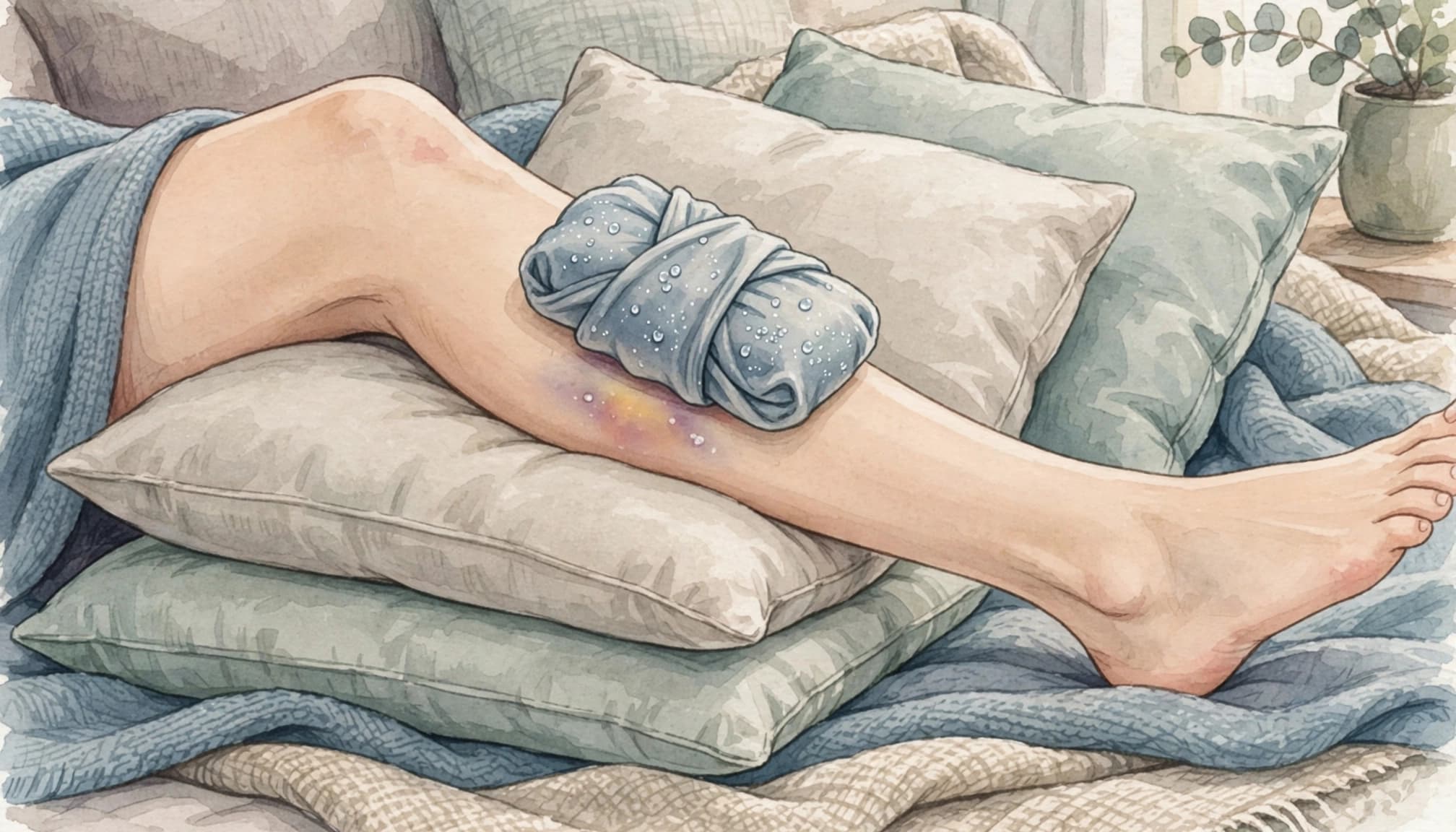
- Rest the affected area and protect it against another knock.
- Apply a cold pack wrapped in cloth, keeping ice away from bare skin.
- Raise the bruised limb above heart level when practical.
- Watch for increasing size, swelling, pain, or bleeding elsewhere.
MedlinePlus recommends cold application and elevation in its bruise care guidance. A bruise should gradually become less painful rather than progressively tighter or more swollen.
Massage or attempts to drain a bruise can cause further injury. Pain relief also needs care: ibuprofen, naproxen, and added acetylsalicylic acid can increase bleeding risk. A pharmacist or prescriber can assess an appropriate option.
Reducing Avoidable Bruising and Bleeding
Aging skin has less elasticity and thinner protective tissue, so older adults may be easily bruised. Long-term sun damage can also affect skin health, leaving forearms and the backs of hands particularly fragile. Light contact may cause noticeable bruises on arms in an older person taking a blood thinner.
Protective sleeves, gloves for gardening, and fewer household trip hazards can reduce repeated injury. No supplement reliably "toughens" skin against anticoagulant-associated bruising. Vitamin C supports collagen formation, but supplements aren't an established way to prevent anticoagulant-related bruising without a diagnosed deficiency.
Walking, swimming, and gentle exercise such as yoga are generally lower-injury options. Balance, mobility, and underlying illness affect suitability. Contact sports and activities with substantial fall risk increase the chance of serious bleeding.
Medication combinations matter as much as physical activity. Acetylsalicylic acid sometimes has a valid role alongside an anticoagulant, but adding it without a prescription increases bleeding risk. Certain antidepressants and other medicines also require interaction review.
Excessive alcohol adds bleeding and fall risks. Medical and dental teams also need to know about anticoagulant treatment before procedures.
How to Access Blood Thinners Affordably
Treatment cost includes the medicine, monitoring, and reliable refills. That option often has a lower tablet price, although INR testing and associated appointments add expense. Apixaban avoids routine INR testing, but its purchase price can be higher.
Our listings show US$42.50 for a 30-tablet branded Eliquis pack and US$28.85 for a 30-tablet generic apixaban option. These are pack prices, not necessarily monthly costs: a twice-daily prescription requires 60 tablets over 30 days. Strength and prescribed quantity matter in any comparison.
Insurance and subsidy systems differ across the USA, UK, and Australia, so international pack prices don't establish a universal saving. Home-delivery comparisons also need to include shipping charges.
Our Online Pharmacy requires a valid prescription and pharmacist review before eligible dispensing. International sourcing remains subject to destination-country import rules. Cost pressures or delivery delays shouldn't lead to skipped doses, smaller doses, or substitution with acetylsalicylic acid without a prescribing plan.
Frequently Asked Questions
Does bruising mean Eliquis is too strong?
Mild bruising doesn't establish that Eliquis is too strong. The same prescribed dose can produce different visible bruising depending on skin fragility and minor injuries. A sudden increase, spontaneous bruises, or bleeding elsewhere gives clinicians a reason to reassess treatment and possible contributing factors.
Can vitamin K or other supplements prevent bruising?
Eliquis isn't affected by vitamin K in the way warfarin is. Vitamin K doesn't reverse apixaban, and adding it isn't a bruise treatment. People taking it generally need consistent vitamin K intake. Magnesium, iron, and vitamin B12 aren't established treatments for blood-thinner-related bruising without a diagnosed deficiency.
Should Eliquis be stopped before dental work?
Some procedures require a planned interruption, while others don't. The decision depends on the procedure's bleeding risk, kidney function, and the reason for anticoagulation. The prescribing clinician and dental team should coordinate a written plan. Stopping Eliquis independently can expose a patient to stroke or another clot.
Is a medical-alert bracelet useful?
A medical-alert bracelet or necklace can help emergency staff identify anticoagulant use when a patient can't communicate. The medicine name is useful information, alongside an up-to-date medication list. Carrying an anticoagulant alert card also helps during urgent treatment, travel, and appointments with unfamiliar healthcare teams.
Can aspirin replace an anticoagulant if bruising becomes troublesome?
Aspirin works differently and isn't an equivalent substitute for anticoagulation in atrial fibrillation or treatment of deep vein thrombosis. It can also cause bruising and serious bleeding. A clinician may review alternatives when adverse effects become troublesome, but switching requires consideration of the original clot risk.
Keeping Bruising in Perspective
Easy bruising is a recognized consequence of blood-thinner treatment. A small bruise after a minor bump carries a different concern from unexplained spreading discoloration or bleeding elsewhere.
The strongest safety distinction is a change in pattern. New warning signs deserve assessment, while any treatment adjustment must account for the stroke or clot the medicine was prescribed to prevent.