
Complete Guide to Rinvoq (Upadacitinib): Uses, Benefits, Risks, and Patient Success Rates

When your immune system won't stop "pulling the fire alarm," inflammation can spread into joints, skin, and the gut. Rinvoq (upadacitinib) is a prescription pill that helps lower that overactive immune response. Doctors often use it for several inflammatory diseases when other treatments haven't worked well enough, or aren't a good fit.
This guide explains what Rinvoq is used for, what benefits can look like, and what risks matter most (including the FDA boxed warnings). It also breaks down what "success rate" really means in studies versus day-to-day life, plus practical questions to bring to your doctor or pharmacist.
You may see searches like "Best affordable price of Upadacitinib (Rinvoq) at Chemistway." Keep in mind that availability and pricing depend on your country, prescription rules, insurance, and any regulated partner pharmacy options.
Rinvoq basics you should know before starting
Rinvoq is the brand name for upadacitinib. It belongs to a drug class called JAK inhibitors (Janus kinase inhibitors). In simple terms, it works inside immune cells to quiet down signals that drive inflammation.
Rinvoq is taken by mouth. Most people think of it as a "systemic" medicine, meaning it affects the whole body, not just one area. That broad reach is why it can help conditions that involve many systems, like joints and skin, or gut and energy levels.
Because Rinvoq changes immune activity, clinicians usually consider your history first. Many prescribers try other medicines before moving to a JAK inhibitor, especially in people with higher baseline risk for infection, blood clots, or heart disease. The reason is not panic, it's planning. The boxed warnings are real, and the goal is to lower risk with smart screening and monitoring.
For a plain-language overview of indications and general precautions, see the Mayo Clinic's upadacitinib description.
How Rinvoq works (JAK blocking) in everyday terms
Think of inflammation like a home alarm system that's too sensitive. A small trigger, then the siren screams for hours. JAK pathways are part of the wiring that carries immune "messages" from one cell to another. Rinvoq blocks parts of that wiring, so the alarm volume drops.
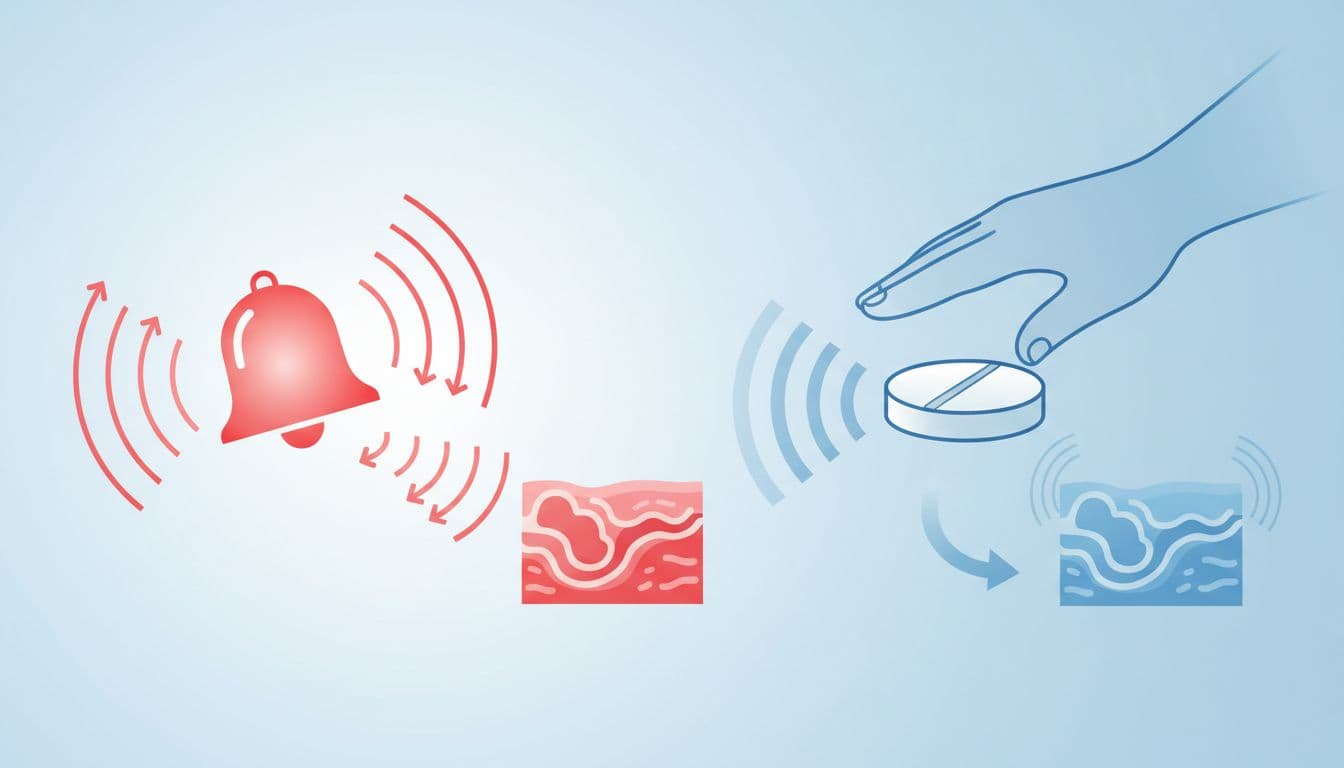
As a result, some people see less swelling and pain in joints, calmer skin, or fewer gut symptoms. Still, responses vary. Your diagnosis, past treatments, and overall health can all change what "works" looks like and how fast you feel it.
What Rinvoq does not do, and who should pause and ask more questions
Rinvoq isn't a cure. If you stop it, symptoms can return, sometimes quickly. It can also raise the chance of infections because the immune system is less reactive.
Before the first dose, it's worth discussing a few "pause and ask" topics with your prescriber: any current infection, a history of blood clots, known heart disease or major risk factors, a personal cancer history, smoking, pregnancy plans, and frequent shingles. These don't always rule Rinvoq out, but they may change the plan (dose choice, monitoring, or even medication selection).
Approved uses, typical dosing paths, and what benefits can look like
As of early 2026, Rinvoq is FDA-approved for several inflammatory diseases. These include rheumatoid arthritis (RA), psoriatic arthritis (PsA), atopic dermatitis (eczema, including some teens age 12 and up), ulcerative colitis (UC), Crohn's disease, ankylosing spondylitis, and non-radiographic axial spondyloarthritis. It's also approved for polyarticular juvenile idiopathic arthritis in certain pediatric settings, although pediatric decisions can vary by prescriber and label details. (Rinvoq is also approved for giant cell arteritis in adults.)
Doctors often tailor dosing to the condition and how active it is. For inflammatory bowel disease, the pattern commonly looks like an "induction" phase to gain control, then a lower "maintenance" dose. For Crohn's disease, induction often uses a higher dose for about 12 weeks, followed by a lower maintenance dose, as directed by the prescriber.
In October 2025, the FDA updated the IBD labeling in a practical way: some adults with moderate to severe UC or Crohn's can use Rinvoq after trying one approved systemic therapy when TNF blockers are not suitable, instead of only after a TNF blocker failure. That matters for people who can't take TNF inhibitors or had safety problems on them.
For a quick, consumer-friendly summary of conditions treated, see Rinvoq uses and warnings on Drugs.com.
Inflammatory arthritis and spine conditions: what improvement often means
For RA and PsA, "better" usually means less joint pain, less swelling, and less stiffness. Function can improve too, like opening jars, typing, or walking longer without needing breaks. In spine-related conditions (ankylosing spondylitis and non-radiographic axial spondyloarthritis), many patients track morning stiffness and range of motion because those changes can show up before the calendar says it's time.

Timing varies a lot. Some people notice improvement within weeks, while others need more time. It helps to track a few "real life" markers, like steps per day, grip strength, or how long morning stiffness lasts. That record gives your clinician something concrete to compare over time.
If your care plan includes methotrexate as a first-step or add-on for arthritis, this product page provides context on the medicine many clinicians try early: Trexall (methotrexate) injection for rheumatoid arthritis.
Eczema and IBD: skin clearing and gut symptom relief goals
With atopic dermatitis, improvement often starts with less itch. After that, people may notice fewer flares, calmer redness, and better sleep. Since itching can be like a mosquito in your ear at 2 a.m., relief can feel bigger than it sounds on paper.

For UC and Crohn's disease, the goals usually include fewer urgent bathroom trips, less abdominal pain, and more stable energy. In UC, less bleeding is a common marker people watch. Meanwhile, doctors also track deeper targets, including inflammation on labs and healing seen on scope, because symptom relief alone doesn't always tell the full story.
Some patients also use non-JAK medicines as part of IBD management. For example, mesalamine is commonly used in UC, and this page offers a basic overview: Lialda (mesalamine) for ulcerative colitis.
Risks and side effects, including the boxed warnings, explained without scare tactics
Many people take Rinvoq without severe problems. Still, serious harms can happen, so it's smart to know the risks before you start.
Common side effects can include upper respiratory infections (like colds), nausea, headache, acne, fever, and some lab changes (such as cholesterol or liver enzyme shifts). Your clinician may order blood tests at baseline and during treatment to spot changes early.
Rinvoq also carries FDA boxed warnings. In everyday language, these warn about: serious infections (including TB and certain fungal infections), cancers, major heart-related events, blood clots, and a higher risk of death in certain higher-risk groups (especially older adults with cardiovascular risk factors). This doesn't mean these outcomes will happen to you. It means you and your clinician should weigh your personal risk factors and monitor closely.
Before starting, clinicians often screen for TB and review vaccines. Many patients need updates on routine vaccines (like shingles, flu, and COVID-19). Live vaccines are usually avoided during treatment unless a clinician advises otherwise.
If you feel "suddenly not right" (chest pain, shortness of breath, one leg swelling), treat it as urgent and get help right away.
For a practical side effect and interaction overview, see GoodRx tips for taking Rinvoq.
What side effects are common, and which symptoms need urgent care
Common and often manageable issues include mild nausea, headache, acne, and uncomplicated cold symptoms. Your prescriber may adjust other parts of your plan if labs change.
Red flags are different. Seek urgent medical help for fever that won't break, a persistent cough with weight loss, new severe belly pain, sudden shortness of breath, chest pain, one-sided leg swelling, sudden weakness or trouble speaking, black stools, a widespread severe rash, or yellowing of the skin or eyes. If symptoms are severe, use local emergency services.
For another patient-friendly summary that discusses boxed warnings and interactions, you can also review Rinvoq side effects and warnings at Medical News Today.
Drug interactions and combinations to avoid
Clinicians usually avoid combining Rinvoq with other strong immune suppressants, such as other JAK inhibitors and certain biologics, because the infection risk can stack up.
Also mention every prescription, over-the-counter medicine, and supplement you take. Some antibiotics and antifungals can change Rinvoq levels, and grapefruit can affect drug metabolism in some people. When in doubt, ask the pharmacist before you start a new product.
Patient success rates, real-world expectations, and how to improve your odds safely
People often ask, "What's the success rate?" In studies, success usually means a measured drop in symptom scores, reaching remission criteria, or showing less inflammation on tests. Researchers compare Rinvoq to placebo, and sometimes to other treatments, over set time windows.
Across some IBD trials, remission rates during induction have landed roughly in the 40 to 50 percent range for Rinvoq versus about 20 percent for placebo, with stronger results on endoscopic healing measures in treated groups. Those numbers vary by disease type, study design, and how sick participants were at baseline. They also don't predict one person's outcome.
Real life can look messier than trials. People may have failed several past medicines, miss doses during travel, change doses due to side effects, or manage other health conditions at the same time. All of that can shift results.
A few habits can help safely: take it as prescribed, don't stop suddenly without a plan, keep lab appointments, report infections early, and track symptoms in a simple log (stool frequency, itch level, morning stiffness, sleep).
If cost is a concern, ask about insurance prior authorization, manufacturer assistance programs, and pharmacy options in your area. It's reasonable to bring a list of prices you've seen, then confirm what applies to your exact prescription and location.
What "remission" means in studies versus everyday life
In trials, remission has strict rules. It might mean a low symptom score, fewer bowel movements, little to no rectal bleeding, or clinician-rated skin improvement. For IBD, "endoscopic improvement" means less visible inflammation on a scope, which is something your doctor measures.
In everyday life, remission can still include leftovers, like mild fatigue, occasional stiffness, or sensitive skin. The goal is a steady, livable baseline, plus good test results over time.
A good target is "better function with fewer flares," not perfection on day one.
Questions to ask your prescriber or pharmacist before your first dose
- Which goal are we aiming for (symptom control, remission, scope healing, or all of these)?
- How soon should I expect to notice change, and when do we reassess?
- What labs do I need, and how often will we check them?
- Which vaccines should I get before starting, and which should I avoid while on it?
- What are my personal heart or blood clot risks?
- Which infection symptoms matter most for me, and who do I call after hours?
- What should I do if I miss a dose?
- What's our plan if Rinvoq doesn't work well enough?
Conclusion
Rinvoq (upadacitinib) can be a strong option for inflammatory arthritis, eczema, and inflammatory bowel disease, especially when other treatments haven't helped. At the same time, it comes with serious risks, including boxed warnings, so screening and ongoing monitoring matter.
The best path is shared decision-making: review your medical history, talk through personal risk factors, and set clear treatment goals. Also remember that medication access and cost depend on prescription rules and where you live. During the first few months, keep a simple symptom and side-effect log and bring it to follow-ups. That small habit often leads to better, safer adjustments.