
COPD Medications: Long-Acting Inhalers Explained

A COPD diagnosis often leads to several prescriptions, each with a different job.
A rescue inhaler eases sudden breathing symptoms. Long-acting bronchodilators are taken daily to control breathlessness and reduce exacerbations. Inhaled corticosteroids may be prescribed for people with recurrent flare-ups.
Treatment depends on symptoms, previous flare-ups, and how well you can use an inhaler. A clinician can help choose the right medicines for your needs.
Table of contents
- How COPD medications work
- When treatment moves to dual or triple therapy
- Safety and correct inhaler use
- Tablets and newer add-on treatments
- Treatment beyond inhalers
- How to access COPD medications affordably
- Key takeaways
- Frequently asked questions
- Conclusion
How COPD medications work
COPD includes emphysema, which damages the lung's air sacs, and chronic bronchitis, which causes persistent airway inflammation and mucus. Treatment improves airflow and can reduce exacerbations, but it doesn't repair damaged lung tissue.
Bronchodilators relax the muscles around the airways. Beta-2 agonists stimulate receptors that relax those muscles, while muscarinic antagonists block acetylcholine signals that tighten them.
Short-acting bronchodilators provide quick relief, while long-acting options are used for daily maintenance.
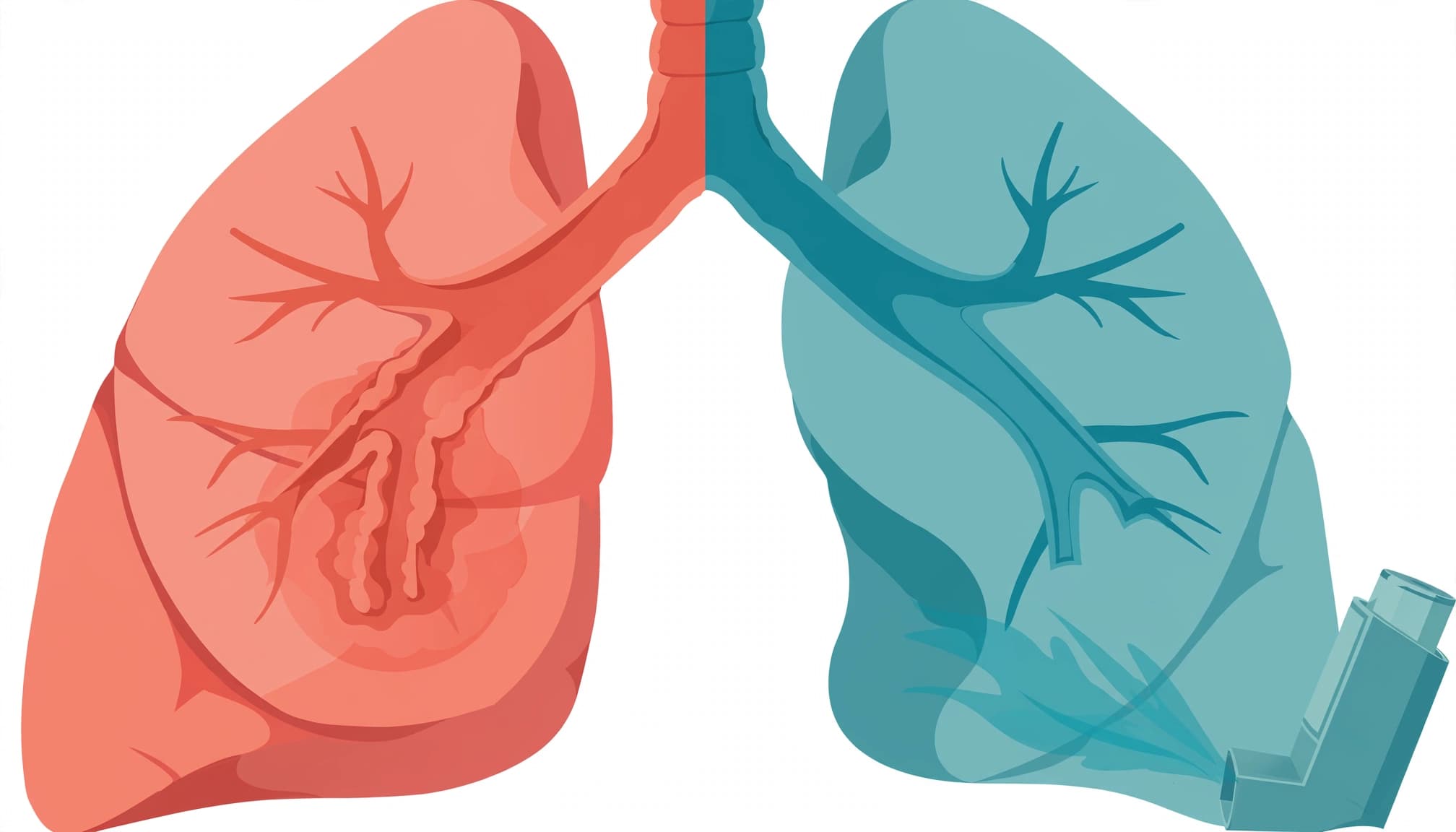
The main classes differ in onset, duration, and purpose.
| Drug class | Examples | Onset and duration | Main role |
|---|---|---|---|
| Short-acting beta-2 agonist (SABA) | Albuterol, called salbutamol internationally; levalbuterol | Within minutes; usually about 4 to 6 hours | Quick relief |
| Short-acting muscarinic antagonist (SAMA) | Ipratropium; ipratropium/albuterol in Combivent Respimat | Often slower; several hours | Short-acting bronchodilation |
| Long-acting beta-2 agonist (LABA) | Formoterol, indacaterol | Onset varies; about 12 to 24 hours | Daily maintenance |
| Long-acting muscarinic antagonist (LAMA) | Aclidinium; umeclidinium in Incruse Ellipta | Not for rescue; about 12 to 24 hours | Daily maintenance |
| Inhaled corticosteroids (ICS) | Budesonide, fluticasone, usually in combinations | Benefit develops with regular use | Reduce flare-ups in selected patients |
Duration estimates vary, and some references describe short-acting effects as roughly 3 to 6 hours. Formulation also affects timing.
Formoterol acts faster than salmeterol, but a LABA prescribed for maintenance isn't automatically approved for rescue use. Aclidinium is taken twice daily; tiotropium and umeclidinium are generally taken once daily. A LAMA is used for daily maintenance.
When treatment moves to dual or triple therapy
COPD treatment doesn't follow the same ladder for every patient. Clinicians assess symptoms, spirometry, prior exacerbations, hospital admissions and patient-specific risks.
Persistent symptoms favor long-acting bronchodilators
A SABA provides quick relief between maintenance doses. Occasional symptoms may need one medicine, while persistent breathlessness often calls for daily long-acting bronchodilators. Bronchodilators can be used alone or in combination.
When one LABA or LAMA leaves substantial symptoms, combining both classes can improve control. Many patients with significant symptoms or exacerbation risk start with LABA/LAMA, and the LABA choice can depend on treatment history. A LAMA such as tiotropium may be part of this combination.
Before adding COPD medications, clinicians reassess inhaler technique, adherence and other causes of breathlessness. Heart disease or poor conditioning can cause symptoms that another inhaler won't resolve.
Repeated exacerbations can justify inhaled steroids
Inhaled corticosteroids suppress airway inflammation. They aren't routine treatment for every patient, and COPD prescriptions usually combine them with long-acting bronchodilators.
Older criteria emphasized FEV1 below 50% predicted plus more than one exacerbation in the previous year. FEV1 measures the amount of air exhaled during the first second of a forced breath.
The GOLD treatment framework considers exacerbations and blood eosinophils alongside other clinical factors. Counts around 300 cells per microlitre may indicate a greater likelihood of steroid benefit, but eosinophils don't determine treatment on their own.
Continued exacerbations despite dual treatment may justify triple therapy, which combines a LABA, a long-acting muscarinic antagonist and inhaled corticosteroids. Coexisting asthma also affects the decision to use steroids.
Safety and correct inhaler use
How well COPD medications work depends partly on how much medicine reaches the lungs. Device choice and correct inhaler technique affect treatment effectiveness.
Side effects differ by drug class
Albuterol and other LABA medicines can cause tremor, palpitations and a faster heartbeat. LAMA medicines can cause dry mouth; urinary retention and narrow-angle glaucoma require particular caution.
Inhaled steroids can cause oral thrush and hoarseness. Rinse your mouth and spit out the water after each dose to reduce local exposure.
Pneumonia risk also matters. Older evidence linked doses above 500 micrograms daily of fluticasone propionate or equivalent with increased pneumonia risk. Risk can occur below that threshold, too. Clinicians weigh the expected benefit against infection history and other risk factors.
Device technique can resemble treatment failure
Pressurized metered-dose inhalers require coordination between pressing the device and breathing in. A spacer can help with compatible devices. Dry-powder inhalers require sufficient inspiratory effort, while nebulizers deliver medicine during ordinary breathing.
Incorrect use can limit symptom control and contribute to exacerbations. A clinician or pharmacist should observe your technique rather than rely on a verbal description. Simplifying devices can reduce mistakes, but fewer inhalers don't automatically mean fewer active drugs.
Severe breathlessness at rest, blue lips, confusion or inadequate relief from prescribed rescue treatment warrants urgent medical assessment.
Tablets and newer add-on treatments
Inhalers remain central, but selected patients need additional treatment. These options address different problems and aren't interchangeable.
Roflumilast has a limited role
Roflumilast is an oral phosphodiesterase-4 inhibitor that reduces inflammation. Clinicians reserve it for severe COPD with chronic bronchitis and frequent exacerbations despite appropriate inhaled treatment.
Chronic bronchitis traditionally means a productive cough for at least three months in each of two consecutive years, after other causes are excluded.
Roflumilast doesn't relieve sudden breathlessness. Diarrhea, nausea, weight loss and mood changes can limit use. Australian Prescriber's statement that it wasn't available in Australia described the situation in 2017, not current availability.
Other medicines have narrower indications
Short courses of oral corticosteroids can help during an exacerbation, but long-term daily use carries substantial risks. Antibiotics treat selected flare-ups with evidence of bacterial infection.
Long-term azithromycin can reduce exacerbations in selected patients. Hearing effects, heart-rhythm risks and antibiotic resistance limit its use.
Nebulized ensifentrine, FDA-approved in 2024, inhibits PDE3 and PDE4 and is a maintenance option, not rescue treatment. Injectable biologics, including dupilumab and mepolizumab, also have roles in selected eosinophilic COPD.
The Merck Manual's COPD treatment discussion places these specialist options alongside established inhaled treatments.
Treatment beyond inhalers
COPD medications work within a broader treatment plan. Smoking cessation remains the most important intervention because it reduces mortality and slows lung-function decline.
Rehabilitation and vaccination reduce disease burden
Pulmonary rehabilitation combines supervised exercise with education and symptom-management support. Programs commonly last eight to twelve weeks, although duration varies.
Physiotherapists and other rehabilitation professionals tailor exercise to each patient's capacity. Pulmonary rehabilitation improves exercise tolerance and quality of life but doesn't repair emphysema.

Cochrane reviews found that influenza vaccination reduced COPD exacerbations. Pneumococcal vaccination also reduced the likelihood of flare-ups in a separate review, although confirmed pneumococcal pneumonia wasn't reduced.
The AAFP review of COPD care includes rehabilitation and preventive measures alongside medicines.
Oxygen and procedures require careful selection
Long-term oxygen improves survival in patients with severe chronic resting hypoxemia. It isn't automatically appropriate for breathlessness when blood oxygen levels are adequate.
Earlier claims that no COPD drug improves survival are outdated. The GOLD executive summary discusses mortality reductions with triple therapy in trials involving selected patients with a history of flare-ups.
Bullectomy, lung-volume-reduction surgery and lung transplantation are options for selected patients with severe disease despite optimized medicines and rehabilitation. Suitability depends on lung anatomy, functional status and other health conditions.
How to access COPD medications affordably
The lowest-priced prescription isn't always the least expensive effective option. An unfamiliar inhaler that a patient can't use correctly can waste medicine and leave symptoms uncontrolled.
Insurance formularies in the USA, Australia's Pharmaceutical Benefits Scheme and UK NHS prescribing arrangements lead to different out-of-pocket costs. International retail prices aren't directly comparable with insured local copayments.
Generic equivalents, preferred devices on a formulary and manufacturer assistance can reduce costs. Any switch still requires checking the active ingredients, strength and inhaler technique.
Our prescription medicine options require a valid prescription from a licensed healthcare provider. Home delivery can help patients stay on schedule with refills, but international shipping remains subject to destination-country import rules.
Our salbutamol tablets and prescription information lists a price of US$9.07 for a 30-tablet pack. This isn't the price of an inhaler. Oral salbutamol generally isn't preferred over inhaled treatment because it can cause more systemic side effects. Tablets aren't a substitute for a prescribed rescue inhaler.
Include shipping charges when comparing medicine delivery costs to the USA. Monthly costs vary by treatment plan, so there isn't one price that applies to everyone.
Key takeaways
- Rescue medicines provide short-term relief; maintenance inhalers, including a LAMA, require regular daily use.
- Dual bronchodilation and combination treatment address different needs; exacerbations and eosinophil levels help guide steroid decisions.
- Inhaler technique, smoking cessation and rehabilitation remain important even when prescriptions change.
- Lower prices must be assessed alongside device suitability, prescription requirements and delivery costs.
Frequently asked questions
Why are both rescue and maintenance inhalers prescribed?
A rescue inhaler relieves sudden symptoms for several hours. Maintenance inhalers provide longer bronchodilation and reduce daily breathlessness or exacerbations. Both may be prescribed because they have different roles. More frequent rescue use can signal worsening control and needs clinical assessment.
Can lungs get better with COPD?
Treatment can improve symptoms, exercise capacity, and quality of life, but it can't restore destroyed air sacs or reverse established emphysema. Quitting smoking slows lung-function decline, and pulmonary rehabilitation helps people function better despite ongoing airflow obstruction.
When do eosinophil levels matter?
Blood eosinophils help clinicians estimate whether adding an inhaled corticosteroid (ICS) may reduce flare-ups. Higher counts, especially around 300 cells per microlitre or above, often suggest greater benefit. Clinicians also consider past flare-ups, asthma history, and pneumonia risk.
How can I lower the cost of treatment?
Costs depend on the drug combination, device, insurance, and country. A generic or formulary-preferred inhaler may cost less if it's clinically appropriate. Compare the full price, including shipping and the amount supplied, rather than tablet prices or advertised discounts. Different formulations aren't automatically interchangeable.
Is it safe to order prescription medicine online?
A legitimate online pharmacy requires a prescription for prescription-only medicines and provides access to pharmacy support. Safe access also depends on regulated dispensing, the correct formulation, and destination-country rules. International availability doesn't automatically establish FDA approval or permission to import a particular medicine into the USA.
Conclusion
The distinction between rescue and maintenance treatment explains much of a COPD prescription. Escalation depends on ongoing symptoms and exacerbations, while steroid decisions require a separate assessment of likely benefit and harm.
This information is for educational purposes only. Consult a licensed healthcare provider before changing COPD medications.
Effective care depends on usable treatment, not simply additional prescriptions. The device, medicine and broader care plan must work together.