
Counterfeit Medicines: How to Spot Them Before the First Dose

Counterfeit medicines may contain the wrong substance, too little or no active ingredient, or harmful contaminants. Counterfeit drugs can look convincing, but appearance alone can't confirm authenticity.
If a medicine seems suspicious: pause, and don't take or share it. Verify the pharmacy and prescription, then contact a pharmacist or prescriber.
Fake medicines can make a first dose an unnecessary gamble, so involve a healthcare professional before using anything that doesn't seem right.
Table of Contents
- Key takeaways
- The first-dose checks that matter
- What counterfeit, falsified, and substandard mean
- How to assess an online pharmacy
- Why the drug supply chain matters
- Price, access, and safe international ordering
- Frequently asked questions
- The pause before taking medicine
Key Takeaways
- Inspecting original packaging can reveal warning signs, but it can't prove that counterfeit medicines are authentic or safe.
- Choose licensed online pharmacies that require a valid prescription and offer pharmacist review before dispensing medical products.
- Unexpected packaging, a missing seal, or an unfamiliar tablet may suggest falsification, but poor storage or a dispensing error can look similar. Ask a pharmacist before another dose, and seek medical help if adverse effects occur.
- The World Health Organization estimates that at least one in ten medicines in low- and middle-income countries are substandard and falsified. This isn't a country-specific risk estimate.
- Supply chain security helps reduce risk, but a barcode or lower price never proves authenticity. Verify licensing, prescription review, traceable sourcing, and delivery details.
The First-Dose Checks That Matter
Before swallowing a new tablet, compare the patient name, medicine name, strength, dosage form, quantity, directions, lot or batch number, and expiry date. Check the seal, original packaging, and delivery condition. Don't take or share medicine that doesn't match the prescription. Keep the package for pharmacist or prescriber review.
A mismatch may be a dispensing error rather than counterfeit medicines, but both require prompt attention. Confirm the active pharmaceutical ingredient when the label or product information raises questions. Unexpected adverse effects also warrant professional advice, especially when the active ingredient may be wrong or missing.
Inspect the package without treating it as proof
Look for an intact safety seal, clear printing, a legible expiry date, and matching lot or batch information. Missing tablets, damaged seals, temperature damage, loose tablets, or poor print quality require verification.
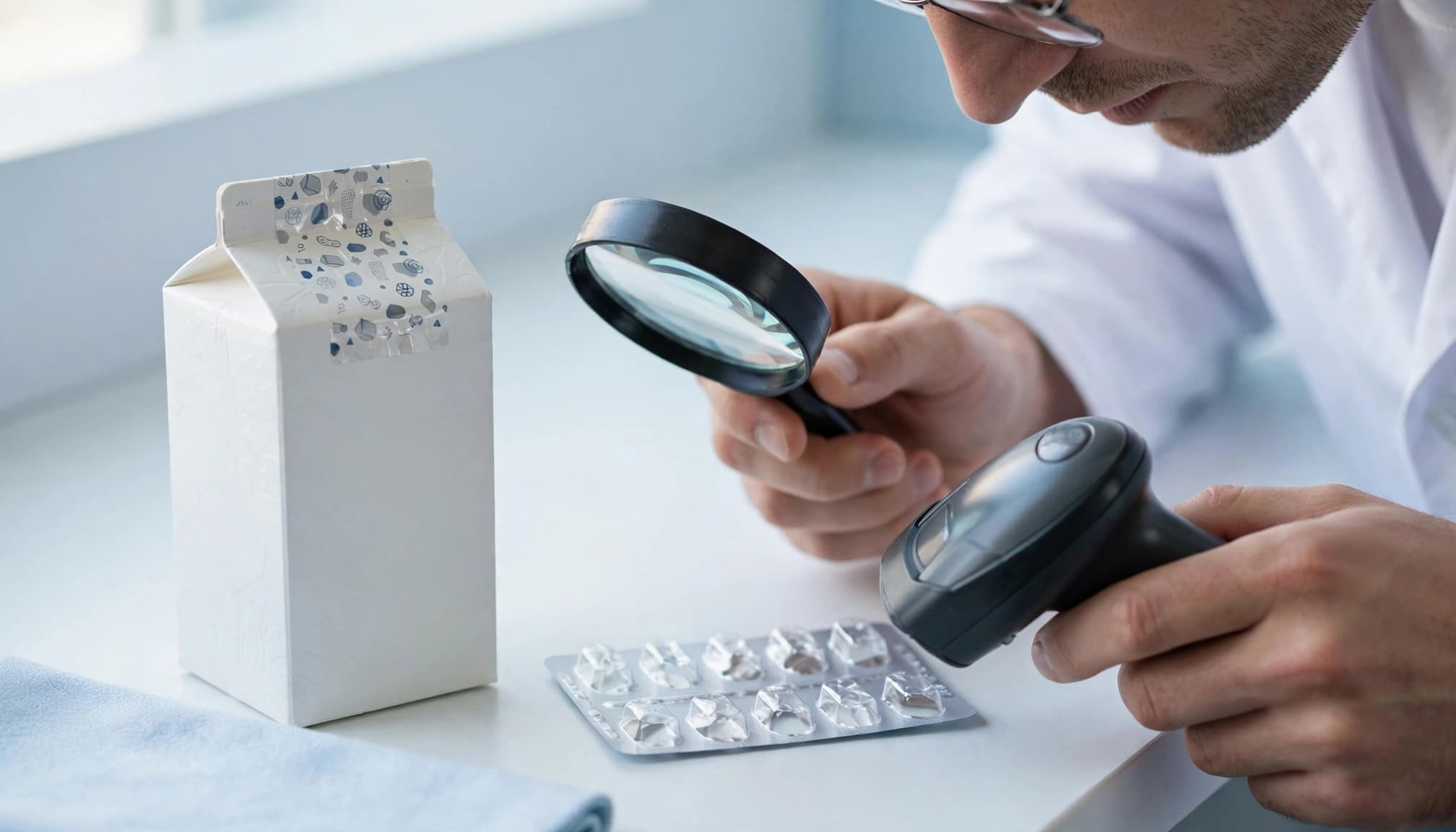
A different color, imprint, or package doesn't automatically mean counterfeit medications. Legitimate manufacturers and generic medicines can change their appearance. However, fake medicines and other counterfeit products may imitate legitimate designs, so visual checks alone aren't enough.
A product may be counterfeit drugs, improperly stored, recalled, or affected by a dispensing error. These causes aren't the same, but each needs professional review. Visual inspection cannot confirm the active ingredient or replace the manufacturer's quality control and safety standards.
Confirm the source before the product
Prescription drugs and other medical products should come through a pharmacy that can identify its location, licensing status, pharmacist contact route, and prescription process. A seller that promises medicine without a prescription may not follow safety standards or provide traceable products.
For people arranging online medicine home delivery, the safer path includes prescription upload, pharmacist review, secure payment, and trackable shipment. Waldrugmart's guide on how to choose a safe online pharmacy describes the practical checks that should happen before checkout.
A sealed carton matters, but a traceable pharmacy and a valid prescription matter more.
What Counterfeit, Falsified, and Substandard Mean
These terms overlap in ordinary conversation, but they describe different failures. The World Health Organization's definitions help distinguish counterfeit drugs, substandard and falsified medical products, recalled medicines, and products degraded by poor storage.
Falsified medicines deliberately misrepresent themselves
A falsified medicine may misrepresent its identity, composition, or source. Counterfeit drugs often fall into this category because the deception is intentional. A counterfeit drug may contain no active pharmaceutical ingredient, the wrong strength, or contaminants.
Criminal groups can use legitimate-looking packaging to exploit intellectual property and make counterfeit products appear authentic. Counterfeit medications and other illicit medicines may delay effective treatment while exposing patients to avoidable risks. Biopharmaceutical companies, regulatory authorities, and law enforcement agencies work to identify these threats and protect the wider medicine supply.
This is especially serious for insulin, anticoagulants, antibiotics, transplant medicines, oral chemotherapy, and other treatments where timing and dose consistency matter. The active ingredient may be absent or unreliable. People seeking to buy cancer drugs online or order oncology medicines online should expect additional prescription and pharmacy checks, not fewer.
Substandard products fail quality requirements
Substandard medicines are authorized products that fail quality control requirements or safety standards. They differ from deliberately falsified products, even though the risks can still be substantial. Manufacturing problems, inadequate testing, improper storage, or transport failures can affect medical products without deliberate deception.
Recalled medicines are products removed from use because a safety or quality problem has been identified. A medicine can also degrade after manufacture when heat, moisture, light, or time damage its quality. These examples fall within the broader concern over substandard and falsified products, but they don't all involve criminal intent.
The WHO estimates that at least one in ten medical products in low- and middle-income countries are substandard or falsified. That figure doesn't describe every country, pharmacy, or medicine. It does show why a low price, imported product, or professional website cannot settle the question of safety.
The problem affects patients, public health, health systems, and global health. The Pharmaceutical Security Institute tracks pharmaceutical crime, while authorities address risks across legitimate distribution networks. Understanding these distinctions helps patients recognize why quality concerns may involve authorized products, falsified medicines, or storage failures.
How to Assess an Online Pharmacy
An online pharmacy can improve access for rural patients, travelers, and people managing long-term treatment. It can also put distance between customers and pharmacists. The safeguard is a practical legitimacy checklist, not a polished storefront.
Look for prescription review and real support
Before ordering, verify the pharmacy’s license with the relevant regulatory authorities. Confirm that it lists a physical location, provides a pharmacist contact route, and explains how it protects personal information and payment details.
A legitimate service asks for a valid prescription when required. Its ordering process should include secure payment, realistic delivery terms, and clear information about the medical products it dispenses. The steps for ordering prescription medicines online should include a prescription upload and review before dispensing.
A pharmacy that immediately approves every order, offers prescription drugs after a brief questionnaire, or claims that prescriptions aren’t necessary creates a serious safety risk. Unapproved online sources, social-media sellers, and cryptocurrency-only payment options also make verification difficult and should be avoided.
Treat price claims as a prompt to verify
Cheap prescription drugs worldwide can be tempting when U.S. prices strain a household budget. Still, a professional-looking website or low price cannot establish authenticity, reliable sourcing, or compliance with safety standards. These claims alone don’t show that a seller can prevent counterfeit drugs from entering the drug distribution system.
Before placing an order, confirm the exact medicine, manufacturer where applicable, strength, quantity, delivery country, and total price. The medicine delivery cost to USA may change with shipping method, temperature handling, customs requirements, and insurance. Australia, the UK, and the United States also have different rules and pricing systems.
A pharmacy should explain what happens if an order can’t be filled, requires clarification, or is delayed for clinical review. Those steps support safe dispensing, particularly for targeted cancer therapy drugs, immunosuppressants, and medicines with narrow dosing margins.
Why the Drug Supply Chain Matters
In the United States, the Drug Supply Chain Security Act, or DSCSA, requires electronic tracing of certain prescription drugs through the drug distribution system. It strengthens supply chain security and helps keep counterfeit products out of legitimate channels. The broader risk includes substandard and falsified medical products, so the law isn't a guarantee that every package worldwide is safe. These safeguards also support health systems by improving visibility across the drug supply chain.
Package-level tracing strengthens verification
The FDA explains that the law supports interoperable electronic identification and tracing at the package level. Its DSCSA overview describes a system intended to help trading partners identify and remove suspect products.
The system gives manufacturers, wholesalers, dispensers, biopharmaceutical companies, regulators, and other authorized trading partners distinct responsibilities. The Pharmaceutical Security Institute provides broader context about pharmaceutical crime and intellectual property threats, but it isn't a consumer verification service.
Consumers shouldn't be expected to decode serial numbers or scan a barcode as a final authenticity test. Counterfeit drugs can still appear convincing, especially when packaging and labeling look legitimate.
Pharmacist review remains a human safeguard
Traceability systems work alongside professional review. A pharmacist can compare the prescription against the medicine, investigate an unfamiliar package, assess storage concerns, and contact the supplier or prescriber when needed.
That review may explain why specialty orders take longer. Pharmacy verification before medication release can involve checking prescription validity, dose, interactions, handling requirements, and availability before dispatch.
If a product remains suspicious, it may be reported through appropriate channels to regulatory authorities or law enforcement agencies. This helps protect patients and supports action against unsafe products.
Price, Access, and Safe International Ordering
Cost pressure often pushes patients toward online pharmacies. For chronic disease, cancer, and transplant care, that pressure is understandable. Different health systems and pricing policies can shape access, but safe treatment remains essential to public health and global health.
Compare total cost, not the headline price
The cost of medicines in the USA, Australia, the UK, and other international markets can vary substantially. Differences may reflect insurance coverage, lawful generic competition, biopharmaceutical companies, or national pricing structures. A lower price may also conceal counterfeit drugs, illicit medicines, or substandard and falsified medical products from unapproved online sources.
Patients should compare the complete order, including strength, pack size, insurance coverage, shipping, taxes, duties, and refill timing. Consider possible delays and ask how cold-chain products will be stored during transit. A cheaper medicine may carry added risks if it is separated from a verified drug supply chain.
Keep the prescriber involved
A prescriber or pharmacist should know when a patient is considering a different manufacturer, an imported product, or a change in refill timing. Ask about storage requirements and how the change could affect treatment continuity.
This is especially important for oral chemotherapy drugs, biologics, immunotherapy, and immunosuppressants. Monitoring may depend on a precise regimen, manufacturer, or supply schedule.
An Online Pharmacy that requires a valid prescription and offers pharmacist access may support continuity of care. It cannot replace the clinician who selected the treatment or verify every product’s authenticity.
This information is for educational purposes only and does not replace medical advice. Consult a licensed healthcare provider or pharmacist before starting, stopping, substituting, or taking a prescription medicine that raises safety concerns.
Frequently Asked Questions
Is it safe to buy medicine online?
It can be safe when online pharmacies are licensed, require valid prescriptions where needed, protect personal information, and follow safety standards. Sellers using unapproved online sources may offer prescription drugs or other medical products without proper oversight. A low price, online advertisement, or professional-looking website alone doesn't establish safety.
How can someone verify online pharmacy legitimacy?
Confirm the pharmacy's license through relevant regulatory authorities, verify its physical contact information, and confirm pharmacist access. Ask how it sources products through the drug supply chain. Clear sourcing supports supply chain security and quality control. Biopharmaceutical companies and legitimate pharmacies should provide clear location, delivery, privacy, and refund information.
Do online pharmacies require prescriptions?
A legitimate pharmacy requires a valid prescription for prescription drugs that legally require one. Over-the-counter products are different. A seller offering prescription treatment without requesting a prescription is a serious warning sign. Such sellers may distribute counterfeit drugs or products that haven't passed appropriate checks for identity, strength, or purity.
What visual signs may suggest counterfeit medicine?
Check the original packaging for spelling errors, broken seals, unusual colors, or differences from previous supplies. Compare the label, dosage, and active ingredient with your prescription. Visual clues can help identify fake medicines, but counterfeit products may look convincing. Appearance alone can't confirm authenticity or product quality.
How does a counterfeit product differ from a recalled or improperly stored medicine?
A counterfeit product misrepresents its identity, source, or contents. A recalled product was withdrawn because of a confirmed or potential safety issue. Improper storage can damage a genuine medicine. Substandard and falsified products may contain the wrong active pharmaceutical ingredient, too little medicine, or contaminants.
What should happen after a suspected counterfeit medicine?
Don't take another dose or share the product. Keep the package, original packaging, label, receipt, and remaining medicine. Contact a pharmacist or prescriber, then report concerns to the relevant regulator or poison center. The FDA lists reporting options for suspected counterfeit medicine. The World Health Organization and law enforcement agencies may also use reports to address illicit medicines and protect health systems.
What should someone do after taking suspicious medicine or developing adverse effects?
Stop and seek advice from a pharmacist or prescriber before taking more. Don't share the medicine, and keep its packaging and receipt. For trouble breathing, facial or throat swelling, severe confusion, seizures, collapse, or other urgent symptoms, seek emergency care immediately and contact a poison center when appropriate.
Can a barcode prove that medicine is real?
No. A barcode or QR code may support product tracing, but a home scan can't confirm every aspect of authenticity. The FDA's product-tracing requirements apply to authorized participants in the drug supply chain, not a consumer verification test for counterfeit medications.
The Pause Before Taking Medicine
Counterfeit medicines exploit a moment of trust: pause before the first dose when a package arrives and looks close to normal. Don't take or share suspicious medical products; preserve the original packaging and delivery records, then contact a pharmacist or prescriber. Seek urgent medical or poison-center help after exposure or serious adverse effects.
For patients who depend on regular treatment, the soundest protection is continuity through a licensed pharmacy and professional review. Strong supply chain security is more reliable than price, packaging, or a barcode. Counterfeit medications, counterfeit drugs, fake medicines, and other counterfeit products can threaten public health when an active pharmaceutical ingredient is missing or wrong.