
Creatine Monohydrate: Benefits, Dosage, and Safe Use

Creatine supplements are among the best-supported dietary supplements for improving exercise performance during repeated, intense efforts. This form is widely used because robust research and scientific evidence support its role in athletic performance, partly by helping maintain creatine phosphate availability.
That doesn't make it right for everyone. Most healthy adults take 3 to 5 grams per day with regular use. Kidney disease, pregnancy or breastfeeding, and unusual lab results warrant discussion with a health care provider before using this supplement.
Is Creatine Monohydrate Safe and Worth Taking?
Short answer: Creatine supplements can support exercise performance and physical performance during high-intensity exercise, especially when creatine phosphate recycling supports repeated efforts, and may help increase muscle mass with training. A daily dose of 3 to 5 grams works for most healthy adults. Temporary changes in body weight or digestive discomfort are possible side effects, while people with kidney disease or complex medical needs should speak with a health care provider first.
Table of Contents
- How creatine supplies rapid energy
- Benefits for training and brain function
- Dosage and how to take it
- Side effects and safety
- Choosing creatine monohydrate and comparing costs
- Frequently asked questions
Key Takeaways
- Creatine monohydrate helps skeletal muscles recycle creatine phosphate during short-duration exercise, supporting exercise performance through the body’s rapid energy system.
- It may support athletic performance in weight lifting and muscle growth when paired with progressive training.
- A consistent 3 to 5 grams each day is enough for most people.
- Loading can fill muscle stores faster, but it isn't necessary. Plain monohydrate powder has stronger evidence than newer creatine forms. If you have kidney disease, abnormal lab results, or other complex medical needs, ask a health care provider before using it.
How Creatine Monohydrate Supplies Rapid Energy
Creatine is a dietary supplement, not a steroid or a prescription treatment. Your liver, kidneys, and pancreas also make creatine from amino acids, while meat and seafood provide it through food.
Your own supply and dietary sources
About 95% of the body's creatine is stored in skeletal muscles, mostly as creatine phosphate within muscle tissue. Beef, pork, salmon, tuna, and other animal foods provide some creatine. Dietary intake or supplementation can replenish creatine phosphate, while plant foods provide little.
Vegetarians and vegans may find this form especially useful because their diets contain little or no preformed creatine. The International Society of Sports Nutrition position stand identifies monohydrate as the most researched form for exercise performance. It cites scientific evidence for lean muscle mass support.
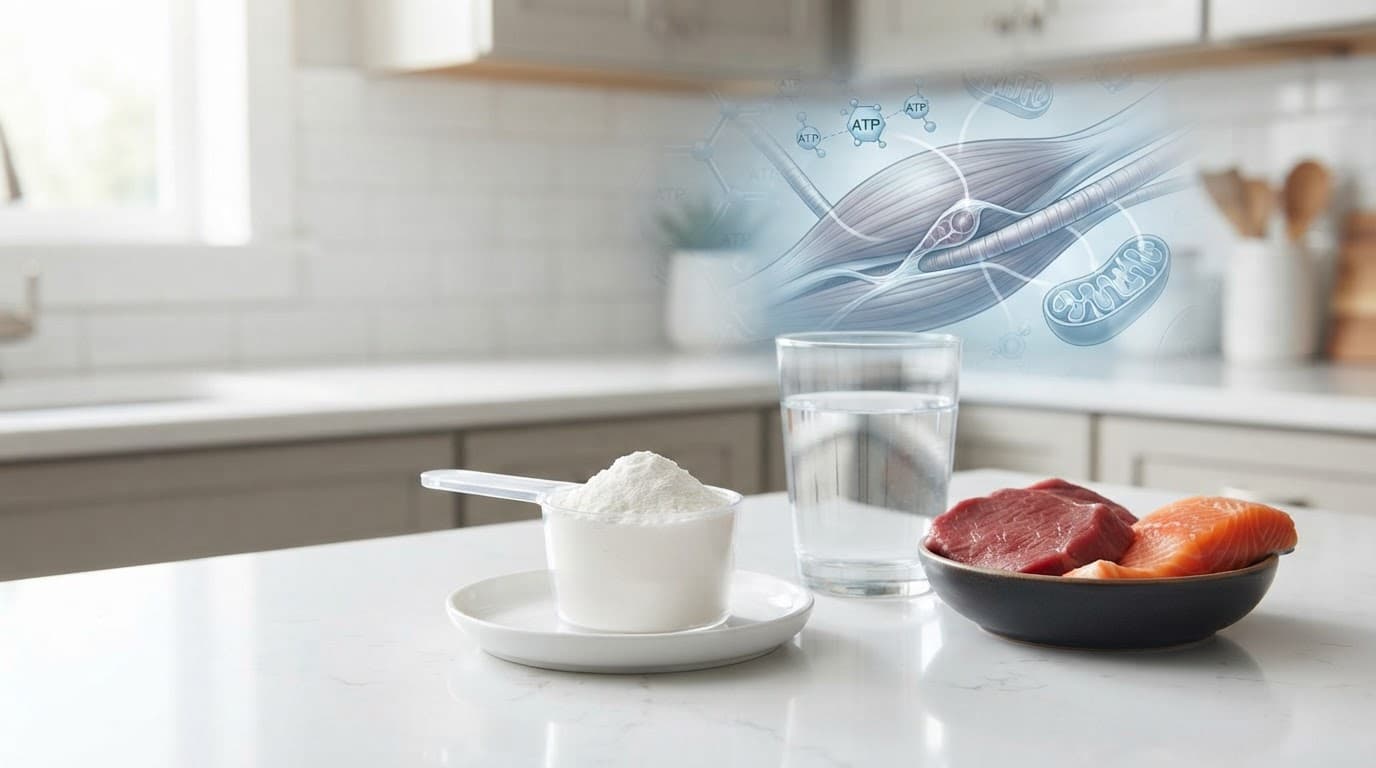
The ATP and phosphocreatine system
Adenosine triphosphate, or ATP, is the immediate fuel your muscles use for contraction and rapid energy production. When ATP levels fall, stored creatine phosphate, also called phosphocreatine, donates a phosphate group to ADP. This creatine phosphate reaction rapidly restores ATP through the energy system.
This effect matters most during repeated bursts of short-duration exercise and high-intensity exercise, when creatine phosphate helps replenish ATP. Creatine won't turn a long walk into a sprint, but it may help maintain training output across sets, intervals, and explosive efforts through the creatine phosphate energy system.
Benefits for Training and Brain Function
Strength, power, and muscle mass
Creatine monohydrate and other creatine supplements work best alongside resistance training and weight lifting, helping make more creatine phosphate available in skeletal muscles. They may help you complete an extra repetition, use slightly more weight, or sustain quality during repeated intervals. Over time, this volume can improve exercise performance and athletic performance, supporting muscle growth and muscle mass gains.
Early scale changes often reflect more water held within muscle tissue. This water retention can raise body weight without indicating body-fat gain. The U.S. military's creatine performance overview notes that daily amounts as low as 3 grams can raise creatine stores.
Cognitive performance has limits
Brain function also relies on an energy system that uses creatine phosphate to support energy production. Early scientific evidence suggests creatine may modestly support some cognitive tasks during severe sleep loss, although this research is far smaller than the sports-performance evidence.
It isn't a treatment for memory disorders, fatigue, or chronic sleep problems, and it can't replace adequate sleep. Speak with a health care provider about relevant medical concerns. No established daily "brain dose" differs from the usual 3 to 5 gram maintenance amount.
Creatine Monohydrate Dosage and How to Take It
Consistency matters more than timing with creatine supplements. Take your daily serving with water, a meal, or a protein shake, and continue regular use on rest days.
| Approach | Typical amount | What to expect |
|---|---|---|
| Daily maintenance | 3 to 5 grams each day | Muscle stores rise gradually over several weeks |
| Optional loading phase | 20 grams daily, divided into four 5-gram servings for 5 to 7 days | Stores fill faster, then switch to maintenance |

Start with a simple daily dose
For most people, a daily dose of 3 to 5 grams of monohydrate is practical. A labeled scoop of creatine powder is convenient, but don't assume it equals 5 grams; check the product label.
If you miss a serving, take your next usual dose. Taking extra to "catch up" adds no useful benefit and may worsen stomach discomfort.
Loading is optional, not required
A loading phase may help before a competition or training block for athletic performance, including weight lifting. It fills creatine phosphate stores faster, but it's optional. A regular daily dose can support muscle growth over time, so loading isn't required.
Split a loading dose into smaller servings across the day to reduce digestive side effects. If discomfort continues, skip loading and use the standard maintenance dose instead.
If you have a medical condition or take medication, ask a health care provider before starting.
Side Effects, Lab Values, and Safety
What you may notice
Creatine supplements are generally well tolerated at standard doses when used as a dietary supplement. The most common side effects include water retention, a small increase in body weight, and occasional stomach upset. These changes may reflect additional water in muscle tissue as creatine phosphate storage increases.
Taking a large amount at once can make digestive symptoms more likely, so dividing doses may help.
Hydration still matters during exercise, especially in hot conditions. Creatine itself doesn't replace fluids, carbohydrates, protein, or recovery time.
When to seek medical guidance
Healthy adults generally tolerate standard dosing well, but a health care provider can review whether it's suitable for you.
The 2025 creatine safety position statement supports the safety and efficacy of creatine monohydrate when used within established guidelines.
Speak with a health care provider before using creatine if you have kidney disease, are pregnant or breastfeeding, are under medical monitoring, or take regular medication.
Creatine can raise serum creatinine on a blood test without proving kidney injury. Tell your health care provider who orders your labs that you take creatine, so results can be interpreted in context.
This information is for educational purposes only. Consult a health care provider before starting a supplement if you have a health condition or take medication.
Choosing Creatine Monohydrate and Comparing Costs
| Format | What to consider | Practical choice |
|---|---|---|
| Plain monohydrate powder | Single ingredient formula with easy dosing | Best starting point for most users |
| Capsules or gummies | Convenient, but several may be needed per dose | Check active creatine per serving |
| Other creatine forms | Often marketed with absorption claims | No clear reason to pay more for most people |
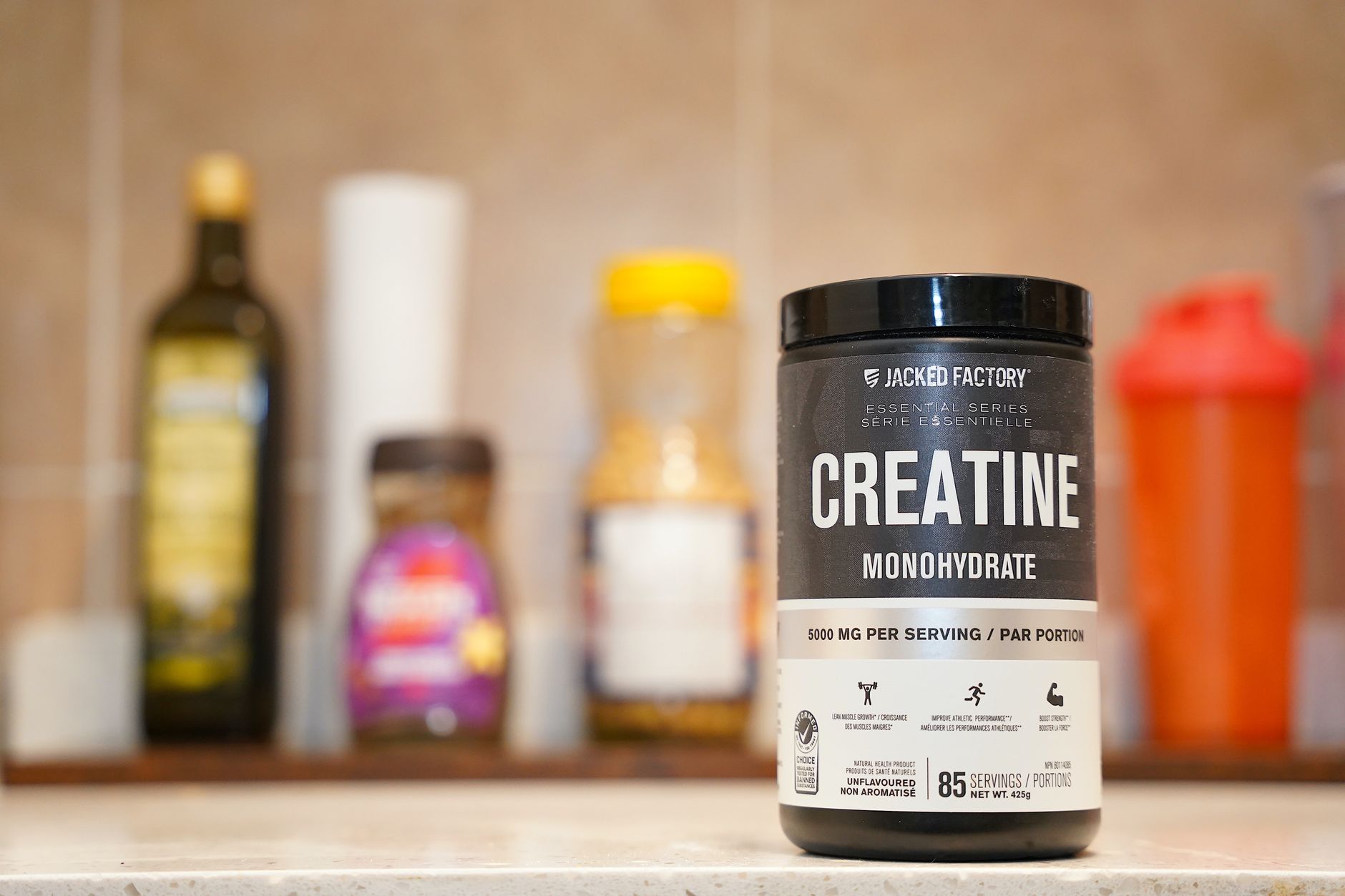
Photo by Gupta Sahil
Compare creatine supplements by the cost of a usable 3 to 5 gram serving, not tub size or marketing claims. Unflavored creatine powder is often less expensive per serving than gummies or capsules. Third-party tested products can help verify identity and purity, but testing doesn't prove disease-treatment benefits. The FDA's GRAS notice for creatine monohydrate addresses food-ingredient safety, not approval for a dietary supplement to treat disease.
A reputable Online Pharmacy should show the ingredient panel, serving size, dispensing details, and support options. Product prices and cross-border rules can differ between the USA, Australia, and the UK, so check local import requirements before ordering.
For blends, verify the actual active creatine amount. Marketing claims matter less than the labeled dose for the creatine phosphate system. BioHack Wanderlust Energy Optimiser lists 3 grams of monohydrate per serving. Magnesium products such as BioCeuticals Ultra Muscleze are separate nutritional products and don't replace creatine's role in that system.
A Practical Final Word
Creatine monohydrate earns its reputation because the basics work: choose a tested product, commit to regular use, and pair it with training that challenges your muscles. Creatine phosphate helps provide rapid energy for challenging training, supporting physical performance.
The best plan is usually the least complicated one. Keep your health care provider informed, especially when you have kidney concerns or take regular medications.
Frequently Asked Questions
Is a creatine loading phase necessary?
No. Loading fills creatine phosphate stores faster, but the same daily dose of 3 to 5 grams reaches the same point with patience. Loading is an option for athletes who want a faster start, not a requirement for strength, body composition, or general use. If you have a medical condition or take medication, ask a health care provider before changing the dose.
What side effects should I watch for?
Temporary water retention, mild bloating, and stomach discomfort are the usual concerns. Taking more than the recommended amount at once can make digestive symptoms more likely. Start with a standard daily serving, drink fluids as normal, and contact a health care provider if symptoms are severe or concerning.
Does creatine cause kidney disease?
Research in healthy adults does not show kidney damage from standard creatine use. Still, creatine can increase serum creatinine, which may affect lab interpretation. Anyone with kidney disease, reduced kidney function, or unexplained abnormal results should consult a health care provider before using it.
Should vegans and vegetarians take creatine?
People who avoid meat and fish consume little to no dietary creatine, so supplementation can be useful. A vegan-friendly creatine monohydrate powder can raise muscle creatine stores directly. The same daily amount and safety precautions apply, regardless of dietary pattern.
Are capsules and gummies as good as powder?
They can work if they provide enough creatine monohydrate per day. However, capsules and gummies often cost more per usable serving and may require several pieces to reach 3 to 5 grams. Plain powder is usually the simplest, most cost-conscious option. People taking medication or managing a complex medical history should ask a health care provider for individualized guidance.