
Diabetes Sick Day Rules for Prescription Medicines

A routine cold, flu, or stomach illness can raise blood glucose even when appetite disappears. A written sick day plan helps prevent dehydration, severe low blood sugar, and diabetic ketoacidosis by setting out what to monitor, which prescription medicines need attention, and when to seek urgent care.
Direct answer: Follow your sick day plan: check blood glucose more often when ill, test ketones when glucose is high or symptoms suggest ketosis, keep taking insulin unless a clinician gives different instructions, drink fluids regularly, and call for medical advice before changing non-insulin diabetes medicines.
This information is for educational purposes only and doesn't replace individual medical advice. A licensed healthcare provider should create a written plan for each person's prescriptions.
Table of Contents
- Why diabetes sick day rules matter during illness
- Prescription medicine rules during illness
- Monitor blood glucose and ketones more often
- Keep fluids and carbohydrates coming in
- Build a sick day kit
- Know when illness requires urgent care
- Safe access to diabetes prescriptions during a sick day
- Key Takeaways
- Frequently Asked Questions
Why illness changes blood glucose
Illness activates stress hormones, including cortisol and adrenaline. These hormones prompt the liver to release glucose, so blood sugar levels can rise even when a person eats less than usual. Fever, infection, pain, vomiting, and dehydration can all make insulin less effective.
The CDC's sick-day guidance advises people with diabetes to check glucose regularly, drink fluids, and follow their diabetes treatment plan. This applies to both type 1 diabetes and type 2 diabetes, but a healthcare provider should tailor medicine instructions to each person.
A person who feels unwell may also feel overwhelmed by changing readings. A written sick day plan turns a stressful day into clear steps: measure, record, drink, take prescribed treatment, and seek help when thresholds are met.
Prescription medicine rules during illness
Diabetes sick day rules for prescription medicines should never rely on one-size-fits-all instructions. The right plan depends on the medicine, illness, food intake, hydration, kidney function, and previous glucose patterns.
Insulin usually requires continued treatment
People using insulin, especially those with type 1 diabetes, must not stop basal insulin without explicit medical advice. The body needs background insulin even when meals are missed. Without it, glucose and ketones can rise rapidly.
Take your insulin according to your clinician-approved plan. Meal-time insulin may need a different approach when food intake is reduced, vomiting occurs, or meals are missed. Follow the written instructions for whether to use, adjust, or skip a dose, and call for advice when the plan doesn't cover the situation.
Tablets and non-insulin injections need individual guidance
Some diabetes medications lower glucose in ways that depend on food intake. Vomiting, diarrhea, dehydration, reduced food intake, or possible kidney impairment can also affect medicine safety. A review of sick-day medication guidance found that acute illness can create medication safety problems for people with diabetes and other chronic conditions.
Medicines such as metformin, SGLT2 inhibitors, sulfonylureas, and some non-insulin injections may need temporary review. Ask a healthcare provider or pharmacist for advice rather than assuming every medicine should be stopped. Recommendations vary by country, prescription, kidney function, and the person's written plan.
No one should guess whether to pause, reduce, or continue a prescription medicine. Keep medicine names, strengths, and prescriber's contact details with the sick day plan.
Monitor blood glucose and ketones more often
Glucose readings guide decisions during illness. They also show whether a routine infection is becoming a diabetes emergency.
Use the monitoring schedule in the care plan
The CDC advises that you check your blood sugar every four hours during a sick day. Some type 1 diabetes plans call for testing every two to three hours. Follow your care plan more closely when readings rise, vomiting occurs, ketones appear, or treatment changes, and compare results with your personal target range.
Record the time, reading, food or fluids taken, insulin or medicine doses, temperature, symptoms, and ketone result. A short record gives a healthcare provider useful information during a phone call.

Check ketones before symptoms become severe
Ketones form when the body lacks enough usable insulin and begins breaking down fat for energy. The CDC recommends using strips to check urine ketones when you're sick or when high blood sugar reaches 240 mg/dL or higher. Local guidance may use different units or thresholds.
Blood ketone meters can detect ketones earlier than urine strips, but either method is useful when used correctly. Moderate or large ketones, especially with vomiting, abdominal pain, or worsening symptoms, require prompt medical attention instead of self-directed insulin changes.
Keep fluids and carbohydrates coming in
Dehydration concentrates glucose in the bloodstream and can make a person feel worse. To stay hydrated, take small, frequent sips, which may be easier when nausea begins.
Aim for regular fluids
The American Diabetes Association advises one cup of fluid each hour in type 1 diabetes sick-day guidance. Water may be suitable when blood glucose is high. Broth or an oral rehydration solution may be needed after vomiting or severe diarrhea.
Alcohol and heavily caffeinated drinks can worsen dehydration. If a person cannot keep liquids down for several hours, home treatment has reached its limit.
Replace missed food carefully
When normal meals are impossible, carbohydrates from fluids or easy-to-digest foods may help prevent low glucose and starvation ketones. Options can include soup, saltine crackers, toast, unsweetened applesauce, or gelatin.
When a person is awake and able to swallow, fruit juice or regular soda may treat or prevent low blood glucose if the written plan permits those fast-acting carbohydrate sources. They aren't routine hydration choices when blood glucose is high.
Carbohydrate needs and medicine decisions depend on insulin use, glucose readings, and the clinician's instructions. The safest approach is to follow the guidance already provided by the diabetes care team.
Build a sick day kit
A prepared supply kit can prevent a minor illness from becoming a supply problem. Keep everything in one accessible place, then review expiration dates and prescription quantities several times a year.
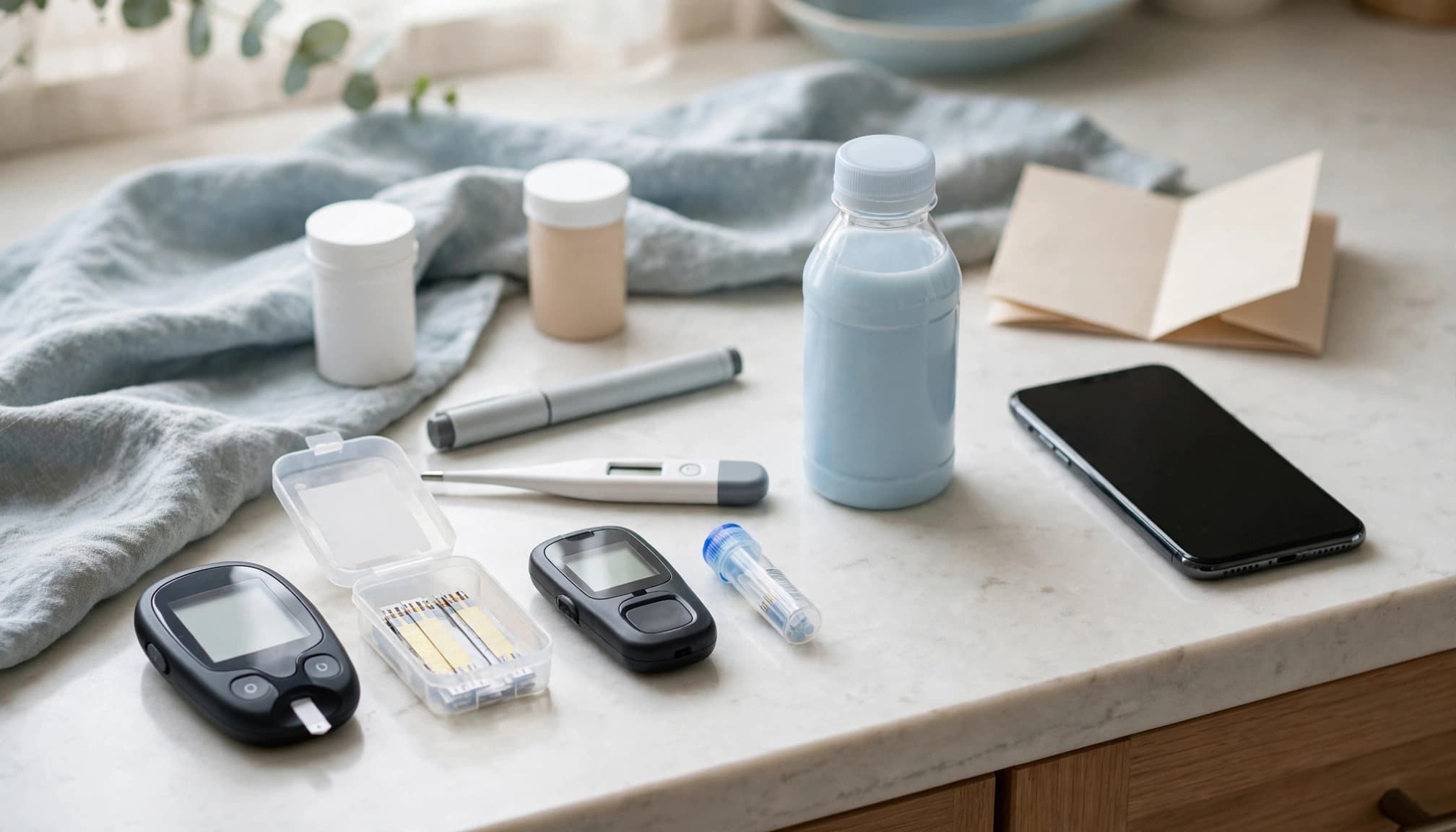
A practical kit should include:
- A glucose meter or continuous glucose monitor, spare meter or continuous glucose monitor supplies, test strips, and batteries.
- Urine or blood ketone testing supplies.
- A thermometer, fluids or oral rehydration supplies, easy-to-digest foods, and a written medication list.
- Insulin, needles or pen supplies, and other diabetes prescription medicines with enough supply for an unexpected illness.
- Emergency contact numbers, insurance details, and the person’s written sick-day instructions.
- A prescribed glucagon product only when a clinician has recommended one for severe hypoglycemia. Family members should know where emergency glucagon treatment is stored and how to use it.
Know when illness requires urgent care
A rising number matters, but symptoms matter too. Diabetic ketoacidosis can develop when insulin is insufficient and ketones build up in the blood.
Call the healthcare provider promptly
Contact the diabetes team for moderate or large ketones, repeated high glucose that doesn't improve with the clinician-approved correction plan, or uncertainty about prescription medicine doses. Prompt medical attention can help prevent complications.
A fever over 101 lasting 24 hours, ongoing vomiting, severe diarrhea, signs of dehydration, or glucose above 300 mg/dL on two readings despite correction also require urgent clinical advice. MedlinePlus guidance on diabetes during illness advises acting early when sickness makes glucose difficult to manage. Fixed glucose and fever thresholds are general prompts and may vary by country and clinician plan.
Seek emergency care for DKA symptoms
Go to an emergency room or call local emergency services for difficult breathing, confusion, severe weakness, persistent vomiting, inability to keep fluids down for more than four hours, or worsening ketones.
The CDC lists DKA symptoms that include fast, deep breathing, fruity-smelling breath, dry mouth, flushed skin, and muscle aches. An awake person who can swallow should follow the clinician-approved low-glucose treatment plan, which may include the 15-15 rule. An unconscious person or someone unable to swallow needs emergency services and prescribed glucagon guidance, not food or drink. A blood glucose level below 60 mg/dL that doesn't respond to prescribed treatment also needs urgent help.
Safe access to diabetes prescriptions during a sick day
Online medicine home delivery can support routine continuity, but it cannot replace emergency care or same-day clinical assessment. A person who is already ill should not wait for a shipment if insulin, glucose strips, or another essential prescription medicine has run out.
Plan refills before the last dose
Refill reminders should account for weekends, prescriber renewals, insurance approvals, and possible delivery delays. Guidance on avoiding missed doses during refill delays can help families build extra time into routine medication planning.
A reputable Online Pharmacy should require a valid prescription for prescription-only treatment, provide pharmacist support, and state dispensing and shipping details clearly.
Compare access costs without compromising safety
Medicine prices, availability, and delivery charges can differ across the USA, Australia, and the UK. The medicine delivery cost to the USA may also depend on the product, shipping method, and destination rules.
Cost should never be the reason to stretch insulin, split tablets, or substitute a medicine without approval. International orders may involve longer transit times and local import requirements, so they are best planned as part of regular refill management rather than used during an acute sick day.
Key Takeaways
- Illness can raise blood glucose even when food intake falls.
- Insulin should not be stopped without direct clinical instruction.
- Check glucose more often and test ketones when sick or when glucose is 240 mg/dL or higher.
- Fluids, carbohydrate replacement, and medicine changes should follow an individual sick day plan.
- Vomiting, dehydration, moderate or large ketones, breathing changes, or persistent high glucose require prompt medical attention.
Frequently Asked Questions
What happens to blood sugar levels during a cold or flu?
Illness raises stress hormones that can increase glucose and reduce insulin effectiveness. Fever, infection, dehydration, and reduced activity may all contribute. A person can have high readings even when eating little, which is why more frequent monitoring matters during a sick day.
Should insulin and diabetes pills be taken when vomiting?
Insulin shouldn't be stopped without advice, particularly for people with type 1 diabetes. Medicines such as metformin, SGLT2 inhibitors, sulfonylureas, and some non-insulin injections may require temporary review during vomiting, diarrhea, dehydration, or reduced food intake. Follow the written sick day plan and contact a healthcare provider instead of guessing whether to hold or continue a medicine.
How often should glucose be checked during illness?
The CDC advises testing every four hours, while some type 1 diabetes plans recommend every two to three hours. More frequent checks may be needed for rising glucose, ketones, vomiting, or medication changes. Each reading should be recorded with symptoms, fluids, and doses taken.
Why are ketones important on a sick day?
Ketones can show that the body isn't getting enough usable insulin and has begun using fat for fuel. High ketones can lead to diabetic ketoacidosis. Testing is especially important during illness, when blood glucose is 240 mg/dL or higher, or when nausea and vomiting occur.
When should someone go to the emergency room?
Emergency care is needed for severe or persistent hypoglycemia, inability to swallow, confusion, difficult breathing, or suspected DKA. Seek care for severe dehydration, persistent vomiting, or suspected diabetic ketoacidosis. It's also needed when liquids can't stay down for more than four hours or low blood sugar remains below 60 mg/dL despite prescribed treatment.
A written plan reduces avoidable risk
Diabetes sick day rules work best when prepared before the first fever, stomach bug, or missed meal. Write down each prescription, your monitoring schedule, ketone thresholds, emergency contacts, and clinician-approved steps for vomiting, diarrhea, dehydration, or reduced intake. Ask a healthcare provider to review these instructions before illness begins.
Recommendations can vary by country, prescription, diabetes type, kidney function, and your care plan. Illness creates uncertainty, but clear monitoring and timely escalation can keep a difficult sick day from becoming a medical crisis.