
Dry Eye Disease: Prevention and Treatment Guide

Dry eye disease is a multifactorial condition caused by an unstable tear film, excess evaporation, reduced tear production, or both. It is an informational topic with safety and treatment-choice implications, since persistent irritation can resemble other eye conditions.
This guide covers symptoms, prevention, diagnosis, Mebomian Gland Dysfunction, Miebo, and Nova Tears. Contents: causes, daily care, treatment options, and common questions.
Key Takeaways
- Dry Eye Disease may be evaporative, aqueous-deficient, or mixed.
- Mebomian Gland Dysfunction often drives tear evaporation.
- Screen habits, humidified air, and preservative-free drops may reduce irritation.
- Prescription options such as Miebo need professional assessment.
What Is Dry Eye Disease and Why Does It Happen?
The tear film has watery, oily, and mucus components. When one layer fails, the eye surface dries and vision may fluctuate. Symptoms include burning, grittiness, redness, fatigue, and blurred vision that worsens with screens, wind, or dry air.
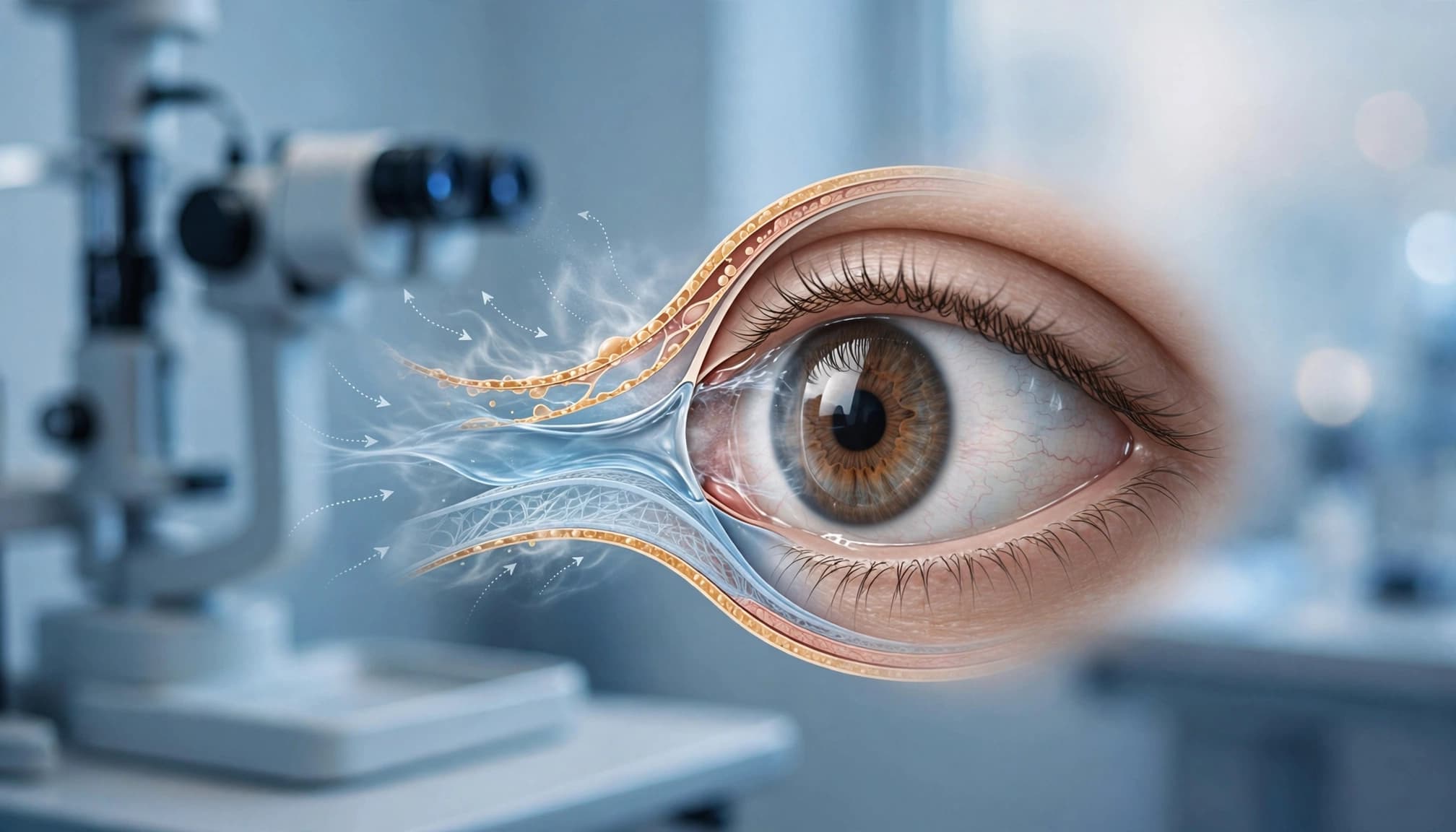
Aqueous-deficient disease involves too little tear fluid. Evaporative dry eye occurs when tears vanish too quickly. Many people have a mixed form. Mebomian Gland Dysfunction is a leading cause of evaporation because blocked eyelid glands weaken the oily outer layer.
Age, Sjogren syndrome, diabetes, eyelid inflammation, eye surgery, smoke exposure, and some medicines can raise risk.
How to Prevent Dry Eye Symptoms From Getting Worse
Regular screen breaks and conscious blinking reduce surface drying. Humidified air, adequate sleep, and glasses that shield the eyes from wind or smoke may also help. Contact lens wearers should follow cleaning and replacement instructions carefully.
Warm compresses and gentle lid hygiene may help when blepharitis or Mebomian Gland Dysfunction is suspected. Persistent symptoms need an eye examination. For frequent lubrication, preservative-free options may be preferable, including Nova Tears preservative-free eye drops, Optimel Manuka dry eye drops, or Hylo Forte preservative-free drops.
Dry Eye Disease Treatment: From Artificial Tears to Miebo
Treatment should match the cause and severity. Lubricating drops, gels, nighttime ointments, warm compresses, lid care, and treatment for rosacea or blepharitis may all have a role.
Miebo is preservative-free perfluorohexyloctane ophthalmic solution, approved by the FDA in 2023 for signs and symptoms of dry eye disease. It targets tear evaporation, so it may suit evaporative disease linked to Mebomian Gland Dysfunction. Miebo's approved use and side effects include blurred vision and eye redness.
The labeled dose is one drop in each affected eye four times daily. Remove contact lenses first and wait 30 minutes before reinserting them. Other prescriptions, including Restasis cyclosporine eye drops, work through different mechanisms.
Frequently Asked Questions
Can dry eye disease cause blurry vision?
Yes. An unstable tear film can interrupt the eye's smooth optical surface, causing vision to fluctuate. Blinking may briefly improve clarity.
Is Miebo the same as artificial tears?
No. Artificial tears add lubrication or moisture. Miebo is a prescription perfluorohexyloctane solution that reduces tear evaporation.
When should dry eye be checked urgently?
Moderate or severe pain, light sensitivity, marked redness in one eye, discharge, or reduced vision need prompt clinical assessment.
Final Thoughts
Dry eye disease is manageable, but treatment works best when it addresses the underlying mechanism rather than irritation alone. Persistent or changing symptoms deserve an eye-care evaluation. This information is for educational purposes only, and a licensed healthcare provider should assess persistent, severe, or changing symptoms.