
EGFR ALK Testing: How Results Guide Lung Cancer Care
Written by: Waldrugmart Editorial Team
Reviewed by: Navdeep Singh, B.Pharm — Registered Pharmacist
Last reviewed:
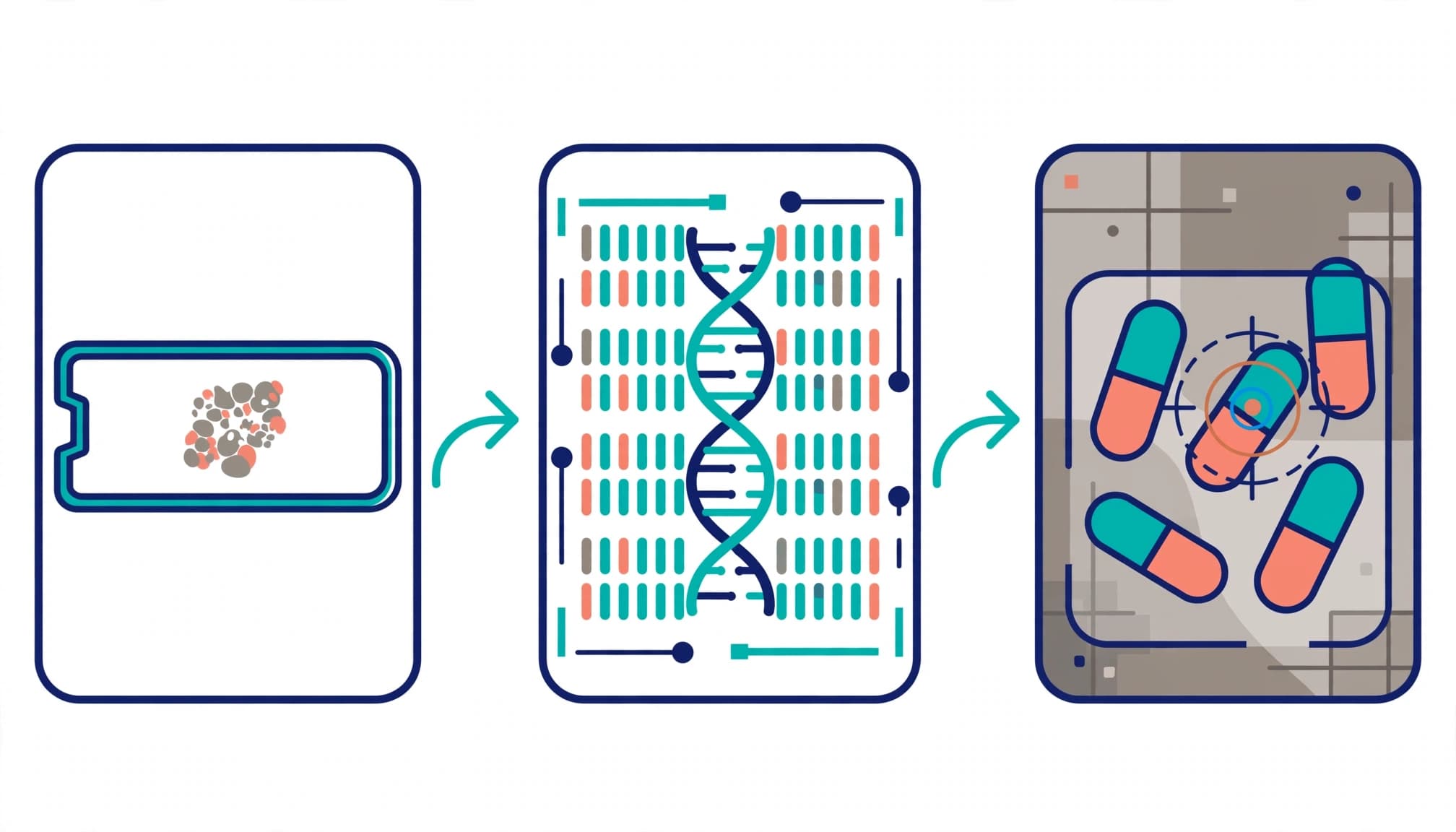
EGFR ALK testing identifies tumor changes that can guide targeted treatment for non-small cell lung cancer (NSCLC). A positive result helps identify suitable medicines, but the exact alteration, cancer stage, and patient health determine the regimen.
These results distinguish cancers that can look identical under a microscope yet respond differently to treatment. The pathway begins with confirming the diagnosis, then matching a reliable molecular result to an appropriate therapy.
Table of Contents
Key takeaways · Who needs testing · Samples and reporting · Laboratory methods · Treatment choices · Retesting · Costs and access · FAQs
Key Takeaways
- Advanced non-squamous NSCLC needs broad biomarker testing before first-line treatment, rather than EGFR and ALK testing alone.
- A negative liquid biopsy doesn't exclude a treatable alteration. Tissue testing remains important when feasible.
- Targeted medicines require a matching biomarker, a valid prescription, and monitoring. They aren't interchangeable treatments for every lung cancer.
Who Needs EGFR and ALK Testing?
What the tumor changes mean
EGFR mutations can keep growth signals switched on inside cancer cells. They occur in approximately 10% to 15% of NSCLC in Western populations, with higher frequencies in some populations. They're most common in adenocarcinoma and among never-smokers or former light smokers.
Exon 19 deletions account for about 45% of EGFR-mutant cancers; the exon 21 L858R substitution accounts for about 40%.
ALK-positive cancer contains an ALK rearrangement, usually an EML4-ALK fusion. ALK rearrangements occur in roughly 5% of NSCLC. Reported EGFR and ALK co-occurrence is uncommon, approximately 0.1% to 2.4%.
When testing should happen
For advanced non-squamous non-small cell lung cancer, including adenocarcinoma, NCCN, ESMO, and CAP/IASLC/AMP guidance supports broad biomarker testing before first-line treatment. This includes EGFR testing. Smoking history mustn't exclude testing under CAP/IASLC/AMP patient-selection guidance.
The established turnaround time benchmark is no more than 10 working days after specimen receipt. Transport and sample preparation can add time.
Pathologist-initiated reflex testing removes a separate ordering step. In a Toronto study, it increased testing by about one-third and reduced time to optimal systemic therapy from 36 to 24 days. Testing also guides treatment in selected earlier-stage cancers.
How EGFR ALK Testing Moves From Sample to Report
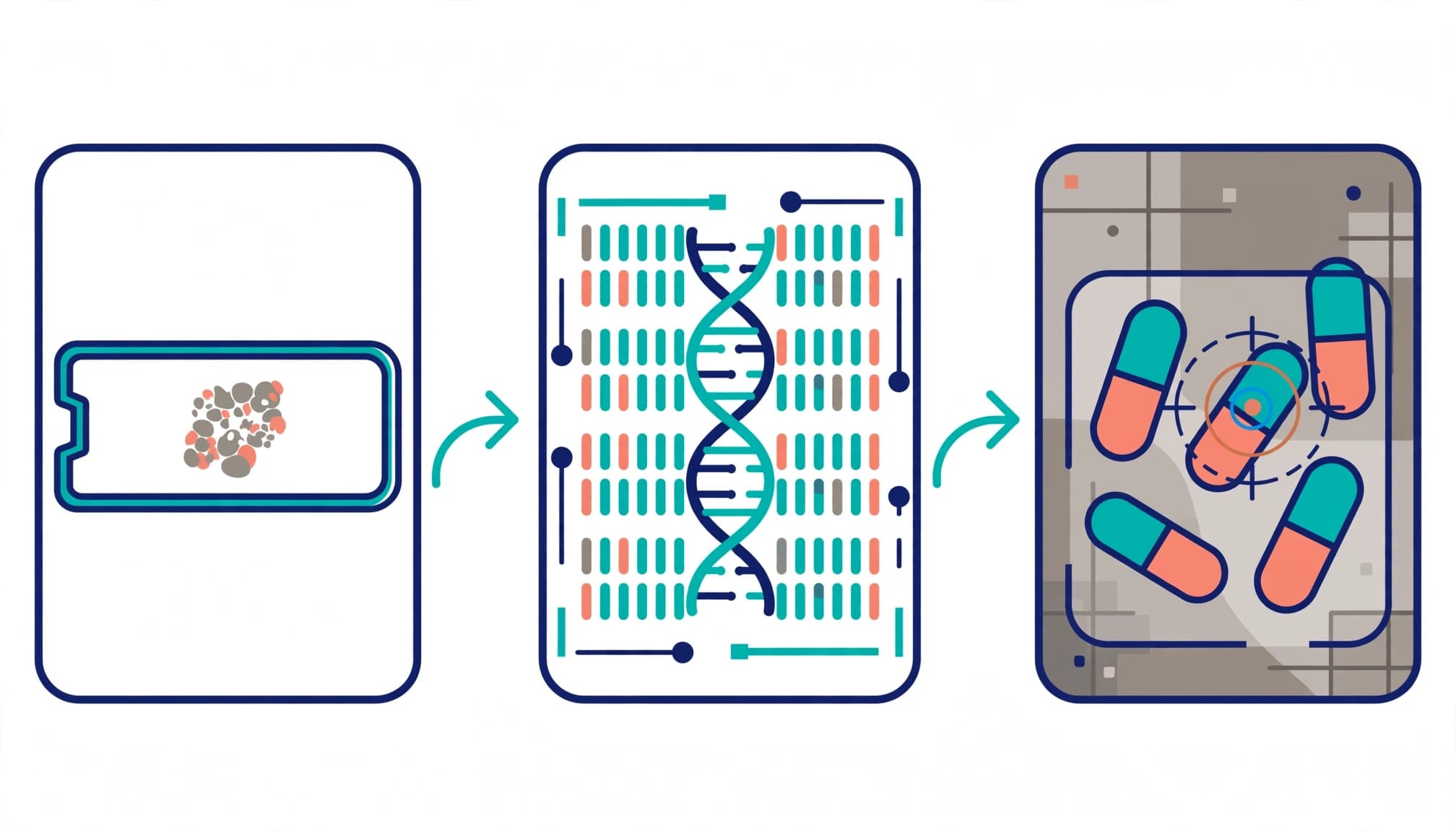
Tissue establishes the diagnosis
A pathologist examines biopsy tissue or a cytology sample to confirm and classify non-small cell lung cancer. Molecular testing then identifies cancer-related alterations; it doesn't replace the diagnostic examination.
A broad next-generation sequencing panel, or NGS, conserves limited tissue compared with repeated single-gene tests. Beyond EGFR and ALK, relevant targets include ROS1, BRAF, KRAS, MET, RET, NTRK, and HER2. PD-L1 generally requires a separate protein-staining test.
The report should identify the alteration, testing method, sample adequacy, and clinically relevant limitations.
Blood complements tissue testing
Liquid biopsy analyzes circulating tumor DNA, or ctDNA, in blood. It can help when tissue is scarce, biopsy is unsafe, or another tissue procedure would delay treatment.
Blood testing often returns sooner because it avoids tissue processing. Low ctDNA shedding or assay limitations can produce negative or inconclusive results, so a negative plasma result isn't a definitive negative.
A positive actionable result can guide treatment within the assay's validated use. After a negative or inconclusive result, tissue testing or an appropriate repeat or alternative test may be considered when feasible.
Which Laboratory Methods Detect EGFR and ALK?
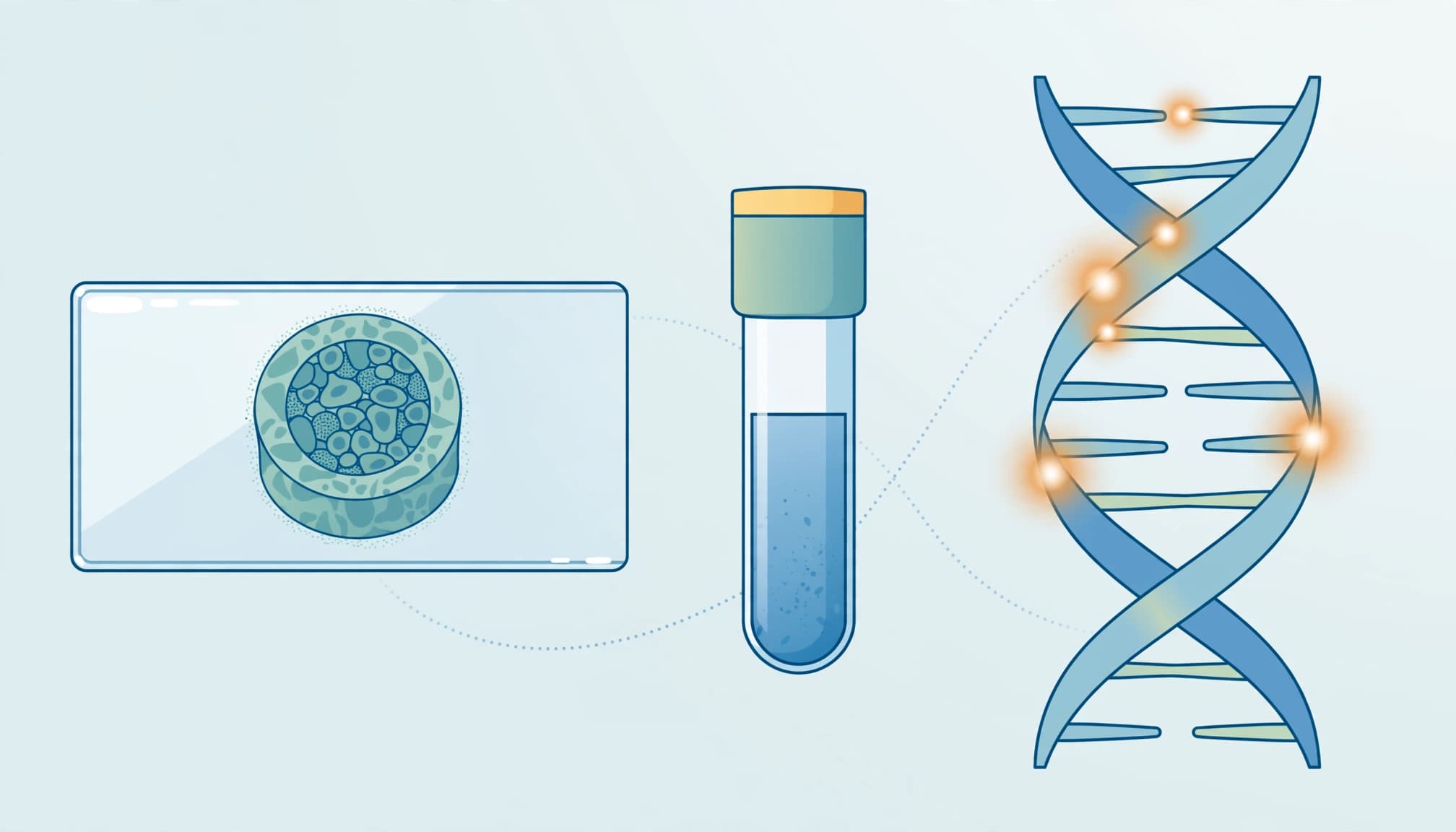
EGFR: coverage matters
PCR detects predefined mutations; NGS examines a broader set of variants. Some assay-treatment pairings are FDA-approved: Roche's cobas EGFR Mutation Test v2 has companion diagnostic uses with erlotinib and osimertinib, while Qiagen's therascreen EGFR RGQ PCR kit has uses with gefitinib and afatinib. The FDA companion-diagnostic list connects authorized assays with relevant treatments. Approvals apply to specific assays, variants, and treatments.
Limited PCR coverage matters for exon 20 insertions: commercial kits may miss 50% or more of cases identified by NGS.
CAP, IASLC, and AMP recommend against total EGFR immunohistochemistry for selecting EGFR-targeted therapy. Protein abundance doesn't establish a sensitizing mutation.
ALK: complementary methods
FISH using the Vysis LSI ALK Break Apart Rearrangement Probe Kit is the historical gold standard. It requires at least 50 evaluable tumor cells and doesn't identify the fusion partner.
Validated IHC (immunohistochemistry), including Ventana ALK (D5F3), and NGS are established approaches. D5F3 companion-diagnostic milestones occurred in Europe in 2012, China in 2013, and the USA in 2015.
NGS can characterize fusion partners; RNA-based testing can resolve certain difficult cases. FISH can help resolve selected equivocal or discordant findings, subject to local validation and specimen quality. In a reported 2019 utilization dataset, NGS overtook FISH for ALK detection, accounting for 46.0% versus 37.7%.
How Positive Results Guide Targeted Treatment
A tyrosine kinase inhibitor (TKI) blocks signaling from its matched abnormal protein. Treatment depends on the specific biomarker.
These alterations lead to different treatment pathways.
| Result | Treatment implications in advanced disease |
|---|---|
| EGFR exon 19 deletion or L858R | Osimertinib-based treatment; amivantamab plus lazertinib is another option. |
| EGFR exon 20 insertion | A distinct pathway, including amivantamab-based treatment where indicated. |
| ALK rearrangement | ALK inhibitors such as alectinib, brigatinib, lorlatinib, or crizotinib. |
| Neither detected | Review assay coverage, sample adequacy, and other biomarkers. |
The exact variant matters more than the word "positive." Exon 19 deletions and L858R both qualify for common EGFR-directed regimens, although outcomes aren't identical across mutation subgroups.
Osimertinib treatment and safety information addresses an EGFR inhibitor used alone or with chemotherapy in appropriate settings. Other options include erlotinib for EGFR-mutated NSCLC, although newer regimens have changed first-line practice.
For ALK-positive disease, treatment selection follows current guidance and considers factors such as central nervous system activity. Crizotinib may be considered in selected cases.
Targeted therapy can improve disease control, but it doesn't guarantee a response. Rash and diarrhea are common with EGFR inhibitors; pneumonitis, liver injury, and drug-specific cardiac effects require attention. ALK inhibitors have their own monitoring requirements.
Immunotherapy is a separate treatment class. High PD-L1 expression alone doesn't override an actionable EGFR or ALK result.
Why Retesting Matters When Cancer Progresses
Resistance can emerge as cancer cells acquire new changes. Historically, progression often occurred around 12 months after first- or second-generation EGFR TKIs. The T790M resistance mutation accounted for approximately 50% to 60% of acquired resistance.
That historical estimate doesn't describe resistance after first-line osimertinib.
For progression after an earlier-generation EGFR inhibitor, plasma ctDNA testing is an established initial approach to finding T790M. Droplet-digital PCR can detect low-abundance T790M, although it searches a narrower set of changes than broad sequencing.
The CAP guidance on relapse testing recognizes both biopsy and circulating DNA approaches. A negative blood result may require tissue follow-up.
After osimertinib or an ALK inhibitor, broader resistance testing may identify another treatment target. Tissue biopsy can also detect transformation into another cancer type, which a mutation-only blood test cannot establish.
How to Access Targeted Treatment Affordably
Testing costs depend on the assay, laboratory, and coverage. There isn't one reliable universal price. In the USA, insurance affects out-of-pocket costs; Australia and the UK use different public funding arrangements.
Medicine comparisons also need matching strengths and pack sizes. Our listed gefitinib 250 mg tablets include a 30-tablet pack priced at US$169.14. That listing isn't a USA retail-price comparison or a reason to replace a prescribed regimen.
Similarly, generic erlotinib information concerns the same active ingredient as branded erlotinib, not a substitute for osimertinib or an ALK inhibitor.
Our Online Pharmacy requires a valid prescription for prescription medicine. Global sourcing and online medicine home delivery remain subject to destination-country rules; an overseas prescription doesn't automatically authorize importation. Delivery charges also belong in the total cost comparison.
This information is for educational purposes only. Consult a licensed healthcare provider before starting or changing cancer treatment.
Frequently Asked Questions
Which test confirms lung cancer?
A pathologist generally confirms lung cancer by examining tissue or cells collected during biopsy or another sampling procedure. EGFR and ALK tests characterize the cancer after diagnosis. A liquid biopsy can identify treatment-related alterations, but it doesn't usually establish the complete initial diagnosis by itself.
What does a negative EGFR or ALK result mean?
It means the assay didn't detect the alterations it examined in that sample. It doesn't exclude lung cancer or every targeted treatment option. Low tumor content, limited assay coverage, and low ctDNA shedding can affect results. Broad profiling may identify another actionable change.
What is the life expectancy with EGFR-positive lung cancer?
An EGFR-positive result alone cannot establish life expectancy. Stage, brain involvement, overall health, the exact mutation, and response to treatment all matter. Modern targeted treatments have improved outcomes for many patients, but clinical-trial averages cannot predict how long an individual patient will live.
Is targeted therapy safer than chemotherapy?
The side-effect profiles differ, so neither category is universally safer. Targeted medicines can cause serious lung inflammation, liver injury, or heart problems, depending on the drug. Combination regimens add further risks. Treatment selection balances expected cancer control with health conditions, interactions, and monitoring needs.
Can targeted therapy avoid chemotherapy?
Some patients receive an oral targeted medicine without chemotherapy, depending on the alteration, stage, and clinical circumstances. Others benefit from combinations that include chemotherapy. EGFR exon 20 insertions require different considerations than exon 19 deletions or L858R, while ALK-positive disease follows a separate treatment pathway.
The Result Must Match the Treatment
EGFR and ALK testing connects a cancer diagnosis with treatments directed at its biology. Its clinical usefulness depends on adequate sampling and precise interpretation, including recognition of what an assay can miss.
The same discipline applies when disease progresses. A treatment-changing result must describe the cancer's current biology, rather than rely indefinitely on its original molecular profile.