
Generic vs Brand Medications: How to Switch Safely (Plus a Doctor Checklist)

A refill arrives, and the pills look different. New color, new shape, a new bottle label. Your first thought is often the same: Is this really my prescription medicine?
For most people, switching from a brand-name drug to a generic is safe, and it can cut costs fast. Still, "generic vs brand medications" isn't just a price question. It's also about consistency, side effects, and how closely your dose needs to be controlled.
This article shares general education, not medical advice. Before you switch (or accept a substitution), check with your prescriber or pharmacist, especially if you take high-risk meds.
What "generic" really means, and what can still change
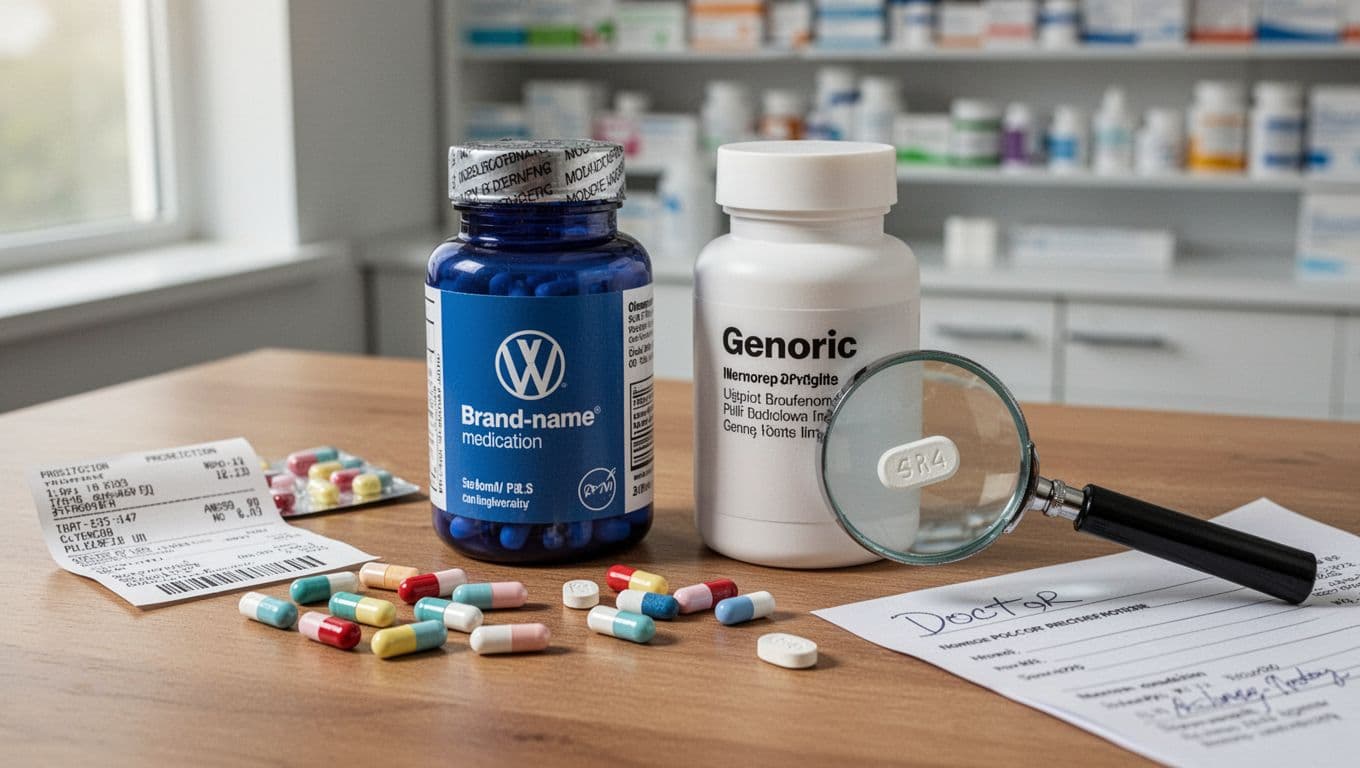 Brand and generic bottles side by side, with a close look at pill markings and labels, created with AI.
A true generic has the same active ingredient, strength, dosage form (like tablet or capsule), and route (like oral) as the brand. The FDA also requires bioequivalence, meaning your body absorbs it at a similar rate and amount. You can read the FDA's plain-language explanation in Ensuring the Safety of FDA-approved generic drugs.
However, two things can still differ and matter for some patients:
- Inactive ingredients: dyes, fillers, coatings, or lactose can change. These can affect allergies, stomach upset, or headaches.
- Release features and "feel": the tablet's coating, how fast it dissolves, or how it sits in your stomach may vary slightly.
Here's a quick comparison to keep the basics straight:
| Feature | Brand-name medication | Generic medication |
|---|---|---|
| Active ingredient | Same | Same |
| Strength and dosage form | Set by approval | Must match |
| How it works in the body | Proven in trials | Must be bioequivalent |
| Inactive ingredients | Vary by maker | Can differ from brand |
| Pill look (color/shape) | Often consistent | May change by manufacturer |
Most switches go smoothly. Still, if you've had past problems, ask your pharmacist to check whether the generic is considered therapeutically equivalent (often called "AB-rated"). For a deeper clinical discussion of interchangeability, see Brand and generic medications: are they interchangeable?.
How to tell if switching is safe (step-by-step)
 A doctor and patient reviewing a medication change plan together, created with AI.
Switching safely is less like flipping a switch and more like changing shoes. Most pairs fit. A few leave blisters, and you want to notice early.
- Confirm the exact drug and dose on the label.
Check the drug name (generic name is fine), strength, and directions. If anything changed, pause and call the pharmacy. - Check the pill imprint (and keep the bottle).
Many tablets and capsules have letters or numbers stamped on them. Compare the imprint to your prior fill. If you don't recognize it, ask the pharmacist to confirm the manufacturer and National Drug Code (NDC). - Ask whether the manufacturer changed.
Some people feel fine on one generic and not another. If you're sensitive, ask the pharmacy to keep the same manufacturer for future refills when possible. - Review "your risk level" before the first dose.
If your medication has a narrow margin for error, or you're medically fragile, ask your clinician first. This matters a lot for transplant meds, seizure meds, blood thinners, and some heart and thyroid drugs. - Make a simple monitoring plan for the next 1 to 3 weeks.
Write down what "working" looks like for you, then watch for change. Examples: pain control, blood pressure readings, blood sugar logs, mood stability, asthma control, or reflux symptoms. Some meds also need labs (INR for warfarin, TSH for thyroid meds, drug levels for transplant meds). - Know when to follow up.
If you feel worse, call promptly. If symptoms are stable, still mention the switch at your next visit. For high-risk drugs, your clinician may schedule a sooner check.
If a pharmacy substitutes a different-looking pill, don't assume it's wrong. Verify the imprint and manufacturer, then watch closely for any new side effects.
When not to switch without supervision (and what to do if the pharmacy substitutes)
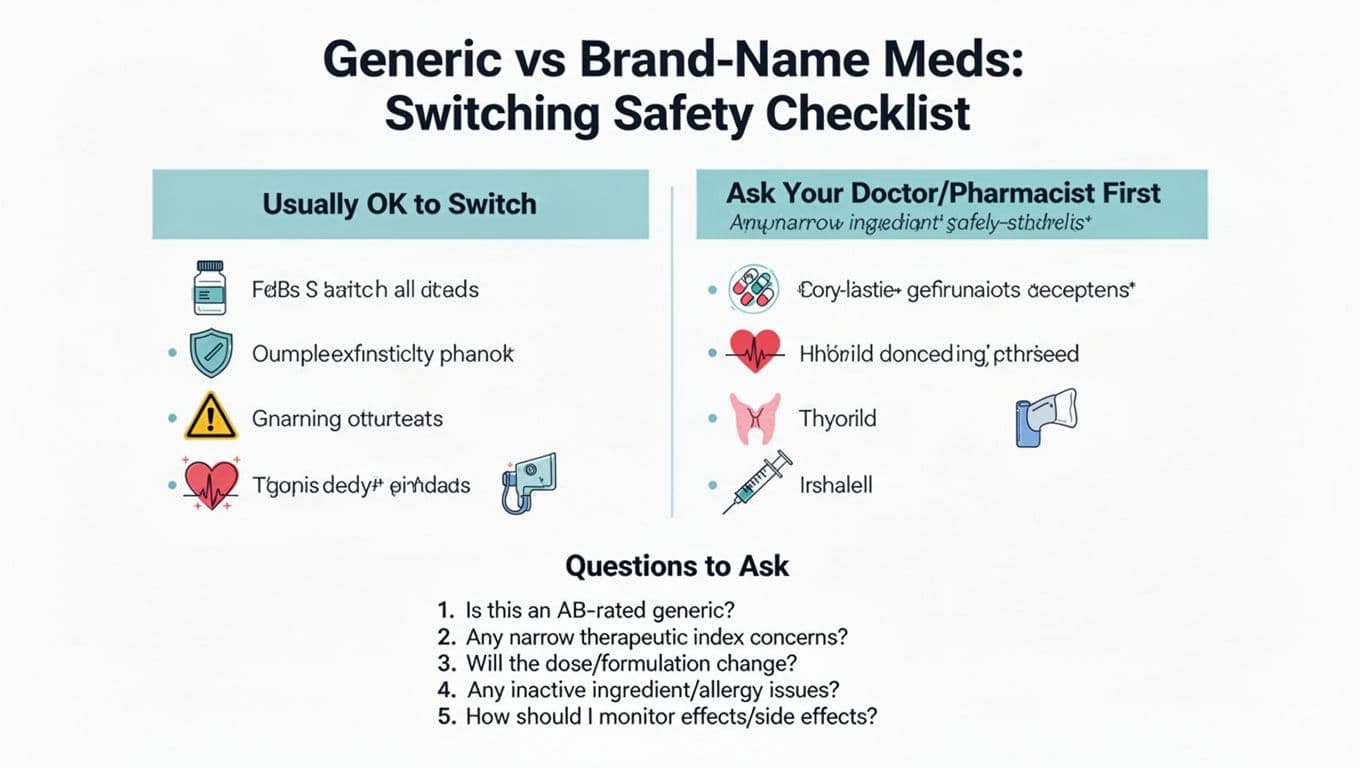 A simple safety checklist for switching between brand and generic meds, created with AI.
Some situations deserve extra care. Don't switch on your own, or don't switch without a clear plan, if any of these apply:
- Pregnancy (or trying to conceive)
- Organ transplant or use of immunosuppressants
- Seizure disorders
- Anticoagulation (blood thinners like warfarin, or complex clotting histories)
- Active cancer treatment where your oncology team tracks tight lab targets
Also be cautious with extended-release products, patches, inhalers, and injections, because small differences in delivery can feel bigger in real life.
If a substitution happens and you're uneasy, take these steps: call the pharmacy to confirm the generic and manufacturer, ask if they can order the prior manufacturer, and message your prescriber if symptoms change. Insurance can also drive switches, so ask whether "dispense as written" is needed, and whether a prior authorization could keep the brand.
For people managing long-term conditions, an Online pharmacy can help you stay consistent by filling larger supplies and tracking refills. If you use Waldrugmart's prescription delivery start page, keep your medication list and allergies ready so the pharmacy team can verify details. Cost still matters, so it helps to understand the total checkout price, including the medicine delivery cost to USA and timelines for online medicine home delivery. If you're trying to stretch a budget, this guide on saving on prescriptions without insurance can give you options to discuss with your clinician.
Concerns about generic quality sometimes show up in the news. For context on how oversight works and why questions come up, see this report: investigation on FDA quality testing for generics.
A simple checklist to ask your doctor (and pharmacist)
Use this before you switch, especially if you've had side effects before.
- Is this generic considered therapeutically equivalent for my exact drug and form?
- Will the dose, release type, or device change (tablet vs capsule, ER vs IR, inhaler brand)?
- Do I have any allergy or sensitivity risks from inactive ingredients (dyes, lactose, coatings)?
- Can we keep the same manufacturer for consistency across refills?
- What should I monitor at home (symptoms, BP, glucose, peak flow)?
- Do I need labs after switching (INR, TSH, kidney function, drug levels)?
- When should I follow up, and what changes mean "call today"?
- If insurance blocks the brand, what's the backup plan (prior auth, appeal, different med)?
Quick FAQ: the answers people really want
Are generics less effective?
For most patients, no. FDA-approved generics must match the brand's key performance targets, including bioequivalence and quality standards. If you feel different after switching, it's still real and worth checking.
Why do pills look different?
Different manufacturers use different shapes, colors, and inactive ingredients. Pharmacies may also change suppliers. The label and imprint help confirm what you received.
Can I request a specific manufacturer?
Often, yes. Ask your pharmacy to note your preferred manufacturer, then request it each refill. Supply issues can limit options, so plan ahead for travel and weekends.
What about biosimilars?
Biosimilars are not the same as standard generics. They're "highly similar" versions of biologic drugs (large, complex medicines). Switching rules can vary by product and state, so your specialist and pharmacist should guide that decision.
Conclusion
A safe switch is usually possible, but it shouldn't feel like guesswork. Confirm the label and imprint, ask about the manufacturer, and set a short monitoring plan so you catch problems early. When the stakes are higher, bring your clinician in before you change anything. Your goal is simple: the right prescription medicine, the right way, with confidence.