
Grapefruit Drug Interactions: Medicines That Need a Check

Grapefruit can change how much medication reaches the bloodstream, even when the prescribed dose stays the same. Grapefruit drug interactions affect certain cholesterol, blood pressure, transplant, cancer, and allergy medicines, but the risk depends on the exact medicine.
For some drugs, exposure rises and side effects become more likely; for others, absorption falls and treatment becomes less effective. Check the active ingredient and food instructions with a healthcare provider or pharmacist.
Which medicines need a grapefruit check?
Medicines that may need a grapefruit check include simvastatin, atorvastatin, felodipine, nifedipine, cyclosporine, tacrolimus, certain oral cancer treatments, and fexofenadine. This list isn't exhaustive, and warnings can vary by exact medicine. Waiting a few hours between grapefruit and a dose doesn't reliably prevent an interaction.
Key Takeaways
- Medicines in the same class can have different grapefruit warnings, so check the exact medicine.
- Whole grapefruit and juice can both matter. Some related citrus fruits also require caution.
- A pharmacist can assess accidental exposure and possible alternatives. Patients shouldn't skip, double, or change doses independently.
Table of contents
- How grapefruit changes medication levels
- Which medicines deserve particular attention
- Why separating grapefruit and medication isn't reliable
- Other citrus fruits and juices
- A pharmacist's interaction check
- Affordable access without sacrificing safety
- Frequently asked questions
- The importance of medicine-specific guidance
How grapefruit drug interactions work
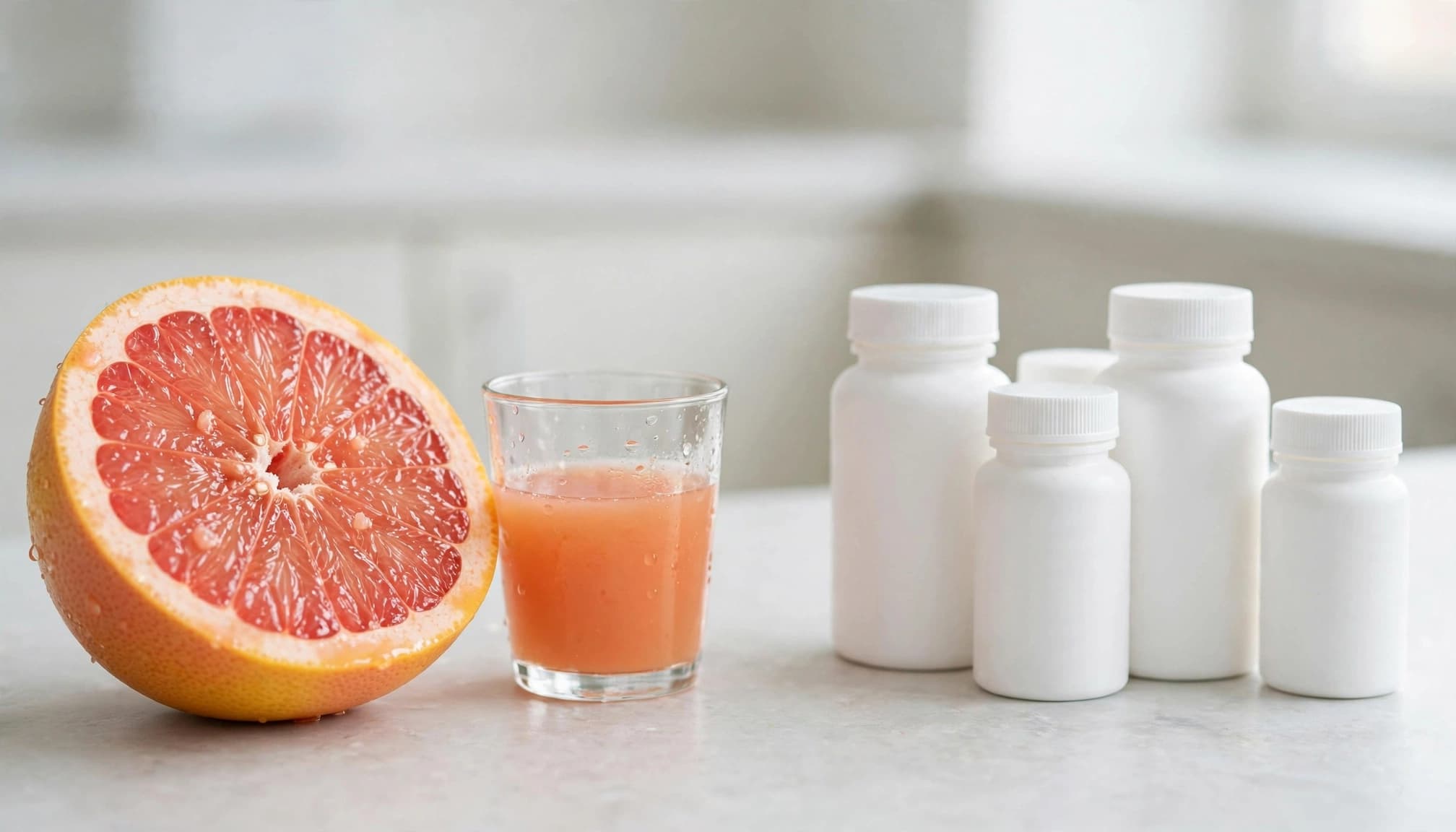
Grapefruit juice can affect an oral medicine in the intestine, before it reaches the general circulation. Depending on the medicine, two different processes can raise or lower exposure.
Enzyme inhibition can raise drug exposure
Grapefruit contains furanocoumarins, including bergamottin and 6',7'-dihydroxybergamottin. These compounds can inactivate the CYP3A4 enzyme in the intestinal wall. There, it contributes to drug metabolism by breaking down certain medicines during absorption.
With less intestinal breakdown, more medicine can enter the bloodstream. The prescribed dose hasn't changed, but exposure has.
A review of fruit juice interactions describes this effect and its connection to adverse reactions. Whether it matters clinically depends on a medicine's reliance on intestinal CYP3A4. Its therapeutic range also matters, since some treatments become unsafe after relatively small changes in exposure.
Transporter inhibition can reduce absorption
Drug transporters help move some medicines across the intestinal wall. Grapefruit can inhibit uptake transporters, including members of the OATP family, reducing intestinal absorption.
Fexofenadine, sold as Allegra and in generic forms, is an important example. Fruit juice can lower its availability and weaken allergy relief.
These pathways require different precautions. A warning about reduced absorption shouldn't be interpreted as a warning about overdose. An over-the-counter medicine still merits an interaction check.
Which medicines deserve particular attention?
The FDA identifies several affected prescription and nonprescription medicines. Lists of grapefruit drug interactions are starting points, not substitutes for checking current product information.
Product guidance may specify whether and how much grapefruit juice to avoid. Recommendations vary by medicine.
Statins differ within the same class
Simvastatin (Zocor), lovastatin, and atorvastatin (Lipitor) need particular attention. Higher exposure can increase the risk of muscle injury and other adverse effects, including rhabdomyolysis, a severe muscle breakdown that can damage the kidneys.
These statin drugs don't all respond alike, and the effect depends partly on grapefruit intake. Atorvastatin guidance, for example, isn't identical to simvastatin guidance.
Pravastatin and rosuvastatin (Crestor) generally don't have the same clinically important grapefruit interaction. Rosuvastatin still has other interaction risks, including with certain antivirals and fibrates, that may increase side effects. A lower grapefruit risk doesn't make a drug suitable for everyone.
Checking prescription label instructions can help distinguish food warnings from dosing directions. Any statin substitution requires prescriber approval.
Other drugs have different consequences
These examples show why the precise medicine matters. Blood pressure medications such as felodipine and nifedipine are among the medicines to check.
| Medicine or group | Reason for a grapefruit check |
|---|---|
| Felodipine and nifedipine (calcium channel blockers) | Increased exposure can cause excessive blood pressure reduction, dizziness, flushing, or a fast heartbeat. |
| Cyclosporine and tacrolimus | Increased levels can cause drug toxicity, including kidney injury; transplant teams monitor treatment closely. |
| Amiodarone and dronedarone | Increased exposure can raise the risk of adverse cardiac effects. |
| Palbociclib (Ibrance) | Its prescribing information advises avoiding grapefruit during treatment. |
| fexofenadine (Allegra) | Fruit juice can reduce absorption and allergy control. |
The table isn't a complete list. Warnings vary within classes: calcium channel blockers, cancer treatments, and immunosuppressants don't all share the same guidance.
For nonprescription products, checking OTC drug interactions also requires identifying every active ingredient, rather than relying on a familiar brand name.
Why separating grapefruit and medication isn't reliable
Taking a medicine in the morning and drinking grapefruit juice at night doesn't reliably prevent enzyme-mediated interactions.
Furanocoumarins can inactivate intestinal CYP3A4. Recovery depends on the body producing replacement enzyme, not simply clearing grapefruit juice from the stomach. Clinical studies show effects can persist for several days, though duration varies.
A clinical review of grapefruit interactions examines clinically important changes in absorption and metabolism. This evidence doesn't establish a universal waiting period for every medicine.
The amount and frequency of grapefruit intake, the particular drug, and differences between patients all affect the result. So a small serving or occasional glass can't automatically be declared safe.
When a label says to avoid grapefruit, moving the dose is an unreliable workaround. Transporter-based interactions may have different timing characteristics, so ask a healthcare provider for medicine-specific guidance rather than relying on a general spacing rule.
Other citrus fruits and juices also need attention
Whole grapefruit, grapefruit juice, and juice made from concentrate can all matter. Blended drinks may contain grapefruit juice even when another fruit dominates the label.
Seville oranges, often used in marmalade, and pomelos can cause interactions similar to grapefruit juice. Some tangelos and grapefruit-related hybrids also warrant checking, as with other citrus fruits. Ordinary sweet oranges don't generally share the same enzyme-inhibiting pattern, but that doesn't make orange juice compatible with every medicine.
For fexofenadine, apple juice and orange juice can reduce absorption. Water is recommended for taking it.
A review of other fruit juice interactions explains why warnings extend beyond grapefruit. However, findings differ across citrus fruits, other juices, and medicines.
Claims about pomegranate juice or other juices shouldn't become blanket bans without checking the treatment involved. The practical distinction is between an established medicine-specific warning and a broad assumption that all fruit products behave alike.
A pharmacist's check goes beyond the drug name

A useful assessment checks the active ingredient, formulation, dose, and dosing schedule. Include the amount and timing of grapefruit juice, plus all other medicines and supplements.
An accurate medication list helps when several prescribers or pharmacies are involved. Kidney and liver function, age, and other interactions can affect the consequences of an exposure.
After accidental consumption, the right response depends on the medicine. A transplant recipient taking tacrolimus needs a different assessment from someone taking fexofenadine for seasonal allergies. The pharmacist or prescriber can advise whether blood levels need checking.
Fainting, chest pain, a new irregular heartbeat, severe muscle weakness, or dark urine warrant urgent medical assessment. For less urgent concerns, contact a pharmacist or healthcare provider promptly for individual guidance, including whether monitoring or a treatment change is needed.
Don't stop or adjust a prescribed medicine on your own after grapefruit exposure. Preventing toxicity and maintaining disease control both matter.
This information is for educational purposes only. Consult a licensed healthcare provider or pharmacist for advice about an individual prescription medicine, accidental exposure, or possible side effects.
How to access medicines affordably without sacrificing safety
Compare the complete treatment cost
For long-term therapy, affordability includes more than a tablet's advertised price. Insurance coverage, dispensing charges, delivery fees, and necessary monitoring all affect the total.
Local pharmacies, mail-order services, and international suppliers may offer different prices. Comparisons across the USA, UK, and Australia require matching the active ingredient, strength, quantity, and formulation. Currency conversion alone doesn't establish an equivalent offer.
Medicine delivery costs to the USA can also change the apparent saving. A generic or alternative may reduce costs if your healthcare provider approves it, but a cheaper product still needs an interaction review.
Verify prescriptions, sourcing, and continuity
Online medicine home delivery can help people with mobility limitations or distant pharmacies. However, global sourcing raises questions about dispensing authorization, product approval, import rules, and delivery reliability.
Waldrugmart's Online Pharmacy states that prescription drugs require a valid prescription from a verifiable, licensed physician, and that shipments are limited to a 90-day supply. Those requirements don't establish that every product can legally enter every destination country.
For new or replacement medicines, preparing for a pharmacist consultation helps clarify food warnings and suitability before treatment changes.
For transplant and oral cancer medicines, continuity and specialist oversight remain part of the affordability calculation. International purchasing doesn't remove the need to review grapefruit drug interactions.
Frequently asked questions
Can grapefruit juice make medication less effective?
Yes. Although many interactions increase medicine exposure, some reduce absorption. Fexofenadine is a common example because fruit juice can inhibit intestinal uptake transporters. Reduced absorption may weaken allergy relief. Its instructions recommend taking fexofenadine with water, not grapefruit juice, orange juice, or apple juice.
How long do grapefruit's effects last?
Effects on intestinal CYP3A4 can last several days because the body must replace inactivated enzyme. Studies and professional guidance report different durations, so there’s no universal waiting interval. Follow medicine-specific advice rather than relying on a general rule about waiting a few hours or a day.
Which cholesterol medicines are less affected by grapefruit?
Pravastatin and rosuvastatin generally lack the clinically important interaction associated with simvastatin and lovastatin. Atorvastatin also needs a check, although its guidance differs. These differences don’t justify an independent switch: cholesterol targets, kidney function, other interactions, and previous side effects all influence the choice.
Does eating grapefruit matter as much as drinking juice?
Both whole grapefruit and its juice can contain compounds responsible for interactions. Pomegranate juice may also affect certain medicines, so check the specific medicine’s instructions. The effect depends on the product and medicine, so avoiding juice while continuing to eat grapefruit may not follow the intended restriction.
Can prescription medicines be ordered internationally?
Availability doesn’t establish legal importation or suitability. Requirements vary by destination, medicine, supplier, and prescription rules. A legitimate service should identify its dispensing pharmacy and provide pharmacist access. For medicines needing blood levels monitoring or specialist oversight, ask a healthcare provider about uninterrupted treatment and clinical follow-up before ordering.
Medicine-specific guidance is the deciding factor
The interaction depends on the exact medicine, how grapefruit affects its absorption, and the patient's circumstances. The same breakfast can raise one medicine's exposure while reducing another's effectiveness.
Check the active ingredient and its instructions with a healthcare provider or pharmacist before changing grapefruit or medication use. Timing changes and similar-looking substitutions aren't reliable alternatives, especially when stable drug levels are needed for safe treatment.