
How Ibrutinib Works in Blood Cancers

If you've heard the name ibrutinib, you may be wondering whether it's chemotherapy, a pill, or something else entirely. The short answer is that it's a targeted cancer medicine, and that difference matters.
Doctors use ibrutinib for several blood cancers, mostly cancers that start in B cells. It works by blocking a signal those cancer cells rely on to stay alive. Once you see how that signal works, the drug makes a lot more sense.
What ibrutinib is and which blood cancers it treats
Ibrutinib is a BTK inhibitor, which means it blocks a protein called Bruton's tyrosine kinase. That protein helps B cells receive growth and survival signals. In some blood cancers, those signals stay switched on, so the cells keep living longer than they should.
Because of that, ibrutinib is used in several B-cell cancers. These include chronic lymphocytic leukemia (CLL), small lymphocytic lymphoma (SLL), Waldenstrom macroglobulinemia (WM), mantle cell lymphoma (MCL), and some cases of marginal zone lymphoma (MZL). You can see the current approved uses in the FDA prescribing information and the NCI's ibrutinib page.
This quick table puts those uses in plain language:
| Blood cancer | What it involves | Why ibrutinib may help |
|---|---|---|
| CLL and SLL | Slow-growing cancers of abnormal B cells | Many depend on BTK signaling |
| WM | A rare B-cell cancer with abnormal IgM production | BTK helps these cells survive |
| MCL | A lymphoma that often needs targeted options | BTK can drive cancer cell growth |
| MZL | A lymphoma linked to abnormal B-cell survival | Blocking BTK may slow disease |
The key point is simple: ibrutinib isn't for every cancer. It fits best when the disease depends on the BTK pathway.
How ibrutinib is different from traditional chemotherapy
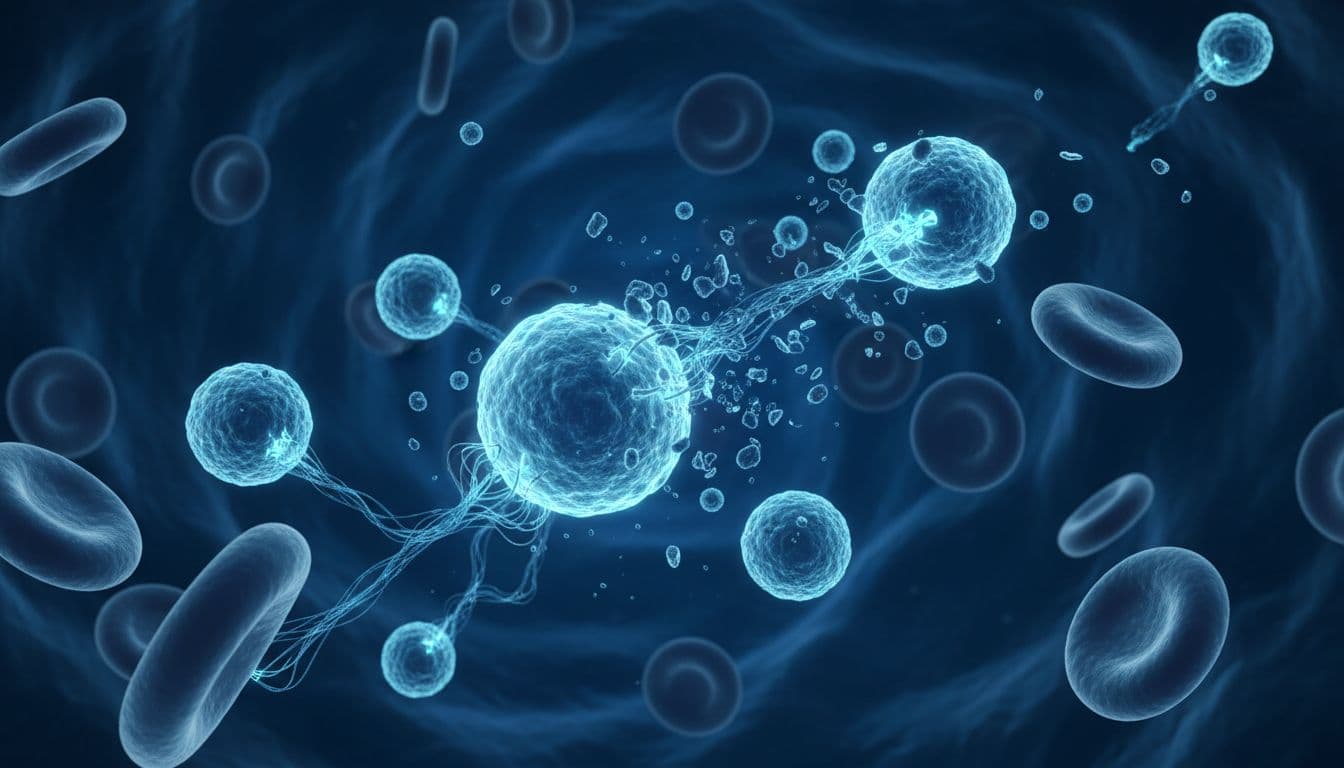
Chemotherapy usually attacks fast-growing cells across the body. That broad attack can harm cancer cells, but it can also affect healthy cells in the hair, gut, and bone marrow.
Ibrutinib works in a narrower way. It targets one signaling protein that many B-cell cancers rely on. So the treatment experience often feels different from standard chemo. Some people still have side effects, but the pattern is different because the drug is aiming at a more specific weak spot.
That doesn't mean it's mild or risk-free. It means the drug is built with a different goal. Instead of damaging many dividing cells at once, it tries to interrupt a key message inside certain cancer cells.
Why doctors use it for B-cell cancers
B cells are part of your immune system. Under normal conditions, they help make antibodies and protect you from infection. But when B cells turn cancerous, they can keep receiving "stay alive" messages even when they shouldn't.
BTK sits in one of the main pathways that carries those messages. In several B-cell cancers, that pathway helps the cancer cells grow, avoid death, and stay sheltered in places like lymph nodes or bone marrow.
So doctors use ibrutinib because it gets in the way of that survival system. In many patients, that can shrink swollen lymph nodes, lower the number of cancer cells, and help control the disease over time.
How ibrutinib works inside cancer cells
To understand ibrutinib, it helps to picture cancer cells as cells getting bad instructions over and over. BTK is part of the wiring that carries those instructions. When BTK keeps firing, the cancer cell gets repeated signals to live, move, and multiply.
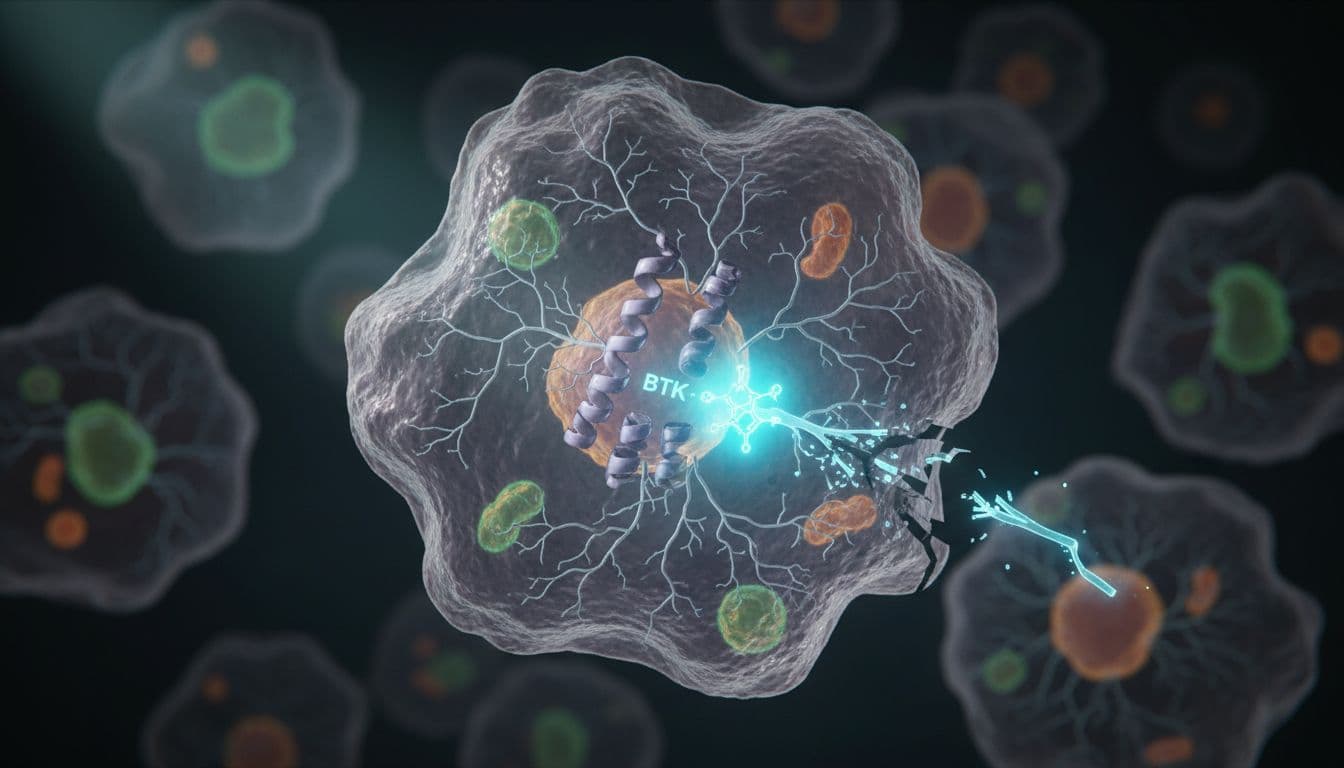
Ibrutinib blocks BTK by attaching to it and shutting down its activity. A review of BTK inhibitors in B-cell cancers describes this as a key reason the drug can slow malignant B cells.
The BTK pathway and what it does
BTK is part of the B-cell receptor pathway. That pathway tells B cells when to activate, survive, and respond to the environment around them. In healthy cells, those signals are tightly controlled.
Cancer changes that balance. In CLL, WM, and other B-cell cancers, the pathway may stay active too long or too often. As a result, the cells keep getting support from their surroundings. They become harder to kill and easier to maintain.
That is why BTK became an important drug target. If you block the protein near the center of that pathway, you can weaken a major source of support for the cancer cell.
What happens when BTK gets blocked
When ibrutinib blocks BTK, several things can happen at once. The cancer cell receives fewer growth signals. Its survival signals drop. Its ability to move into protective tissues can also decrease.
That last point matters. Some cancer cells do better when they hide in lymph nodes, bone marrow, or other supportive spaces. Ibrutinib can disrupt that behavior, so the cells become more exposed and less stable.
For some patients, blood counts or lymph node swelling may shift in ways that look confusing at first. That is one reason doctors follow labs and symptoms over time, not from a single snapshot. What matters is the overall disease trend, not one number on one day.
What treatment with ibrutinib is like in real life
One reason ibrutinib changed blood cancer care is that it's usually taken by mouth at home. That can feel less disruptive than repeated infusion visits, though it still requires close follow-up.
Depending on the cancer type, ibrutinib may be used alone or with other drugs. Dosing can vary by diagnosis, and oncologists adjust plans based on how the patient is doing.

How patients usually take the medicine
Ibrutinib comes as capsules, tablets, and an oral suspension. It's commonly taken once a day, usually at the same time each day. The MedlinePlus drug information for ibrutinib explains the usual daily dosing and why patients should follow the prescription exactly.
Taking ibrutinib on schedule matters because the drug works through steady, ongoing BTK blockade.
Since this is a long-term treatment for many people, routine matters. Patients shouldn't change the dose, skip around, or stop suddenly unless their cancer team tells them to. If side effects show up, the doctor may pause treatment, lower the dose, or switch plans.
Common side effects and safety concerns to know
Common side effects include diarrhea, tiredness, bruising, nausea, rash, and muscle or joint pain. Some patients also develop low blood counts.
There are also more serious risks. These include bleeding, infections, high blood pressure, and heart rhythm problems such as atrial fibrillation. The DailyMed prescribing information lists these warnings in detail.
This is why follow-up visits matter so much. Doctors often monitor blood pressure, blood counts, signs of bleeding, and any new shortness of breath, fever, or pounding heartbeat. If something feels off, patients should report it early rather than waiting for the next appointment.
Who may benefit most, and what to ask before starting
Ibrutinib can be a strong option, but it isn't the right choice for everyone. Doctors look at the exact cancer type, prior treatment, age, heart history, bleeding risk, kidney and liver function, and other medicines the patient takes.
Drug interactions matter because some medications and supplements can change how ibrutinib is processed in the body. That can raise side effect risk or reduce how well the treatment works.

Before starting, these are smart questions to bring to the oncology visit:
- How long is treatment expected to last?
- Which side effects should prompt a same-day call?
- Do any of my other medicines, vitamins, or herbal products interact with it?
- Will I need blood tests or heart monitoring?
- If this drug stops working, what comes next?
Those questions help turn a complex treatment into a clearer plan.
Conclusion
Ibrutinib is a targeted medicine that blocks BTK, a protein many B-cell blood cancers depend on. That simple action can weaken cancer cell survival signals and help control diseases such as CLL, SLL, WM, MCL, and some cases of MZL.
Its role is important because it works differently from standard chemotherapy. For many patients, that has opened the door to effective treatment with a once-daily medicine and a different side effect pattern.
The right treatment choice always depends on the person in front of the doctor. Blood cancer care is never one-size-fits-all, and decisions about ibrutinib should always be made with a qualified healthcare professional.