
How to Measure Liquid Medicine Without Dosing Errors

A small mistake can turn a helpful dose into too little medicine or too much. Achieving an accurate measurement is critical for maintaining medication safety, especially for children, older adults, and anyone taking medicines with a narrow dosage range.
To measure liquid medicine safely, always use the oral syringe, dosing cup, dropper, or spoon provided with your specific product. Read the label for both the amount and unit of measurement, prefer milliliters whenever possible, and confirm the concentration before every dose.
Quick answer: Never use household tools like silverware to administer medication. Match your device to the prescribed volume, hold it at eye level, and measure only the exact amount written on the pharmacy label or provided by your clinician.
Key Takeaways
- Use an oral syringe for small or precise liquid doses to ensure accuracy.
- Always check both the prescribed dosage and the medicine strength before you begin measuring.
- Using a milliliter (mL) measurement is far more precise and safer than relying on common kitchen items like a teaspoon or tablespoon.
- Keep the specific dosing tools provided with the product stored with the original bottle to avoid mix-ups.
- Ask your pharmacist for clarification before attempting any unit conversion or if you are unsure about the concentration of the medication.
Table of Contents
- Why the concentration on the label matters
- Choose a tool made for measuring medicine
- Steps for accurate measurement
- The errors that cause most wrong doses
- Extra care for children, older adults, and complex regimens
- Ordering and storing liquid medicines safely
- FAQ
Why the Concentration on the Label Matters
Liquid medicine has two numbers that must work together: the strength and the volume. Strength tells you how much active medication is contained in a given amount of liquid. You may see it written as 160 mg per 5 mL, 100 mg/mL, or a similar format.
A dosing direction might say to give a prescribed dose of 250 mg. Yet the amount of liquid needed depends on the bottle's concentration. For example, a liquid labeled 125 mg per 5 mL requires 10 mL to provide 250 mg. A different bottle may deliver the same drug at a different strength.
That is why caregivers should never assume that two bottles with the same medicine name require the same volume. Refill products, age-based formulations, and products from different manufacturers can vary, and assuming the volume is the same can lead to serious medication errors. If you are ever uncertain about the strength of your liquid medication, consult your pharmacist for clarification.
Before measuring, read these details on the label:
- The medicine name and active ingredient
- The concentration, such as mg per mL or mg per 5 mL
- The prescribed amount and dosing schedule
- Any instructions to shake the bottle
- The expiration date and storage guidance
Confusing abbreviations can also cause harm. mL means milliliter, while tsp means teaspoon. A liquid medication safety guide provides essential information on medication safety and explains why reading those units carefully matters.
Choose a Tool Made for Measuring Medicine
The best device depends on the volume prescribed. An oral syringe offers the most control for tiny doses and is the ideal medication syringe for infants, children, and adults who need an exact amount. A dosing cup can work for larger volumes, but its lines are often harder to read. Always prioritize using the specific dosing tools supplied with the bottle, as they are calibrated for that medication's instructions.
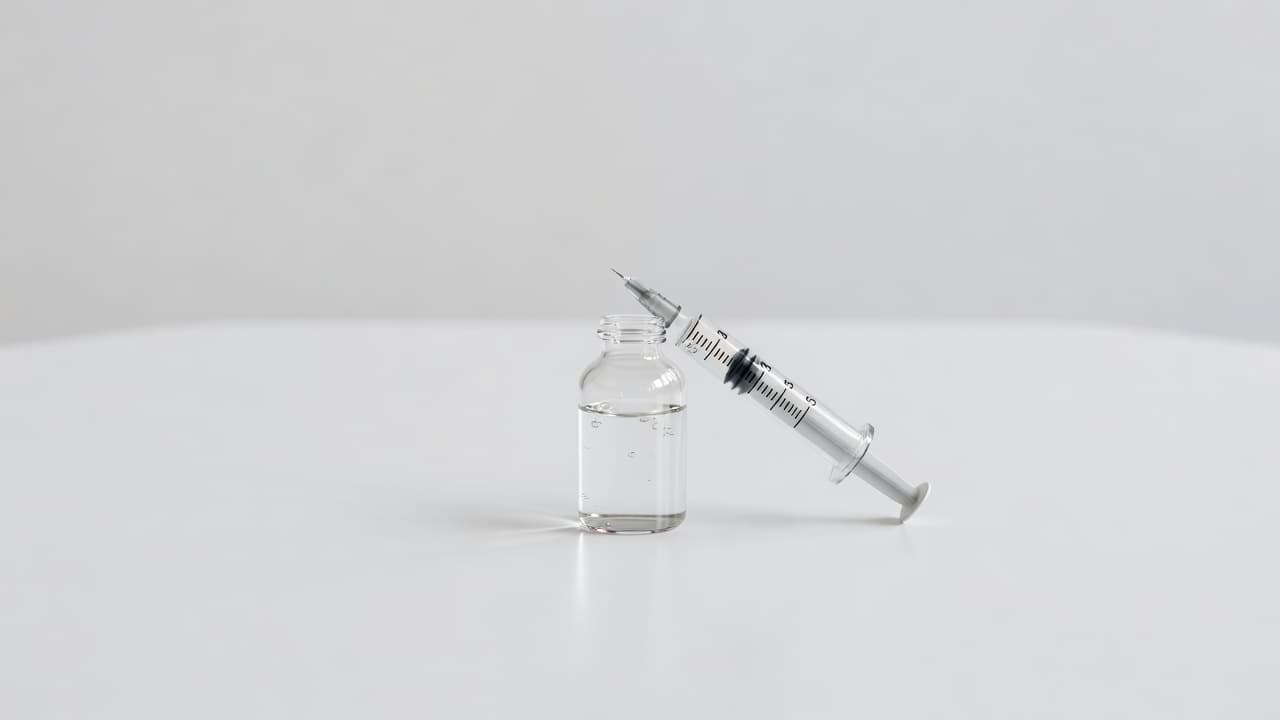
| Measuring tool | Best use | Main caution |
|---|---|---|
| Oral syringe | Small, exact doses | Read the plunger edge at eye level |
| Dosing cup | Larger doses | Cup markings can be easy to misread |
| Medication dropper | Drops or very small volumes | Use only with its matching bottle |
| Measuring spoon | Teaspoon-based directions | Do not substitute kitchen spoons |
It is important to remember that household kitchen spoons vary widely in capacity and should never be used as medical equipment. Harvard Health's advice on avoiding liquid medicine mistakes is direct: kitchen spoons are not proper dosing tools.
If a bottle comes with a dosing cup but the prescribed amount is small, ask your pharmacist for an oral syringe. Most pharmacies can provide these specialized measuring devices upon request. Using the right tool is the most effective way to ensure an accurate measurement and prevent a difficult dosing error.
How to Measure Liquid Medicine Step by Step
Accuracy is essential when you measure liquid medicine, as the process of medication administration should never be rushed. A distracted environment can invite mistakes, so always set the bottle, label, and your medication syringe on a clean, well-lit surface.
- Read the label every time. Confirm the patient's name, the name of the drug, the concentration, the prescribed dose, and the timing. Do not rely on memory, even for a long-term prescription medicine.
- Shake the bottle if instructed. Suspensions can separate while standing. Without shaking, the first dose may contain less medicine and the last dose more.
- Use a clean, dry dosing device. Insert the syringe adaptor if the bottle has one. Then, draw up slightly more liquid than needed into the medication syringe.
- Remove air bubbles. Hold the syringe tip upward, tap it lightly, and push the excess medicine back into the bottle. Pull the plunger again to the exact mark.
- Check at eye level. Align the top edge of the black rubber plunger with the correct mL line. Note that a milliliter, which is sometimes referred to as a cubic centimeter or cc, is the standard unit of measurement. Looking down from above can make a dose appear larger or smaller than it actually is.
- Give the dose slowly. For a child, place the syringe inside the cheek and release a little at a time. This reduces coughing and helps prevent spit-out doses.
- Record the dose when needed. A written log is useful when multiple adults help with care, when medicines are taken several times daily, or when a caregiver feels uncertain.
Never mix medicine into a full bottle of formula, juice, or food unless a pharmacist or doctor approves it. The person may not finish the serving, and you will not know how much medicine they actually received.
The American Academy of Pediatrics also emphasizes medication safety and recommends using the device that comes with the medicine when dosing children. Their pediatric guide to using liquid medicines for children offers practical guidance for parents and caregivers.
The Errors That Cause Most Wrong Doses
Preventing medication errors often comes down to taking a brief moment of caution before each dose. Most mistakes are common and easily avoidable.
Using kitchen spoons: Household flatware is intended for eating, not for medical measurement. Even two spoons from the same set may not hold the identical volume, leading to inaccurate intake.
Mixing up mL, teaspoons, and tablespoons: One teaspoon equals 5 mL, but you should never rely on mental unit conversion to guess your dose. Always follow the specific unit listed on the prescription label, and use milliliters whenever possible to avoid confusion.
Using the wrong device: A syringe or cup from a different product may have different volume markings. To ensure accuracy, always keep dosing tools with their original bottles.
Repeating a dose too soon: If you are unsure whether a previous dosage was administered, do not automatically give another. Instead, check a medication log, ask another caregiver, or call your pharmacist to verify the timing.
Measuring in poor light: Dim kitchens and rushed schedules make fine measurement markings difficult to read. Always measure your liquid medication on a bright counter or use a phone flashlight to see the graduations clearly.
If someone receives more than the recommended dose, call Poison Control in the U.S. at 1-800-222-1222. Call emergency services for trouble breathing, collapse, seizures, or severe drowsiness.
Extra Care for Children, Older Adults, and Complex Regimens
Children often receive weight-based treatments, so an old instruction may no longer fit after a growth spurt or a medication change. Always confirm the current prescribed dose at each pediatric appointment. Keep all bottles out of reach and ensure child-resistant caps are fully secured after each use.
Older adults may struggle with poor vision, arthritis, memory changes, or the challenge of managing several medicines with similar packaging. Large-print labels, a written schedule, and pre-measured syringes prepared immediately before use can help reduce confusion. Consult with your doctor to determine if pre-filling doses is safe, as you should not do so unless a pharmacist confirms it is appropriate for that specific medicine.
Families managing several prescriptions should keep a single medication list that includes the drug name, concentration, dose, reason for use, and timing. This strategy is especially helpful after a hospital discharge or when multiple relatives take turns caregiving, as it ensures everyone remains on the same page regarding the patient's care.
Ordering and Storing Liquid Medicines Safely
An online pharmacy can help people who need regular refills, live far from a local pharmacy, or manage long-term treatment. Still, safe ordering starts with a valid prescription, clear product details, and a licensed prescriber who can answer your questions.
When using online medicine home delivery, confirm the exact formulation and concentration before placing a refill for your liquid medication. Ask about packaging for temperature-sensitive products and check the expected arrival date. The medicine delivery cost to USA can vary by destination, order size, and shipping method, so review these details carefully before checkout.
For ongoing prescriptions, you can get started with home medicine delivery after confirming that the listed strength matches your current label. Keep bottles in their original containers, away from heat, moisture, and direct sunlight unless your provider gives different instructions.
Cost should never push a patient toward an unfamiliar or poorly labeled source. A reputable international online pharmacy should require a valid prescription, disclose all product details, and provide access to qualified pharmacist support. Lower prices are only useful when the medicine and its dosing instructions are clear.
Final Thoughts
Measuring a liquid dose correctly comes down to a simple routine: read the label, use the right device, verify the mL marking, and document the oral dosing schedule when needed.
A few careful seconds can prevent a dangerous mix-up. When the label, medication concentration, or measuring tool does not make sense, ask a licensed healthcare provider or your pharmacist before giving the medicine to ensure you have the correct information.
Frequently Asked Questions
Can I use a kitchen teaspoon for liquid medicine?
No. You should never use kitchen spoons to measure medication because they vary in size and capacity, which often leads to inaccurate dosing. Instead, use a designated measuring spoon, oral syringe, medicine cup, or medication dropper marked specifically in milliliters. If the medication did not come with an appropriate tool, ask your pharmacist for one that matches your prescribed dose.
What does 5 mL mean in liquid medicine?
Five milliliters, or 5 mL, is equivalent to one standard teaspoon. Even so, measuring in mL is significantly safer because most oral syringes and medicine cups are designed with clear mL markings. Always follow the unit of measurement printed on your prescription label rather than attempting to convert it to a teaspoon yourself, unless your doctor or pharmacist provides specific instructions to do so.
Should I shake all liquid medicines before measuring?
No. You should only shake the bottle if the label explicitly instructs you to do so. Some liquid medicines are suspensions, meaning the active ingredients settle at the bottom and require mixing. Other medicines are solutions that are already evenly distributed. If you are unsure which type of medication you have, verify the instructions with your pharmacist before your next dose.
What if my child spits out liquid medicine?
Do not automatically give your child another dose. It is difficult to determine exactly how much medicine was successfully swallowed. Wipe away any visible excess, note how much you believe was taken, and call your pharmacist or pediatric clinician for guidance. They can provide professional advice based on the specific type of medicine and the estimated amount consumed.
Can I order liquid prescription medicine online?
Yes, you can order liquid prescriptions online as long as the pharmacy is legally authorized to dispense the product and possesses a valid prescription. Before finalizing your order, double-check the concentration, bottle size, storage requirements, and expected delivery timing. If your medication arrives and the bottle looks different from a previous refill, contact your pharmacist or doctor to confirm that the dosage and concentration are correct.