
LDL HDL Triglycerides: A Clear Guide to Heart Health

A cholesterol screening test commonly leads to a standard assessment of LDL cholesterol, HDL cholesterol, and triglycerides. These measurements describe different forms of cholesterol and fat in the blood, so they aren't interchangeable scores.
LDL can contribute to deposits in artery walls. Blood fat results often rise with excess alcohol, refined carbohydrates, uncontrolled diabetes, or some medications. HDL adds useful context, although raising it with a supplement or drug isn't a treatment goal.
Short answer: LDL carries cholesterol into artery walls, where it can contribute to plaque buildup. HDL carries cholesterol away from tissues toward the liver. These measurements describe blood cholesterol and blood fats, not a diagnosis by themselves. Interpretation depends on overall cardiovascular risk and the possibility of cardiovascular disease. Age, medical history, diabetes, blood pressure, smoking, kidney health, and clinician advice also matter.
Table of Contents
- What LDL, HDL, and triglycerides do
- How to read a lipid panel
- Why cardiovascular risk is more than one number
- Daily habits that lower triglycerides and LDL
- When prescription medicine enters the picture
- Testing, fasting, and family history
- Final perspective
- Frequently asked questions
Key Takeaways
These bullets describe general patterns, not personal treatment targets. A clinician should interpret them with age, blood pressure, diabetes, smoking, family history, kidney disease, and other risk factors in mind.
- LDL is the primary cholesterol measure associated with atherosclerotic cardiovascular disease and plaque formation in artery walls.
- Triglycerides are not cholesterol, but elevated results can signal metabolic risk and may affect LDL calculations.
- HDL remains part of risk assessment, but lowering LDL often matters more than trying to raise HDL.
- Diet, activity, alcohol intake, blood sugar, and prescribed treatment can all influence a lipid profile.
- A single test result needs clinical context, especially when family history or diabetes is present.
What LDL, HDL, and triglycerides do
LDL deposits cholesterol in artery walls
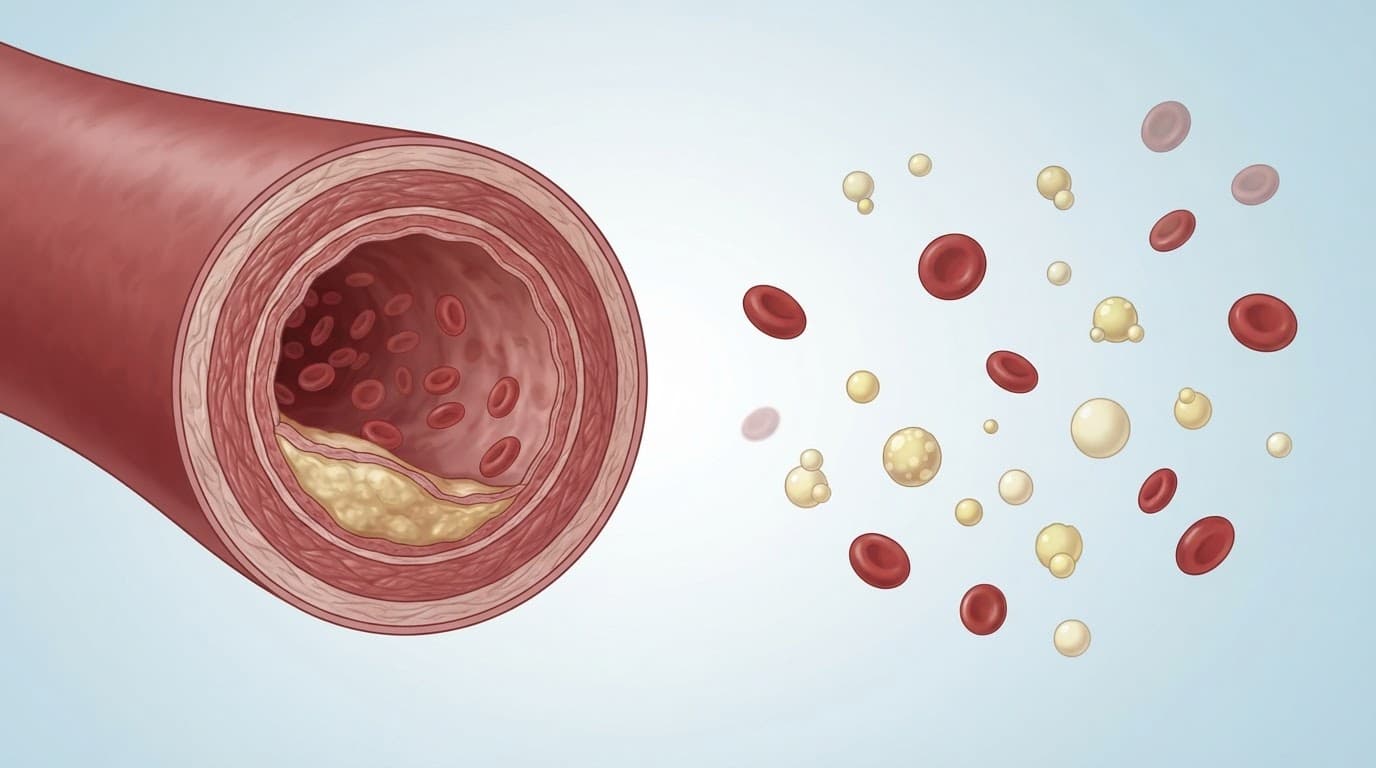
LDL, or low-density lipoprotein, transports cholesterol through the bloodstream. Problems can develop when too many LDL particles circulate for too long. They may enter artery walls, trigger inflammation, and contribute to plaque buildup.
Over time, this plaque can narrow blood vessels or become unstable and rupture. A clot may then block blood flow to the heart or brain. That is why clinicians often focus treatment on lowering LDL cholesterol.
HDL has a different job
HDL, or high-density lipoprotein, helps move cholesterol from tissues back to the liver, where the body can process it. This role explains why HDL cholesterol is commonly labeled as "good cholesterol."
Still, a high HDL result doesn't erase the risks associated with elevated LDL, smoking, diabetes, or high blood pressure. Prevention decisions now consider the full risk profile rather than treating HDL as an isolated target.
Triglycerides reflect circulating fuel
Triglycerides are the most common fat in the body. After a meal, unused calories can be packaged into these fats for storage. Levels at or above 150 mg/dL, approximately 1.7 mmol/L, are often considered elevated. High levels can accompany insulin resistance, obesity, excess alcohol use, kidney disease, hypothyroidism, or poorly controlled diabetes.
When triglycerides reach very high levels, they can increase pancreatitis risk. A result around or above 500 mg/dL, approximately 5.6 mmol/L, should be discussed promptly with a healthcare professional.

How to read a lipid panel
The familiar cutoffs below are general adult reference ranges, not universal treatment goals. They describe commonly used categories, not personal optimal levels. Targets may be lower with established artery disease, diabetes, familial risk, or other major concerns.
| Lipid measure | Common adult category | Why it matters |
|---|---|---|
| Total cholesterol | Under 200 mg/dL (about under 5.2 mmol/L) is often called desirable | A broad measure that includes several cholesterol types |
| LDL cholesterol | Under 100 mg/dL (about under 2.6 mmol/L) is often called optimal | The main atherogenic cholesterol target |
| HDL cholesterol | 60 mg/dL or higher (about 1.6 mmol/L) is generally favorable | Used in risk assessment, but not a stand-alone treatment target |
| Triglycerides | Under 150 mg/dL (about under 1.7 mmol/L) is generally normal | Can rise with diet, alcohol, metabolic illness, and some drugs |
| Non-HDL cholesterol | Total minus HDL | Captures LDL and other plaque-forming particles |
These categories help clinicians interpret cholesterol screening results and place cholesterol levels in context. They don't replace a broader risk assessment.
The CDC's overview of cholesterol describes LDL as the cholesterol type that can build up in arteries. Total cholesterol, by contrast, can conceal an unfavorable mix of LDL and triglyceride-rich particles.
A broader cholesterol calculation can sharpen the picture
Non-HDL cholesterol requires no new blood test. It is simply the total measure minus HDL. The result includes LDL plus cholesterol carried in other potentially harmful particles, including VLDL remnants.
This calculation is often helpful when triglycerides are elevated. It gives clinicians another way to assess the atherogenic cholesterol burden when a calculated LDL value may be less reliable at higher levels.
Why cardiovascular risk is more than one number
Cholesterol results are one part of a broader cardiovascular risk assessment. Blood pressure, tobacco use, diabetes, kidney disease, inflammatory conditions, age, and family history are important risk factors for heart disease and cardiovascular disease.
Cholesterol screening can identify people who need a more complete risk review. These factors influence the chance of a heart attack or stroke. A history of coronary artery disease in the family may also warrant closer evaluation.
The American College of Cardiology's CVD Risk Estimator+ includes the PREVENT equations, which estimate 10-year and 30-year cardiovascular risk for appropriate adults. These estimates support, but don't replace, clinician judgment. They aren't a personal diagnosis. A clinician may use the results to decide whether lifestyle work alone is reasonable or whether medication should be considered.
Lp(a) and hs-CRP add context for some patients
Lipoprotein(a), written Lp(a), is a mostly inherited particle that can raise cardiovascular risk even when routine cholesterol results appear acceptable. Many clinicians now consider a one-time Lp(a) test, particularly when early coronary artery disease runs in the family.
High-sensitivity C-reactive protein, or hs-CRP, measures inflammation. An hs-CRP result of 2 mg/L or higher can count as a risk-enhancing factor in selected cases. Testing for either marker is selective, not required for everyone. Neither test replaces the blood test. Instead, both can clarify decisions when ordinary results leave uncertainty, so discuss them with your health care team.
Daily habits that lower triglycerides and LDL
Small, repeatable choices make lifestyle changes more sustainable. Try replacing a daily sweetened drink, building meals around vegetables and legumes, or preparing several high-fiber lunches instead of pursuing a total dietary reset. These habits may improve results, but no single change guarantees a specific number.
Food changes that address the lab result
For high LDL, reducing saturated fat matters. Fatty and processed meats, butter, full-fat dairy, and tropical oils are common sources. These dietary modifications replace some of those foods with nuts, seeds, olive oil, beans, fish, vegetables, and other unsaturated fats, which can support LDL reduction. Food choices are distinct from fish oil supplements, which shouldn't be treated as a substitute for broader dietary changes.
High triglycerides call for a different emphasis. Added sugars, refined starches, alcohol, and large portions can raise triglycerides sharply. Regular meals with protein and fiber may also help control blood glucose, which matters when diabetes drives the result.
Activity and weight affect metabolic health
Regular physical activity can improve insulin sensitivity and support metabolic health. Strength training also supports glucose control and body composition. Even modest weight reduction may improve metabolic health and cardiovascular risk in people with overweight or metabolic syndrome.
Smoking cessation has broad cardiovascular benefits, including improved vascular function. Sleep apnea should also be evaluated when fatigue, loud snoring, obesity, and uncontrolled blood pressure appear together. Adequate sleep can also influence cardiovascular risk.
The timing of repeat cholesterol screening should be decided with a clinician, rather than based on a self-selected schedule. These habits support risk reduction, but they may not replace treatment when it's indicated.
Alcohol reduction is often one of the fastest changes for high triglycerides and may lower cardiovascular risk, especially when results rise after regular drinking.
When prescription medicine enters the picture
Lifestyle changes remain important, but they don't erase inherited risk or unfavorable cholesterol levels. People with LDL cholesterol of 190 mg/dL or higher, familial hypercholesterolemia, diabetes, established heart disease, or a high estimated risk may be considered for cholesterol-lowering medication. Treatment decisions depend on the full clinical picture, rather than one threshold alone.
Statins lower LDL production in the liver
Statins block HMG-CoA reductase, a liver enzyme involved in cholesterol production. The liver then pulls more LDL from the blood. Atorvastatin and rosuvastatin are common options. Information about Lipitor atorvastatin for cholesterol control and Crestor rosuvastatin for high cholesterol should be reviewed alongside licensed prescribing guidance.
Muscle aches can occur, although severe muscle injury is uncommon. Clinicians may review symptoms, drug interactions, thyroid disease, and other contributors. They may adjust treatment when appropriate, rather than assuming all symptoms require stopping treatment.
Other medicines may be added or substituted
Ezetimibe reduces cholesterol absorption in the small intestine. It may be used with a statin or when a person cannot tolerate a suitable statin dose. Zetia ezetimibe for high cholesterol is one example of this medicine.
For some people, combination treatment is appropriate. Vytorin ezetimibe and simvastatin combines two approaches in one prescription medicine. The updated ACC and AHA lipid management guidance places medication decisions within an assessment of overall cardiovascular disease risk, not a single laboratory threshold.
Medication prices and access vary across the USA, Australia, and the UK because of insurance rules, national pricing systems, dispensing fees, and local regulation. Any online pharmacy purchase should require a valid prescription, include pharmacist review, and follow the import and dispensing rules where the patient lives. Missed doses and self-directed dose changes can undermine treatment, particularly when medication is used for established cardiovascular conditions.
This information is for educational purposes only and does not replace medical advice. A licensed healthcare provider should review abnormal results, symptoms, medicines, and treatment choices.
Testing, fasting, and family history
Most adults can have a routine lipid panel without fasting, but clinicians may request fasting when triglycerides are elevated. Fasting or repeat testing may also confirm a calculated LDL result because triglycerides can make it less reliable. The American Heart Association's testing guidance explains that a standard cholesterol test reports total cholesterol, LDL, and HDL. Results may be reported in mg/dL or mmol/L. Follow the ordering clinician's instructions rather than independently changing food, medication, or fasting behavior.
Familial hypercholesterolemia deserves early attention
FH is an inherited condition that produces very high LDL from childhood. A parent, sibling, or grandparent who had heart disease or a heart attack at an early age should prompt a family discussion with a clinician.
Routine cholesterol screening in children remains debated. Family-based testing can identify those who may need genetic counseling, earlier monitoring, or treatment. Family history changes the meaning of an LDL result and may justify earlier assessment.
Final Perspective
LDL, HDL cholesterol, and triglycerides are best understood as related measurements, not opposing scores. LDL reduction has the clearest role in preventing heart disease linked to plaque buildup, while triglycerides can signal metabolic strain and HDL adds risk context.
The durable response may be less dramatic than the first lab report feels. It can include repeat testing, steady dietary changes, blood-pressure and glucose management, and clinician-directed treatment, without one target fitting every reader. These results are most useful when interpreted alongside age, medical history, diabetes, kidney health, family history, and clinician advice.
Frequently Asked Questions
What is the difference between LDL cholesterol and HDL cholesterol?
LDL cholesterol carries cholesterol into circulation and may contribute to plaque in artery walls. HDL helps transport cholesterol toward the liver. Both appear on a cholesterol test, but elevated LDL is usually the main treatment priority. Cholesterol levels need context because people with the same result may receive different advice based on their risk factors.
Why are triglyceride results included in a cholesterol test, and what is non-HDL cholesterol?
Triglycerides show how much stored fat is circulating in blood. They may rise with alcohol, refined carbohydrates, obesity, diabetes, thyroid or kidney disease, and some medicines. It is calculated as total cholesterol minus HDL, offering a broader view of cholesterol carried by other particles.
Do people need to fast before cholesterol screening?
Many routine cholesterol tests don't require fasting. A clinician may request fasting when these readings are high or when a calculated LDL result needs confirmation. A nonfasting result above 400 mg/dL, about 4.5 mmol/L, may prompt confirmation. Discuss very high triglycerides, chest pain, stroke symptoms, or other concerning findings promptly with a healthcare professional. Follow the ordering clinician's instructions.
What is inherited high cholesterol?
It is an inherited condition that causes markedly elevated LDL from an early age. It increases lifetime exposure to plaque-forming cholesterol and may contribute to premature cardiovascular problems. A strong family history of early cardiac events, stroke, or high cholesterol should prompt clinical evaluation.
Can diet and exercise replace cholesterol medicine?
Diet, exercise, weight management, alcohol reduction, and smoking cessation can improve results and reduce overall risk. Yet people with inherited high cholesterol, diabetes, established heart disease, or high predicted risk may still need prescription treatment. These approaches and prescribed treatment often work together rather than competing. Discuss options with a healthcare professional before making treatment changes.