
Low Blood Sugar on Diabetes Medication: Immediate Steps

Low blood sugar related to diabetes medicine generally means a low blood glucose reading below 70 mg/dL. An alert person who can swallow safely should take 15 grams of fast-acting carbohydrate, wait 15 minutes, then retest and repeat if the reading remains below 70.
Call 911 if someone passes out, has a seizure, cannot be awakened, or isn't alert enough to swallow safely. Give prescribed glucagon if available; don't put food or drink in their mouth.
The immediate response depends on both the glucose reading and the person's ability to treat themselves.
Table of Contents
- Glucose levels and symptoms
- Treating an episode with the rule of 15
- Emergency help and glucagon
- Diabetes medicines that cause lows
- Nighttime and repeated episodes
- Affordable, safe treatment access
- Frequently asked questions
- Conclusion
Key Takeaways
- A reading below 70 mg/dL needs treatment; below 54 mg/dL is a more serious biochemical low.
- Confusion, seizures, or inability to swallow can require emergency treatment, regardless of the number.
- Insulin and medicines that stimulate insulin release carry the greatest medication-related risk.
- Repeated episodes need a medication review, even when fast-acting carbohydrate corrects each episode.
What Low Blood Sugar Readings and Symptoms Mean
The NIDDK's hypoglycemia guidance identifies below 70 mg/dL as low for many people with diabetes. Individual treatment plans may set different alert thresholds.
A blood sugar level helps classify a low, but it doesn't alone show whether someone needs another person's help.
| Classification | Glucose reading or condition |
|---|---|
| Level 1 | 54 to below 70 mg/dL |
| Level 2 | Below 54 mg/dL |
| Level 3 | Altered mental or physical function requiring assistance, regardless of the reading |
A person can therefore have severe hypoglycemia without a documented reading below 54 mg/dL.
Early warning symptoms
Hunger, shakiness, sweating, dizziness, and a fast heartbeat are common warning signs. Irritability and headache can also occur.
These symptoms reflect the body's response to falling glucose. However, symptoms alone don't establish the cause: dizziness can also result from dehydration or low blood pressure.
Symptoms affecting brain function
As glucose falls, confusion, blurred vision, unclear speech, and difficulty coordinating movements can appear. Someone may seem intoxicated or behave unusually.
Seizures and loss of consciousness are emergencies. A glucose test can help identify the problem, but testing must not delay emergency assistance.
Treating Low Blood Sugar With the Rule of 15
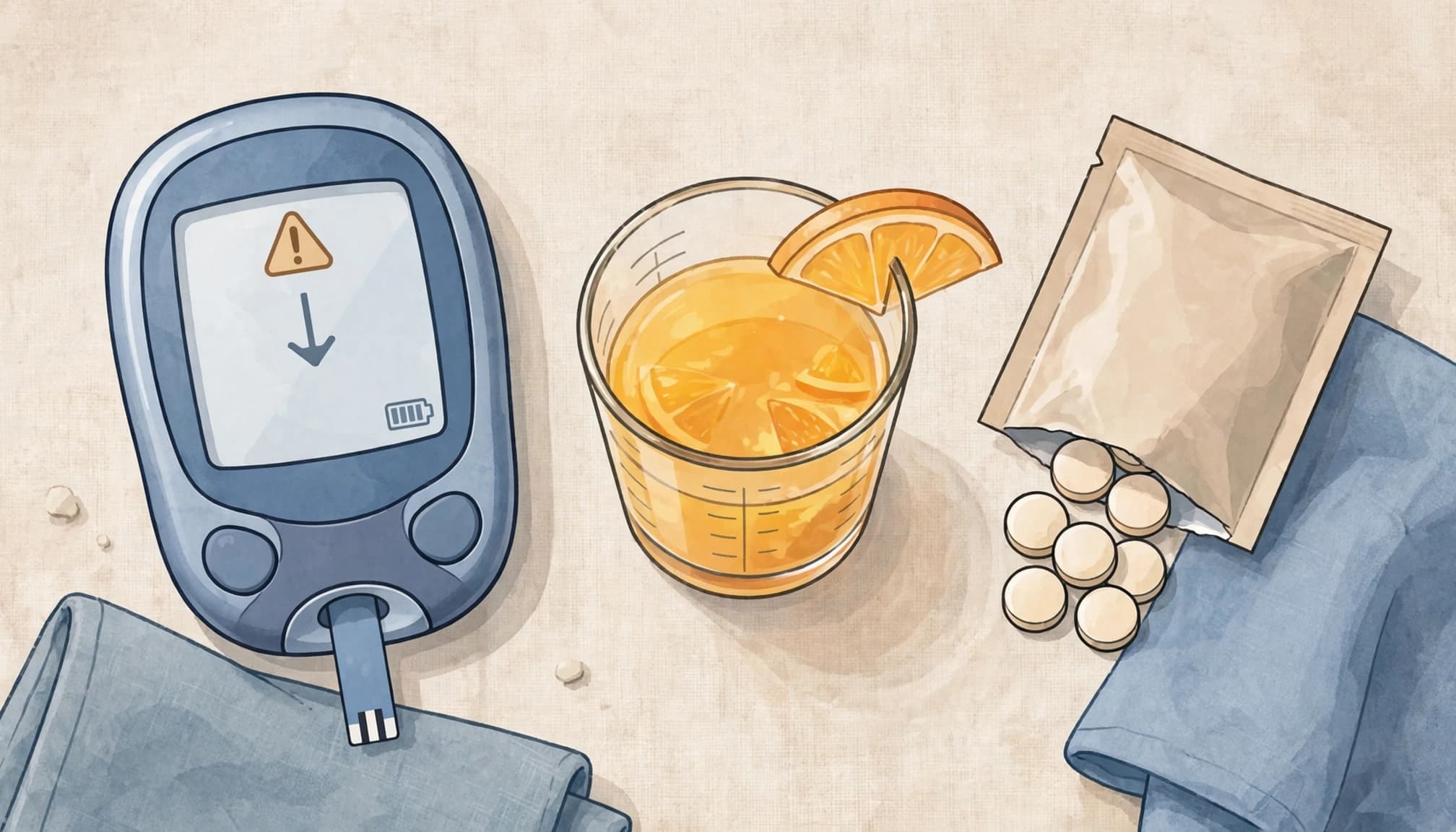
When the person is alert and can swallow
The ADA's patient treatment guidance recommends the following approach for most conscious people:
- Take 15 grams of fast-acting carbohydrate. Examples include 4 ounces of fruit juice or regular soda, glucose gel supplying 15 grams, or about 3 to 4 glucose tablets, depending on their carbohydrate content. Hard candy is another option if its labeled portion supplies 15 grams and the person can swallow safely.
- Wait 15 minutes, then measure the blood sugar level again.
- Repeat treatment if glucose remains below 70 mg/dL. Continue until it reaches at least 70.
One tablespoon of sugar or honey is another quick-carbohydrate option. Diet soda doesn't supply the carbohydrate needed for treatment.
For someone taking Glyset (miglitol) or acarbose, glucose tablets or glucose gel are preferred. These medicines delay the breakdown of some other carbohydrates.
After the reading improves
If the next meal is more than an hour away, a snack helps maintain recovery. A carbohydrate-and-protein option, such as cheese with crackers, can follow the initial fast-acting carbohydrate.
A rising reading matters more than a vague sense of improvement. Persistent confusion, worsening symptoms, or lows that don't respond to repeated treatment require urgent medical assessment.
Continuous glucose monitors can lag behind blood glucose during rapid changes. A finger-stick measurement can help when symptoms and the sensor reading disagree.
When Emergency Help and Glucagon Are Needed
Recognizing unsafe swallowing
A person who cannot stay awake, follow simple instructions, or swallow normally should not receive oral treatment. Food, fluids, and honey can enter the airway.
Call 911 if someone does pass out, has a seizure, has trouble breathing, or cannot be awakened. If an unconscious person is breathing normally, place them on their side while waiting for help. Follow the dispatcher's instructions if breathing is abnormal.
How glucagon works
Glucagon tells the liver to release stored glucose. Prescription emergency treatments include nasal powder and injectable preparations.
The ADA's severe hypoglycemia guidance explains its role when a person cannot treat themselves. Caregivers can administer it without being healthcare professionals.
People taking insulin, particularly those with previous severe episodes or reduced warning symptoms, need access to an appropriate rescue plan. Ready-to-use preparations avoid mixing steps during an emergency.
Emergency assessment remains necessary after rescue treatment. The medicine responsible for the low may continue working after the person wakes.
Which Diabetes Medicines Can Cause Lows?
Insulin and insulin-releasing medicines
Insulin lowers glucose by helping it enter cells and reducing glucose production by the liver. Too much of the dose relative to food intake or activity can cause hypoglycemia.
Sulfonylureas also raise risk because they stimulate the pancreas to release insulin. Examples include glyburide and Diamicron (gliclazide). Meglitinides, including repaglinide, stimulate insulin release around meals.
Missed meals, an accidental extra dose, or reduced kidney function can increase risk. Unplanned exercise can also raise risk, especially when food intake and medication aren't matched. Some episodes recur because the medicine remains active after the initial treatment.
Medicines with lower risk when taken alone
Metformin and alogliptin have a low hypoglycemia risk when used alone. Metformin reduces liver glucose production; alogliptin supports glucose-dependent insulin release through the incretin system.
However, adding the hormone or a sulfonylurea changes the overall risk. Combination tablets can also contain an ingredient that stimulates pancreatic hormone release, which isn't obvious from the brand name.
Medication review should cover every active ingredient, dose, and meal schedule. Older adults and people with kidney disease often need closer monitoring because medication effects and food intake can change.
Nighttime Lows and Missing Warning Signs
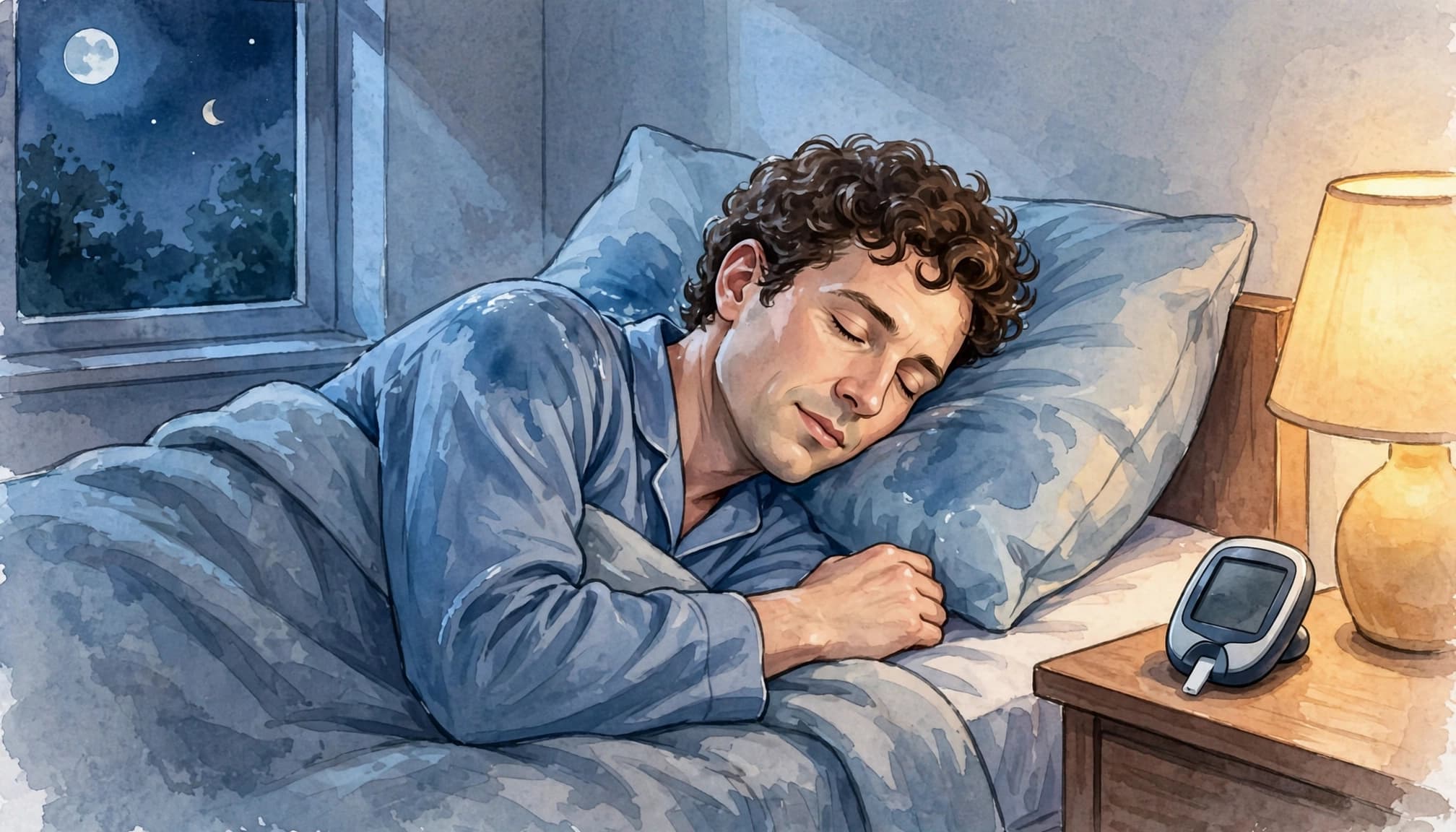
Signs during sleep
Nighttime low blood glucose may cause nightmares, crying out, or sweating that dampens pajamas or sheets. Morning tiredness, irritability, headache, or confusion can follow.
Some people sleep through an episode. Overnight glucose data can help identify patterns that symptoms alone miss.
Alcohol can increase risk, especially without enough food, and can mask warning symptoms. For adults who drink, general moderation limits are no more than one drink daily for women or two for men. These limits don't guarantee safety against hypoglycemia.
Hypoglycemia unawareness
Repeated lows can weaken the body's warning response. A person may develop confusion without first noticing shakiness or sweating.
The ADA's clinical hypoglycemia guidance supports treatment review and targeted education for impaired awareness. Clinicians may temporarily adjust glucose targets to reduce further episodes.
Continuous glucose monitoring with alarms can help, but it doesn't replace a rescue plan. A medical alert bracelet and caregiver training are also useful when a person cannot explain what is happening.
Accessing Treatment Affordably and Safely
Glucose tablets and other quick-carbohydrate supplies are available without a prescription. This rescue treatment requires a prescription, and costs depend on the formulation, insurance coverage, and available assistance.
For routine prescription medicine, a local-versus-international price comparison needs to include dispensing fees, delivery charges, and temperature-controlled shipping where required. USA, UK, and Australian import rules differ; overseas pharmacy licensing doesn't override destination-country restrictions.
Our Online Pharmacy requires valid prescriptions and offers pharmacist support for routine medicine questions. However, online medicine home delivery cannot replace immediate access to emergency supplies.
Affordability should not lead to unsupervised dose reductions or substitutions. A cheaper diabetes medicine may carry a different hypoglycemia risk. A clinician or pharmacist can discuss suitable alternatives and assistance options without interrupting treatment.
Frequently Asked Questions
Can gestational diabetes treatment cause low blood sugar?
Yes. Gestational diabetes causes high glucose, but insulin treatment can lower it too far when food intake, activity, and dosing don't match. The NIDDK's gestational diabetes explanation distinguishes the condition from treatment-related lows. Pregnancy requires an individualized monitoring and treatment plan.
Do children need the same 15-gram treatment?
Children, especially small children, may need less carbohydrate than adults. Their diabetes team should provide a written treatment amount based on age, size, and treatment regimen. Caregivers and school staff need that plan and access to their prescribed rescue medicine. Unsafe swallowing requires emergency treatment rather than food or drink.
Can low blood sugar happen without diabetes?
Yes, although recurrent hypoglycemia without glucose-lowering medicines needs medical evaluation. Possible causes include alcohol with inadequate food, serious illness, hormone deficiencies, and previous gastric bypass surgery. Rarely, an insulin-producing tumor is responsible. Clinicians assess symptoms, laboratory glucose during an episode, and whether symptoms resolve when glucose rises.
Can an A1C test diagnose an episode?
An A1C test reflects average glucose over roughly three months, so it cannot identify an immediate low. A meter or continuous glucose monitor helps assess an episode as it happens. For unexplained hypoglycemia without diabetes treatment, clinicians may need laboratory plasma glucose measured while symptoms are present.
What if an extra diabetes dose caused the low?
An accidental extra dose needs prompt professional assessment, even after glucose improves. Insulin and sulfonylureas can cause prolonged or repeated episodes. Emergency symptoms require 911. Without those symptoms, a poison center or healthcare professional can assess the medicine, amount, timing, and need for observation.
Recovery Includes Preventing Another Episode
Fast-acting carbohydrate treats an episode only when the person can swallow safely. Impaired consciousness changes the response: emergency help and the prescribed rescue treatment take priority over oral sugar.
This information is for educational purposes only. Consult a licensed healthcare provider for an individualized hypoglycemia plan and medication changes.
A corrected glucose reading ends the immediate low, but recurrent episodes require a review of treatment, meals, and monitoring.