
Medication Redosing After Vomiting: When to Repeat a Dose

Whether to repeat a dose of an oral medication depends on the medicine, formulation, and elapsed time. Vomiting within 15 minutes or seeing an intact tablet can justify considering a replacement; after an hour, another dose is usually unnecessary.
These are general timing guides, not permission to repeat every medicine. Some drugs have instructions that prohibit an immediate replacement, even after early vomiting.
The decision starts with timing, but the medicine's own instructions take priority. This information is for educational purposes only. Consult a licensed healthcare provider for individual dosing decisions.
Table of Contents
- Key takeaways
- Medication redosing timing
- Absorption and visible tablets
- Medicine-specific exceptions
- Practical safety steps
- Surgical antibiotic redosing
- Cost and access
- Frequently asked questions
- Conclusion
Key Takeaways
- A clinician may consider replacing an oral dose vomited within 15 minutes, or when the intact medicine is visible.
- After an hour, replacement is usually unnecessary because the medicine has probably moved beyond early digestion.
- Between those times, timing alone cannot establish how much medicine remains.
- Drug-specific instructions, overdose risk, and persistent vomiting determine the safest response.
Medication Redosing: What Do the Timing Rules Mean?
Whether to repeat a dose after vomiting is a frequent question raised with prescribers. September 2009 guidance from Therapeutic Research describes the familiar 15-minute and one-hour thresholds.
The following distinctions apply to swallowed medicines, subject to product-specific instructions.
| What happened | General interpretation | Redosing consideration |
|---|---|---|
| Vomiting within 15 minutes | The dose may not have progressed far through digestion. | A clinician may suggest replacement after reviewing the medicine. |
| An intact tablet is visible | At least some medicine may have remained in the stomach. | Replacement is commonly considered, but appearance alone isn't conclusive. |
| Vomiting between 15 and 60 minutes | Partial absorption is possible. | There is no universal replacement rule. |
| Vomiting after an hour | The medicine has likely moved beyond early digestion. | Another dose is usually unnecessary. |
These thresholds cannot measure the absorbed amount. Repeating a partially absorbed dose can produce an excessive total exposure, while withholding a necessary replacement can leave treatment incomplete.
A 2025 pediatric redosing review describes hospital-specific practice, including a 30-minute threshold at one institution. That variation helps explain why a single timing chart cannot settle every case.
Why Absorption Cannot Be Judged by the Clock Alone
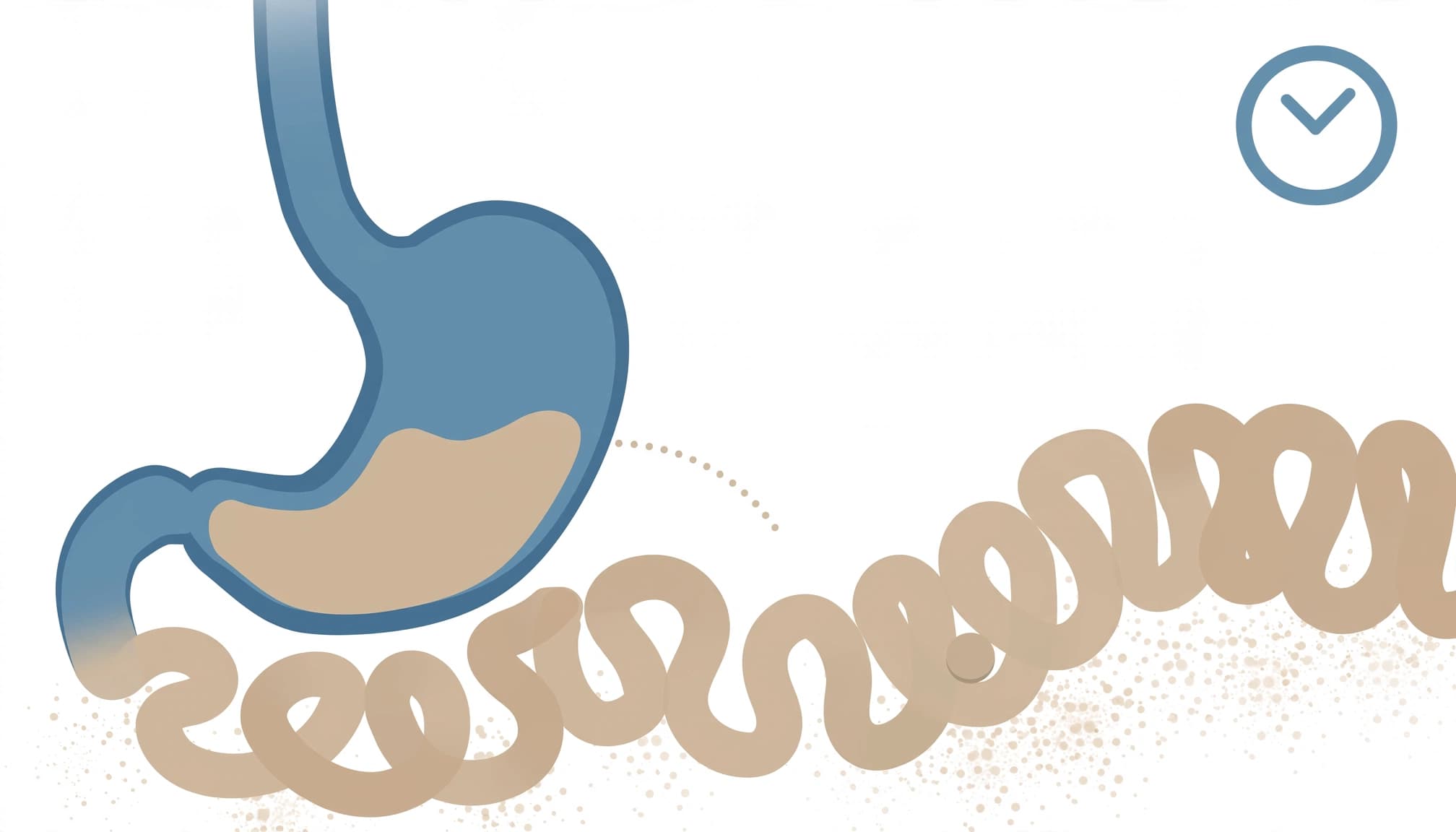
Leaving the stomach and entering the bloodstream are different
Many oral medicines dissolve before the small intestine absorbs them. However, digestive transit varies with food, illness, and other medicines.
After an hour, the medicine has probably moved beyond the early digestive phase, which explains why redosing is usually unnecessary. Clinicians should explain that reasoning rather than describe one hour as a guaranteed absorption deadline.
Food instructions still matter. Taking every medicine with a snack to prevent nausea can interfere with medicines that must be taken without food.
Formulation changes what a visible tablet means
Formulations affect how an oral medication dissolves and absorbs. Liquids, immediate-release tablets, and modified-release products don't behave identically. With a liquid, vomit appearance cannot reveal the amount of active ingredient lost.
Delayed-release products, such as Asacol mesalazine tablets, release medicine under particular conditions in the digestive tract. Extended-release formulations spread delivery over time.
An apparently whole tablet therefore doesn't establish that no medicine was released. Crushing a replacement or opening a capsule also isn't a safe workaround unless that product permits it.
When the Medicine's Instructions Change the Answer
Anti-sickness medicines can have strict spacing requirements
Metoclopramide is a dopamine-blocking antiemetic that also speeds upper digestive tract movement. Its instructions provide a clear exception to general redosing advice.
Patients taking metoclopramide should follow the NHS guidance for metoclopramide, which requires at least six hours between doses, even after vomiting. Taking an immediate replacement would conflict with that instruction.
Anti-sickness medicines also have adverse effects and interaction risks. Their purpose doesn't make repeated dosing harmless, and a prescription marked "as needed" still has minimum intervals and daily limits.
Cancer and transplant medicines need individualized decisions
Oral cancer therapies and transplant medicines require particular care because both underexposure and excessive exposure can cause harm. Antiseizure medicines, anticoagulants, and medicines with a narrow therapeutic range also warrant prompt professional assessment.
For example, Tykerb lapatinib information concerns a targeted cancer medicine, a kinase inhibitor. A general vomiting timetable cannot replace its treatment instructions.
Persistent vomiting during cancer treatment may also require changes to nausea control. Repeatedly attempting replacement doses leaves the absorbed amount uncertain and can increase toxicity risk.
What Information Helps a Pharmacist Make the Decision?
A useful medication redosing assessment needs more than "the tablet came back up." The sequence of events and exact product often determine the answer.
- Record the medicine's name, strength, formulation, prescribed dose, and time taken. Include other medicines swallowed at the same time.
- Note when vomiting started, whether it happened repeatedly, and whether a recognizable tablet was visible in the vomitus.
- Report any replacement already taken, relevant symptoms, and instructions from the treatment team. Don't redose until a pharmacist or prescriber has reviewed the product and timing.
A current medication list is especially helpful after hospital discharge, when old and new directions may conflict. Caregivers should document replacement doses so another person doesn't accidentally administer the same medicine again.
Prompt clinical advice is appropriate when vomiting prevents retention of essential medicines or fluids. Diabetes treatment needs particular attention: medicines such as Rybelsus oral semaglutide have product-specific instructions, and dehydration can complicate diabetes management.
Collapse, seizures, trouble breathing, or inability to awaken require emergency assistance. Blood in vomit, severe abdominal pain, or substantial dehydration also needs urgent assessment.
If an extra dose has already been taken, poison advice can assess the risk before symptoms develop. In the USA, Poison Help is available at 1-800-222-1222.
Surgical Antibiotic Redosing Follows Different Rules

NHS Scotland's Scottish Antimicrobial Prescribing Group has published good practice recommendations for surgical prophylaxis and redosing antibiotics. These address maintaining antibiotic protection during an operation, rather than replacing a vomited oral dose.
For procedures lasting more than four hours, selected agents require another dose at four or eight hours. The interval depends on the antibiotic.
The guidance lists amoxicillin, cefazolin, and cefuroxime for repetition at four and eight hours. Metronidazole requires repetition at eight hours only, while ceftriaxone has no routine four- or eight-hour repeat.
Major blood loss creates another consideration. For these listed medicines, the recommendations specify replacement after blood loss exceeding 1,500 mL, following fluid replacement.
These schedules assume normal renal and hepatic function unless otherwise stated. The surgical team individualizes treatment; patients shouldn't apply the intervals to antibiotics taken at home.
The distinction matters because the clinical problem is different: concentrations can fall during a long operation even when vomiting never occurs.
Accessing Replacement Medicine Affordably and Safely
There is no standard price for replacing a vomited dose. Cost depends on the medicine, strength, pack size, insurance coverage, and whether a replacement prescription is needed.
Patients comparing prices in the USA, UK, Australia, and other countries should match the same formulation and quantity. For USA deliveries, shipping also belongs in the total. A cheaper immediate-release product isn't interchangeable with a prescribed delayed-release formulation simply because the ingredient matches.
International sourcing and online medicine home delivery can support planned refills. They can't resolve an urgent dosing decision or guarantee timely access during persistent vomiting.
Our Online Pharmacy requires a valid prescription for prescription medicines and offers pharmacist consultations. Prescription compliance and licensed dispensing remain necessary whether a medicine is purchased locally or through global sourcing. A replacement supply should follow the agreed dosing plan, not encourage extra dosing.
Frequently Asked Questions
What is medication redosing after vomiting?
Medication redosing means administering another dose because vomiting may have removed some or all of the original oral medicine. It involves balancing inadequate treatment against excessive exposure. The decision depends on elapsed time, formulation, visible medicine, and the consequences of an additional dose.
Is it safe to repeat a dose within 15 minutes?
Replacement is commonly considered when vomiting occurs within 15 minutes, but it isn't automatically safe. Some absorption may already have occurred, and certain drugs prohibit immediate repetition. A pharmacist or prescriber can apply the medicine's instructions and assess the risk of another dose.
What if the intact drug is visible in the vomit?
Seeing an intact tablet is a reason to seek a replacement decision, because some medicine may have remained unabsorbed. However, its appearance doesn't prove that the entire active dose remains inside. Modified-release products and medicines with substantial overdose risk need particular caution before repetition.
Is another dose needed after an hour?
Usually, another dose isn't needed when vomiting occurs more than an hour after swallowing an oral medicine. The medicine has probably passed the stomach. However, delayed gastric emptying and medicine-specific instructions can alter that assessment, so one hour isn't proof of complete absorption.
Should all medicines be repeated if several were taken together?
Each medicine needs a separate decision, even when several tablets were swallowed together. Absorption rates, formulations, and overdose risks differ. Repeating the entire group can duplicate medicines already absorbed. The assessment should include every product, the administration time, and any replacement doses already taken.
The Medicine Determines the Final Answer
The 15-minute and one-hour thresholds offer a starting point for medication redosing, but they cannot establish the absorbed dose. Visible tablets add information without removing that uncertainty.
The strongest decisions combine timing with product instructions and the risks of too little or too much treatment. Explaining that reasoning gives patients a clearer plan for the next episode of vomiting.