
Medication Side Effects vs Allergic Reactions: A Clear Guide

A new symptom after taking medicine can feel alarming, especially when you depend on treatment every day. The key difference in medication side effects vs allergic reactions is the cause; side effects occur because of how a drug interacts with your body, while an allergic reaction occurs when your immune system mistakenly identifies the medication as a harmful invader.
Quick answer: Nausea, drowsiness, headache, constipation, and dizziness are common side effects. Hives, facial swelling, throat tightness, wheezing, or shortness of breath may signal an allergic reaction and require urgent medical care.
Knowing which signs require emergency help can protect you from both unnecessary worry and dangerous delays.
Table of Contents
- Key Takeaways
- Medication Side Effects vs Allergic Reactions: The Core Difference
- Symptoms and Timing Can Help Tell the Story
- What To Do After a Medication Reaction
- Safe Access and Prescription Refills
- The Safest Response Is a Clear Response
- Frequently Asked Questions
Key Takeaways
- Medication side effects are predictable outcomes of a drug's normal action, whereas a drug allergy involves an abnormal response from your immune system.
- Symptoms such as hives, swelling of the lips or tongue, breathing difficulties, and fainting are signs of a life-threatening reaction that requires immediate medical attention.
- A dry cough caused by an ACE inhibitor or stomach upset from antibiotics may be a common side effect, but any new rash still warrants a professional clinical review.
- Avoid labeling yourself as having a specific allergy without first discussing the reaction in detail with a licensed healthcare provider.
- Always obtain your medications through a legitimate online pharmacy that requires a valid prescription and provides access to professional pharmacist support.
Medication Side Effects vs Allergic Reactions: The Core Difference
Understanding the distinction between medication side effects vs allergic reactions is essential for your long-term health. A side effect occurs because a medicine affects more than one body system, changes a normal process, or reaches a higher concentration than your body tolerates comfortably. This is often described as a drug intolerance, which does not involve the immune system.
For example, blood pressure medicines can cause dizziness because they lower blood pressure. Statins may cause muscle aches. Antibiotics can upset the stomach because they also affect helpful gut bacteria. These reactions may be unpleasant, yet they do not automatically mean you must avoid the medicine forever.
A medication allergy is fundamentally different. It is a form of drug hypersensitivity where the immune system mistakes a drug, or one of its ingredients, for a threat. When this involves an IgE-mediated reaction, the body releases chemicals that can cause itching, hives, swelling, wheezing, or a dangerous whole-body reaction called anaphylaxis.
According to the American Academy of Allergy, Asthma & Immunology's drug allergy guidance, only about 5% to 10% of adverse drug reactions are true allergic reactions. Many people carry an inaccurate drug-allergy label because a past side effect was mistaken for a true allergy.
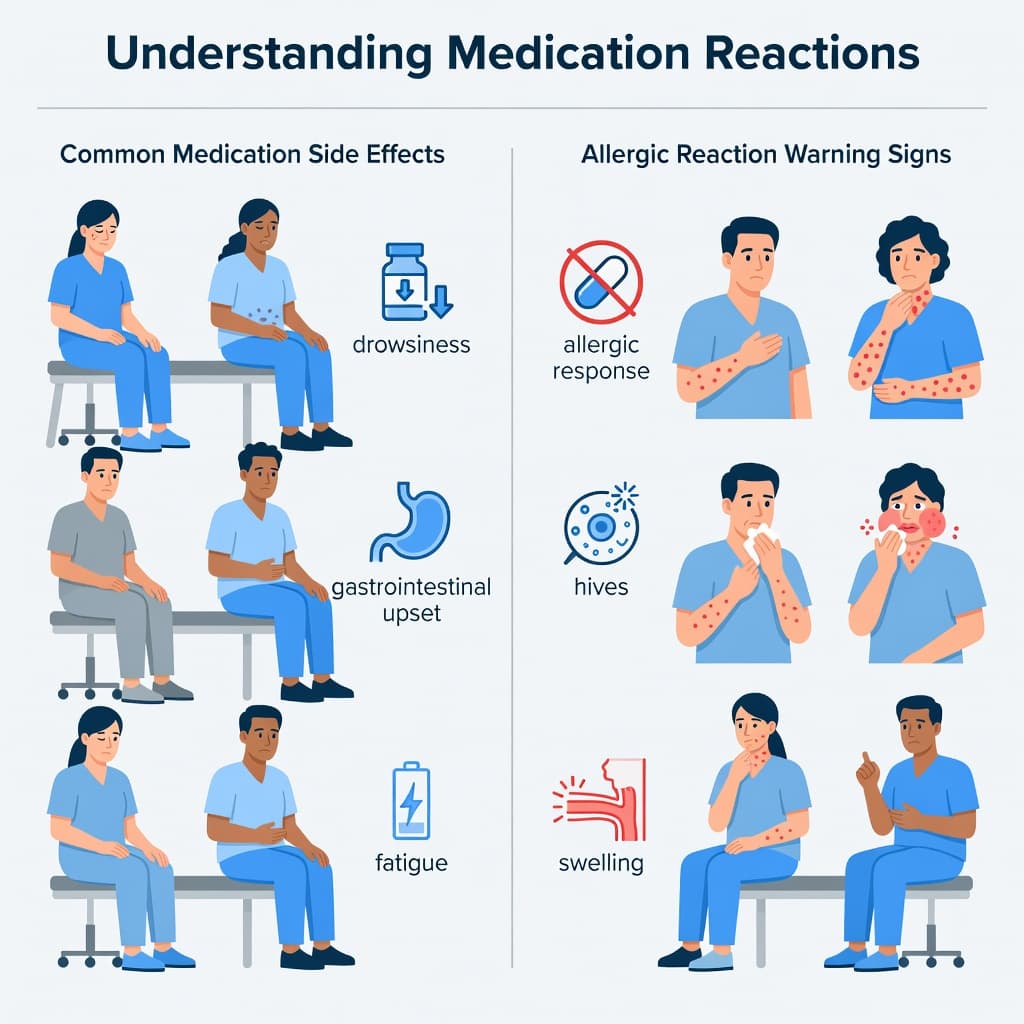
The distinction matters. An incorrect allergy label can limit treatment choices, especially when you need antibiotics, cancer treatment, or long-term cardiovascular care. In contrast, ignoring a genuine allergy can put you at risk during a future dose.
Symptoms and Timing Can Help Tell the Story
Symptoms alone do not always provide a perfect answer. Nausea or vomiting can occur during a severe allergic reaction, and some drug rashes are delayed. Still, the pattern gives your healthcare provider valuable clues regarding potential adverse drug reactions.
| Feature | Likely Side Effect | Possible Drug Allergy |
|---|---|---|
| Body process involved | Expected drug action or metabolism | Immune-system response |
| Common symptoms | Nausea or vomiting, diarrhea, headache, fatigue, dizziness | Hives, itching, skin rash, facial swelling |
| Breathing symptoms | Usually absent | Wheezing, throat tightness, shortness of breath |
| Timing | May happen with the first dose or after a dose change | Often minutes to hours after exposure, though rashes can be delayed |
| Future use | A clinician may adjust the dose or switch medicines | Avoid the suspected drug until medically assessed |
A dry cough offers a useful real-life example. ACE inhibitors, including perindopril, can cause a persistent dry cough. That is a known medication side effect related to the drug class, not usually an allergy. People prescribed COVERSYL for blood pressure management should report a persistent cough, dizziness, or faintness to their prescriber rather than stopping treatment without guidance.
However, ACE inhibitors can rarely cause angioedema, which is sudden swelling of the lips, tongue, face, or throat. While this may not be a classic allergy, it is still an emergency because it can block the airway.
Skin rash symptoms deserve close attention. A few small itchy bumps might be mild, but a spreading rash with fever, painful skin, mouth sores, blistering, or peeling needs urgent evaluation. While common drugs like antibiotics or NSAIDs are frequent culprits for sensitivities, the clinical overview of allergy and side-effect patterns describes fatigue, nausea, diarrhea, and constipation as common non-allergic medication effects.
What To Do After a Medication Reaction
First, assess the severity of the situation. Call 911 or seek emergency care right away for trouble breathing, throat tightness, fainting, a weak pulse, confusion, or swelling of the face, tongue, or lips. These are classic signs of anaphylaxis, a life-threatening condition that often requires the immediate administration of epinephrine.
For symptoms that are uncomfortable but not urgent, contact your prescribing clinician or pharmacist promptly. While mild itching or hives might be managed with over-the-counter antihistamines, you should never make this decision without professional guidance. Write down the medicine name, the dosage, the time you took it, when symptoms began, and any food, supplements, or other medicines you used that day. A photo can also help document a rash before it fades.
Do not take another dose if you experience hives, swelling, breathing symptoms, or a rapidly worsening rash unless an emergency clinician tells you otherwise. However, for mild nausea or a headache, do not automatically stop a prescription medicine. Sudden discontinuation can be risky when managing treatments for blood pressure, seizures, transplant care, cancer, and other serious conditions.
Your clinician may lower a dose, recommend taking the medication with food, change the timing, substitute another drug, or refer you to an allergist. An allergist can review your complete medical history and perform skin testing or supervised drug challenges to confirm whether a reported reaction is a true drug allergy.
The FDA encourages patients and clinicians to report serious or unexpected adverse events through MedWatch. Clear reporting helps identify rare safety problems that may not appear in early clinical trials.
Keep a current medication list that includes the exact reaction, not just the word allergy. For example, noting that penicillin caused hives and lip swelling is far more useful to your healthcare team than simply writing penicillin allergy.
Safe Access and Prescription Refills
Medication safety starts before the first dose. Whether you order prescription drugs online for a chronic condition or arrange online medicine home delivery for a family member, use a provider that requests a valid prescription, identifies the dispensing pharmacy, and gives access to pharmacist support.
Price matters, particularly for costly specialty treatments and chemotherapy drugs. Patients comparing the medicine delivery cost to USA addresses with pricing in Australia, the UK, or other markets should also factor in shipping times, local import rules, product availability, and prescription requirements. Cheap prescription drugs worldwide are not a bargain if the source cannot verify quality or the medication arrives too late.
An international online pharmacy should never promise to replace urgent care or bypass a clinician's instructions. It should provide traceable orders, secure prescription handling, and clear contact information. You can manage prescription refills online when a licensed prescriber has determined that the treatment is appropriate.
This is especially important for people who buy cancer drugs online or order oncology medicines online. Immunotherapy, targeted cancer therapy drugs, oral chemotherapy drugs, and immunosuppressants can cause serious adverse effects that may resemble allergic reactions. Report new fever, rash, diarrhea, breathing symptoms, or swelling to the oncology team without delay.
Before placing an order, review Waldrugmart's pharmacy services and sourcing standards, confirm your prescription details, and ask how to reach a pharmacist if symptoms occur after delivery.
The Safest Response Is a Clear Response
Understanding medication side effects vs allergic reactions can be challenging, but recognizing the body's patterns is essential for your health. While common side effects might be managed by adjusting your dosage or trying a different prescription, allergic symptoms like hives, swelling, or difficulty breathing require an immediate medical assessment to prevent serious complications.
If you notice signs of anaphylaxis, such as a sudden drop in blood pressure or throat closure, seek emergency medical attention right away. Because medication side effects vs allergic reactions can overlap, it is always best to err on the side of caution.
This information is for educational purposes only and does not replace professional medical advice. Always consult a licensed healthcare provider or pharmacist regarding any suspected medication reaction, and prioritize emergency care if you experience severe symptoms.
Frequently Asked Questions
Can a side effect become a drug allergy?
A side effect does not transform into a drug allergy. These issues involve different bodily processes and adverse drug reactions. However, any new or worsening symptom may require a medical reassessment. It can be difficult to identify the underlying cause without carefully reviewing the specific medicine, timing, dosage, and your personal health history.
How soon does a medication allergy happen?
Some allergic reactions involve the immune system and start within minutes to a few hours after a dose. Other reactions, especially certain skin issues, may appear days later. An allergic response can also occur after you have taken a medication multiple times without issue, as your body may become sensitized over time.
Is a skin rash always a drug allergy?
No. A skin rash can result from a virus, heat, other health conditions, or as a known medication side effect. Still, you should report any new rash that appears after starting a prescription medicine, especially if it spreads, itches, blisters, causes a fever, or affects the mouth or eyes.
What should I do if I feel nausea or vomiting after a new prescription?
Contact your pharmacist or prescriber before stopping the medicine, unless you also experience severe symptoms such as swelling, breathing trouble, or fainting. Nausea or vomiting is often a manageable side effect, and a clinician may be able to suggest a change in timing, food intake, or dosage to help you tolerate the medication.
Is it safe to order prescription medicine online?
It can be safe when the pharmacy requires a valid prescription, uses licensed dispensing partners, protects your personal data, and offers direct pharmacist access. Avoid sellers that offer prescription medicines without a prescription or cannot provide clear contact and sourcing information.