
Medication Storage Safety in Bathrooms, Kitchens, and Cars

A medicine bottle left beside the sink or in a hot car can become a safety problem long before its expiration date. Heat, moisture, and easy access can affect medicine quality and put children, pets, or visitors at risk.
Medication storage safety means keeping prescription medicine and over-the-counter medications secure, dry, correctly labeled, and stored according to their instructions. A locked, cool location away from daily household traffic is usually safest and also supports pet safety.
Quick answer: For safe storage, avoid storing medicines in humid bathrooms, near kitchen heat and water, or in parked cars. Keep them in labeled bottles in a locked location, out of sight and out of reach, then use a take-back option for unused or expired medicines.
Table of Contents
- Key Takeaways
- Control Access to Medicines
- Bathrooms, Kitchens, and Cars
- Handling Daily Medicines Safely
- Disposing of Unused Medicines
- Planning for Prescription Delivery
- Common Questions About Medicine Storage
Key Takeaways
- For safe storage, keep prescription medicine in a cool, dry place inside a locked cabinet, high and out of reach of children and pets.
- Keep prescription labels, instructions, and safety warnings with each medicine for clear dosing guidance.
- Use a kitchen cabinet only when it’s away from heat, steam, and water.
- Use cars for short transport, not long-term medication storage.
- Use a drug take-back program for unused medications and any expired medication.
Control Access to Medicines
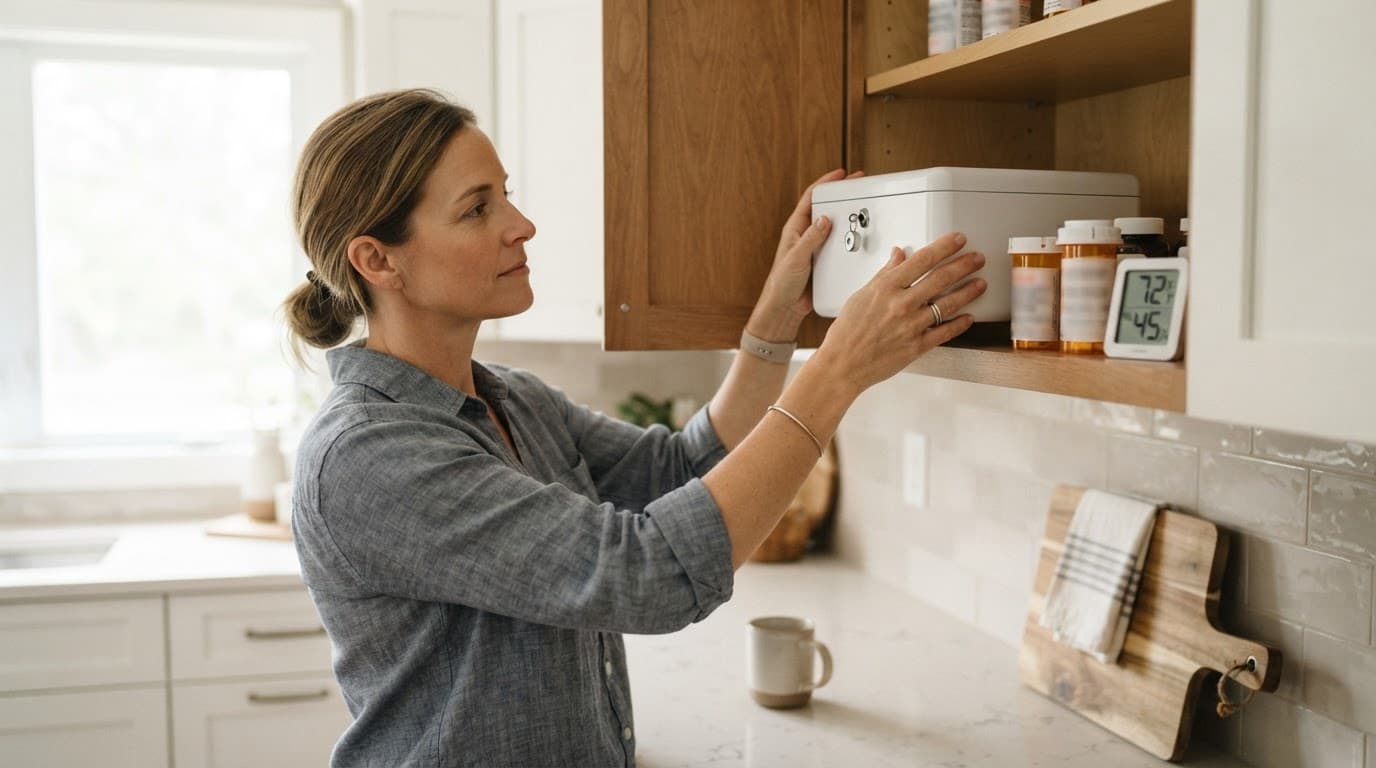
A proper storage plan protects medicine and people around it. The National Library of Medicine's medicine storage guidance recommends keeping medicines out of sight and out of reach, preferably in a cabinet with a latch or lock. The CDC also advises securing medicines to prevent accidental access by children.
Put every medicine behind a barrier
Child-resistant caps reduce the chance of quick access, but they're not childproof. Effective childproofing also requires a high, locked cabinet, a lockable medication box, or a secured drawer. Keep the key or code separate from the medicine, especially when storing opioid prescriptions. A smart lock can help caregivers track access, but it shouldn't replace physically securing the container. If someone may have swallowed medicine, contact poison control, and call emergency services for urgent symptoms.
When refills arrive through prescription delivery, compare each delivered prescription medicine with your current medication list before putting it away. These safe prescription home-delivery tips can help households check orders, labels, and storage needs promptly.
Keep the original container intact
The labeled package preserves the prescription label, expiration date, drug name, strength, and pharmacy instructions. Moving tablets into an unlabeled jar creates an avoidable risk of missed doses, duplicate doses, and drug mix-ups.
Leave medicines in their labeled packaging unless a pharmacist recommends a different system. A weekly pill organizer can help with daily routines, but keep the labeled bottles locked nearby for identification. Fixed-dose blood pressure medicines, including perindopril and amlodipine combinations, need the same careful handling as other medicines.
Bathrooms, Kitchens, and Cars
Safe storage depends heavily on location. A study of U.S. households found that medicines sensitive to temperature and humidity should not remain in kitchens or bathrooms for long periods, particularly near heat and moisture sources, as discussed in this household medication storage study.
| Location | Main concern | Safer approach |
|---|---|---|
| Bathroom cabinet | Steam and humidity from showers | Use a secure bedroom or hallway cabinet instead |
| Kitchen cabinet | Heat and moisture near appliances and sinks | Choose a high cabinet far from the stove and sink |
| Parked car | Temperature swings, sunlight, and theft | Carry medicine with you when you leave the vehicle |
The safest general setting is a secure cabinet in a climate-controlled room. However, always follow the storage directions on the label and any instructions from the dispensing pharmacy.
Why bathrooms and kitchens cause problems
Bathroom storage exposes bottles to warm steam from baths and showers. Moisture can damage tablets, capsules, test strips, and some packaging before the labeled expiration date.
A kitchen can be acceptable if the cabinet is high, dry, and away from the sink, oven, dishwasher, coffee maker, and direct sunlight. Don't store medicine beside food, cleaning chemicals, or pet supplies. A shelf in a hallway closet is often a better option.
Cars can damage medicines quickly
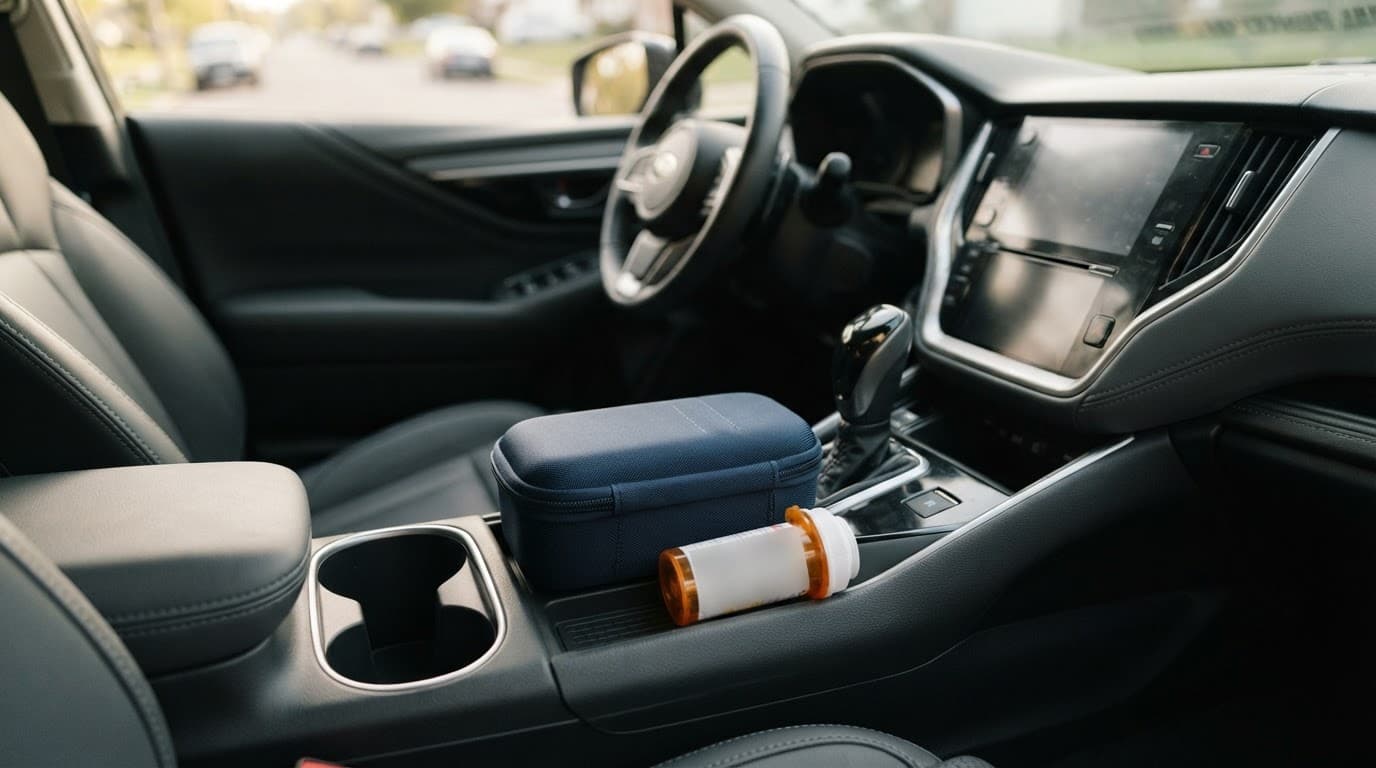
Never leave medicines in a glove box, center console, trunk, or under a seat. Cars can become extremely hot or cold, and the temperature may shift fast. St. Jude also cautions families against storing medicines in bathrooms or vehicles because these conditions can affect the product and increase safety risks in its St. Jude's storage and disposal advice.
For travel, carry medicine in its original container inside a protective bag. Bring it indoors as soon as you reach your destination. If a medicine has been exposed to extreme heat, freezing temperatures, moisture, leaks, discoloration, or damage, ask a pharmacist before using it.
Handling Daily Medicines Safely
Some medicines need added protection
Most oral tablets and capsules require a cool, dry place at room temperature, unless the product label says otherwise. Yet insulin, biologics, injectable medicines, reconstituted liquids, inhalers, eye drops, and certain cancer treatments may have different requirements.
Keep light-sensitive medicines in their original carton if directed. Opioid prescriptions require strict access control and label-specific handling, since temperature needs can vary. Do not refrigerate a medicine unless its label says to do so. Freezing can damage some products, while unnecessary refrigeration can affect others. Before placing a special-order prescription medicine in a home cabinet, review its label and ask a pharmacist about temperature limits.
When ordering a prescription, use the secure prescription ordering steps to provide a valid prescription and review handling instructions before checkout.
Make liquid medications harder to mix up
Liquid medications need particular care around infants and children. Measure only with the oral syringe, cup, or device supplied or recommended by the pharmacy. Kitchen spoons don't measure reliably.
After giving a dose, close the bottle, wipe the outside if needed, and return it to its locked storage spot. Record the dose time when more than one caregiver is involved. A shared caregiver log helps prevent medication errors and accidental double dosing during busy mornings or overnight care.

Photo by Rufina Rusakova
A pill organizer can support adherence, but it does not replace a locked storage space or a current medication list.
Disposing of Unused Medicines
Remove leftovers as soon as treatment ends
Prompt drug disposal helps prevent unused medications or an expired medication from being taken by mistake. It also reduces the risk of sharing, theft, or unsupervised use, especially with opioid prescriptions and other controlled substances. Discontinued treatments should not sit in a household cabinet.
The FDA recommends a drug take-back program as the preferred disposal route for most unwanted medicines. This route is particularly suitable for leftover opioid prescriptions and is among the safest disposal methods for other high-risk medicines. Many pharmacies, hospitals, and police departments offer collection kiosks; community guides such as this overview of medication take-back and drop-box options can help identify local choices.
Use household trash only when necessary
If no take-back option is available, follow current FDA instructions. Remove medicines from their containers and mix them with an undesirable substance, such as used coffee grounds, dirt, or cat litter. Place the mixture in a sealed container before putting it in the trash.
Scratch out personal information on empty prescription packaging. Do not flush medicines unless the product appears on the flush list. Most medicines should not go down a toilet or sink.
Planning for Prescription Delivery
Home delivery can help people in rural areas, caregivers, travelers, and patients managing long-term treatment. Still, every package needs a storage plan before it reaches your door.
When ordering prescription medicine, use an Online Pharmacy that requires a valid prescription, identifies its dispensing source, offers pharmacist review, and provides trackable delivery. Delivery costs can vary by package size, speed, destination, and temperature control requirements.
Bring packages inside promptly during heat waves, freezes, or heavy rain. Check the seal, quantity, label, and expiration date before putting the order away. If a refill is delayed, these prescription medication support FAQs can help you prepare questions for the pharmacy and prescriber.
Safer Storage Starts Before the First Dose
Medication safety protects potency, prevents accidental poisoning, and makes daily treatment easier to manage. A secure cabinet outside the bathroom, an organized dose routine, and timely disposal cover most household risks.
This information is for educational purposes only and does not replace medical advice. Consult a licensed healthcare provider or pharmacist about the storage requirements for your specific medicine.
Common Questions About Medicine Storage
Can I store medicine in a bathroom cabinet?
Bathroom cabinets are poor long-term storage locations because shower steam and humidity can affect medicines and their packaging. Move medicines to a secure location in a bedroom, hallway, or dry kitchen area away from sinks, appliances, and sunlight.
Is a kitchen cabinet safe for prescription medicine?
A kitchen cabinet can work when it stays cool and dry. Choose a high, locked cabinet away from the stove, oven, sink, dishwasher, and coffee maker. Never leave medicines on counters, in a pantry within a child's reach, or beside cleaning products.
What should I do with medicine left in my car?
Bring it inside as soon as possible. Heat, cold, moisture, and direct sunlight can affect medicine in a vehicle. Don't rely on a glove box or trunk for storage. If the product looks damaged or experienced extreme temperatures, contact a pharmacist before taking it.
How should caregivers store children's medicine?
Keep each bottle in its original, tightly closed container inside secure storage. Use an oral syringe or marked dosing device, not a kitchen spoon. Record each dose when several caregivers help, then return the bottle to secure storage immediately after use.
Can I throw an expired drug in the trash?
Use a collection kiosk or mail-back option whenever possible, especially for opioid prescriptions. If neither is available, mix most medicines with coffee grounds, dirt, or cat litter, seal the mixture in a container, and place it in household trash. Flush only medicines listed on the FDA flush list.