
Nasal Spray Technique for Better Allergy Relief

A nasal spray can miss its target even when the right medicine is in the bottle. Nasal spray technique determines whether an allergy treatment stays on the inflamed nasal lining or runs down the throat.
For allergic rhinitis, the proper method is simple: clear the nose, aim away from the middle wall, inhale gently, and follow the product's dose and priming instructions. Small errors often explain a bad taste, nose irritation, or disappointing relief.
Quick answer
For better allergy relief, keep the head slightly forward, point the nozzle outward toward the ear on the same side, press once while breathing in gently, and avoid hard sniffing. Never spray directly onto the nasal septum.
Table of Contents
- Why technique changes allergy relief
- The seven steps that matter
- Common mistakes and safety concerns
- Access, refills, and product selection
- Closing perspective
- Frequently asked questions
Key Takeaways
- Aimed correctly, the spray reaches the nasal tissue instead of the throat.
- Steroid, antihistamine, and decongestant sprays have different roles and risks.
- Priming and dose instructions vary by product, so the leaflet matters.
- Persistent symptoms, frequent nosebleeds, or a blocked device warrant medical advice.
Why Nasal Spray Technique Changes Allergy Relief
Allergy nasal sprays work locally, but their drug classes differ. Intranasal corticosteroids, such as fluticasone allergy nasal spray, reduce inflammatory activity in the nasal passages. They are often used consistently during allergy season rather than only on the worst days.
Antihistamine sprays block histamine's effects, while combination products such as azelastine and fluticasone nasal spray address both pathways. Decongestant sprays shrink swollen blood vessels but can cause rebound congestion when used longer than directed.
The septum is the area to avoid
The nasal septum is the thin, sensitive wall between the nostrils. Directing medicine at it can cause dryness and bleeding. Pointing the nozzle outward places the spray closer to the turbinates, the folded tissue where inflammation often creates congestion.
A nasal deposition modeling study found that changes in spray angle alter where medication settles. That is why product instructions should take priority over habit.
Nasal Spray Technique for Better Allergy Relief
Start with clean hands and read the label. Some bottles need shaking, while a new or long-unused pump may need priming until it produces a fine mist.
- Blow the nose gently to clear mucus, without forceful blowing.
- Keep the bottle upright and close one nostril with a finger.
- Use the opposite hand for the open nostril when practical.
- Insert the tip only slightly, with the head tipped a little forward.
- Aim outward, toward the ear on the same side of the head.
- Press the pump while breathing in slowly and gently.
- Wipe the nozzle, replace the cap, and repeat only if the label directs it.
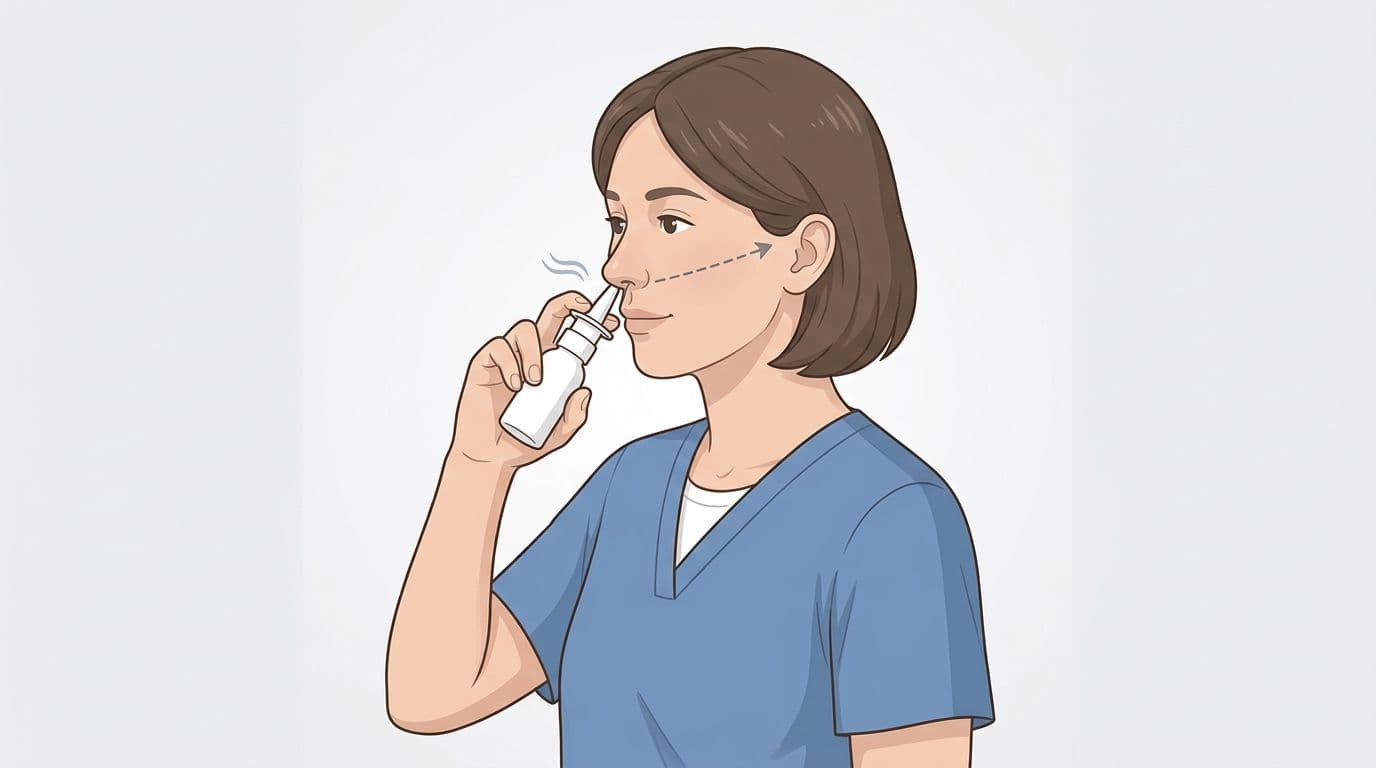
Hard sniffing is counterproductive because it can pull medicine into the throat. The practical guidance in GoodRx's nasal spray instructions also stresses aiming away from the center of the nose.
Common Mistakes and Safety Concerns
Tilting the head back is a familiar mistake. It increases throat drainage and often leaves a bitter taste. Repeated spraying after a missed puff can also exceed the intended dose.
Keep the nozzle clean and personal
A nasal spray should not be shared. Wipe the tip after use and keep the cap on between doses. If the nozzle blocks, follow the leaflet's cleaning instructions rather than piercing it with a pin.

Dryness, irritation, and mild nosebleeds can occur with medicated sprays. Frequent bleeding, severe burning, vision changes, or symptoms that remain uncontrolled need review by a licensed healthcare provider.
Access, Refills, and Product Selection
A bottle's price rarely tells the full story. Delivery costs for medicine sent to the USA, prescription rules, strength, bottle size, and dispensing country all affect the final cost. The same applies when comparing USA, UK, or Australian listings.
Safe access starts with the prescription and label
When people order prescription drugs online, a legitimate service should verify the prescription medicine, provide the product leaflet, and identify the active ingredient. A prescription mometasone nasal spray may suit some patients, but selection depends on symptoms, age, other medicines, and medical history.
Home delivery of medicine bought online can help patients maintain refills, especially in rural areas. Still, an Online Pharmacy should never replace clinical assessment or encourage use beyond the label.
This information is for educational purposes only and does not replace medical advice. Consult a licensed healthcare provider or pharmacist before starting, changing, or stopping treatment.
A Small Adjustment With Real Consequences
Correct nasal spray technique places the medicine where allergy inflammation occurs and reduces avoidable irritation. The bottle, dose, and timing matter, but the angle of the nozzle often decides whether treatment feels effective.
For recurring allergy symptoms, consistent technique is part of treatment, not a minor detail.
Frequently Asked Questions
How should an allergy nasal spray be used?
Clear the nose first, shake or prime the device if its leaflet requires it, and keep the head slightly forward. Aim the nozzle outward toward the ear, not at the septum. Press once while inhaling gently, then clean and cap the nozzle.
Why should the spray point away from the center of the nose?
The septum has delicate blood vessels and can become dry or irritated. Aiming outward reduces direct contact with that tissue and helps medication settle along the side of the nasal passage, where swelling and allergy inflammation commonly occur.
Can a steroid nasal spray be used every day?
Many intranasal corticosteroids are intended for regular daily use during allergy periods, but the dose and duration depend on the product. Patients with frequent nosebleeds, recent nasal surgery, glaucoma, or persistent symptoms should discuss use with a healthcare provider.
What affects the cost of allergy nasal spray delivery?
Total cost can include the medicine's active ingredient, strength, number of sprays, prescription status, shipping, and destination rules. Comparing equivalent products matters more than comparing a single advertised price, particularly for international orders and ongoing refills.
When should persistent allergy symptoms be reviewed?
Medical review is appropriate when symptoms don't improve despite correct nasal spray technique, when dosing needs exceed the label, or when severe congestion, recurrent bleeding, facial pain, or breathing problems develop. A different diagnosis or treatment plan may be needed.