
NovaTears for Meibomian Gland Dysfunction

Dry, burning eyes often result from tears evaporating too fast, not simply from having too few tears. This eyelid condition may limit oil, causing evaporative dry eye, a form of dry eye disease that destabilizes the tear film.
NovaTears is a water-free lubricant made to slow tear evaporation. It may improve comfort when the lipid layer is weak, but it does not clear blocked glands or replace an eye exam.
Key Takeaways
- MGD is a common cause of evaporative dry eye because unhealthy oil speeds tear loss.
- NovaTears contains 100% perfluorohexyloctane, a preservative-free, water-free liquid that supports the tear film's lipid layer.
- It lowers evaporation but won't clear plugged glands or treat every reason eyes feel dry.
- Typical use is one drop in each affected eye, up to four times daily, not while lenses are inserted.
- Persistent symptoms, pain, or vision changes need an eye-care assessment rather than repeated self-treatment.
NovaTears and the Meibomian Glands
Meibomian glands sit inside the upper and lower eyelids. They release meibum, an oily substance that forms the tear film's outer lipid layer. The underlying aqueous layer helps keep the eye's surface moist.
With meibomian gland dysfunction, gland openings can clog or produce thicker, poor-quality meibum. Tear evaporation can speed up, causing tears to break apart early between blinks. Burning, grittiness, redness, and blurred vision can follow. Excessive watering can also occur, yet it may be a reflex response to surface irritation.
Rosacea, blepharitis, aging, contact lens wear, dry air, and long screen sessions can contribute to MGD. However, these symptoms can also occur with allergies, aqueous-deficient dry eye, infection, or corneal disease. A clinical review of dry eye associated with MGD describes restoring the oily barrier and reducing evaporation as central treatment goals.
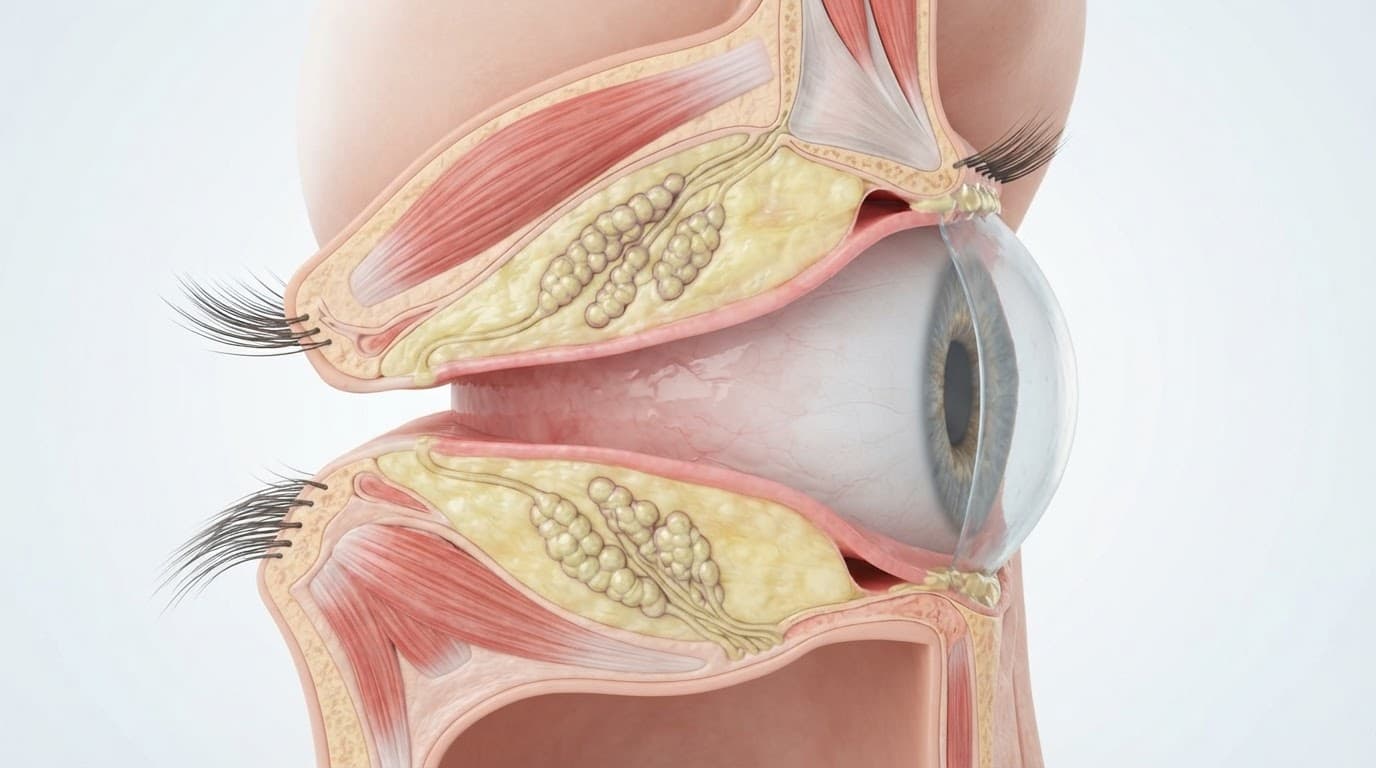 An optometrist or ophthalmologist can examine the eyelid margins and assess expressed gland secretions. They can also look for damage to the ocular surface. That evaluation helps determine whether evaporative dry eye is the main problem and whether the product fits the treatment plan.
How NovaTears Supports a Weak Lipid Layer
NovaTears is an eye lubricant for evaporative dry eye disease. The label identifies perfluorohexyloctane 100% v/v as the sole ingredient in the active ingredients section. The formula is preservative-free, water-free, and phosphate-free.
Perfluorohexyloctane spreads across the eye’s surface and supports the tear film. It forms an outer oil layer that helps slow tear evaporation. The product works alongside natural tears rather than replacing every tear-film component.
That difference matters for people whose tears disappear quickly after blinking. The product does not unblock meibomian glands, treat eyelid inflammation, or increase natural tear production. It targets one part of the problem, evaporation.
A 2024 meta-analysis of the ingredient reviewed clinical studies in evaporative dry eye. It found reduced corneal staining, improved symptoms, and a better OSDI score on ocular surface measures. Results may vary when gland obstruction or eyelid inflammation remains untreated.
The product comes in a 3ml bottle. This multi-dose bottle has a small droplet size, which many users find comfortable. Its post-opening shelf life is generally six months, but follow the carton or clinician instructions.
Using NovaTears Safely and Correctly
The usual dosage instructions are one drop in each affected eye, up to four times daily. Wash your hands first, tilt your head back, and keep the bottle tip away from your eye, lashes, fingers, and countertop. Close the cap promptly after using the eye drops.
The drops should not be applied while you are wearing contact lenses. If you routinely wear contact lenses, ask an optometrist or ophthalmologist how to manage lens wear safely. Don't assume all lubricating products have the same instructions for lenses.
The medication isn't recommended for children under 18 or during pregnancy and breastfeeding unless an eye-care professional tells you otherwise. Don't use it if you have a known allergy to any ingredient. Stop using the drops and seek advice if you have side effects such as persistent irritation, eyelid swelling, or vision changes.
Availability and product instructions can differ by country. If you're comparing products through an Online Pharmacy, confirm that the bottle, formulation, and storage guidance match the product recommended by your clinician.
Sudden vision loss, severe eye pain, marked redness, light sensitivity, or an eye injury needs urgent medical care. The medication should never delay an urgent eye evaluation.
Manage the Glands, Not Only the Symptoms
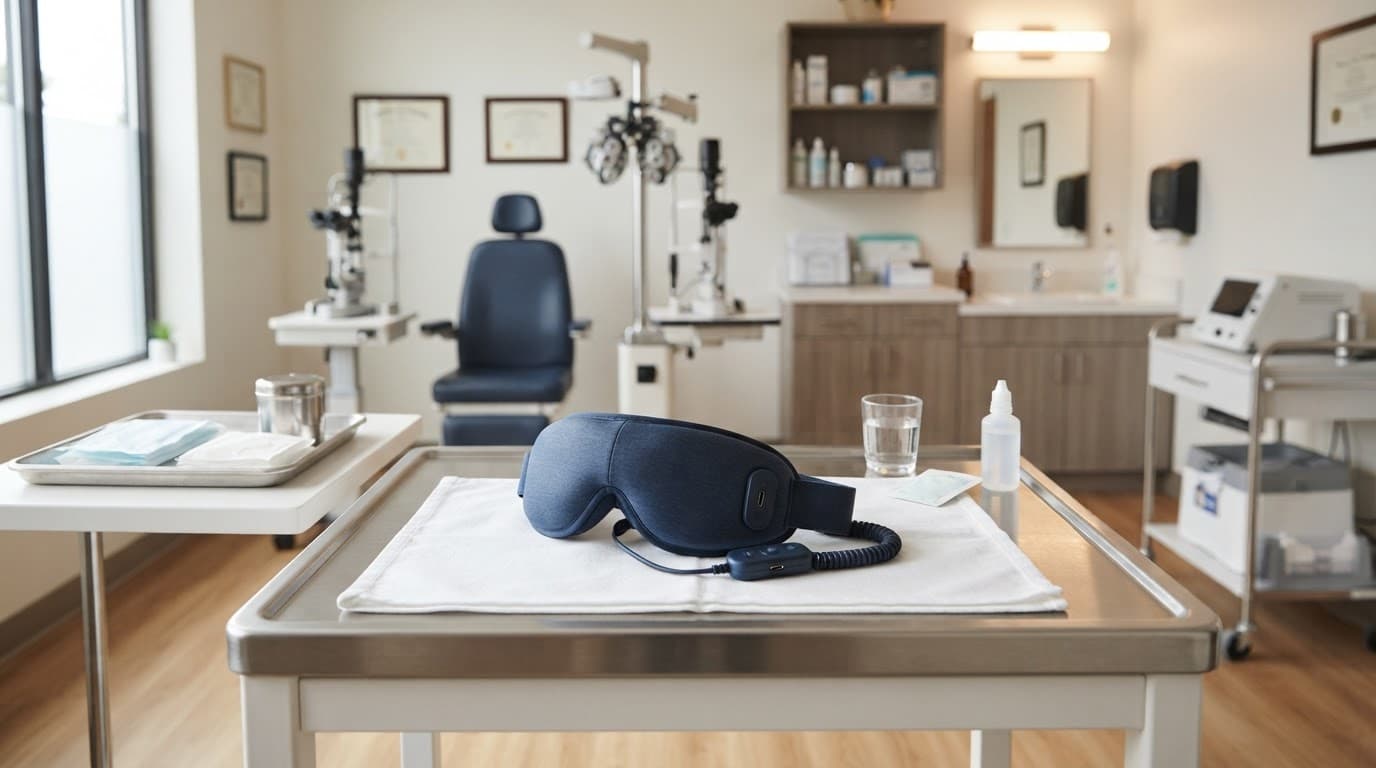
Eye drops work best as part of a broader plan for evaporative dry eye that also addresses the eyelids. Warm compresses can soften thickened meibum. A comfortably warm lid mask used for several minutes once or twice daily may help, provided it isn't hot enough to burn the skin.
After warming, gentle lid care may help some people. Avoid hard squeezing or trying to force glands open at home. An optometrist can show you an appropriate technique if expression is suitable.
Screen habits also matter. Blinking becomes less complete while reading, gaming, or working at a monitor. Take regular visual breaks, blink fully several times, and keep fans or air-conditioning vents from blowing directly toward your face.
 Different treatments address different parts of evaporative dry eye:
| Approach | Main purpose | Important limit |
|---|---|---|
| Warm compresses and lid hygiene | Softens and clears thicker gland secretions | Requires consistent use and may not resolve advanced blockage |
| NovaTears | Supports a weak lipid layer and reduces evaporation | Does not resolve gland obstruction or inflammation |
| Water-based or lipid-containing tears | Adds lubrication and moisture | May provide shorter relief when evaporation is severe |
| In-office care | May include gland expression, thermal treatment, or IPL | Needs an eye exam and individualized treatment |
A review of dry-eye therapies notes that lipid-containing artificial tears can also help with the gland problem. If persistent ocular surface symptoms continue despite home care, an eye clinician may consider prescription anti-inflammatory treatment or procedures such as thermal pulsation, lid debridement, or intense pulsed light.
Questions about a product's label, storage, or refill process can go to Ask a Pharmacy Question, Contact Waldrugmart, Speak With Our Support Team. Persistent symptoms still need assessment by an eye care professional.
Frequently Asked Questions
Can MGD cause watery eyes?
Yes. An unstable tear film can irritate the eye's surface and trigger reflex tearing. Those extra tears may still lack enough oil, so the eyes can feel dry soon afterward.
How do eye doctors check for MGD?
An optometrist or ophthalmologist examines the eyelid margins, glands, tear stability, and ocular surface. They may gently assess gland secretions and use meibography to image the glands.
Can long screen sessions make evaporative dry eye worse?
They can. People often blink less often and less fully when concentrating on a screen, allowing tears to evaporate faster. Regular breaks and intentional full blinks can help reduce this strain.
Does NovaTears cure meibomian gland dysfunction?
No. It may relieve discomfort related to evaporation, but it doesn't cure blocked or inflamed glands. Long-term care may include lid treatment, environmental changes, and follow-up eye exams.
A More Stable Tear Film Starts With the Cause
NovaTears may help when tear evaporation drives evaporative dry eye symptoms. Its formula supports the eye’s protective oils and is preservative-free.
However, lasting relief depends on recognizing why those oils are weak. Healthy meibomian gland function helps tears remain stable between blinks, so persistent symptoms deserve professional eye care rather than endless trial and error.