
Oral Cancer Medication Safety: Safe Handling at Home

Oral cancer medication safety depends on following the prescribed schedule, protecting household members from exposure, and reporting symptoms promptly. Tablets should stay intact, caregivers should use disposable gloves, and food or medicine changes need an oncology pharmacist's review.
At-home oral chemotherapy removes the infusion chair, but it doesn't remove the need for clinical supervision. Drug-specific instructions govern dosing, food, storage, and household precautions. A written treatment plan connects these requirements.
Table of Contents
Key takeaways | Understanding treatment | Dosing safely | Food and interactions | Household protection | Urgent symptoms | Affordable access | FAQs
Key Takeaways
- Oral treatment can cause serious side effects and requires scheduled monitoring.
- Meal timing, grapefruit, supplements, and other medicines can change drug exposure.
- Gloves, secure storage, and body-fluid precautions protect caregivers; fever and breathing problems require urgent attention.
Understanding Oral Cancer Treatment
"Oral" means taken by mouth, not treatment exclusively for mouth cancer. Oral anti-cancer drugs include distinct classes, such as chemotherapy, targeted treatments, and hormone therapies.
Capecitabine interferes with DNA production after conversion to fluorouracil. Many kinase inhibitors block growth signals, while abiraterone reduces androgen production. The National Cancer Institute's cancer drug information summaries distinguish individual treatments and their approved uses.
Suitability depends on cancer type, biomarkers, organ function, and other medicines. Oral treatment isn't inherently weaker or safer than intravenous treatment. Although it reduces infusion visits, blood tests and clinical assessments remain necessary. Patient education should cover medicine-specific dosing and monitoring instructions.
Preventing Dosing and Prescribing Errors
A complete prescription prevents avoidable confusion
A clear prescription template should list tablet strength, tablets per dose, treatment days, rest days, meal instructions, and missed-dose rules.
A two-institution comparison found that 75% of prescriptions at the template-using institution met the study's adherence threshold, versus 50% elsewhere (P=.0237). That threshold meant including at least 75% of evaluated 2013 ASCO/ONS safety standards. The finding supports structured prescribing, but the comparison doesn't establish causation.
About half of 508 reported oral chemotherapy prescribing errors occurred during prescribing. Patients shouldn't perform a dose calculation or change tablet counts independently. Clarify a new label that conflicts with the treatment calendar with the oncology team or pharmacist before taking another dose.
A dosing record supports adherence
A 2019 review in Deutsches Arzteblatt International reported non-adherence estimates as high as 54%. Side effects, complex schedules, forgetfulness, and cost can interrupt treatment and threaten its success.
A diary should record doses when taken, not beforehand. Alarms can help, but treatment breaks must remain visible on the calendar.
Never double a dose to compensate for one missed or vomited. Instructions differ between medicines. Tablets shouldn't be crushed, cut, chewed, or capsules opened without explicit professional direction. Swallowing difficulty needs an oncology team's assessment, not an improvised preparation.
Food and Drug Interactions That Change Treatment
Meals and grapefruit change drug exposure
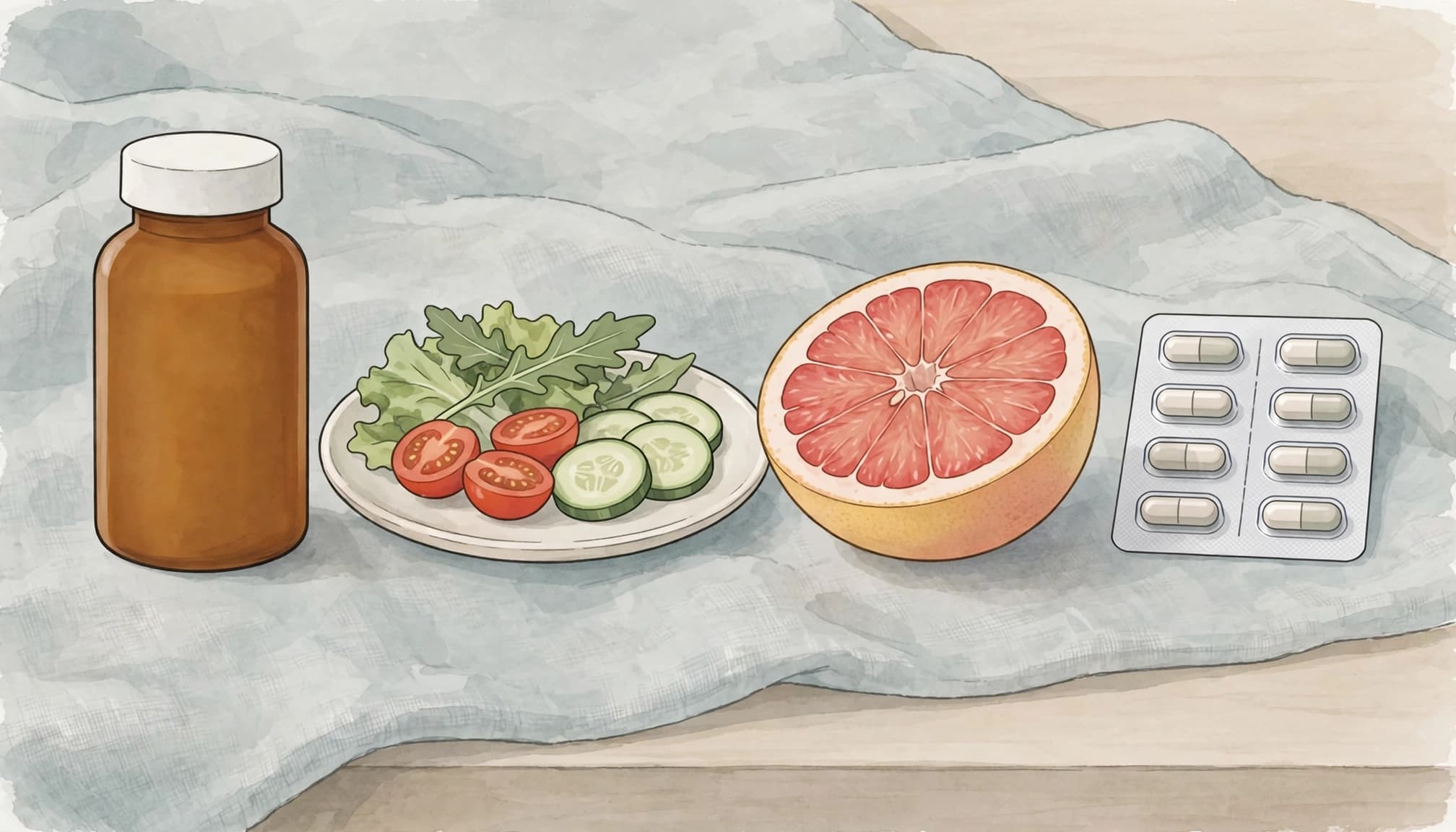
The 2019 review found meal-related instructions for about half of oral anticancer drugs. Food intake and meal timing can increase or decrease absorption. With conventional abiraterone formulations, meals can increase total exposure, measured as AUC, up to tenfold. Formulation-specific instructions matter.
Grapefruit reduces intestinal CYP3A4 activity, so more of certain drugs reaches the bloodstream. Affected treatments require avoidance of grapefruit-containing products. For example, the FDA-approved capivasertib labeling prohibits grapefruit products during treatment.
Other prescriptions can alter treatment levels
The same review estimated that roughly 70% of oral anticancer drugs relied predominantly on CYP3A4 metabolism.
These examples of drug–drug interactions show why a complete medication review matters.
| Product or medicine | Potential consequence |
|---|---|
| Clarithromycin, azole antifungals, HIV protease inhibitors | CYP3A4 inhibition can raise affected cancer-drug levels. |
| St. John's wort, carbamazepine, rifampicin | Enzyme induction can lower affected drug levels. |
| Proton pump inhibitors, including omeprazole | Reduced stomach acidity can lower absorption of some treatments. |
Omeprazole reduced dasatinib plasma concentrations by 43% in a cited study. Simply separating doses may not resolve acid-suppression interactions.
A Dutch retrospective study identified potential interactions in 46% of roughly 900 patients, with 16% classified as potentially major. Risks included QT prolongation, gastrointestinal effects, and central nervous system complications.
Every clinician and dentist needs the current medicine list, including supplements and nonprescription products. Medicines shouldn't be stopped or substituted without clinical direction.
Oral Cancer Medication Safety for Households
Prevent direct contact and accidental access
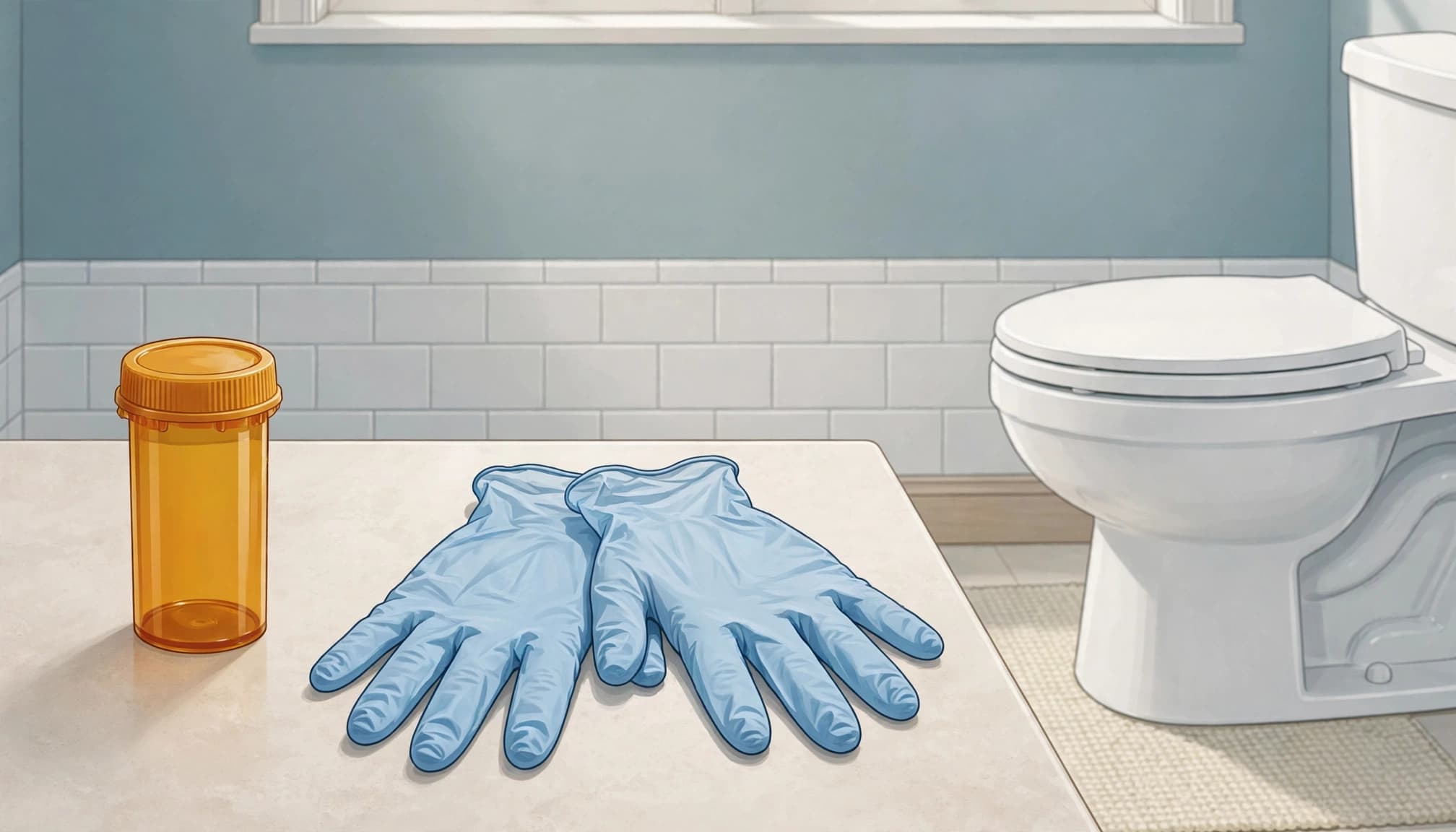
Caregivers should wash hands before putting on disposable gloves and after removing them. Gloves must be discarded after each use. Memorial Sloan Kettering's oral chemotherapy handling guidance covers these exposure precautions.
Oral chemotherapy safety depends on the medicine-specific label and instructions from the oncology team or pharmacist. Not every oral anticancer medicine is chemotherapy, and handling, storage, precautions for body fluids, and disposal requirements vary by medicine.
Keep treatment in its original labeled container, away from children, pets, heat, and moisture. Refrigerate only when directed. Pill organizers need pharmacist approval because some medicines require protective packaging.
Pregnant caregivers should avoid handling these medicines or contaminated waste. Follow the product-specific disposal instructions or ask a pharmacist how to dispose of unused treatment.
Manage body fluids and accidental exposure
Chemotherapy residues can leave through urine, stool, vomit, and blood. During the precaution period specified in the medication guide or by the oncology team, close the toilet lid and flush twice. Wear gloves for contaminated laundry and wash it separately in warm water, following treatment-team instructions.
Follow the medication guide or oncology team's stated precaution period. Some medicines require different timing.
For skin contact, wash promptly with soap and water. If medicine enters the eyes, immediately flush with plenty of lukewarm running water for 10 to 15 minutes and call the treatment team. Contaminated surfaces and spills need the team's cleanup instructions.
Symptoms That Need an Immediate Call
A temperature of 100.5°F (38.1°C) or higher requires an immediate call to oncology. Follow the lower threshold in your written treatment plan, which may be 100.4°F (38°C). If the plan is unclear, call your oncology team for instructions rather than waiting for a higher temperature. Fever during cancer treatment can indicate infection.
Flu-like symptoms, shortness of breath, painful urination, or blood in urine or stool also require prompt contact. Severe breathing difficulty, chest pain, collapse, or uncontrolled bleeding warrants emergency services.
Nausea, fatigue, and diarrhea are common side effects. Some agents also cause hair loss, skin changes, easy bruising, or mouth sores. The NCI's oral complications guidance describes treatment-related mouth problems and other side effects.
Persistent vomiting or diarrhea can cause dehydration and disrupt absorption. Ask your treatment team how to manage these symptoms rather than taking repeated replacement doses.
Accessing Oral Cancer Medicines Affordably
There isn't one meaningful price for oral chemotherapy. Costs depend on the drug, strength, treatment cycle, generic availability, insurance, and national reimbursement rules. USA, Australia, and UK patient costs therefore aren't directly interchangeable.
A local specialty pharmacy may coordinate insurance authorization and financial assistance. International sourcing requires additional attention to legal importation, continuity of supply, and transport conditions. Approval in another country doesn't establish FDA approval or permission for personal importation.
For online medicine home delivery, the total cost includes shipping and possible customs charges, not just the advertised tablet price. Delivery delays must never lead to rationing.
Our prescription medicine services require a valid prescription from a licensed healthcare provider. Our Online Pharmacy also offers pharmacist consultations. Dispensing support complements the oncology team's responsibility for drug selection, dose changes, and monitoring.
Affordable cancer medications remain useful only when the correct product reaches the patient without interrupting treatment.
Frequently Asked Questions
Can a missed or vomited dose be replaced?
The correct response depends on the medicine and how much time has passed. An extra tablet can cause overdose, while automatic replacement after vomiting can repeat an absorbed dose. The written treatment plan or oncology pharmacist should determine the response; doubling is unsafe.
Does spacing grapefruit and tablets prevent an interaction?
Spacing them doesn't reliably prevent the interaction because grapefruit's effect on intestinal enzymes can outlast the meal. For affected drugs, avoidance includes juice, fruit, and products containing grapefruit. The restriction depends on the exact medicine, so a blanket rule for every cancer treatment is inaccurate.
Can pregnant family members remain in the household?
Pregnancy doesn't automatically require separation from a person receiving oral cancer treatment. However, pregnant household members should avoid handling hazardous tablets, contaminated laundry, or body fluids. The oncology team should explain any additional drug-specific precautions, including those concerning sexual contact and reproductive exposure.
Are generic cancer drugs as effective as branded versions?
FDA-approved generics must meet standards for the same active ingredient, strength, dosage form, and bioequivalence to their reference product. However, medicines with different formulations aren't automatically interchangeable. Any switch should preserve the prescribed formulation, meal instructions, and monitoring plan through the treating clinician and pharmacist.
Is it safe to buy cancer medicines online?
Online dispensing can support access when a legitimate pharmacy requires a valid prescription, provides pharmacist access, and supplies the prescribed product through lawful channels. Websites offering prescription cancer drugs without prescriptions present serious risks. Cross-border availability alone doesn't establish authenticity, suitability, or legal importation.
Safe Home Treatment Requires Continued Clinical Oversight
Oral therapy places substantial responsibility inside the home. A clear prescription, interaction review, and exposure precautions reduce preventable harm.
Reliable communication remains essential when symptoms, missed doses, or supply problems threaten the treatment plan.
This information is for educational purposes only. Consult a licensed healthcare provider for advice about an individual cancer treatment regimen.