
Pill Organizer Safety: How to Prevent Medication Mix-Ups

A missed dose can be worrying, but taking the wrong pill can be more dangerous. Effective medication management relies on routines, and a pill organizer or pill box helps you stay on track, yet it only works when you fill it with care and check every dose before taking it.
The safest method is simple: use a current medication list, keep original bottles close, and fill one prescription at a time in a quiet, well-lit space.
Quick answer: To use a pill organizer without mixing medications, fill it on the same day each week, work from prescription labels, open only one bottle at a time, and inspect each compartment before closing it.
Key Takeaways
- A pill organizer should match your current medication list, not memory or an old prescription.
- Fill every prescription medication one at a time before opening the next bottle.
- Keep original labeled containers available for dose checks, expiry dates, and special storage instructions.
- Some medications should stay in their original packaging because of moisture, light, or air exposure.
- Ask a pharmacist to review your system if your prescription medicine changes often.
Table of Contents
- Choose the right pill organizer for your routine
- How to fill a pill organizer without mixing medications
- Store your pills safely and update every change
- Order refills before your organizer runs empty
- Keep the system simple and accurate
- Frequently asked questions
Choose the Right Pill Organizer for Your Routine
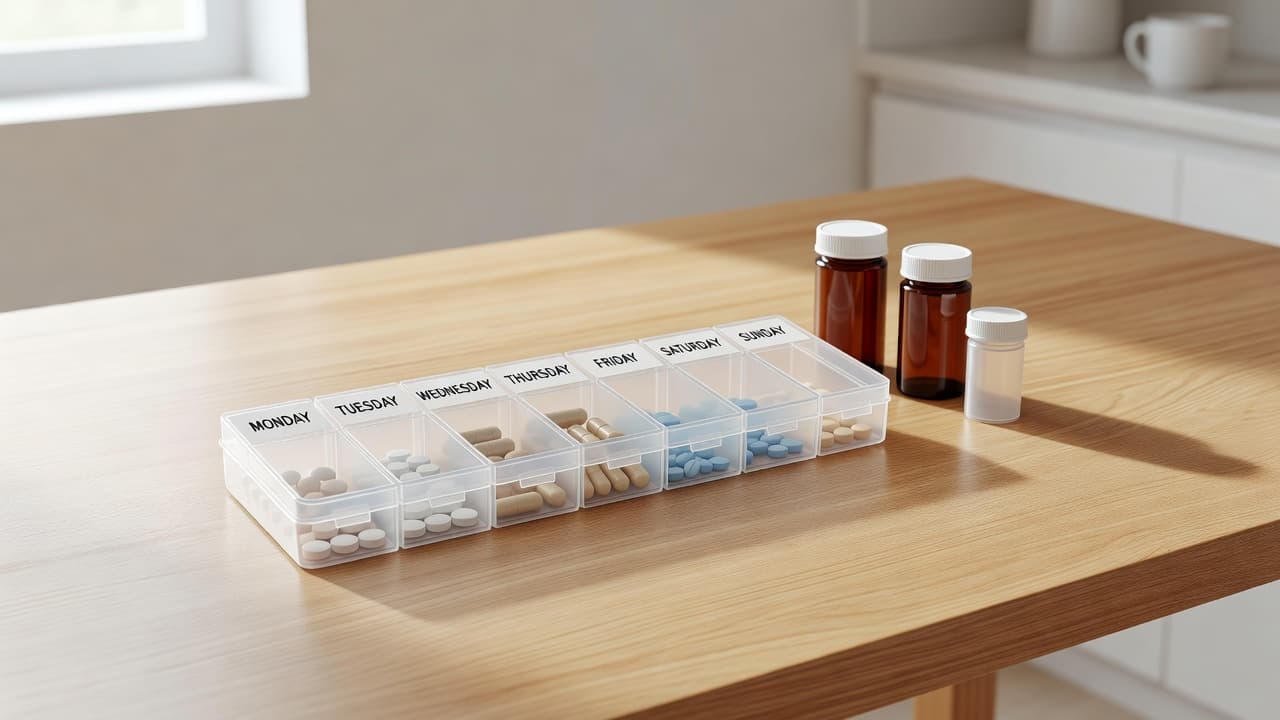
The right pill organizer matches your prescription schedule. A simple weekly pill organizer works well for one daily dose. However, if you take medicine in the morning and evening, choose an am/pm pill planner with separate compartments.
People with more complex schedules may need boxes with four daily compartments. Some organizers include alarms or removable daily trays, while a smart pill dispenser or automated pill dispenser can help caregivers, travelers, and anyone managing several prescriptions.
Before buying one, count the number and size of tablets or capsules you take each day. Large tablets, large supplements, inhaler accessories, eye drops, injections, and liquid medicine often do not fit safely inside standard compartments. For bulky items, an extra large pill organizer can provide the needed space, or you can keep those items with their original labels and add them to your medication checklist.
When shopping, look for helpful features depending on your physical needs. Options designed for arthritic hands often feature a push-button design or a spring open design to make daily access easier. Other useful additions include braille labels for the visually impaired and bpa-free plastic materials for safety.
A weekly box is often useful for hypertension treatments, diabetes medications, thyroid tablets, and other long-term therapies. It can also help people taking combination drugs, where one tablet contains more than one active ingredient. For example, a fixed-dose blood pressure medicine may combine perindopril with amlodipine. That single tablet should be listed by its full name and strength.
MedlinePlus guidance on organizing medicines recommends selecting a system that supports your dosing frequency. The goal is not to create a crowded plastic box. It is to make each dose easy to identify before you take it.
How to Fill a Pill Organizer Without Mixing Medications
Set aside a consistent refill time, such as Sunday morning after breakfast. Don't fill a pill organizer when you're rushing out the door, tired, upset, or watching television. Medication errors often begin with small distractions.
Start with a current list from your pharmacy portal, prescriber, or medication record. Include prescription drugs, vitamins, minerals, and other daily supplements. The FDA also advises patients to maintain a master medication list with names, doses, and prescribing details, as highlighted in its medication list reminder.
Use this filling sequence every week:
- Wash and dry your hands, then work on a clean, dry surface with bright lighting.
- Place your list of medications and supplements beside the organizer and keep all original bottles nearby.
- Open one bottle only. Read the label aloud or point to the drug name, strength, and instructions.
- Fill that medication across the needed days and times into the individual compartments. Finish it completely before opening another bottle. If your device features removable compartments, take out just the one you are filling to keep your workspace clear.
- Compare each filled daily compartment with the label before moving to the next medication.
- When your daily medication setup is complete, inspect every day and time slot again before snapping the lid shut.
Never pour several medications into your hand and sort them afterward. Similar-looking tablets can have different strengths or entirely different uses. A small white pill for blood pressure may resemble a pain reliever, allergy tablet, or vitamin.
If possible, ask a caregiver, family member, or pharmacist to check the first few times you set up your organizer. This is especially helpful after a hospital visit or a prescription change.
If a compartment looks unfamiliar, do not take the contents until you verify the medication against the original label.
Don't crush, split, or open a tablet in advance unless a pharmacist or prescriber has told you it is safe. Extended-release, enteric-coated, and certain specialty medications can release incorrectly when altered.
Store Your Pills Safely and Update Every Change
A filled pill organizer belongs in a cool, dry place. Bathrooms, windowsills, cars, and kitchen counters near the stove expose medications to heat and moisture. Those conditions can damage tablets and capsules before their expiration date, which makes a moisture-proof environment essential for preserving your prescriptions. For trips or high-humidity areas, some people prefer a waterproof pill canister to protect sensitive medicines from the elements.
Keep your organizer in a visible place that fits your routine, such as a kitchen shelf near breakfast supplies. Still, it must remain out of reach of children, pets, and visitors. The FDA advises keeping medications in original containers with labels intact to reduce accidental exposure and confusion, including around pets. Review its advice on safe medication storage at home.
Each person in a household needs a separate, clearly marked pill organizer. Different colors can help, but names and dosing times matter more. Never share an organizer, even when two people take the same medication.
Some medicines need special handling. Ask a pharmacist before transferring medications that come in blister packs, foil packets, light-resistant containers, or moisture-control packaging. Keep medicines that require refrigeration, such as many injectable drugs, in their recommended storage conditions.
Cleaning and maintaining the pill organizer between refills is equally important. Wash it with mild soap and water if the manufacturer allows it, then let it dry completely. Moisture trapped in compartments can damage pills.
If a medication is started, stopped, or changed, empty the pill organizer and refill it from the updated list. Do not try to patch one or two sections while leaving the rest untouched. That approach creates confusion later in the week.
Order Refills Before Your Organizer Runs Empty
A pill organizer is only useful when you have a reliable supply of the right medication. Check each bottle during your weekly fill. If you have fewer than one to two weeks of doses left, request a refill before the organizer runs empty. If you are preparing for a trip, a travel pill organizer offers great portability for managing your doses on the go.
For chronic conditions, prescription synchronization can reduce the number of separate refill dates. Ask your prescriber or pharmacist whether your medications can be renewed on a similar schedule. This can make a pill organizer easier to manage and reduce last-minute gaps, especially when paired with automated reminders from your pharmacy.
An Online Pharmacy can be helpful for people who need routine refills, live in remote areas, or care for a family member. However, safe ordering still requires a valid prescription, correct strength, and clear communication with a licensed healthcare provider.
When comparing online medicine home delivery options, look beyond the advertised price. Confirm the pharmacy prescription process, shipping timelines, product packaging, and customer support. The medicine delivery cost to USA can vary with medication type, delivery speed, order size, and international shipping requirements.
Patients using an international online pharmacy should plan ahead. Delivery times can differ from local pickup, especially for specialty products. You can register a prescription and review ordering steps before a refill becomes urgent.
For people managing expensive long-term treatment, including cancer care, affordability matters. Still, anyone looking to buy cancer drugs online or order oncology medicines online should only use licensed sources that require a valid prescription and provide pharmacist support. Never transfer a new cancer medication, immunotherapy product, or oral chemotherapy drug into a pill organizer without first confirming storage instructions with the oncology team.
For a broader view of safe household storage, review these medicine storage and disposal tips. Price matters, but correct medication and safe handling matter more.
Keep the System Simple and Accurate
A pill organizer turns a complicated medication schedule into a clear daily routine. Its safety depends on the habits behind it: one bottle at a time, careful label checks, clean compartments, and prompt updates after every prescription change.
Keep your medication list current and your original containers close. Those two steps give you a reliable way to check any dose that does not look right, which ultimately supports safe medication management over the long term.
This information is for educational purposes only and does not replace medical advice. Consult a licensed healthcare provider or pharmacist about medication storage, dosing, missed doses, and possible drug interactions.
Frequently Asked Questions
Can I put all my medications in one pill organizer?
You can use one pill box or organizer for your scheduled oral medicines if each compartment is large enough and you can identify every dose. Keep each person's medicines separate. Ask a pharmacist before transferring medications with special packaging, refrigeration needs, or instructions to protect them from light or moisture. You should also check with your pharmacist if you are adding sticky items like gummy vitamins that might compromise nearby pills.
How often should I refill a pill organizer?
Most people refill a pill organizer once a week on the same day. A weekly routine makes it easier to spot low supplies and prescription changes. If your doctor adjusts a dose or starts a new medicine, empty the organizer and refill it using the new directions.
What should I do if I find an unknown pill in a compartment?
Do not take the pill until you identify it. Check the organizer against your medication list and original bottle labels. If you still cannot confirm it, call your pharmacist. Never guess based on a pill's color, shape, or size.
Can medications stay in a pill organizer while traveling?
Many stable tablets and capsules can travel in a pill organizer for a short trip, especially when placed inside a secure outer carrying case. Carry original labeled bottles as backup, especially when flying or crossing borders. Keep medicines in a carry-on bag, avoid extreme temperatures, and bring an updated medication list with prescriber contact details.
Is it safe to order prescription drugs online?
It can be safe when the pharmacy requires a valid prescription, provides access to a licensed pharmacist, and clearly explains its ordering and shipping policies. Avoid websites that sell prescription medicine without a prescription or offer drugs with unclear labeling, origin, or storage information.