
PrEP vs PEP: The Key Difference in HIV Prevention

If you're comparing PrEP vs PEP, the short answer is simple: PrEP is taken before possible HIV exposure, while PEP is taken after a possible exposure. One is a planned shield. The other is an emergency response.
That difference matters because timing changes everything. If you know which option fits your situation, you can act faster, ask better questions, and avoid losing valuable time.
Quick answer: PrEP is for ongoing prevention before exposure, and PEP is a 28-day emergency treatment that must start within 72 hours after possible HIV exposure.
Table of Contents
- Key takeaways
- PrEP vs PEP at a glance
- How PrEP and PEP work in the body
- Testing, side effects, and safety basics
- Cost, access, and using an online pharmacy safely
- Conclusion
- FAQ
Key takeaways
- PrEP helps prevent HIV before exposure and works best with steady, on-schedule use.
- PEP is for emergencies and must start as soon as possible, no later than 72 hours after exposure.
- Both options use antiretroviral medicine, but they are not interchangeable in the moment.
- Regular HIV testing matters with either approach.
- Cost and access can vary, so a licensed clinic or trusted online pharmacy can help you compare options safely.
PrEP vs PEP at a glance
PrEP stands for pre-exposure prophylaxis. It's meant for people with ongoing or repeated chances of HIV exposure, such as those with an HIV-positive partner, people who don't always use condoms, or people who inject drugs and share equipment.
PEP stands for post-exposure prophylaxis. It's for a recent possible exposure, such as condom failure, unplanned unprotected sex, or a needlestick injury. Because HIV can start establishing infection quickly, PEP is a race against the clock.
This side-by-side view helps:
| Feature | PrEP | PEP |
|---|---|---|
| When you take it | Before exposure | After exposure |
| Main purpose | Ongoing prevention | Emergency prevention |
| Timing | Daily pills or scheduled injections | Start within 72 hours |
| Typical duration | Long-term, as needed | 28 days |
| Best for | Repeated risk | A single recent event |
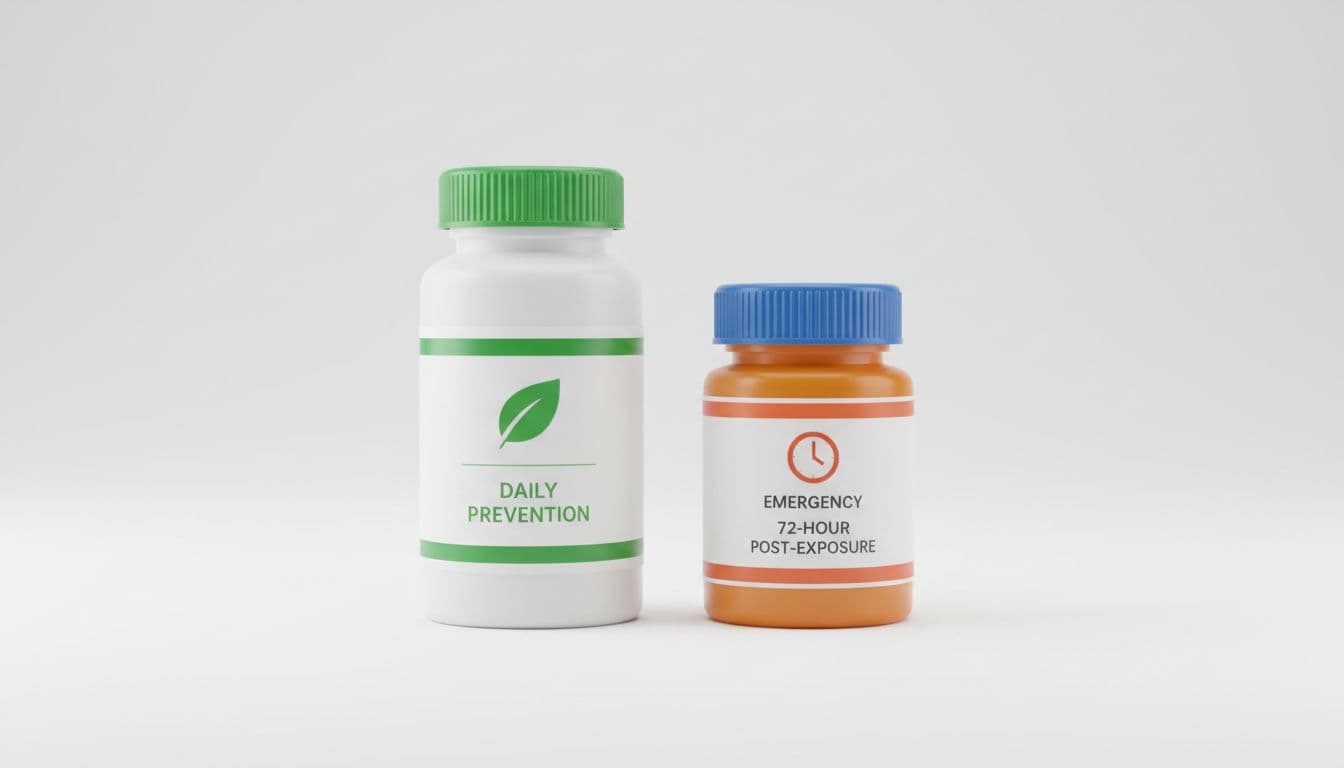
The takeaway is clear: PrEP is a seat belt you fasten before the drive. PEP is the airbag after the crash.
Research summarized by MedlinePlus on HIV PrEP and PEP shows that PrEP is highly effective when taken as prescribed, with sexual transmission risk reduced by about 99%.
How PrEP and PEP work in the body
Both strategies use HIV medicines, but they do different jobs.
PrEP keeps protective drug levels in your body before exposure happens. If HIV enters the body, the medicine makes it much harder for the virus to take hold. Current FDA-approved PrEP options include daily oral tablets and long-acting injectable cabotegravir. For some people, a daily pill is easy. For others, an injection every two months is a better fit.
PEP works after a possible exposure. The goal is to stop HIV before it becomes a lasting infection. Most PEP regimens use a short course of multiple antiretroviral drugs for 28 days. Because the window is narrow, speed matters more than convenience.
Who usually needs PrEP? People with repeated exposure risk. Who usually needs PEP? Someone with a recent event that may have exposed them to HIV.
PEP is not a backup plan you can keep using over and over. If exposures keep happening, a clinician may recommend switching from emergency treatment to a PrEP plan after the PEP course ends and follow-up testing is complete.
For the timing details, the NIH PEP fact sheet is direct: start PEP as soon as possible, ideally within 24 hours, and no later than 72 hours after exposure.
Testing, side effects, and safety basics
Neither PrEP nor PEP is a casual over-the-counter fix. Both require medical guidance because HIV testing, kidney health, hepatitis B status, and drug interactions can affect the safest choice.
Before starting PrEP, you usually need an HIV test to confirm you do not already have HIV. During PrEP, follow-up testing continues at regular intervals. This matters because taking PrEP alone when someone already has HIV can lead to treatment problems.
PEP also begins with urgent evaluation. A clinician looks at what happened, how long ago it occurred, and whether the exposure was high risk. Then they choose the right regimen and plan follow-up testing.
Side effects are often manageable. Some people notice nausea, diarrhea, headache, or fatigue. Most symptoms improve, but that does not mean you should stop on your own. A provider can often help with timing, food choices, or a regimen change.
Balanced care also means honesty about limits. PrEP and PEP do not prevent other sexually transmitted infections, and they are not a substitute for broader sexual health care.
For more detailed clinical guidance, HIVguidelines.org on PEP and PrEP offers evidence-based recommendations used in real-world care.
This information is for educational purposes only. Consult a licensed healthcare provider for testing, treatment decisions, and urgent post-exposure care.
Cost, access, and using an online pharmacy safely
Access is often the hardest part. In the USA, HIV prevention drugs can be costly without insurance, especially for newer injectable options. Generic oral PrEP may cost less, while PEP bills can vary based on the clinic, the regimen, and whether lab work is included.
Some people compare prices across the USA, Australia, and the UK because coverage systems differ. Others look at international sources when local prices feel out of reach. Still, safety comes first. If you order prescription drugs online, use a licensed source that requires a valid prescription and offers pharmacist review.
A trusted online pharmacy should clearly show the drug name, dose, safety details, and refill rules. It should also explain shipping, storage, and support. For example, transparent product pages often include dosing and risk information, similar to this Rivaroxaban prescription information.
If you're comparing services for prescription medicine, ask practical questions. Does the pharmacy require a prescription? Is online medicine home delivery tracked? What is the final medicine delivery cost to USA after shipping and handling? An international online pharmacy may look cheaper at first, but the real total includes shipping time, customs rules, and refill reliability.
The safest path is simple: get tested, speak with a clinician, and use a verified source if you need treatment filled. If cost is the barrier, compare licensed options before you buy.
Conclusion
The real difference between PrEP and PEP is timing. PrEP protects before exposure. PEP gives you a brief emergency window after exposure.
Once you know that split, the next step becomes clearer. If you may have been exposed, seek care now. If your risk is ongoing, ask about a PrEP plan that fits your life and your budget.
FAQ
What is the main difference between PrEP and PEP?
PrEP is prevention you start before possible HIV exposure. PEP is emergency treatment you start after a possible exposure. PrEP works best for ongoing risk, while PEP is for a recent event and must begin within 72 hours.
How soon do I need to start PEP?
Start PEP as soon as possible. Most guidance says the sooner, the better, with the outside limit at 72 hours after exposure. Waiting too long can make it far less likely to work, so urgent care is important.
How effective is PrEP?
PrEP is highly effective when taken exactly as prescribed. Oral PrEP can reduce HIV risk from sex by about 99%. Missed doses lower protection, so the benefit depends on consistent use and regular follow-up testing.
Can I move from PEP to PrEP?
Yes, some people do. If a recent exposure led to PEP, and ongoing risk remains, a clinician may help you transition to PrEP after the 28-day course and follow-up HIV testing. That shift turns emergency protection into steady prevention.
Is it safe to order HIV prevention medicine online?
It can be safe if the pharmacy is licensed, requires a valid prescription, provides pharmacist support, and gives clear product details. Be careful with sites that skip medical screening, hide contact information, or promise easy sales without verification.
What does PrEP or PEP cost in the USA?
Costs vary a lot. Insurance, clinic programs, manufacturer assistance, and generic options can lower the price. Oral PrEP is often less expensive than injectable PrEP, and PEP costs depend on the drugs, visit fees, and lab tests.
Do I still need HIV testing if I take PrEP?
Yes. Routine HIV testing is part of safe PrEP use. Your clinician may also check kidney function and screen for other sexually transmitted infections. These visits help confirm the medicine is still the right fit and is working safely.