
Prescription Refill Reminder System: Set It Up Safely

A prescription bottle rarely runs empty without warning. The harder problem is that refills can require prescriber approval, pharmacy processing, insurance checks, or delivery time before the last dose is taken.
A prescription refill reminder system tracks the medication supply and prompts the patient or caregiver to act early. It doesn't change a dose or guarantee that a refill is available.
Short answer: Start refill reminders 10 to 14 days before medication runs out. This is a useful starting point for many routine prescriptions, but timing varies by medication, insurance, pharmacy, location, delivery method, and prescriber renewal requirements.
A layered setup can combine a calendar reminder, a pharmacy or health-system app alert, an automatic refill option when available, medication synchronization, and a backup contact method. Controlled substances and early refills may have additional restrictions.
Table of Contents
- How a prescription refill reminder system works
- Build a refill schedule around the actual supply
- Choose notification channels and escalation rules
- Privacy, HIPAA, and opting out of alerts
- Online pharmacy delivery, cost, and safe ordering
- When a reminder should trigger clinical follow-up
- Final thoughts
- Frequently asked questions
Key Takeaways
- Start refill reminders before the final week of medicine supply, allowing time to resolve delays.
- Text alerts improve visibility, but they can't resolve an expired prescription, cost barrier, or missing authorization.
- Better medication adherence depends on solving access and treatment barriers, not simply sending more notifications.
- A pharmacy or health plan app can provide another alert channel. Caregivers need the patient's permission and accurate pharmacy records before managing alerts.
- Alerts for high-risk medicines, including transplant, oral cancer, anticoagulant, or seizure treatments, need prompt follow-up. Contact a pharmacist or prescriber about clinical or access problems. Don't stop treatment, ration doses, or double a dose without professional guidance.
How a Prescription Refill Reminder System Works
A refill system uses the medication name, quantity dispensed, directions, fill date, remaining supply, and the pharmacy's processing or shipping lead time. The prescribed directions form the medication schedule; a reminder schedule then sets a notice based on the estimated run-out date. That estimate is only a planning aid because actual medication supply can change with dose changes, partial fills, lost medicine, insurance limits, pharmacy stock, or location.
The system may be run by a local pharmacy, health plan, caregiver, pill reminder app, or an Online Pharmacy. A pharmacy or health-system app may show order status separately from dose reminders. Some services can also send a pickup readiness notification after a refill is prepared.
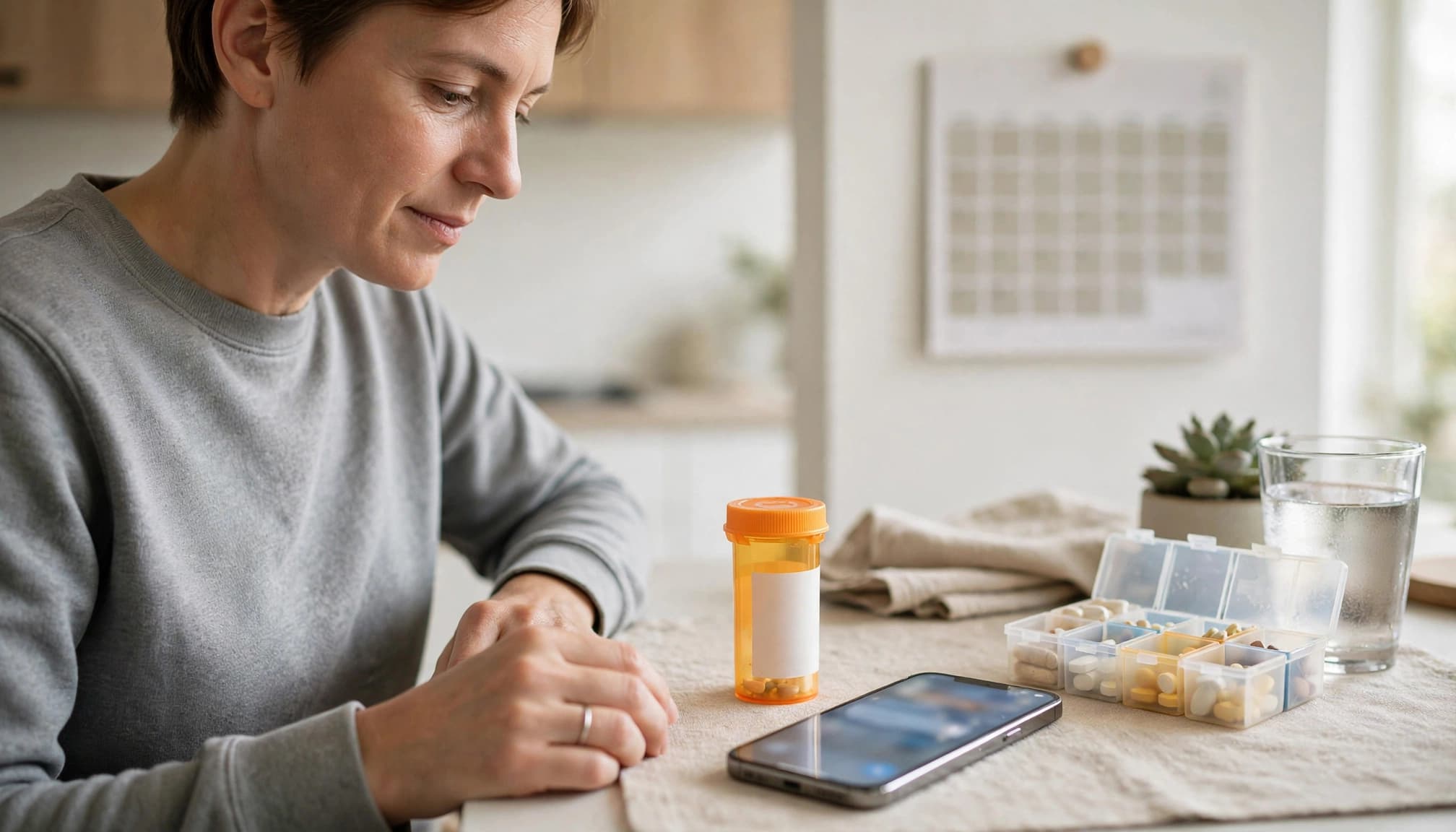
The reminder is about supply, not the dose
A refill notice should not tell someone to change a dose, skip tablets, or stretch medicine. Reminder text messages and text alerts can support medication adherence, but they don't prove a dose was taken. These refill reminders have a narrower job: flag a possible gap before it happens.
This distinction matters for chronic conditions. Blood pressure medicines, diabetes drugs, inhalers, thyroid medicines, and statins often have repeat refills. Oral chemotherapy, transplant medicines, anticoagulants, and seizure treatments may have tighter clinical requirements. A delayed refill may require a call to a pharmacist or prescriber, not a routine reorder.
Research on text alerts is mixed. A large randomized trial of refill text reminders found that text alerts alone did not reliably improve long-term behavior or refill adherence. The messages are useful prompts, but they don't remove cost barriers, side effects, confusion, transportation problems, or limited access.
Build a Refill Schedule Around the Actual Supply
The medication schedule should follow the label, actual quantity dispensed, prescribed directions, and any partial fill. A 30-day supply taken once daily should trigger an initial alert around day 16 to 20. A 90-day supply allows more room, but it still needs a reminder before renewal authorization expires.
Calendar refill reminders should be supplemented with pharmacy or health-system app alerts. Lead times vary by medication, insurance, pharmacy, delivery method, and location. Adjust the timing and frequency for mail delivery, prior authorization, lab monitoring, prescriber response time, and specialty-pharmacy handling.
Record one medication at a time
For each prescription medicine, note the fill date, quantity, directions, prescriber, and pharmacy. Also record the current medication supply, number of refills remaining, and preferred contact details in a paper calendar, phone app, or pharmacy account. This supports prescription management. Refill pattern tracking can help review prior fill dates, but it should never override the prescription label.
Then set three alerts:
- Early alert: 10 to 14 days before the expected run-out date.
- Action alert: About 7 days before supply ends, prompting an order or prescriber request.
- Gap alert: 2 to 3 days before the final dose, prompting direct contact with the pharmacy.
Automatic refill options and medication synchronization can reduce separate due dates. Verify that synchronization doesn't cause an unsafe early or late fill.
A caregiver managing medicines for a parent or spouse should get the patient's permission first and receive only the minimum necessary information. Confirm which pharmacy texts and account details the caregiver may access. The same practical rule applies when family members receive pharmacy texts or manage an account.
Separate refills from renewals
A refill uses authorization already included in the prescription. A renewal requires the prescriber to issue a new order. Systems often fail because they treat both as the same task.
When the prescription has no refills left, the first alert should arrive two to three weeks before the medicine runs out. The request may require an appointment, lab work, or clinical review before the prescriber issues a new order. Controlled substances and early refill requests can have additional legal, insurance, and pharmacy restrictions. A pharmacy team or prescriber should answer those questions. Patients can manage prescriptions and refills online when an account shows order details and current requests in one place.
Choose Notification Channels and Escalation Rules
A single set of refill reminders can disappear under promotional texts, work emails, or a full voicemail box. Pair text alerts with a second channel for a more dependable system, especially when medication is time-sensitive.

Match the channel to the situation
| Reminder method | Best use | Limitation |
|---|---|---|
| Text alerts | A fast text message notice that a refill is due or ready | May expose limited health information on a shared phone |
| Receipts, order details, and delivery updates | Easy to overlook or filter | |
| Automated phone call | Useful for people who don't use apps | Outdated numbers reduce reliability |
| Pill reminder app | Tracks doses and estimated supply | Needs correct setup and regular updates |
| Caregiver calendar | Helps when a patient needs support | Requires permission and clear boundaries |
| Pharmacy or health-system app notifications | Pickup readiness notification and order status updates | Requires app access and current account details |
For a routine maintenance prescription, two channels may be enough. Use two independent channels, such as text alerts plus a calendar or app alert. Add a caregiver backup only when the patient has given permission.
Set reminder frequency according to the medication's risk, delivery lead time, and the reliability of phone or email access. For higher-risk medicines, refill reminders may need earlier timing and a backup channel. A pickup readiness notification means the prescription is ready, not merely that a refill request was received.
Build an escalation path
The first reminder should invite action. A two way reminder can let the patient confirm that a refill request was submitted or identify an obstacle, but a reply doesn't confirm clinical approval.
The next step should address no refills, payment issues, unavailable stock, or delivery delays. Final escalation should go to the pharmacy team or prescriber, not another automated message.
On shared phones, lock-screen previews, or caregiver devices, keep text alerts and reminder text messages brief. Review app permissions before sharing access.
Check automatic refill status and contact the pharmacy before the final doses; you can submit a quick prescription refill order form when the prescription remains valid. The pharmacy team becomes the escalation point for a prescription that's held, expired, unavailable, unaffordable, or clinically inappropriate. A reminder can't override a clinical concern or a prescriber's decision not to renew.
Privacy, HIPAA, and Opting Out of Alerts
Pharmacies and insurers in the United States may send communications about a currently prescribed drug without treating every message as marketing. The HHS refill reminder guidance explains that the HIPAA Privacy Rule refill reminder exception may permit messages connected to refill activity. Any financial remuneration must be reasonably related to the cost of making the communication.
A vendor handling protected health information for a covered entity may be a business associate. However, a consumer reminder app isn't automatically a business associate or subject to the same HIPAA Privacy Rule obligations. Review the app's privacy policy, permissions, and data-sharing practices.
That distinction matters. A message from a pharmaceutical manufacturer may be promotional, unlike a pharmacy notice about a currently prescribed drug. The HIPAA Privacy Rule treats those situations differently. Marketing or unrelated promotional activity may require written authorization. Routine refill reminders may still be permitted when connected to refill activity. A health plan or Medicare Advantage plan may send service-related notices, but that doesn't guarantee coverage or message eligibility. The exception is limited when financial remuneration isn't reasonably related to communication costs.
Keep message content minimal
Text alerts sent to a shared phone should avoid detailed diagnosis information. "Your pharmacy order needs attention" is generally less revealing than a message naming a sensitive treatment. Avoid putting diagnosis details in shared calendars or unsecured apps.
Some patients prefer face to face communications with the pharmacy team instead of receiving detailed text alerts.
Patients should also know how to stop messages. Common options include replying "STOP" to an SMS, unsubscribing from email, changing account preferences, or asking the pharmacy to remove a number from automated calls. If someone opts out of text alerts, reminder text messages, or an automated phone call, they should use a reliable alternative, such as a calendar reminder, portal notification, or direct pharmacy contact. Opting out of one channel shouldn't prevent someone from requesting essential service notices through another.
Online Pharmacy Delivery, Cost, and Safe Ordering
For people in rural areas, frequent travelers, and families managing long-term treatment, online medicine home delivery can reduce the burden of pharmacy trips. It also adds a timing problem. Orders need lead time for prescription verification, dispensing, insurance processing, stock checks, and shipping. Patients shouldn't wait until the final doses.
The medicine delivery cost to USA can vary by product, shipping service, origin, package size, and delivery speed. A health plan's formulary, network rules, prior authorization, and location can change the true cost. Listed medicine prices may also differ across the USA, Australia, and the UK because each market has different pricing rules, formularies, and supply arrangements.
Price comparisons need a full calculation
The lower listed price isn't the only cost. A sound comparison includes the prescription medicine, dispensing fee, shipping, possible taxes or customs charges, and the cost of an interruption if the parcel is late.
An international online pharmacy should clearly explain prescription requirements, dispensing location, delivery estimates, and available support. Patients who order prescription drugs online should begin before the final two weeks of supply, not wait until the final doses.
Good prescription management includes reviewing refill status, authorization, delivery address, and remaining refills through a legitimate account. Automatic refills and medication synchronization may help with delivery planning, but they don't guarantee stock, insurance approval, or an early refill.
The FDA's online pharmacy safety guidance says a legitimate service should require a prescription, provide a physical address and telephone number, and make a licensed pharmacist available. It should never treat a refill request as a substitute for a valid prescription. Don't buy prescription medicine from a site that doesn't require one, conceals its physical location, or lacks pharmacist access. Contact the pharmacy team about a questionable site, missing prescription, or unexplained delay.
Order updates also matter. Reviewing prescription order tracking statuses can distinguish a shipment in transit from an order delayed by an expired prescription, incomplete address, or stock issue. Cost, confusing status messages, or a delayed shipment can leave a patient unable to complete a refill, leading to prescription abandonment. Use the status to identify the next action, rather than placing a replacement order before the original issue is resolved.
When a Reminder Should Trigger Clinical Follow-Up
A refill reminder is not a clinical alarm, but it can reveal a problem needing a clinician's attention. A missed refill may reflect side effects, cost, fear, confusion, a changed treatment plan, or prescription abandonment.
Medication adherence support should address the reason for a missed refill, rather than simply increase alert frequency. Contact a pharmacist or prescriber for an individualized plan, especially when a barrier keeps delaying the refill.
Do not use reminders to self-manage a medication change
New side effects, missed doses, pregnancy, hospitalization, or a new diagnosis can change the appropriate plan. The same is true when a prescriber has changed the strength or stopped a medicine.
Controlled substances may have early refill restrictions. A pharmacy may be unable to provide an early supply without prescriber authorization. Seek urgent care for severe or emergency symptoms.
Do not stop, restart, split, ration, substitute, or double a prescription medicine after a reminder, missed dose, or delayed refill. Make any change only when a qualified healthcare professional gives specific instructions.
This information is for educational purposes only and does not replace medical advice. Consult a licensed healthcare provider or pharmacist before stopping, restarting, splitting, or changing any prescription medicine.
Final Thoughts
A strong refill system combines a realistic supply calculation, early refill reminders, and calendar or app backups. It also keeps contact details current, protects privacy, and provides a clear route to the pharmacy or prescriber. Effective prescription management checks authorization, cost, stock, delivery, and clinical follow-up, not just the refill button.
For people dependent on daily treatment, the most useful reminder arrives while there is still time to solve the real problem behind the refill. Timing varies by medication, insurance, pharmacy, location, and delivery method. Controlled substances and early refills may follow separate rules. Time before the final dose is the system's most important resource. Take unresolved questions to a pharmacist or prescriber, and don't alter doses on your own.
Frequently Asked Questions
What is a prescription refill reminder?
This alert estimates when a medicine supply may run out and prompts a patient or caregiver to request the next fill. It may arrive by text, email, phone call, pharmacy app, or calendar. It doesn't authorize a refill or replace a prescriber's instructions.
How early should refill reminders be set?
Most routine prescriptions need an initial reminder 10 to 14 days before the expected run-out date. Medicines requiring prescriber renewal, prior authorization, specialty handling, mail delivery, or lab requirements may need two to three weeks. Timing varies by medication, insurance, pharmacy, and location. Controlled substances and early refills may have additional restrictions.
Can a pharmacy text refill reminders without HIPAA authorization?
HIPAA permits certain communications about a currently prescribed drug under the refill reminder exception. The message must fit that purpose, and any payment for it must be limited to reasonable communication costs. The HIPAA Privacy Rule doesn't make every app or message automatically private. Promotional messages about unrelated or future therapy may require different authorization.
Can patients opt out of refill text messages?
Yes. Many pharmacy systems let people reply "STOP" to a text message, unsubscribe from emails, update account settings, or request removal from an automated phone call list. Opting out of text alerts doesn't stop a patient from receiving medicine, but another communication method should be arranged. Replace reminder text messages with a calendar, portal, pharmacy app, or direct pharmacy contact. Protect personal health information by limiting lock-screen previews, shared-device access, and sensitive details in third-party reminder apps.
Are online prescription refill services safe?
Safety depends on the pharmacy and prescription process. A legitimate online pharmacy requires a valid prescription, protects personal information, provides pharmacist access, and gives clear contact details. Automatic refill options and medication synchronization can be convenient, but they still require verification of each fill and current directions. Sites that sell prescription drugs without a prescription or hide their location should be avoided.
What if a refill is delayed?
First, check whether the delay involves an expired prescription, payment issue, stock shortage, shipping address, or prescriber renewal. Contact the pharmacy team promptly, then contact the prescriber when a new order or clinical review is needed. Do not ration, double, stop, restart, or substitute medication without professional guidance. Contact a pharmacist or prescriber when a refill is delayed or the treatment plan is unclear.