
Severe Dry Eyes Relief: A Stepwise Plan for Lasting Comfort

Severe dry eye can make a breeze feel like sandpaper. Burning, blurred vision, light sensitivity, and a gritty feeling can turn reading, driving, and screen work into daily strain.
Severe dry eyes relief rarely comes from trying random drops until one feels better. Lasting comfort depends on whether your eyes lack tears, lose tears too quickly, or have inflammation and blocked eyelid glands.
Direct answer: Start with preservative free eye drops, such as artificial tears. Protect the tear film with lid care and screen breaks, then arrange a comprehensive eye exam with an eye care specialist when symptoms persist or affect vision. Severe pain, sudden vision changes, or marked redness need urgent medical assessment.
Table of contents
- Find the cause of severe dry eye
- Build a daily comfort routine
- Compare prescription drops and procedures
- Know when to see a specialist
- Access treatment safely and affordably
- Frequently asked questions
Key takeaways
- Frequent symptoms usually call for preservative free eye drops, not redness-relief drops.
- Tear evaporation often stems from meibomian gland dysfunction, which may improve with eyelid care and a daily warm compress.
- Prescription medicine can reduce inflammation, improve tear production, or slow tear loss.
- Punctal plugs, thermal pulsation, and IPL may help when home care alone falls short.
Severe dry eyes relief starts with the cause
Dry eye syndrome develops when the tear film becomes unstable, reducing tear film quality. Some people do not make enough watery tears. Others make tears that evaporate before protecting the cornea. The Cleveland Clinic's dry eye overview describes both forms, along with symptoms such as burning, blurred vision, and sensitivity to light.
Meibomian gland dysfunction is a frequent cause of chronic dry eye. These tiny oil glands along the eyelid margins release an oil called meibum. That oil forms the tear film's outer layer and slows tear evaporation. When the glands clog, the oil becomes thick or scarce. Tears then break apart quickly, leaving the eye surface exposed.
Medications, aging, contact lenses, dry air, smoke, autoimmune disease, eyelid inflammation, and long screen sessions can add to the problem. During screen work, a reduced blink rate can leave the lids partially closed and the eye surface less protected.
Watery eyes do not rule out dry eye. Irritation can trigger reflex tears, but those tears may lack the oil layer needed to stay on the eye.
An eye care specialist can help distinguish gland dysfunction, insufficient tear production, allergy, and other causes. For a closer look at this tear-loss pattern, see these treatments for evaporative dry eye disease. Research on dry eye care also supports lid hygiene and tear-film support when evaporation is the main issue, as outlined in this clinical review of dry eye treatment.
Build a daily comfort routine
Home care cannot replace treatment for corneal injury or major inflammation. Persistent or potentially serious problems should be assessed by an eye care specialist. These steps can make prescription care work better and reduce daily flare-ups.

Use a warm compress over closed lids for five to 10 minutes once or twice daily. It should feel comfortably warm, never hot. Follow with gentle lid cleansing if your eye doctor recommends it. Heat can soften thickened meibum, while regular hygiene removes debris around the lash line.
A few small habits also protect tear film quality:
- Use the 20-20-20 rule during screen work because digital eye strain can reduce your blink rate. Every 20 minutes, look 20 feet away for 20 seconds and blink fully several times.
- Aim car vents and fans away from your face, use a humidifier in dry rooms, and wear wraparound glasses outdoors on windy days.
- Contact lens wearers should remove lenses when symptoms worsen, then ask an eye care specialist whether another lens material or wearing schedule would help.
Choose artificial tears by symptom pattern
The right over the counter drops depend on when and how dryness appears.
| Product type | Often useful for | Important consideration |
|---|---|---|
| preservative free eye drops, including artificial tears | Frequent daily use and sensitive eyes | Single-dose vials reduce preservative exposure |
| Lipid-containing lubricating eye drops | Meibomian gland dysfunction and rapid evaporation | May suit people whose eyes worsen in wind or air conditioning |
| Gel drops or nighttime ointment | Nighttime dryness or waking with painful eyes | Can blur vision, so use before sleep |
| Preserved drops | Occasional, mild symptoms | Frequent use can irritate some dry, inflamed eyes |
Avoid "get the red out" drops unless an eye clinician directs you to use them. They narrow blood vessels but do not repair a weak tear film.
Omega 3 fatty acids may help with dietary deficiency or certain eyelid-gland issues, but supplements are not a dependable stand-alone treatment. Ask your clinician before starting them, especially if you use anticoagulants. If seasonal itching is stronger than dryness, allergy may also be present. Prescription Olodiva olopatadine eye drops treat allergic eye symptoms, not dry eye itself.
When drops are not enough: prescription and office treatment
An eye care specialist can check your tear output, corneal surface staining, lid position, and meibomian gland function, then determine whether prescription eye drops are appropriate. The Mayo Clinic's dry eye treatment guide lists anti inflammatory drops, tear-stimulating medicines, plugs, and blood serum drops among options for persistent disease.
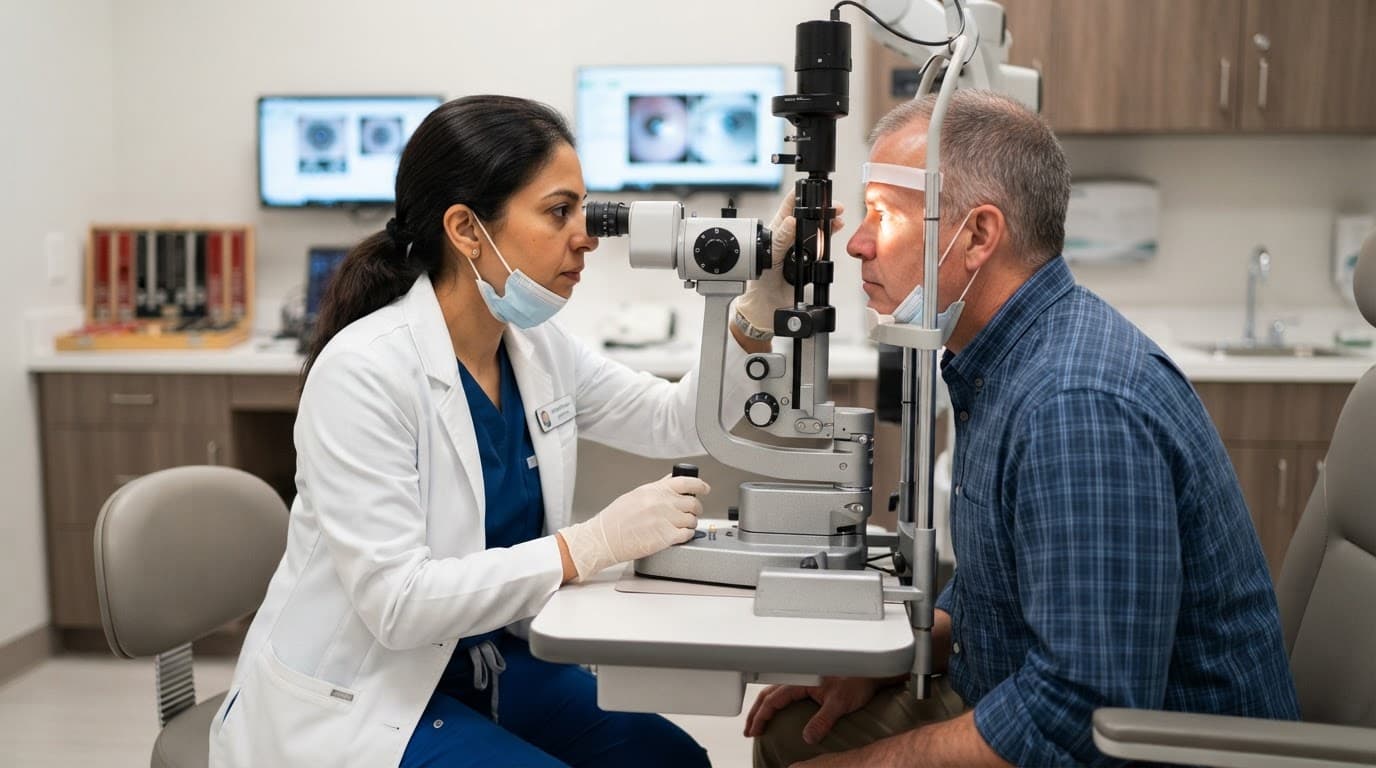
Treatment works best when an eye care specialist matches it to the underlying finding.
| Main problem | Treatment options | How it may help |
|---|---|---|
| Surface inflammation | Cyclosporine, lifitegrast, short-course loteprednol | Calms inflammatory signals that damage the tear surface |
| Rapid tear evaporation | Perfluorohexyloctane, such as Miebo | Supports the tear film's outer layer |
| Blocked meibomian glands | Thermal pulsation, intense pulsed light (IPL) with lid massage | Helps loosen and express oil gland secretions |
| Tears drain through the tear ducts too quickly | Temporary or longer-lasting punctal plugs | Keeps natural and artificial tears on the eye longer |
| Severe corneal dryness | Autologous serum drops | Provides a custom tear substitute made from the patient's blood |
Cyclosporine drops, including Restasis, Cequa, and Vevye, target inflammation and can improve tear production over time. Lifitegrast, sold as Xiidra, also reduces inflammatory activity. These medicines may sting at first and often need several weeks before benefits are clear.
Loteprednol, including Eysuvis, is a corticosteroid for short dry-eye flares. Steroids can raise eye pressure or contribute to cataracts with prolonged use, so clinicians limit their duration and monitor treatment. The American Academy of Ophthalmology's overview of newer dry eye treatments explains why medication choice now includes inflammation, evaporation, and tear-production pathways.
When severe dry eye needs prompt medical care
Schedule a visit with an eye care specialist if preservative-free drops and lid care do not improve symptoms within a few weeks. Go sooner if dryness disrupts work, sleep, driving, or contact-lens wear. A comprehensive eye exam by an eye care specialist can identify corneal damage, infection, allergy, eyelid disease, autoimmune disease, or other causes.
Seek urgent care for sudden vision loss, severe pain, new light sensitivity, injury, thick discharge, or a very red eye on one side. Prompt evaluation can help protect the corneal surface when symptoms point beyond dry eye.
This information is for educational purposes only. Consult a licensed healthcare provider for diagnosis, treatment selection, and guidance on prescription eye medicines.
Accessing dry eye treatment safely and affordably
Costs vary widely. In the USA, insurance coverage, deductibles, and prior authorization can shape the price of prescription drops and in-office procedures. UK NHS eligibility and Australia's Pharmaceutical Benefits Scheme can create different out-of-pocket costs. Ask the clinic for the expected total before booking IPL, thermal pulsation, or punctal plug placement.
For long-term prescriptions, use a licensed pharmacy, and involve your eye care specialist when refills, brands, delivery, or imported products change. An Online Pharmacy may make refills and home delivery easier for people in remote areas, but it should require a valid prescription where required. Global sourcing should never replace legitimate dispensing standards, original packaging, and a clinician's plan for follow-up.
A clearer path to comfortable eyes
Severe dry eye improves when treatment targets the underlying tear-film problem. For some people, that means frequent preservative-free tears and warm compresses. Others need anti-inflammatory drops, gland procedures, or tear-conservation treatment.
Persistent discomfort deserves more than endurance. A timely eye examination with an eye care specialist can protect the cornea and turn a frustrating daily routine into a manageable care plan.
Frequently asked questions
What are the best over the counter drops for severe dry eyes?
Preservative-free artificial tears are usually the best starting point when you need drops often. Lipid-containing drops may help evaporative dry eye, while gels and ointments suit nighttime symptoms. Avoid redness-relief drops because they do not improve tear film stability and may worsen irritation.
How do blocked meibomian glands cause dry eye?
Meibomian glands supply the tear film's protective oil layer. When these glands become blocked or produce poor-quality oil, tears evaporate too quickly; a warm compress may support eyelid care. This leaves the cornea exposed between blinks and can trigger burning, fluctuating vision, redness, and reflex tearing throughout the day.
How long do prescription eye drops take to work?
Cyclosporine and lifitegrast often need several weeks before symptoms improve because they reduce ongoing inflammation rather than simply coating the eye. A short corticosteroid course may calm a flare faster. Continue treatment only as directed, and report persistent stinging, pain, or vision changes.
When do punctal plugs make sense for dry eye?
Punctal plugs may help when tears drain away too fast despite lubricating drops and inflammation control. An eye specialist inserts punctal plugs into the tear ducts to retain tears. They are often considered after assessing lid inflammation, because trapped inflammatory tears can worsen symptoms in some people.
What should I consider before ordering dry eye medicine online?
Use a pharmacy that requires a valid prescription for prescription medicine, identifies the product and strength, and provides pharmacist support. Confirm total costs, delivery timing, and local import rules before paying. Keep your eye care specialist informed, especially when changing brands or starting new treatment.