
Sharps Disposal: Safe Ways to Handle Used Needles

A used needle can injure a family member, sanitation workers, recycling sorters, or waste collectors long after a medication dose is finished. Sharps disposal starts at the point of use. Place every needle, syringe, lancet, or pen needle directly into an approved sharps container. Never leave a sharp on a counter. This guidance covers household and residential medical sharps, including home medical sharps.
Short answer: For safe sharps disposal, immediately place each sharp in an approved sharps container, a rigid, puncture-resistant container with a secure lid. Never place loose used needles or other sharps in trash and recycling or a toilet. Seal the container before it is overfilled, then verify the final disposal route with local public health or waste authorities.
The FDA and EPA provide current household guidance, but local rules determine the final disposal destination. This information is for educational purposes only. People with medication, injection-device, or disposal questions should consult a licensed healthcare provider, pharmacist, or local health department.
Table of Contents
- Key takeaways
- How sharps disposal starts at home
- Choosing a safe sharps container
- Finding the right disposal route
- Why recycling is never an option
- Rules for businesses and clinics
- What to do after a needle-stick injury
- Frequently asked questions
Key Takeaways
- Put medical sharps, including used needles, syringes, lancets, and injection pen needles, into a sharps container immediately after use.
- Use a rigid, leak- and puncture-resistant container with a secure lid. Seal and replace it before it exceeds the fill line.
- Keep home medical sharps and their container away from children and pets.
- Check local disposal methods to confirm whether the sealed container belongs at a drop-off site, through a mail-back service, in household trash, or with household hazardous waste.
- Businesses, tattoo studios, veterinary offices, and clinics must follow formal medical-waste procedures and compliance requirements beyond household guidance.
How Sharps Disposal Starts at Home
The FDA advises placing home medical sharps directly into a disposal container immediately after use. Its guidance for safely using sharps at home provides safety guidelines for people managing diabetes, fertility treatment, anticoagulants, injectable cancer medicines, and other prescription therapies.
Include more than needles
Medical sharps include syringes and lancets, pen needles, auto-injector needles, and infusion-set needles. A capped needle can still puncture a thin bag or become exposed when a cap slips off.
When handling home medical sharps, keep the container upright, stable, and within reach of the injection area. It should remain inaccessible to children and pets. Never pass an exposed sharp to another person or set it on a counter while preparing the container.
Avoid recapping or dismantling
Used needles should go into the container as they are. Never recap, bend, break, clip, remove, or dismantle them, since each action creates another opportunity for a puncture.
The FDA's steps for used-needle disposal also stress prompt containment. That routine matters most during rushed morning doses, travel, and medication changes, when makeshift handling becomes tempting.
Choosing a Safe Sharps Container
A purpose-made sharps container is the safest choice for home medical sharps. Choose one that follows applicable FDA standards and product recommendations. Pharmacies, healthcare providers, medical-supply retailers, and some online sellers carry them in different sizes.
Features that protect against punctures
A puncture-resistant container is rigid and leak-resistant on its sides and bottom. It also needs a secure lid that stays closed during storage and transport.
The sharps container should sit securely on a flat, upright surface. Replace and seal it before it reaches the fill line. Never overfill, reopen, empty, or transfer a filled container. Follow the manufacturer's closure instructions before moving it.
A household substitute has strict limits
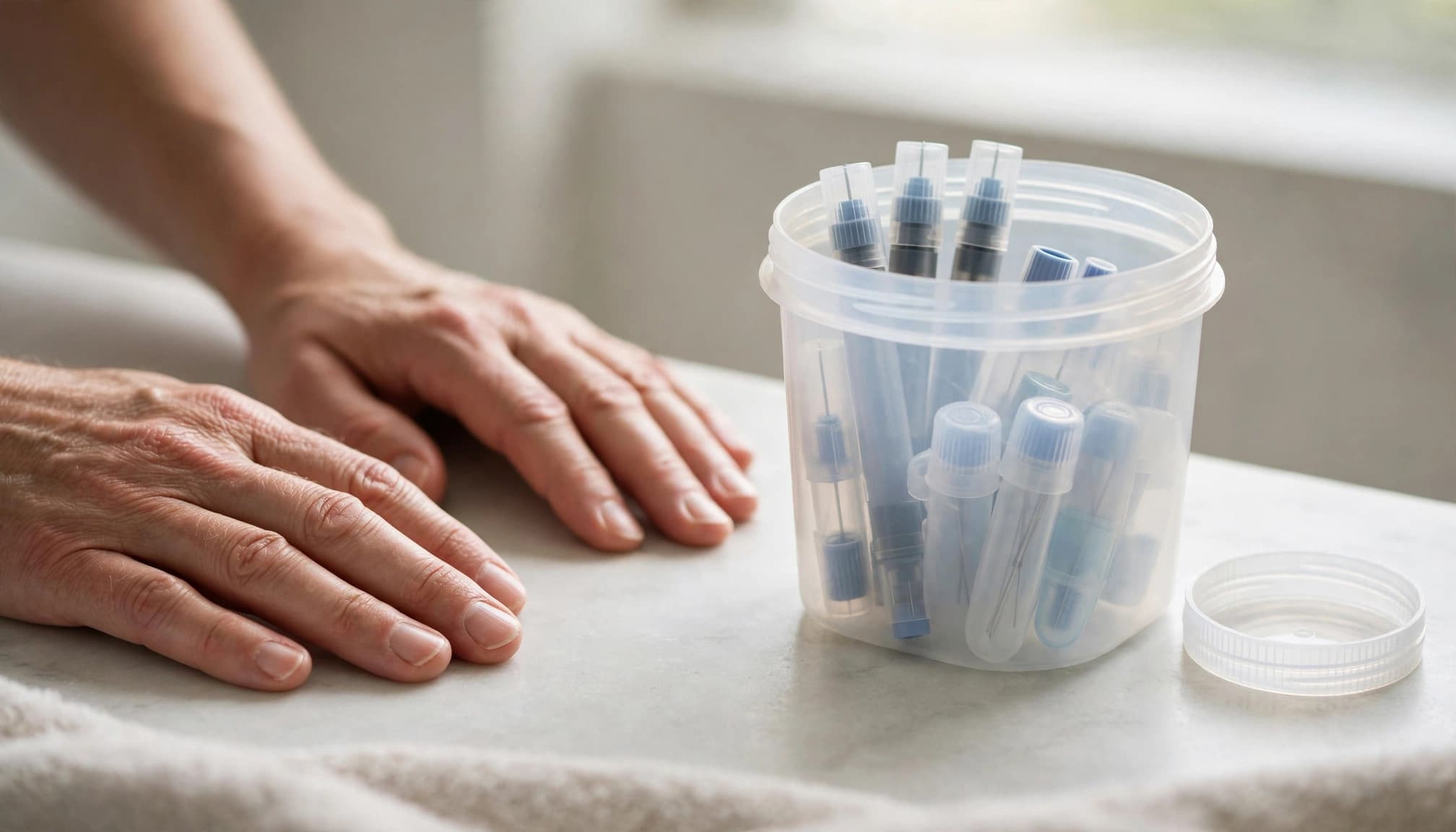
Where local guidance permits it, the EPA allows a heavy-duty, opaque plastic container, such as an empty laundry-detergent bottle. It must have a properly fitting screw-on lid and resist punctures. Tape may help secure the lid, but it isn't a substitute for a proper fit or a guarantee of acceptance.
Don't use glass jars, thin bottles, milk jugs, soda bottles, open cans, bags, cardboard boxes, or containers that can be punctured easily. The EPA's household needle-disposal guidance recommends labeling a sealed substitute container "Do Not Recycle." Confirm that your local authority accepts it before final disposal.
Finding the Right Disposal Route
Sharps disposal and medical waste disposal rules vary by city, county, state, and country. Options may include health-department sites, pharmacy drop-off programs, mail-back programs, household hazardous waste services, or regular trash when expressly permitted.
Confirm drop-off rules before traveling
Before taking home medical sharps to a drop-off location, contact the local health department or waste authority. Confirm accepted sharps, container type and size, fill level, hours, identification requirements, and fees. Also ask whether the program serves residential sharps or only businesses.
Community collection programs may accept sealed containers from patients and caregivers, while other sites serve medical offices or businesses only. A pharmacy may sell a sharps container without accepting a filled one, so call before traveling.
| Disposal route | Best suited to | Important question |
|---|---|---|
| Health department or community site | Local households, when available | Does the site accept sealed home medical sharps containers? |
| Pharmacy drop-off program | Patients with participating pharmacies nearby | Does the pharmacy accept filled containers, or only sell them? |
| Household hazardous waste program | Residents using designated local collection events | Are medical sharps accepted, and what container rules apply? |
| Mail-back program | Rural, remote, or mobility-limited households | Which disposal methods, packaging, and shipping instructions apply? |
| Regular household trash | Households only where local authorities permit it | Is a sealed, puncture-resistant container specifically allowed? |
| Licensed waste disposal provider | Businesses and clinical settings | What storage, pickup, and compliance requirements apply? |
Mail-back programs can close an access gap
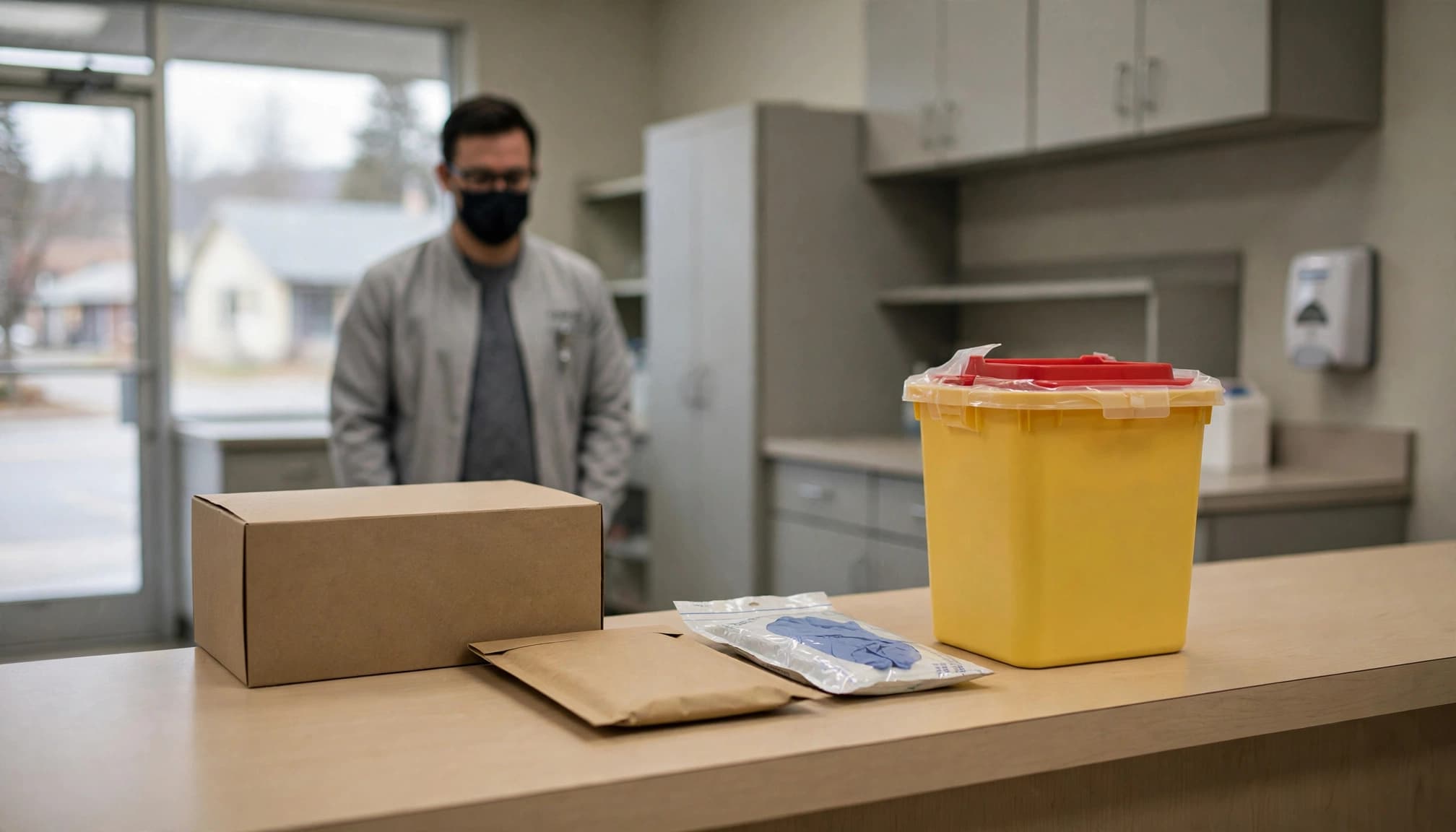
Mail-back programs provide an alternative when no nearby collection site exists. The user typically receives an approved package or container, follows the service's packing instructions, and returns it through the designated shipping method.
Terms vary. Some services accept only needles and syringes, while others exclude medication vials, loose drugs, gauze, or other clinical waste. Never alter the container or exceed its fill line. Anyone arranging injectable prescriptions can review an online pharmacy ordering guide while confirming local storage and disposal requirements.
Why Recycling Is Never an Option
Recycling facilities sort materials by hand and machine. Medical sharps can puncture bags, damage sorting equipment, injure sanitation and recycling workers, and contaminate recyclable materials. A capped needle hidden inside another item can still cause serious injuries. Loose sharps also tear garbage bags and expose janitors and waste collectors.
Sharps disposal does not mean dropping a container into a curbside recycling bin. Never put home medical sharps, including needles, syringes, or lancets, in trash and recycling bins, whether capped or uncapped. Flushing is also prohibited because it can expose wastewater workers and damage equipment.
Some jurisdictions allow a properly sealed and labeled household sharps container in regular trash. Others require a drop-off, mail-back option, household hazardous waste service, or another approved route. These disposal methods vary locally, so confirm the final destination with your local health or waste authority rather than relying on general online advice.
Rules for Businesses and Clinics
Household disposal instructions don't meet commercial medical-waste obligations. Any organization that generates medical sharps needs written procedures for point-of-use containment, storage, employee training, spill response, exposure reporting, pickup, treatment, documentation, and compliance requirements.
Settings beyond hospitals still generate regulated waste
Commercial facilities such as tattoo and piercing studios, aesthetic practices, dental offices, outpatient clinics, veterinary facilities, and mobile healthcare providers all use sharp instruments. These materials are biohazardous medical waste and require appropriate medical waste disposal. Each setting should assess what it generates and follow applicable federal, state, and local requirements.
OSHA regulations apply where occupational exposure to blood or other potentially infectious materials exists. CDC/NIOSH sharps-container guidance states that contaminated needles shouldn't be removed, recapped, bent, broken, or separated before disposal.
Build a process staff can follow
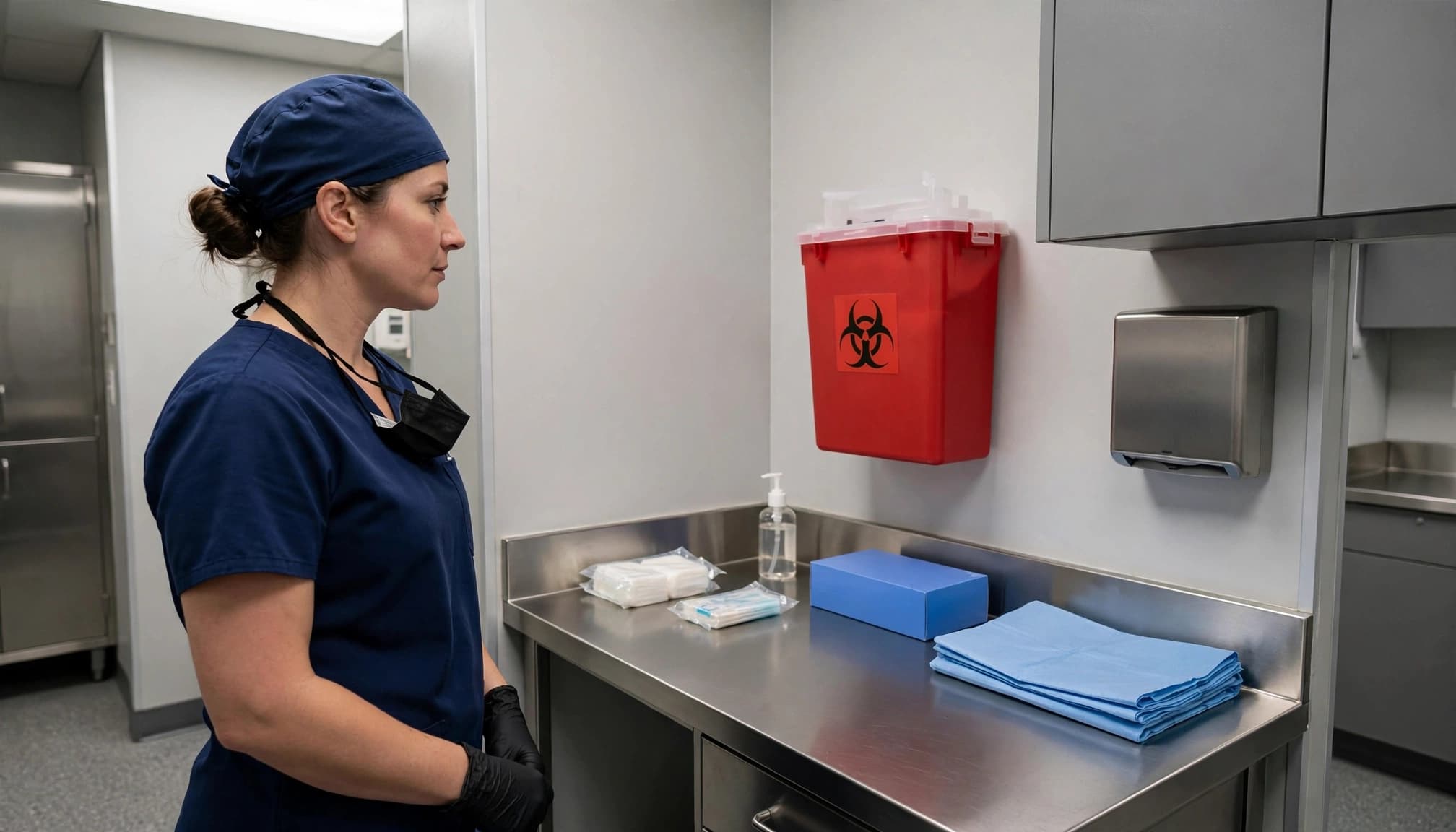
A commercial sharps container should be accessible at the point of use, closed before overfilling, and handled according to the facility's medical-waste contractor instructions. Fill lines are commonly around three-quarters full, but the manufacturer's instructions and applicable local rules control.
Staff training should cover container placement, spill response, incident reporting, exposure reporting, and pickup schedules. A licensed waste disposal provider can advise on collection, treatment, and documentation. However, the business remains responsible for its compliance requirements and for meeting vendor, state, and local documentation obligations.
What to Do After a Needle-Stick Injury
For needle-stick injuries, wash the puncture or exposed skin promptly with soap and water. Flush mucous membranes with clean water if they were exposed. Don’t squeeze the wound aggressively or apply bleach and other caustic chemicals.
Report workplace exposures immediately through the appropriate process. Current CDC/NIOSH occupational-exposure safety guidelines recommend prompt medical assessment. A clinician can review the exposure, vaccination history, and need for testing or time-sensitive post-exposure treatment.
Household exposures involving home medical sharps also require prompt medical advice, especially if the sharp was used by another person or its source is unknown. Contact a clinician, occupational-health service, poison center when appropriate, or your local health department. For questions about safe use of an injection device or medication handling, ask a pharmacist about medication and disposal questions.
Frequently Asked Questions
Can used needles go in regular household trash?
Only if local rules allow a sealed sharps container in household trash. Loose needles must never go in trash bags or bins. Local public health or waste authorities can confirm whether your community requires drop-off, mail-back, or another approved option.
How can I find disposal methods for home medical sharps?
Ask local public health or waste authorities about collection sites, pharmacy drop-off options, and mail-back programs. Confirm accepted materials, container requirements, fees, and operating hours before choosing a service.
How can I protect children and pets before disposal?
Keep the sealed container upright and out of reach of children and pets. Never leave it on a counter, in a bathroom trash can, or in another accessible area.
Do CVS and Walgreens accept filled containers?
Acceptance at CVS and Walgreens varies by individual location and can change. Some stores participate in collection programs, while others only sell approved containers. Before traveling, call the individual CVS and Walgreens store to confirm its current policy, since acceptance varies by location and can change.
What should go into a sharps container?
Medical sharps such as syringes with attached needles, lancets, pen needles, and similar devices belong in the container. Keep loose needles, medication vials, pills, gauze, and ordinary household waste out unless a named program says it accepts them.
What should I do after an accidental puncture?
Wash the area with soap and running water promptly. Don't squeeze or scrub the wound. Seek urgent medical advice, especially if the puncture involved someone else's device or the source is unknown.
How much does sharps disposal cost?
Costs depend on the disposal route. Community programs may offer free or low-cost collection, while mail-back kits and commercial pickup services often charge a fee. Review container, shipping, and processing costs before enrollment.
Can an online pharmacy help with sharps safety?
An Online Pharmacy can help patients understand medication supplies and refill timing, but local authorities set disposal rules. For delivery timing, refill questions, and prescription support, review the site's pharmacy support and safety information.
Safe Disposal Protects More Than One Person
Use this final checklist for sharps disposal:
- Place each sharp directly into a rigid, approved container.
- Keep the container away from children and pets.
- Seal and replace it before it becomes overfilled.
- Never recap or recycle loose sharps.
- Confirm the final route with your local authority or a licensed waste disposal provider.
For households, these steps protect caregivers, children, pets, and waste workers. For businesses, medical waste disposal must also follow applicable compliance requirements. Confirm current disposal methods with the local health department, waste authority, or licensed provider. A sealed container is only the first step. The container's final destination, not merely its seal, completes safe disposal.