
Vitamin B12 Deficiency: Symptoms, Tests and Supplements

Vitamin B12 deficiency can cause anemia, fatigue and nerve damage, but symptoms alone can't confirm the diagnosis. Blood tests help establish whether B12 is low and whether poor intake or impaired absorption explains the result.
Early treatment matters because neurological damage can become permanent. Supplements help when B12 is lacking, although the cause determines whether oral or injectable treatment is appropriate.
Table of Contents
- Key takeaways
- Why vitamin B12 deficiency develops
- Symptoms and warning signs
- How testing confirms the diagnosis
- When supplements and injections help
- Food sources and daily requirements
- Accessing B12 treatment affordably
- Frequently asked questions
- Conclusion
Key Takeaways
- B12 supports red blood cell production, DNA synthesis and nerve health. Deficiency can affect nerves even without anemia.
- Diagnosis combines symptoms, medical history and blood tests. Borderline B12 results sometimes require methylmalonic acid testing.
- Oral supplements often treat dietary deficiency. Significant absorption problems or neurological symptoms may require an injectable regimen and long-term replacement.
Why Vitamin B12 Deficiency Develops
The body can't make B12. It depends on animal foods, fortified foods or supplements, although liver stores can last up to five years. Symptoms therefore often emerge slowly.
B12 supports DNA production and the maintenance of nerve insulation called myelin. Without enough, bone marrow can produce large, abnormal red blood cells, causing megaloblastic anemia.

Too little dietary B12
Vegans and strict vegetarians face higher risk without reliable fortified foods or supplements. However, animal-food intake doesn't rule out deficiency because absorption can fail despite an adequate diet.
Problems absorbing B12
Stomach acid releases B12 from food. Intrinsic factor, a stomach protein, then enables its absorption in the small intestine.
Pernicious anemia results from an autoimmune process that damages stomach cells and reduces intrinsic factor. Other causes include gastrectomy, bariatric surgery, Crohn's disease, celiac disease and atrophic gastritis.
Older adults more often have reduced stomach acid; some also lose intrinsic factor through autoimmune gastritis. Long-term omeprazole or esomeprazole use can impair food-bound B12 absorption. Metformin can also lower B12 levels.
Harvard's B12 overview describes these dietary and absorption risks. Medication-related deficiency calls for assessment, not abrupt discontinuation of prescribed treatment.
Symptoms and Warning Signs
Vitamin B12 deficiency overlaps with thyroid disease, iron deficiency and other conditions. Symptom patterns can guide testing, but they don't establish the cause.
Anemia and mouth changes
Early symptoms can include weakness, fatigue, light-headedness, palpitations and shortness of breath. Skin may look pale or slightly yellow.
A sore, smooth, red tongue, called glossitis, can also occur. These findings suggest a blood-cell or nutritional problem, although none is unique to B12 deficiency.
Fatigue alone is especially nonspecific. Anemia symptoms combined with a restricted diet, stomach surgery or long-term acid suppression provide stronger reasons to investigate B12.
Nerve and cognitive symptoms
Numbness and tingling in the hands and feet, muscle weakness, or difficulty walking need prompt assessment. Poor balance, memory problems, low mood and confusion can also occur.
Importantly, neurological symptoms can develop without anemia or enlarged red blood cells. A normal blood count therefore doesn't exclude vitamin B12 deficiency.
Progressive tingling or walking difficulty warrants assessment even when an earlier blood count was normal.
Sudden one-sided weakness, chest pain, severe breathlessness or acute confusion requires emergency care rather than an assumption that a vitamin deficiency explains it.
How Testing Confirms the Diagnosis
A clinician reviews symptoms, diet, medicines and gastrointestinal history alongside laboratory results. Testing should ideally precede supplementation because B12 products can alter blood measurements.
However, suspected severe deficiency with neurological involvement may require treatment before all results return.
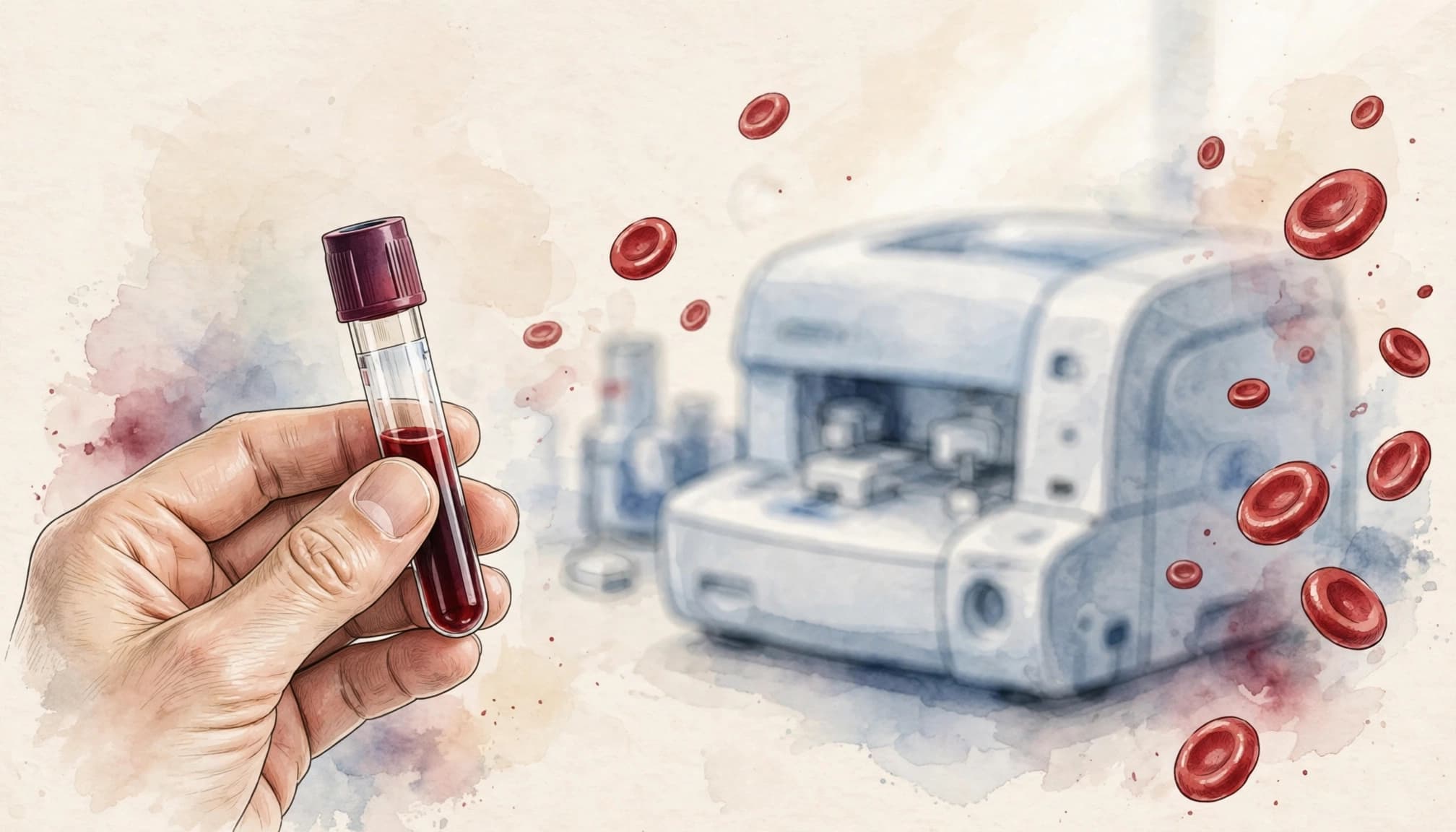
Initial blood tests
A complete blood count (CBC) is a blood test that checks for anemia and enlarged red blood cells. A serum B12 test measures circulating B12; some services use active B12 instead.
Clinicians may also assess folate because both vitamins support red blood cell production, and deficiencies can coexist. Iron deficiency can coexist too, sometimes obscuring the expected large-cell pattern.
Borderline results and the underlying cause
When serum B12 is borderline, methylmalonic acid, or MMA, can help. MMA rises when cells lack sufficient B12.
The NIH clinical fact sheet recommends considering MMA when serum B12 is 150 to 399 pg/mL. This range doesn't mean everyone within it has deficiency. Reduced kidney function can also raise MMA.
Intrinsic factor antibody testing helps investigate suspected autoimmune gastritis or pernicious anemia. A negative result doesn't exclude either condition.
A bone marrow biopsy is rarely necessary. Hematologists may consider it when unexplained blood abnormalities suggest another disorder, rather than for routine B12 diagnosis.
When Supplements and Injections Help
B12 replacement is vitamin therapy. Cyanocobalamin and hydroxocobalamin supply B12 that the body converts into forms needed for cellular reactions.
For dietary vitamin B12 deficiency, high-dose oral B12 supplements are often effective. Clinicians commonly prescribe 1,000 to 2,000 micrograms daily during treatment. That exceeds daily nutritional requirements because only a fraction of a large oral dose is absorbed.
High-dose tablets can work in some absorption disorders through passive absorption. Clinicians may favor B12 injections when neurological symptoms are substantial, illness is severe, or absorption is unreliable.
Intramuscular treatment usually begins with a loading course. Maintenance doses commonly occur every one to three months, depending on the preparation, cause and national guidance. Pernicious anemia generally requires lifelong replacement.
The Linus Pauling Institute's B12 review discusses oral treatment and absorption. Adequate dosing matters more than marketing claims about premium formulations.
B12 usually causes few adverse effects. Possible problems include gastrointestinal upset or injection-site soreness; serious allergic reactions are rare. Cobalt allergy should be disclosed before treatment.
Folic acid alone can improve anemia while B12-related nerve injury continues. Therefore, clinicians assess B12 status before treating suspected folate deficiency alone.
Symptoms, blood counts and adherence need follow-up. A higher B12 blood level doesn't by itself prove that neurological recovery is complete.
Food Sources and Daily Requirements
The NIH consumer guidance sets daily requirements at 2.4 micrograms for adults, 2.6 during pregnancy, and 2.8 while breastfeeding.
B12 occurs naturally in animal products such as beef liver, clams, fish, meat, eggs, and dairy foods.
People following a vegan diet can rely on fortified breakfast cereals, plant milks, fortified nutritional yeast, or supplements for B12. Unfortified nutritional yeast and ordinary plant foods aren't reliable sources.
A practical dietary plan needs regular, dependable B12 intake. Fortification amounts vary, so an occasional serving of plant milk may not supply enough. Supplements provide another option when dietary intake is inconsistent.
Food can prevent inadequate intake, but it won't reliably correct established malabsorption or rapidly treat neurological disease.
No tolerable upper intake level has been set because B12 has low toxicity. However, that doesn't establish a benefit from unnecessary high doses or support B12 as an energy treatment when levels are adequate.
Accessing B12 Treatment Affordably
Cost comparisons need to separate routine nutritional supplements from treatment for confirmed deficiency. A low-priced multivitamin may contain too little B12 for a prescribed replacement regimen.
Our plant-based vitamin B12 capsules are listed at USD $35.95 for 120 vegetarian capsules. The product's dietary suitability doesn't establish that its dose matches an individual treatment plan.
Total costs differ across the USA, UK and Australia because testing, coverage and injection administration vary. Oral treatment avoids injection appointments when clinically suitable, but convenience shouldn't override the need for reliable replacement.
For online medicine home delivery, the meaningful comparison includes the medicine, shipping and any import charges. International sourcing doesn't automatically make B12 cheaper than a local generic.
Our Online Pharmacy offers supplements and prescription support. Prescription medicine requires compliance with applicable prescribing and dispensing rules; importing medicine also remains subject to destination-country restrictions.
This information is for educational purposes only. Consult a licensed healthcare provider for diagnosis and treatment.
Frequently Asked Questions
How long does treatment take to improve symptoms?
Symptoms may begin improving within two weeks, although some take up to three months to show improvement. Blood-cell production responds earlier than many nerve symptoms. Complete recovery can take longer, and persistent symptoms require reassessment rather than an automatic increase in supplement strength.
Can nerve damage remain after treatment starts?
Yes. Long-standing vitamin B12 deficiency can cause nerve injury that treatment doesn't fully reverse. Replacement prevents further deficiency, but recovery depends partly on how severe and prolonged the damage was. Persistent numbness or balance problems may need neurological assessment and rehabilitation alongside continued B12 replacement.
How often are injections needed for pernicious anemia?
After an initial loading course, maintenance treatment commonly ranges from monthly to every three months, depending on the B12 formulation and local guidance. UK hydroxocobalamin schedules often use two- or three-month intervals. Because intrinsic factor loss usually persists, replacement generally continues for life even after symptoms improve.
Does low B12 cause particular food cravings?
No specific food craving reliably identifies B12 deficiency. Craving ice is more commonly associated with iron deficiency, which can coexist with low B12. Appetite changes, fatigue or cravings therefore need interpretation alongside diet, symptoms and blood tests rather than treatment based on cravings alone.
Is it safe to order B12 treatment online?
Oral supplements and prescribed injections have different safety requirements. A legitimate pharmacy provides identifiable dispensing arrangements, pharmacist access and prescription controls where required. Online ordering can't replace diagnosis, and home delivery shouldn't delay urgent assessment for progressive numbness, weakness or difficulty walking, regardless of price.
Conclusion
Vitamin B12 deficiency is treatable, but the cause determines whether dietary changes, tablets or lifelong injections are appropriate. Normal blood counts don't exclude nerve involvement, and borderline B12 results sometimes need further testing.
The most meaningful measure of treatment is recovery alongside correction of the underlying deficiency. Restoring a laboratory number and restoring nerve function aren't always the same outcome.