
Whey vs Plant Protein for Muscle Growth

A shake made with whey protein powder or plant-based protein powder can make it easier to hit your targets. It can't replace consistent resistance training or enough food.
Both options can build muscle. Your better choice is the one you tolerate, enjoy, and can use consistently. This matters if you have dietary restrictions, dairy sensitivity, digestive symptoms, or trouble meeting your daily protein intake.
Short answer: Whey protein has a higher leucine content per gram and usually produces a faster rise in blood amino acids. However, a well-formulated plant protein blend can support comparable muscle growth. Total protein, regular training, and consistency matter more than the source alone.
Table of Contents
- Key takeaways
- Whey vs plant protein at a glance
- Protein and resistance training
- Amino acids and leucine
- Digestion, acne, and tolerability
- How to choose a protein powder
- Frequently asked questions
Key Takeaways
- Whey is a complete protein with high leucine content, supporting muscle protein synthesis after training.
- Plant protein can match whey for muscle growth when the serving size and amino acid profile are sufficient.
- Pea and brown rice protein complement each other by supplying amino acids that may be lower in either one alone.
- Cost, taste, lactose intolerance, acne concerns, and ingredient quality should guide your final choice.
Whey vs Plant Protein at a Glance
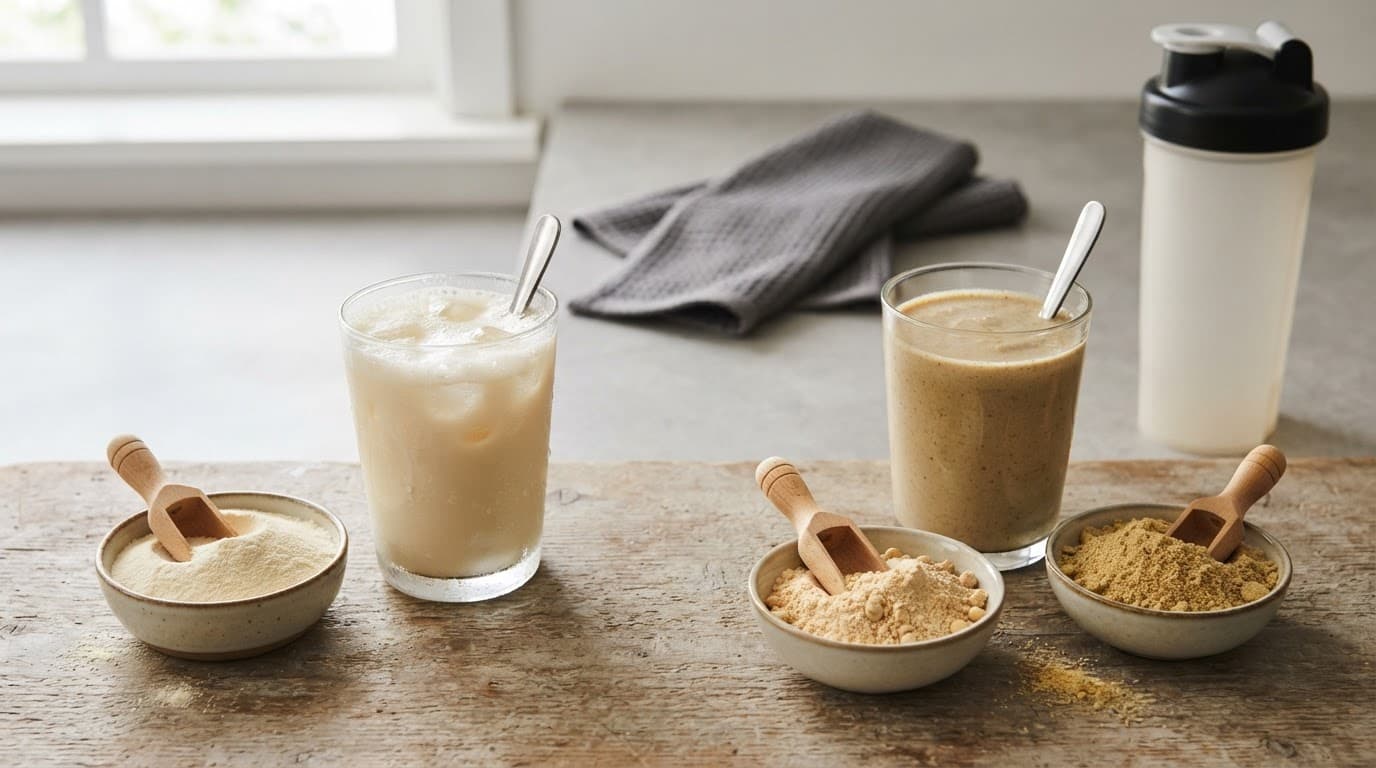
Whey protein powder comes from milk, while plant-based protein powder may use pea, soy, brown rice, hemp, or a blend. Whey concentrate contains more lactose than whey isolate, while plant options are naturally dairy-free.
| Factor | Whey Protein | Plant Protein |
|---|---|---|
| Protein quality | Naturally complete protein | Soy is complete; blends can be complete |
| Leucine content | Usually higher per gram | Often lower, so servings may be larger |
| Digestion and absorption | Often fast, but lactose and other ingredients affect tolerability | Speed and tolerability vary by source, fiber, gums, and other ingredients |
| Texture | Often smooth and creamy | Can be thicker, earthier, or grittier |
| Best fit | People who tolerate dairy | Vegans and people avoiding dairy |
Whey has a practical advantage if you want a smaller serving with a strong amino acid profile. Still, a properly formulated plant protein blend isn't inferior when its serving size and total protein are adequate.
Protein and Resistance Training Drive Muscle Growth
Muscle growth happens when resistance exercise and recovery repeatedly stimulate muscle protein synthesis, supporting the muscle hypertrophy that develops over time. Protein supplies the essential amino acids used to repair and build muscle tissue.
Total daily protein matters more than one shake
The International Society of Sports Nutrition position stand places most active adults around 1.4 to 2.0 grams of protein per kilogram of body weight each day, a useful guide for daily protein intake. People training hard, dieting for weight loss, or eating mostly plant-based meals may need the upper end of that range.
A serving after training is useful because it is convenient and can support post-workout recovery. However, the total across breakfast, lunch, dinner, and snacks has a larger effect than chasing a narrow timing window.
Use shakes to fill a real gap
A 20 to 40 gram serving works well for many adults. Plant-based users may prefer 30 to 35 grams per serving, especially if the product has less leucine or relies on a single plant source.
Protein supplementation should support meals, not crowd them out. Whole foods such as eggs, yogurt, fish, tofu, lentils, poultry, beans, and fortified foods still provide nutrients that plain powder may not.
Amino Acids Explain the Main Difference
All nine essential amino acids support muscle protein synthesis. Branched-chain amino acids include leucine, isoleucine, and valine. Of these, leucine plays the strongest role in signaling the muscle-building response.
Why whey protein has an early advantage
Whey tends to raise blood leucine and essential amino acids more quickly than plant protein. That makes it a convenient post-workout option for people who tolerate dairy and prefer a smaller scoop.
That early response doesn't guarantee more long-term muscle growth. When total protein, calories, and training quality match, research on plant proteins and exercise shows that plant-based choices can support strong results.
A smart plant protein blend closes the gap
A well-formulated blend can narrow the amino-acid gap. Soy is a complete protein on its own, while pea protein is relatively low in methionine and brown rice protein is lower in lysine. Combining them improves the overall amino acid profile.
Look for a plant protein blend with a clear protein amount per serving rather than a vague proprietary blend. The NIH review on plant proteins and exercise also notes that protein quality, dose, and the broader diet affect results.
Digestion, Acne, and Tolerability
The powder that looks strongest on a label isn't useful if dairy sensitivity, bloating, or other digestive symptoms make it difficult to use.
Lactose intolerance and acne concerns
Whey concentrate can cause gas, cramping, or loose stools in people who don't digest lactose well. Whey isolate usually has less lactose, but it's still milk-derived and unsuitable for anyone with a milk allergy.
Acne is less clear-cut. Some people notice breakouts with whey, while research does not prove that whey causes acne for everyone. If breakouts repeatedly follow whey use, switch to a plant option and speak with a dermatologist if acne persists. Seek professional advice for ongoing digestive symptoms or allergy concerns.
Plant-based protein powder can cause symptoms too
Bloating may come from inulin, gums, sugar alcohols, or large amounts of added fiber, not necessarily the protein source itself. Start with a partial serving and check the full ingredient list.
For fully vegan diets, protein powder does not cover every nutritional need. A plant-based vitamin B12 supplement may be appropriate when dietary intake is low, but a clinician can help determine the right approach.

How to Choose a Protein Powder
Start with your dietary needs, then compare a whey protein powder with a plant alternative by protein amount, ingredients, and price.
Compare cost per 25 grams of protein
A lower tub price can hide a smaller serving or less protein per scoop. Divide the product price by its total grams of listed protein, then compare the cost of 25 grams across products.
Meal replacements are different from protein powders. For example, an OPTIFAST Protein Plus vanilla shake includes broader nutrition beyond protein, which may suit a structured meal plan but not every post-workout need.
Match the product to your routine
Choose whey isolate if you tolerate dairy and want a smooth powder with a high leucine content. Choose a plant protein blend with pea protein isolate and brown rice protein. It's suited to people who avoid dairy or follow a vegan diet.
Soy protein isolate is a useful single-source plant protein for people who tolerate it.
Check for a full ingredient list, allergen statement, sealed packaging, and a realistic serving size. The Harvard Nutrition Source guide to protein is a useful reminder that dietary pattern still matters more than any single scoop.
Final Thoughts
Whey offers concentrated leucine and quick digestion, while plant protein works well when you choose a complete source or blend and adjust serving size.
The most reliable muscle-building plan combines progressive training, enough calories, and consistent protein intake.
This information is for educational purposes only and does not replace medical advice. Consult a licensed healthcare provider or dietitian if you have kidney disease, a food allergy, digestive symptoms, or a condition that affects nutrition needs.
Frequently Asked Questions
Can plant protein build as much muscle as whey?
Yes. Plant protein can support similar muscle growth when total protein intake, training, and calorie intake are adequate. A larger serving or a pea and rice blend can help offset the lower leucine content in some individual plant proteins.
Which plant protein powders have a balanced amino acid profile?
Soy protein contains all nine essential amino acids. Pea and brown rice proteins are often combined for a more balanced nutrient profile. Check the label for total protein per serving and the main protein sources.
Does whey protein cause bloating or acne?
Whey can cause bloating in people with lactose intolerance, especially whey concentrate. Acne may worsen for some people, but the evidence is mixed. If either symptom appears repeatedly, try a different protein powder and discuss ongoing symptoms with a healthcare professional.
How much protein should I have after a workout?
Many adults do well with 20 to 40 grams of high-quality protein after training. Body size, training schedule, and daily food intake matter more than exact timing. Spread protein across meals instead of relying on one large shake.
Is whey or plant protein cheaper?
Prices vary by brand, serving size, flavoring, and country. Plant blends can cost less, although premium vegan formulas may cost more than standard whey. Compare the price per 25 grams of protein, rather than the size or price of each tub.