
Amlodipine Ankle Swelling: Causes and When to Call

Amlodipine widens small arteries more than veins, pushing fluid into surrounding tissues. Ankle swelling is one of the recognized side effects of this medicine. Mild swelling in both ankles is common, but new or worsening symptoms deserve medical review.
The key distinction is where the swelling occurs and what accompanies it. Pain, redness, breathing difficulty, or swelling confined to one leg changes the urgency.
Chest pain or sudden shortness of breath requires emergency care. One-sided leg swelling needs urgent assessment, especially with calf pain, warmth, or redness.
Table of Contents
- Key takeaways
- Why amlodipine causes swelling
- The dose connection
- Treatment options
- Comfort measures
- Affordable access
- When to call
- Frequently asked questions
- Conclusion
Key Takeaways
- Amlodipine-related swelling usually reflects fluid redistribution, so water pills often don't resolve it.
- Lowering the dose, changing treatment, or adding an appropriate blood pressure medicine can help.
- Swelling shouldn't automatically be blamed on amlodipine. Blood clots, heart failure, and other conditions need different treatment.
This information is for educational purposes only. Consult a licensed healthcare provider before changing prescription medicine.
Why Amlodipine Ankle Swelling Happens
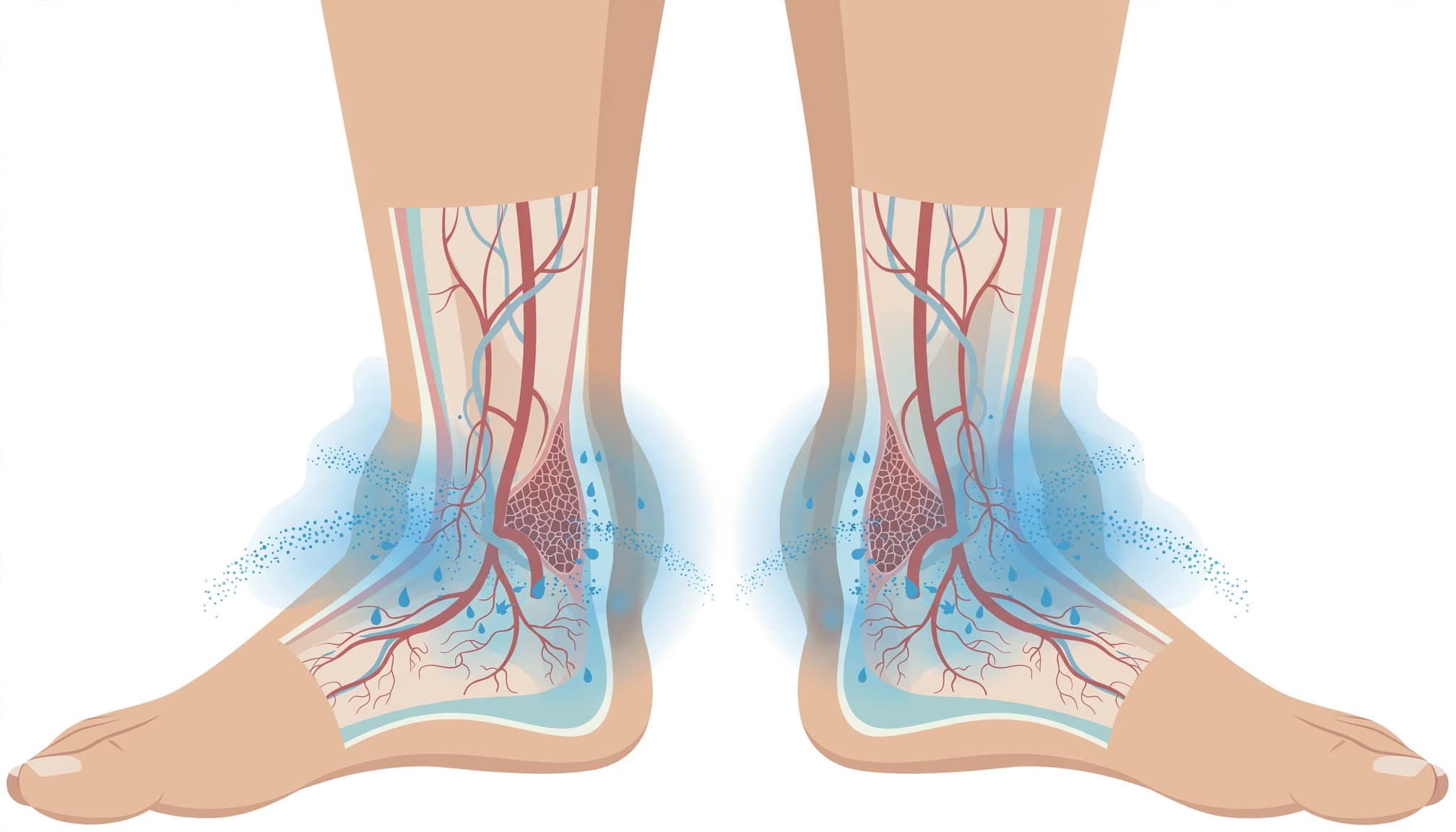
Small arteries widen more than veins
Amlodipine is a dihydropyridine calcium channel blocker. It relaxes arterial muscle to lower blood pressure and also treats certain forms of angina.
The medicine widens small arterial blood vessels, while veins don't widen to the same degree. This mismatch between the blood vessels raises capillary pressure, allowing fluid to enter nearby tissue. Gravity concentrates this fluid around the feet and ankles.
This peripheral edema, also called ankle oedema when it affects the ankles, isn't primarily excess water throughout the body. The distinction matters because treatments for generalized fluid retention may miss the underlying cause.
Certain people and conditions increase risk
Reported ankle edema rates across dihydropyridine calcium channel blockers are roughly 1% to 15%, although estimates vary by drug, dose, and population.
Women, older adults, and people with heart failure face greater risk. Prolonged standing and hot weather also aggravate dependent swelling. Heat-related vasodilation can increase pooling, while sweating and dehydration complicate fluid balance and increase dizziness.
Typical medication-related swelling affects both ankles and worsens toward evening. Nevertheless, that pattern alone doesn't establish the diagnosis, particularly in someone with heart or kidney disease.
How Dose Affects the Risk
The FDA prescribing information for Norvasc gives a usual adult starting dose of 5 mg once daily and a maximum of 10 mg daily. Some adults start at 2.5 mg, including selected older, frail, or liver-impaired patients.
In the label's clinical trial data, edema occurred in 1.8% of patients taking 2.5 mg, 3.0% taking 5 mg, and 10.8% taking 10 mg. This pattern is dose-dependent, but trial averages don't predict an individual's experience.
Swelling can develop after treatment begins or after a dose increase. It can also emerge later, so there isn't a single reliable onset window.
Persistent symptoms deserve review even when blood pressure has improved. Don't stop taking amlodipine or change the dose without consulting a healthcare professional, since blood pressure or angina can worsen.
How Prescribers Manage Persistent Swelling
Review the dose or change treatment
A prescriber first checks for other causes, including venous disease, heart failure, kidney problems, and other medicines. They may consider switching medications based on your blood-pressure needs. Reducing amlodipine may ease edema, but blood pressure still needs monitoring.
Switching treatment is another option. Lercanidipine and lacidipine are more lipophilic calcium channel blockers and may cause less swelling; availability varies by country. A review of hypertension management discusses this approach.
Switching between calcium channel blockers generally doesn't require cross-titration. Your doctor selects the replacement dose and timing. Another drug in the same class, such as nifedipine for blood pressure, can still cause edema.
Consider an ACE inhibitor or ARB
Adding an ACE inhibitor, such as lisinopril or perindopril, or an ARB, such as losartan, can reduce edema incidence while supporting blood pressure control. The mechanism isn't fully understood.
Our perindopril and amlodipine combination information describes one combination approach.
These medicines require appropriate patient selection, kidney function checks, and potassium monitoring. ACE inhibitors and ARBs aren't suitable during pregnancy and generally shouldn't be combined with each other. Potassium supplements, potassium-sparing diuretics, NSAIDs, and lithium also require review.
Avoid adding medicines that miss the cause
Diuretics usually offer limited benefit because the problem is capillary pressure rather than generalized fluid overload. The StatPearls amlodipine review describes unnecessary diuretic treatment as a prescribing cascade.
A diuretic may still treat a separate condition. Nitrates aren't routinely recommended for this problem because tolerance requires nitrate-free intervals.
Comfort Measures While Awaiting Review

To ease mild discomfort, elevate legs above heart level while reclining for 15 to 20 minutes, three or four times daily. Evidence that elevation or compression stockings reliably resolve calcium channel blocker edema is limited.
Gentle walking and breaks during prolonged standing support circulation. Hot weather may worsen dependent pooling, so take breaks in a cool place when possible. For medically suitable adults, walking 30 minutes on five days each week also supports blood pressure management.
Reducing salt intake can help manage hypertension, but it doesn't directly reverse amlodipine's capillary effect. Some treatment plans set sodium below 1,500 mg daily, but the right salt intake depends on the patient.
Dehydration isn't a treatment for swollen ankles. Fluid intake should follow any existing heart or kidney disease plan.
Alcohol can worsen dizziness and low blood pressure. Grapefruit advice varies across product guidance, so pharmacist review is appropriate. A symptom record noting dose changes, morning versus evening swelling, weight, and blood pressure can help the prescriber assess the pattern.
How to Access Amlodipine Affordably
Generic amlodipine can reduce long-term medication expenses, although changing manufacturers doesn't remove an ingredient-related side effect. Persistent swelling calls for a treatment review before another refill.
Our Online Pharmacy lists Norvasc at US$7.03 for a 30-tablet pack. Delivery charges affect the total cost. For patients in the USA, Australia, and UK, local insurance or subsidy arrangements also affect comparisons with international sourcing.
A combination tablet isn't automatically the lowest-cost choice. Separate generics and fixed-dose products can have different costs and dosing flexibility. Our generic perindopril and amlodipine information explains one prescribed combination.
We require a valid, legible prescription from a licensed physician before dispensing prescription medicine. International home delivery remains subject to destination-country import rules; a prescription doesn't override those requirements. Pharmacy support can clarify refill questions, but new symptoms require clinical assessment.
When Ankle Swelling Needs Medical Attention
The urgency depends on accompanying symptoms, not simply ankle size.
- Emergency assessment is necessary for chest pain, sudden shortness of breath, coughing blood, collapse, or swelling of the lips, tongue, or throat.
- Urgent same-day assessment is appropriate for one-sided leg swelling, especially with calf pain, warmth, or redness. These symptoms can indicate a blood clot or infection.
- Call your doctor promptly about rapidly increasing swelling, reduced urine output, or rapid weight gain of roughly 2 to 3 pounds in one day. Existing heart failure makes these changes particularly important.
That weight threshold doesn't diagnose heart failure. However, abrupt weight gain is less typical of uncomplicated amlodipine-related pooling and warrants attention.
Mild swelling in both ankles without warning signs usually allows a non-emergency appointment with your prescriber, particularly when it persists or affects shoes or walking. MedlinePlus amlodipine safety guidance also distinguishes common swelling from serious symptoms.
Emergency symptoms shouldn't wait for a routine prescription review.
Frequently Asked Questions
How long does amlodipine take to work?
Amlodipine starts lowering blood pressure on the first day, although its full effect can take a couple of weeks. Symptoms don't reliably show whether blood pressure is controlled. Home readings and follow-up measurements help assess response, especially after a dose change or a switch to another medicine.
Does ankle swelling go away on its own?
Some mild swelling fluctuates with standing, temperature, and overnight rest. However, persistent medication-related edema doesn't reliably disappear while the same dose continues. After a supervised dose reduction or switch, improvement may take days to several weeks. A fixed recovery deadline isn't reliable, particularly when another condition contributes.
Can lowering amlodipine from 10 mg to 5 mg help?
Yes. Because edema is dose related, reducing 10 mg to 5 mg can improve swelling. However, the lower dose may not maintain blood pressure control alone. A prescriber may add or adjust another medicine and review home readings rather than assume the reduction will preserve the same effect.
Will a water pill fix swollen ankles?
Usually, a water pill doesn't adequately treat edema caused by amlodipine alone. It removes sodium and water but doesn't correct the pressure imbalance across capillaries. Furosemide or hydrochlorothiazide may be appropriate for another diagnosis, but adding either solely for this side effect can cause dehydration or electrolyte problems.
Does generic amlodipine cause the same swelling as Norvasc?
Generic amlodipine contains the same active medicine as Norvasc, so either can cause dose-related ankle swelling. Switching brands alone doesn't reliably solve it. The useful discussion concerns dose, alternative treatment, and other causes of edema. Generic availability can improve affordability, but it doesn't change the drug's basic mechanism.
Keeping Blood Pressure Treatment Safe
Amlodipine ankle swelling often results from pressure-driven fluid pooling and can improve after a supervised treatment adjustment. Preserving blood pressure control remains part of that decision.
The distinction is clinical: mild symptoms on both sides differ from a painful swollen leg or rapid weight gain. Chest pain or sudden breathlessness calls for emergency care, not a routine medication review.