
Antibiotic-associated diarrhea: Causes and Warning Signs

Antibiotic-associated diarrhea (AAD) happens when antibiotics disturb protective gut bacteria, change digestion, or allow harmful organisms to multiply. New diarrhea during or after antibiotics warrants clinician contact, especially with three or more watery stools daily, fever, blood, significant pain, or dehydration.
Most episodes are mild, but C. diff infection requires separate assessment and treatment. Timing and symptom severity help distinguish an expected side effect from illness that needs prompt care.
Table of contents
Key takeaways · Causes and timing · Warning signs · Risk factors · Treatment · Probiotics · Affordable access · FAQ · Conclusion
Key takeaways
- Antibiotics can cause diarrhea during treatment or for several weeks afterward.
- Most cases aren't C. diff, but symptoms alone can't reliably exclude infection.
- A raised temperature, blood, severe pain, or dehydration require prompt assessment.
- Probiotic benefits depend on the strain and patient population.
- Antibiotic changes and antidiarrheal medicines require clinical guidance when infection is possible.
What causes antibiotic-associated diarrhea?
Antibiotic-associated diarrhea generally means three or more loose or watery stools daily during or shortly after antibiotic treatment. Some adult studies require at least two days of symptoms and include episodes occurring up to eight weeks after antibiotics stop.
Reported incidence varies: a 2007 BMJ editorial gives a range of 5-30%, while a 2019 ICU study cites 5-35%.
Disrupted bacteria change intestinal function
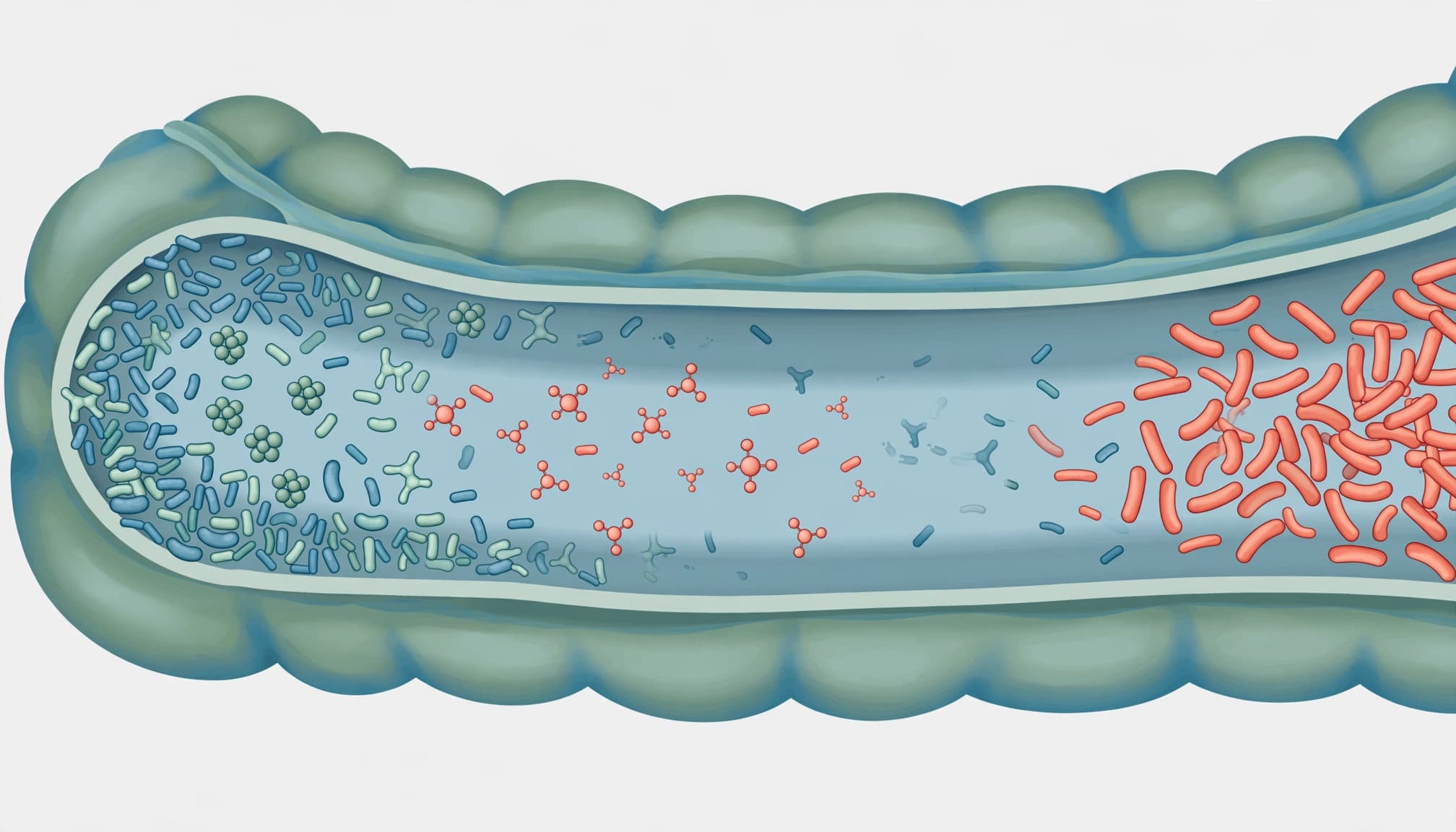
Protective intestinal flora help process food and resist harmful organisms. Antibiotics can reduce these bacteria, altering digestion and the movement of water through the bowel. Some antibiotics also directly affect intestinal activity.
C. difficile (Clostridium difficile), now called Clostridioides difficile, can exploit this disruption and release toxins that inflame the colon. The BMJ editorial attributed 20-30% of cases to this organism; CDC's clinical overview gives 15-25%. These estimates come from different evidence and populations.
Symptoms can begin before or after treatment ends
Mild diarrhea can begin within hours or a few days of antibiotic use. It commonly improves shortly after treatment finishes.
C. diff illness can begin during treatment or appear weeks later, sometimes around two months after antibiotic exposure. A completed prescription doesn't exclude an antibiotic-related cause.
When should a clinician be called?
The CDC advises clinical contact when diarrhea develops during or after antibiotics, since Clostridium difficile infection may need assessment. New, unexplained diarrhea occurring three or more times within 24 hours deserves particular attention.
Symptoms that need prompt assessment
A raised temperature, worsening cramps, blood or pus in stool, persistent vomiting, or diarrhea lasting beyond 48 hours warrant prompt assessment. Older adults, young children, and immunocompromised patients have less margin for fluid loss.
Severe C. diff can cause frequent watery stools, sometimes dozens daily, nausea, a raised temperature, and substantial abdominal pain. However, neither extreme frequency nor visible blood is necessary for infection.
The two-day threshold used in some studies isn't a waiting period. Warning signs justify assessment before that threshold.
Signs that require urgent care
Severe or increasing abdominal pain, a swollen abdomen, confusion, fainting, very little urine, or inability to retain fluids require urgent medical care. These symptoms can indicate substantial dehydration or serious intestinal inflammation.
C. diff and uncomplicated diarrhea can overlap, so symptom severity alone doesn't establish the diagnosis. MedlinePlus explains C. diff symptoms and the need for assessment after antibiotic exposure.

Which antibiotics and circumstances increase risk?
Any antibiotic can cause diarrhea. Higher-risk drugs include clindamycin, cephalosporins, fluoroquinolones, and amoxicillin-clavulanate. Our amoxicillin-clavulanate safety information discusses diarrhea among its adverse effects.
Broad-spectrum antibiotics can disrupt more gut bacteria. Risk factors vary by drug, and cephalosporins don't all carry the same risk. Antibiotic choice must also account for the infection being treated.
Combination treatment in intensive care
A 2019 retrospective study of 277 critically ill patients in an intensive care unit (ICU) in Xi'an, China, found antibiotic-associated diarrhea in 31.05%. Incidence was 44.06% with combined antibiotics versus 17.16% with monotherapy (P<0.001).
Among the critically ill patients, those with diarrhea had an average hospital stay of 19.70 days, compared with 12.29 days without diarrhea (P<0.001). The study found no significant mortality difference, and investigators reported no deaths directly caused by diarrhea. The results don't establish that diarrhea caused longer stays or had an effect on mortality.
Other associations need context
The study's adjusted analysis reported these associations.
| Exposure | Odds ratio |
|---|---|
| Beta-lactam/beta-lactamase inhibitor antibiotics | 3.072 |
| Antifungal agents | 3.189 |
| Duration of proton pump inhibitor treatment | 1.142 |
The first category included beta-lactam plus enzyme inhibitor combinations such as piperacillin-tazobactam and sulbactam-cefoperazone. The duration measure refers to proton pump inhibitors. Odds ratios aren't individual probabilities; these findings came from one ICU population.
The paper's background also cited initial treatment failure above 20% and relapse rates of 40% to 60%. Those figures weren't measured outcomes of this cohort and don't describe the expected course of mild outpatient diarrhea.
How clinicians manage diarrhea during antibiotic treatment
Assessment starts with stool frequency, timing, hydration, recent antibiotics, and other medicines. Laxatives, infections, and existing bowel disease can produce similar symptoms.
Reviewing the prescription and testing
A clinician may review the antibiotic class, such as cephalosporins, and stop, narrow, or replace the prescription when medically appropriate. Patients shouldn't independently skip doses or substitute another prescription medicine.
When C. diff is suspected, clinicians generally test an unformed stool sample for evidence of the organism or its toxins. A positive result needs interpretation alongside symptoms because some people carry the organism without illness.
Confirmed infection may require oral vancomycin or fidaxomicin. Routine symptom relief doesn't replace this treatment.
Replacing fluids and reviewing other medicines
Oral rehydration solution replaces water and salts lost through frequent stools. Small, repeated amounts may be easier to tolerate when nausea accompanies diarrhea.
Dehydration also complicates diabetes and kidney disease. Our pharmacist consultation service can support medication questions, although urgent symptoms need clinical assessment rather than an online response.
Can probiotics prevent antibiotic-associated diarrhea?
Some probiotics reduce diarrhea risk in certain settings, but results don't apply equally to every supplement or patient. Prevention studies don't establish a treatment for existing C. diff infection.
What the older hospital trial found
A randomised controlled trial discussed in Lynne McFarland's 2007 BMJ editorial enrolled 135 older hospitalized patients. A drink containing Lactobacillus casei DN 114 001 had an odds ratio of 0.25 for diarrhea, compared with a placebo milkshake.
C. diff-associated diarrhea occurred in 0% of the probiotic group versus 17% of the placebo group. The small, selected hospital population limits broader conclusions.
In contrast, preventive probiotic use wasn't significantly associated with diarrhea risk in the ICU study (OR 0.802).
Strain identity and patient suitability matter
Results can differ because each probiotic strain may have distinct effects, even when products contain closely related organisms. A label listing only "Lactobacillus" or a high bacterial count doesn't show that the product contains the studied probiotic strain.
Immunocompromised patients, critically ill patients, and people with central venous catheters need particular caution because live microorganisms can rarely cause invasive infection. There's no universally appropriate probiotic.
Accessing treatment affordably and safely
Costs depend on the diagnosis, medicine, dose, insurance, and local availability. A low-priced antidiarrheal doesn't substitute for testing or treatment when C. diff is suspected.
Comparisons across the USA, UK, and Australia should account for currency, pack size, shipping, and local supply rules. UK and Australian materials may spell diarrhea as diarrhoea. Local dispensing may provide faster access; international sourcing adds transit time and delivery charges.
Our prescription upload service supports review before dispensing. Prescription requirements still apply to online pharmacy orders, and home delivery shouldn't delay urgent treatment.
This information is for educational purposes only. Consult a licensed healthcare provider for diagnosis and individualized treatment.
Frequently asked questions
Can Imodium or Gastrostop treat diarrhea caused by antibiotics?
Both contain loperamide, which slows intestinal movement and reduces stool frequency. It doesn't remove the underlying cause or replace lost fluids. Clinician guidance is important after antibiotics, and self-treatment is inappropriate with a raised temperature, blood, severe pain, or suspected C. diff infection. Dosing limits also differ between countries.
Does diarrhea mean an antibiotic dose wasn't absorbed?
Diarrhea alone doesn't establish that a dose failed to absorb, so taking an extra tablet can cause unintended excess dosing. Repeated vomiting raises a separate problem. Our guidance on medication redosing after vomiting explains why the medicine, formulation, and elapsed time affect that decision.
Can C. diff return after treatment?
Yes. New diarrhea after improvement requires reassessment rather than automatic reuse of leftover medicines. The CDC's guidance on recovery after C. diff emphasizes avoiding unnecessary antibiotics and telling healthcare professionals about previous infection. Handwashing with soap and water also helps reduce transmission.
Is diarrhea an antibiotic allergy?
Diarrhea by itself usually reflects an adverse effect rather than an allergy. Hives, facial or throat swelling, wheezing, or breathing difficulty suggest a different reaction and can require emergency care. Recording the exact symptoms helps clinicians distinguish intolerance from allergy when choosing future antibiotics.
What changes for cancer or transplant patients?
These patients may have weakened immune defenses or other treatment-related causes of diarrhea. Immunotherapy, for example, can cause inflammatory colitis that needs a different response. New diarrhea deserves prompt contact with the treating team, especially with fever, pain, or reduced fluid intake. Probiotics also need individualized assessment.
The distinction that matters
Antibiotic-associated diarrhea covers illnesses with different causes and risks. C. diff requires separate assessment, even when symptoms begin after the original prescription has ended.
The useful distinction rests on stool pattern, accompanying symptoms, hydration, and clinical testing when indicated. Mild symptoms often settle, while warning signs justify prompt attention rather than stronger symptom suppression.