
Expired Medicine Disposal: A Safe Guide

Unused medicines in a bathroom cabinet can look harmless, yet they can create real risks for children, pets, guests, and the environment. Proper expired medicine disposal is usually simple: use a drug take-back program first, and use household trash only when no approved collection option is available.
Don't flush medication down the toilet or pour it into the sink unless the drug appears on the FDA's limited Flush List. A few careful minutes protect your household and keep unwanted drugs out of waterways.
Key Takeaways
- A drug take-back location is the preferred option for safely disposing of expired or unwanted medicine.
- Never flush most medications, even if they are expired.
- If no collection site is available, mix medicine with an undesirable material before putting it in the trash.
- Remove or obscure personal details on prescription labels before discarding containers.
- Needles, inhalers, cancer drugs, and other unused medicines may require special handling and disposal protocols.
Table of Contents
- Why expired medicine needs careful disposal
- How to find drug take-back programs for safe disposal
- How to dispose of medicine in household trash safely
- Special rules for disposing of needles, inhalers, and high-risk medicines
- Preventing medication waste when you refill prescriptions
- Frequently asked questions about expired medicine disposal
- A safer end for unused medicines
Why Expired Medicine Needs Careful Disposal
A medicine's expiration date is more than a housekeeping reminder. Over time, a drug may lose strength, change chemically, or no longer provide reliable treatment. That matters most for prescription medications used for chronic illness, infections, seizures, heart conditions, or cancer care.
Leaving old bottles in a drawer also raises the chance of accidental use. Someone may take the wrong tablet in the dark, a child may mistake a colorful pill for candy, or a visitor may take medication without permission. These scenarios create risks for accidental poisoning, and keeping medications like opioids, sedatives, stimulants, and certain pain treatments in the home increases the potential for drug misuse and abuse.
The safest general rule is simple: take expired and unwanted medicine to an approved collection site whenever possible.
The U.S. Food and Drug Administration's guidance for unused medicines identifies take-back programs as the preferred disposal route for both prescription and over-the-counter medicines. These programs handle medication waste through controlled systems rather than household plumbing.
Expiry dates do not mean every medication suddenly becomes dangerous on that day. Still, don't rely on old medicine during a health problem. Speak with a licensed healthcare provider or pharmacist about a replacement, especially when treatment needs to be consistent.
Use a Drug Take-Back Program First
A drug take-back program serves as the safest method for handling expired, unwanted, or partially used medications. Many retail pharmacies, hospitals, local law enforcement agencies, and public health offices maintain year-round collection kiosks for this purpose. The U.S. Drug Enforcement Administration also hosts National Prescription Drug Take Back Day events, which typically occur in April and October.
Before leaving home, call the site or check its posted rules. Some locations cannot accept sharps, aerosols, liquid medicines, or certain medical devices. Keep medication in its original container unless the collection site provides different instructions, and be sure to cover your name, address, prescription number, and other personal details with a permanent marker.
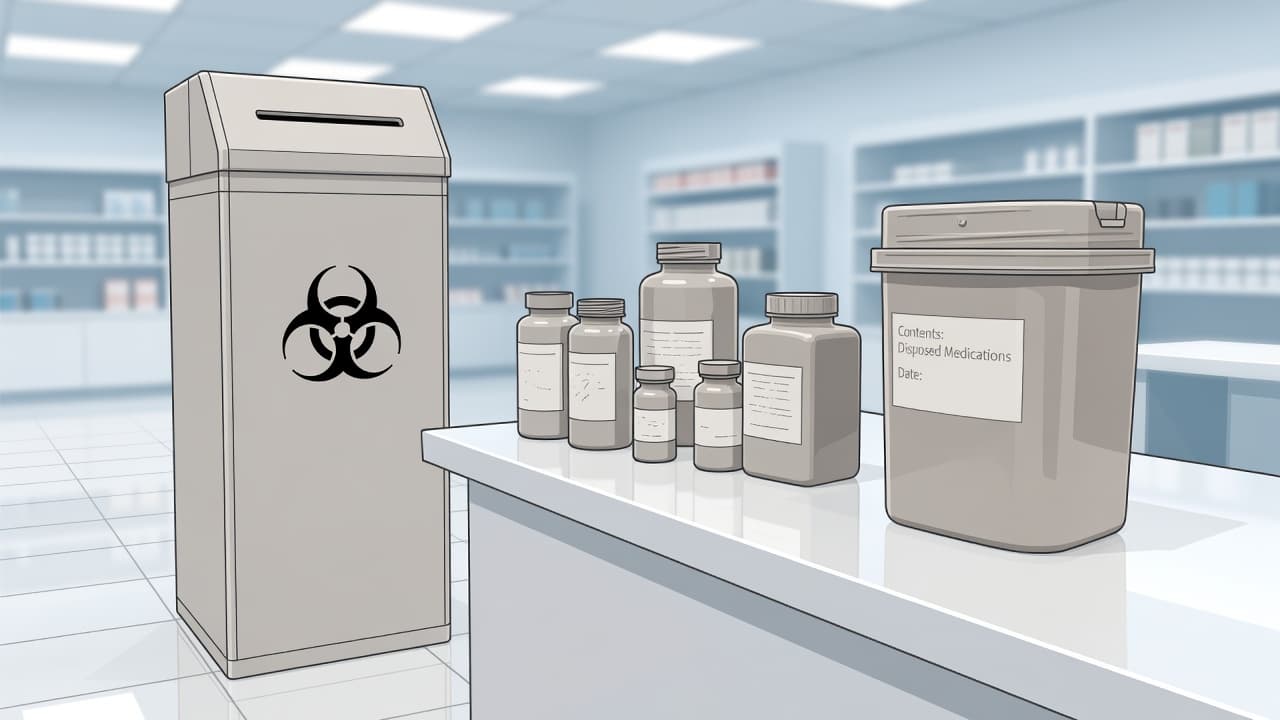
Permanent collection boxes are often more convenient than waiting for an annual event. These sites accept both prescriptions and over-the-counter medicines, and medication disposal kiosks are especially helpful for substances that could be misused if left at home. Review this practical overview of permanent drug drop boxes if you are looking for a local option.
For people handling expensive specialty treatments, do not guess. Oncology tablets, targeted therapies, and medicines such as Cabometyx require careful storage and disposal. Ask the dispensing pharmacy or oncology team whether a take-back site has any product-specific instructions.
How to Dispose of Medicine in Household Trash
When local drug take-back programs, mail-back envelopes, or pharmacy collection services are unavailable, using household trash is your next best option. While there are several drug disposal options available, using the trash is safer than flushing most medications, provided you follow a few specific steps.
The FDA recommends the following method for tablets, capsules, liquids, creams, patches, and drops that are not on the flush list:
- Remove the medicine from its original bottle or blister pack.
- Mix the medicine with an unappealing substance like used coffee grounds, dirt, or cat litter. Do not crush tablets or capsules.
- Put the mixture into a sealed container, such as a zipper bag, empty can, or lidded plastic tub.
- Place the sealed container in your regular household trash.
- Scratch out or remove all personal information from the empty medicine packaging before throwing it away or recycling it.
Mixing medicine with an unpleasant substance makes it less appealing to children, pets, or individuals searching through the garbage. A sealed outer container also reduces the risk of leaks, spills, and loose pills.
Do not place loose tablets in recycling bins. Recycling facilities are designed for clean paper, plastic, glass, and metal, and medication residues can contaminate sorting areas or expose workers to harmful substances.
Only flush a medicine if its label or patient information specifically directs you to do so, or if it appears on the FDA flush list. This list is strictly limited to certain drugs that pose a high risk of serious harm or death after accidental exposure. Following these guidelines is essential to ensuring safe medication disposal in your home.
Special Rules for Needles, Inhalers, and High-Risk Medicines
Needles and lancets should never go into a drug take-back box unless the site specifically accepts sharps. Proper sharps disposal is essential for community health. Place used needles in an FDA-cleared sharps container. If one is unavailable, use a heavy-duty plastic household container with a secure lid, such as an empty laundry detergent bottle, and follow local health department rules for final disposal.
Inhalers and aerosol products require extra care because their pressurized containers can burst or ignite if punctured, crushed, or placed near heat. Contact your local sanitation department to learn about the correct procedures for inhaler disposal, which helps maintain environmental safety.
Patches deserve attention, too. Fold the adhesive sides together before disposal so the medication residue is enclosed. This reduces the risk that a child or pet could absorb what remains on the patch.
For dementia treatments, heart medicines, or other ongoing therapies involving controlled substances, pharmacy instructions matter. Product guidance for Exelon also stresses responsible handling of unused medication and emphasizes the importance of keeping these products away from children and pets.
Preventing Waste When You Refill Prescriptions
The least complicated expired medicine disposal begins with fewer leftovers. Before ordering a refill for your prescription medications, check what is already in the cabinet and confirm that the dose has not changed. If your prescriber switches medications, ask whether you should finish the old supply or stop it immediately.
An online pharmacy can help patients organize refills, but online medicine home delivery does not make unused medicines eligible for return or reuse. Once a prescription has been dispensed, pharmacies generally cannot take it back into inventory because storage conditions cannot be verified.
For U.S. patients comparing medicine delivery costs to USA options, price should never outweigh safe prescription practices. Both retail pharmacies and reputable online services must follow strict safety standards for handling unused medicines. Use only a legitimate service that requires a valid prescription, protects personal information, and provides pharmacist support. The same standard applies to an international online pharmacy, especially for complex treatments or long-term medication.
If a shipment arrives damaged, incorrect, or unwanted, review the seller's medication return and disposal policy before mailing anything back. Never send prescription drugs through the mail unless the pharmacy or an approved mail-back program has given clear instructions.
This information is for educational purposes only and does not replace medical advice. Consult a licensed healthcare provider or pharmacist for guidance about a specific medication.
Frequently Asked Questions
Can I throw expired pills directly into the garbage?
Don't throw loose pills directly into the garbage. Remove them from the original package, mix them with coffee grounds, dirt, or cat litter, and seal the mixture in a container before placing it in household trash. This makes accidental use and recovery from trash less likely.
Should I remove labels from old prescription bottles?
Yes. Cover, scratch out, or remove your name, address, prescription number, and refill details before discarding the bottle. Personal information can expose you to privacy risks. Many people use a permanent marker or adhesive tape to block the label before recycling or trash disposal.
Can I flush expired prescription medicine?
Most expired prescription medicine should not be flushed. Flushing is reserved for a small group of medicines listed by the FDA because accidental ingestion could be fatal. Check the package instructions or the FDA flush list before flushing any medication down a toilet or sink.
Where can I dispose of leftover cancer medication?
Call your oncology clinic, specialty pharmacy, local hospital, or a local drug take-back location before disposing of leftover cancer medication. Some facilities have specific rules for hazardous drugs or high-cost therapies. Do not share oncology medicine with another person, even if their diagnosis seems similar.
Can an online pharmacy accept unused medicines back?
Most pharmacies cannot accept dispensed prescription medication for reuse or resale. This includes unused medicines supplied through mail-order or international services. However, a pharmacy may explain return procedures for damaged deliveries or direct you to an approved disposal option for expired or unwanted products.
A Safer End for Unused Medicines
Whenever possible, expired medicine should leave your home through a local take-back program. If that option is unavailable, following the proper household trash method is an essential practice for safe medication disposal that protects your community and the environment. By carefully securing your unused medicines before throwing them away, you prevent them from ending up in our water systems or falling into the wrong hands.
A labeled bottle often contains private information, and a single forgotten tablet can pose a real risk to your household. Taking the time to follow these guidelines for expired medicine disposal clears both risks from your home with care and confidence.