
Home Medication Inventory: A Practical Setup That Stays Current

An expired inhaler and an unopened refill can sit in the same cupboard, while the next pharmacy order goes in without anyone noticing either one. A home medication inventory makes those gaps visible: it records what is in the house, who uses it, and when it needs attention.
The useful version is small enough to maintain after every refill. It begins with the containers already at home, then stays current through brief checks against labels and deliveries.
Table of contents
- How to create the inventory
- Key takeaways
- What to record for each medicine
- Paper, spreadsheet, or app
- How to keep the record current
- Storage and disposal
- Refill costs and access
- Frequently asked questions
- Final thoughts
How to create a home medication inventory
Gather medicines from around the home for a medicine cabinet inventory. Check each original label and record its name, strength, directions, quantity, and expiration date. Keep the record separate from the medicines, then update it whenever a prescription changes or a new supply arrives.
Gather medicines before making a list
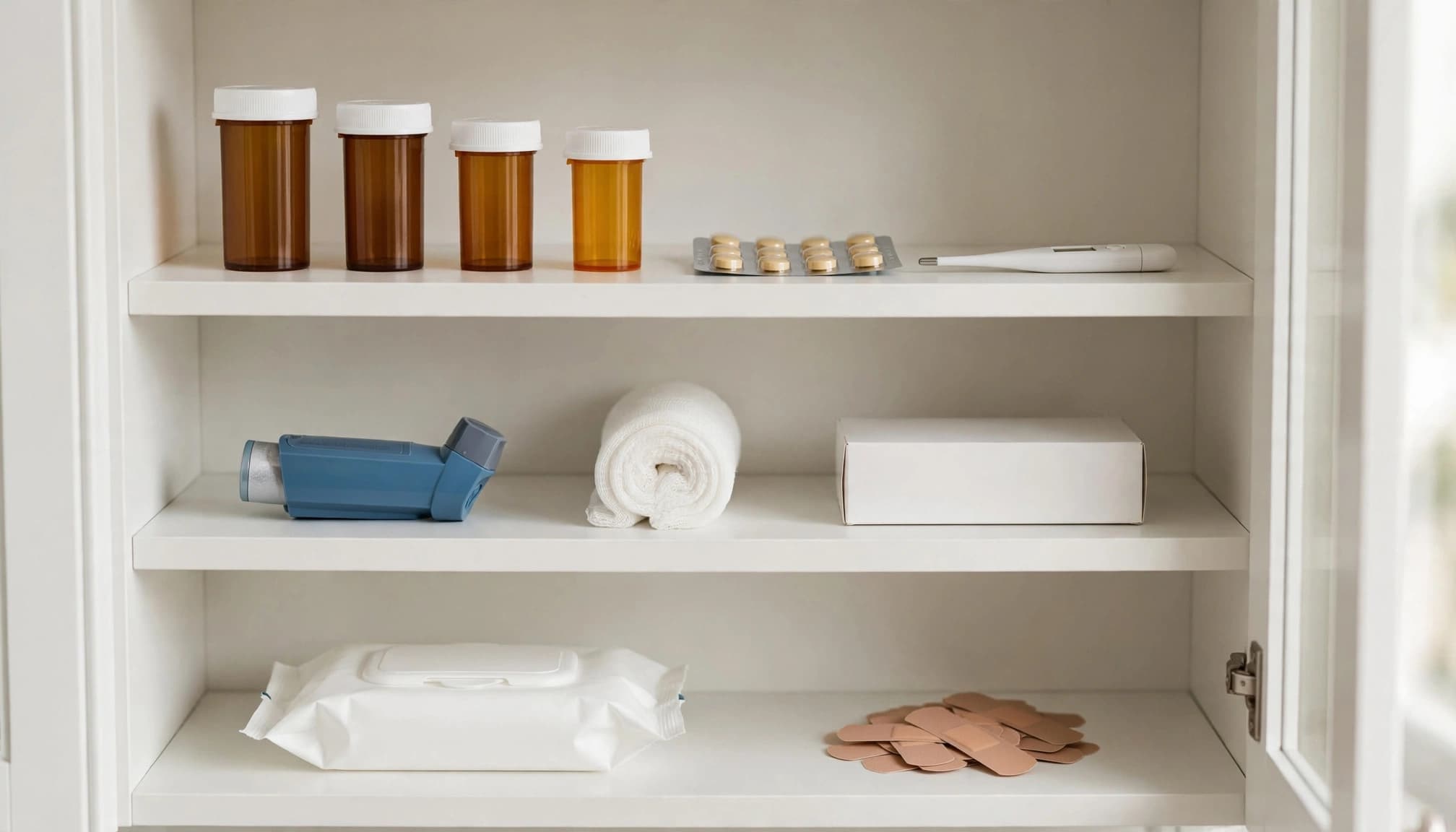
Start with the places medicines end up, not only the main cabinet. Check bedside drawers, travel bags, first-aid kits, and any area used for prescribed refrigerated products. Bring each item to a clear work surface temporarily, away from children and pets.
Include prescription medicine, over-the-counter products, vitamins, and supplements. The FDA's medication-list guidance recommends recording all of these, including products taken only occasionally. Keep inventory management simple: note unopened supplies separately from medicines someone currently takes.
Sort by person and status
Make a separate record for each household member. Within it, distinguish current medicines from unused or discontinued supplies. That prevents an old prescription from appearing beside an active one without explanation.
Check for duplicate medications before counting. Packages with the same drug name may differ in strength, expiration date, or whether they're current. If a label is missing or a medicine's status is unclear, set it aside for a pharmacist to identify. An inventory can't establish that a medicine is still appropriate to take.
Key takeaways
- A useful inventory separates medicines currently taken from extra, expired, or discontinued stock.
- Names and strengths come from original labels; quantities and refill details change as supplies are used.
- Paper works as well as an app if someone keeps it current and can find it during an appointment or emergency.
What to record for each medicine
The central task is matching the record to the package. A product name alone can't distinguish a tablet from a liquid or one strength from another.
Copy the identifying details
Record the generic name alongside any brand names shown on the label, plus the strength, form, and prescribed directions. Include the person who uses it, its purpose if known, and the prescriber or dispensing pharmacy for prescriptions.
This can help reveal a possible duplicate hidden behind different brands. It doesn't settle whether two products are interchangeable. Combination products may contain more than one active ingredient, and formulation differences matter. When something seems duplicated, a pharmacist can compare the actual packages.
For help finding the relevant fields, see how to read a prescription label. The FDA's medicine and supplement questions also prompt patients to account for over-the-counter and dietary products that are easy to leave off a list.
Add stock and refill information
Note the quantity remaining, package size, expiration date, and storage instructions. For a regular prescription, add the number of authorized refills if shown and the date an order was placed. A status field such as "current" or "stopped" is more useful than deleting a medicine without a trace.
Keep the inventory distinct from the schedule used to take doses. A count of tablets in a bottle is an estimate of stock, not proof that doses were taken. The guidance on keeping an accurate medication list can help when the same record must support both refill planning and healthcare visits.
Paper, spreadsheet, or app: which is easier to maintain?
The right format for medication inventory management depends less on features than on who will update it. A notebook kept by the medicine cupboard may beat an elaborate app that nobody opens.
| Method | Useful when | Main limitation |
|---|---|---|
| Paper list | One person needs a simple, accessible record | Changes and shared copies require care |
| Spreadsheet | Several medicines need sorting by person or date | Entries must still be updated manually |
| Inventory app | Reminders and shared access are useful | Setup, privacy, and data export vary by app |
Choose a record that travels
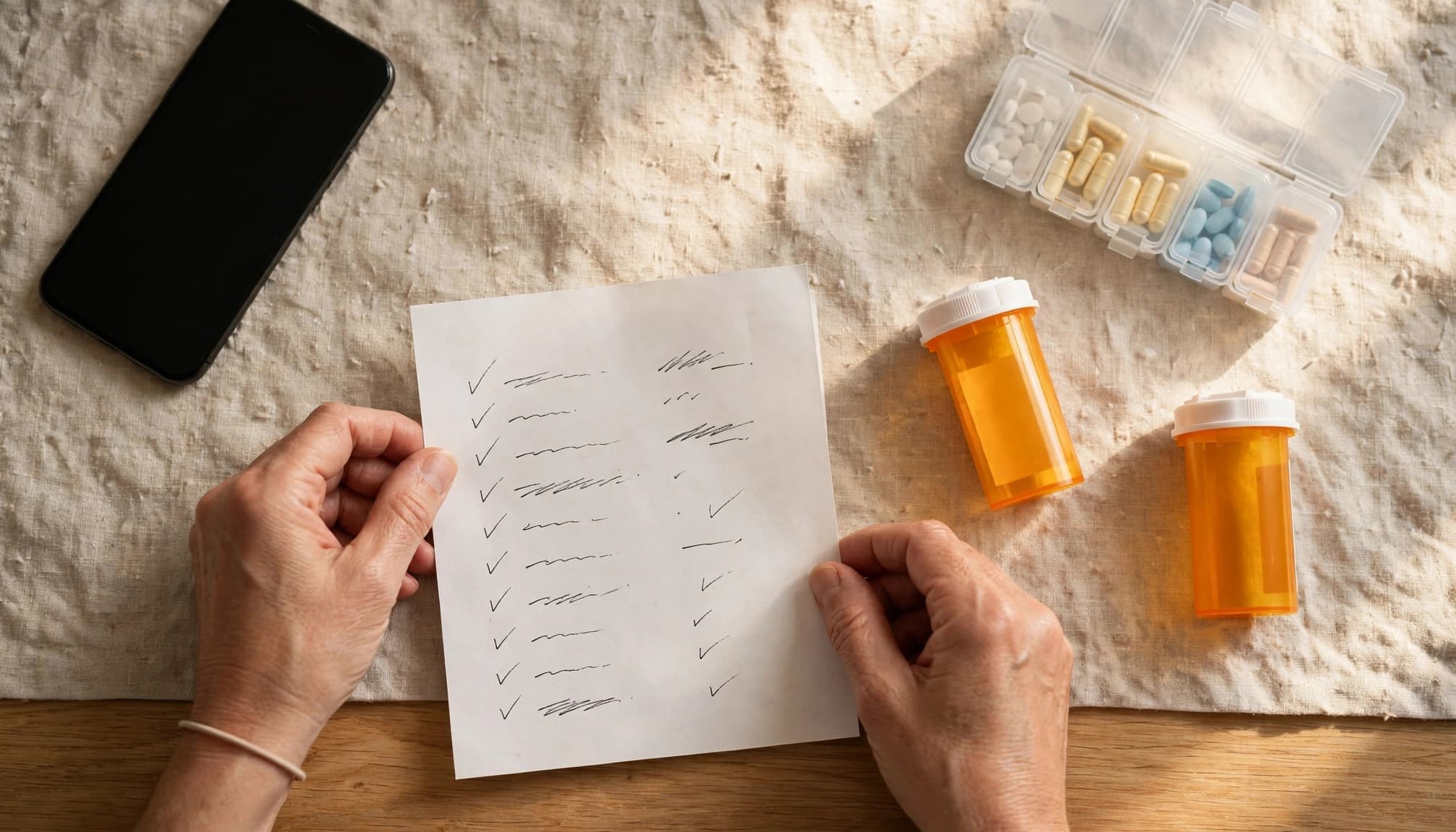
A printed copy can accompany someone to an appointment, while a securely stored digital copy can support inventory tracking away from home. If several people coordinate care, agree on one primary record for tracking medications. Otherwise, an old phone note and a newer paper list can both look authoritative.
Include a "last reviewed" date. It tells a clinician or caregiver how much confidence to place in the quantities, which change faster than names and directions.
Treat scans and photos as shortcuts
A barcode scanner may speed up entry, but a scan is not confirmation of strength, directions, expiration, or which patient received the medicine. Check every imported field against the package. Photos of labels can help with transcription, provided they’re stored with suitable privacy protections.
For a mobile app, look for easy editing, expiration reminders, separate household profiles, and a way to export or print the record. None of those features replaces a pharmacist's review when labels conflict.
Keep the inventory current without recounting everything
Update the record when the medicine is already in hand: after a refill arrives, when a clinician changes a prescription, or when a product is removed. Entering a new package takes less effort than reconstructing months of purchases later.
For daily medicines, estimate remaining stock during routine refill planning rather than counting every tablet after every dose. Exact counts matter more when a discrepancy appears. If the bottle, order confirmation, and recorded quantity disagree, ask the dispensing pharmacy to clarify before assuming a shipment is short.
After hospital discharge, compare the discharge instructions with the home supply. A medicine may have changed strength or been stopped, even if an older bottle remains in the cupboard. Keep the prior entry marked as stopped until its disposal is resolved; don't silently merge it with the replacement.
Delivery tracking improves inventory visibility by showing what’s at home and what’s still in transit. It can't explain every supply chain delay, so confirm delivery before counting an order as stock. For delayed refills, prescription order status guidance explains the processing stages a household may need to check.
Store and dispose of medicines safely
An accurate list doesn't protect a product stored under the wrong conditions. The label determines whether it belongs at room temperature or requires special handling.
Keep the packages in suitable storage
Unless a label says otherwise, choose a cool, dry place away from bathroom steam and car heat. Keep medicines in their original containers, with child-resistant closures secured and access restricted for children and pets. Medication storage guidance for bathrooms, kitchens, and cars explains why convenient locations aren't always safe ones.
If a pill organizer is in use, retain the labeled containers for identification and refill checks. An organizer doesn't carry the full instructions, expiration information, or dispensing details.
Remove expired and unused stock
Check dates when updating quantities, especially for occasional-use products that can sit untouched. Don't use an expired medicine because it looks unchanged. Record its removal so it doesn't appear available during an illness or refill decision.
The FDA favors medicine take-back options for most unused or expired drugs. Where none is available, its disposal instructions depend on the product: only certain medicines appear on the FDA flush list, while others have household-trash steps. A pharmacist can help identify the appropriate route. Never leave medicines loose in household recycling.
Use the inventory to plan refills and compare costs
A stock record shows when a regular supply is running low, but the prescription remains the authority for what may be dispensed. This distinction matters for oral cancer therapies, transplant medicines, and other treatments where a changed regimen can make an unopened package unsuitable.
For online medicine home delivery, inventory management includes recording the date ordered and the date received separately. Then compare the delivered name, strength, quantity, and label with the current prescription before putting it away. An inventory may help households notice low stock and plan questions about medication shortages, but it can't prevent them or replace advice from a prescriber or pharmacist. An online pharmacy should require a valid prescription for prescription-only products and make pharmacist support available.
When comparing local and international prices, the displayed medicine price is only one part of the cost. Shipping charges, delivery time, permitted supply limits, and applicable import rules may change the practical choice. Prices in the USA, Australia, and UK cannot be assumed equivalent. A pharmacist or prescriber can discuss clinically appropriate generic alternatives without treating every lower-priced listing as the same product.
This information is for educational purposes only. Consult a licensed healthcare provider before changing, stopping, or replacing a prescribed treatment.
Frequently asked questions
How often should a home medication inventory be updated?
Update it whenever a medicine starts, stops, changes strength, or arrives as a refill. Review the full record before healthcare appointments and after hospital discharge. For medicines used daily, check remaining quantities during refill planning. An occasional complete cabinet check can catch expired products and supplies left outside the main storage area.
Can a barcode scanner track prescription medicines accurately?
A scanner may identify a packaged product and reduce typing, but it can't be trusted to supply patient-specific directions or the expiration date on every package. Packaging and databases vary. Compare any scanned entry with the original pharmacy label, especially its strength and form, before adding it to the household record.
Should expired medicines remain on the list?
Mark an expired product as unavailable, then remove it from active stock when it has been disposed of properly. Keeping a brief record of what was removed can explain a quantity change. Don't rely on the list alone to judge a product's condition: storage problems can arise before the printed expiration date.
Can a home inventory replace a medication list for appointments?
The two records overlap, but they answer different questions. An inventory tracks what's physically available, including spare and unused packages. An appointment list should make clear what the person currently takes, at what dose, and how often. Sharing an inventory without its status fields could make an old prescription look active.
Is it safe to reorder a medicine through an international online pharmacy?
A current inventory helps confirm what's needed, but it doesn't verify a seller or authorize a prescription. Check prescription requirements, dispensing and pharmacist information, delivery conditions, and the rules that apply in the destination country. For temperature-sensitive or time-critical medicines, shipping uncertainty deserves particular attention before an order is placed.
Final thoughts
The unopened refill and expired inhaler are easier to spot when each has a clear place in a current record. The best home medication inventory isn't the one with the most fields. It's the one that stays close to the labels, distinguishes active treatment from leftover stock, and gets updated when something changes.