
How Caregivers Create a Medication Emergency Card

An emergency department visit often begins with basic questions that become difficult under stress: What medicines does the person take? What caused a past allergic reaction? Which clinician and pharmacy can confirm the details?
An emergency medical card is a wallet sized card with essential emergency medical information. It gives caregivers a compact, current record to share when the patient can't speak clearly or details are scattered across bottles, portals, and phone calls. A fuller digital personal health record can serve as a backup. It should be accurate, easy to find, and brief enough to read quickly. Call emergency services for urgent symptoms instead of relying on the card.
Table of contents
- How a medication emergency card works
- Information to include on the card
- How to make a DIY emergency card
- Paper, wearable, and digital records
- Storage, updates, and pharmacy details
- Frequently asked questions
- A small record with practical value
Key takeaways
- A card should list every current prescription medicine, over-the-counter product, vitamin, and supplement.
- Record the medicine name, strength, schedule, purpose, related medical conditions, prescriber, pharmacy, allergies, and emergency contacts.
- Update the card whenever a medicine starts, stops, or changes dose.
- Keep paper copies in the wallet, emergency kit, and caregiver records.
- Medical alert bracelets with custom engraving may identify an allergy or direct responders to the fuller card, but they don't replace clinical verification.
- A personal health record can provide backup information, but it isn't a substitute for a current paper medication list during power, phone, or login problems.
How a medication emergency card works during an emergency
A medication emergency card is a wallet-sized summary of the details clinicians need to begin safe care. It helps caregivers and first responders present a reliable medication history during an ambulance call, hospital admission, evacuation, or unexpected transfer between care settings.
It supports medication reconciliation
At admission, clinicians compare the medicines a patient has been taking with new orders and treatment plans. This process is called medication reconciliation. The NIH overview of medication reconciliation describes the core work: build a current list, compare it with proposed medicines, and resolve discrepancies.
A current card can speed up that conversation. Caregivers can consult a fuller personal health record when more detail is needed. Clinicians must verify medication names, doses, schedules, interactions, allergies, and organ function.
It is especially useful when the person takes insulin, blood thinners, anti-seizure medicines, immunosuppressants after transplant, or oral cancer therapy.
It has clear limits
The card is not a prescription, an advance directive, or a substitute for clinical assessment. Clinicians must still confirm doses, interactions, organ function, and the reason for treatment.
A card is most useful when it records what the patient takes now, not everything they have ever been prescribed.
Caregivers should call emergency services for urgent symptoms. They shouldn't use the card to start, stop, double, ration, or substitute a prescription medicine.
This information is for educational purposes only and doesn't replace advice from a licensed healthcare provider.
Information to include on the card
The strongest medication emergency card puts the most urgent facts first. Avoid filling limited space with insurance numbers, Social Security numbers, or a long medical history that emergency staff can't scan quickly. Include only sensitive information that's necessary for emergency care.
List prescription medications with enough detail to identify them
Write the generic and brand name when both are known. Include the strength, form, dosage instructions, and why it is taken. For example, "metformin 500 mg tablet, twice daily, diabetes" is more useful than "diabetes pill."
Also list over-the-counter products, vitamins, supplements, inhalers, injections, eye drops, patches, and topical products. A personal health record may help confirm the list, but caregivers should verify it with a pharmacist or prescribing clinician. The FDA's patient labeling resources can help caregivers find the official instructions and warnings that accompany many medicines.
Record allergies and medical conditions
State each allergen and reaction, such as "penicillin, hives" or "contrast dye, breathing difficulty." A vague note saying "allergic to antibiotics" can cause confusion.
Include major diagnoses, chronic conditions, implanted devices, oxygen use, dialysis, mobility assistance, communication needs, and dietary restrictions that affect care. Blood type may be added if it is known from a medical record, but it should never be guessed.
Add people who can verify the information
Place the patient's full name and date of birth at the top. Then include allergies and reactions, a primary emergency contact, a second contact, the prescribing clinician, and the dispensing pharmacy with phone numbers.
Add a preferred hospital or emergency destination when appropriate. Include relevant devices and support needs, but limit personal information to details emergency staff need to provide safe care.
Caregivers who arrange refills should also understand how to safely order prescriptions for a family member. Patient permission, a valid prescription, and pharmacy confirmation matter as much as a delivery address.
How to make a DIY emergency card
A free printable card works well when the information is maintained carefully. A plain index card can also work, although a wallet card template makes it easier to keep details in a consistent order.
Gather the information from primary sources
Start with prescription labels, the pharmacy profile, discharge paperwork, and the current medication list from the treating clinician. Do not rely on memory alone, particularly after a recent hospitalization or dose change.
Check each item against the physical container in hand. Record the date the card was reviewed, then ask the pharmacist or prescriber to clarify any unclear strength, route, or instruction. For liquid medicines, write the concentration as well as the measured dose.
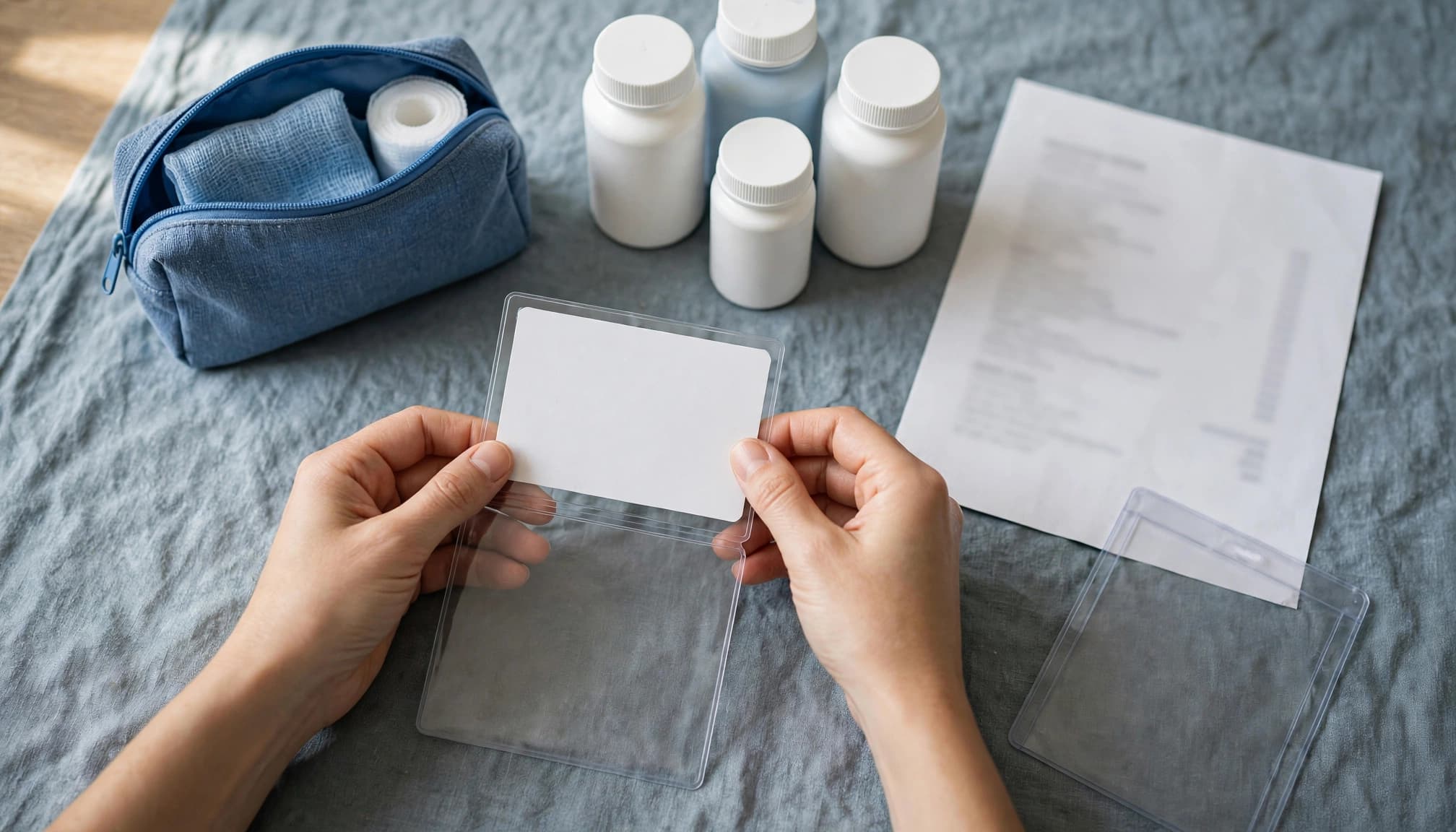
Print, cut, fold, and protect the card
Use dark ink and large, readable type. After checking spelling and phone numbers, print two copies on sturdy paper. Cut along the template marks, then fold only if the layout requires it.
A transparent protective sleeve or laminate helps protect the emergency identification card from moisture and wear. Protective sleeves are especially useful for cards carried in bags or emergency kits. If the patient changes medicines often, a sleeve with a replaceable insert is more practical than permanent lamination.
Store the source file as a personal health record in a secure, access-controlled location. Don't leave the editable file or a card image exposed on an unsecured device. Keep the original file secure so a revised card can be printed promptly.
Paper, wearable, and digital records
Caregivers don't need to choose one format exclusively. Each solves a different access problem, and the best arrangement often combines them.
A paper medical alert wallet card can provide immediate medication details. A medical id card or emergency identification card can also list essential contacts and health information. Wearable identification draws attention to urgent concerns when the person cannot speak.
| Format | Best use | Main limitation |
|---|---|---|
| Paper wallet card | Immediate medication and contact details | Can become outdated or be left behind |
| Medical alert bracelets | Signals a condition or allergy when the person cannot speak | Has limited space |
| Digital health record | Holds fuller history and documents | May require a charged device, signal, or login |
Paper remains the quickest format to hand to a paramedic or triage nurse. It supports continuity of care when a phone, signal, battery, or login is unavailable. A wearable medical ID can draw attention to a severe allergy, diabetes, anticoagulant use, or another critical concern.
Pair a wallet card with medical alert bracelets
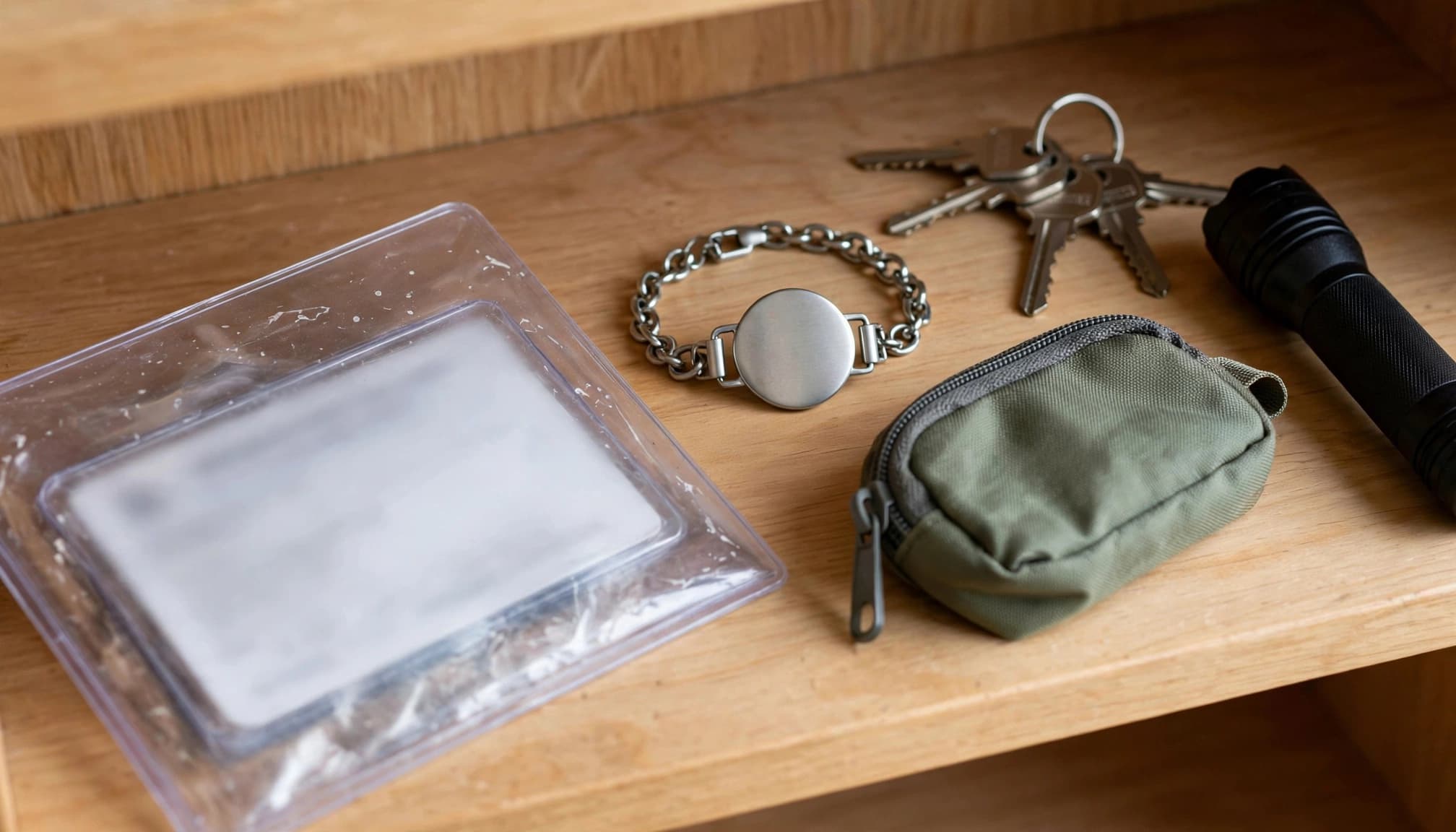
Medical alert bracelets and a medical alert necklace can carry a short prompt such as "see wallet card." With custom engraving, a wearable can flag an allergy or another urgent concern. Custom engraving can also direct responders to fuller information with a brief prompt such as "see wallet card."
The wording is not a universal emergency-services standard, and responders cannot be guaranteed to find the card. Still, pairing both formats gives caregivers a practical backup when the person is separated from a bag or phone.
Use digital records as a backup, not the only copy
A password-protected phone note, patient portal, or personal health record can hold medication photos, recent discharge summaries, and full medical history. A personal health record can store a fuller history for planned care and medication reconciliation. Maintain a secure backup in a separate personal health record, but don't treat it as a replacement for pharmacist or clinician verification.
For medicines obtained through an Online Pharmacy, record the dispensing pharmacy's phone number and the exact product name on the paper card. The emergency record should identify the medicine, not promote a source or estimate future availability.
Storage, updates, and pharmacy details
For emergency preparedness, keep one copy in the patient's wallet or purse, another in the caregiver's bag, and another with emergency supplies. Label each copy as an emergency identification card so responders can recognize it quickly. Protect sensitive information, and don't leave copies where the public can access them.
A fuller personal health record can hold additional details, but store it securely with appropriate access controls. A card that stays in a kitchen drawer has little value during an ambulance transfer.
Build a copy system for travel and disasters
A car, workplace, wheelchair pack, and evacuation kit may each need a copy. Caregivers managing a move, travel, or natural-disaster risk should maintain a 7- to 10-day supply of essential prescription medications when possible. Store them according to label instructions, and confirm refill planning with the pharmacist or prescriber.
Mail-order planning needs extra attention. When an online medicine home delivery service is part of the refill routine, record its contact information and order timing, but don't wait until the final doses are gone. This guidance on safe prescription delivery and refill planning explains why deliveries require advance preparation.
Update it whenever treatment changes
Review the card after every new medicine, stopped medicine, dose adjustment, hospital discharge, new allergy, pharmacy change, or emergency-contact change. Ask a pharmacist or clinician to confirm any unclear details.
Review wearable wording after changes to allergies, conditions, contacts, or treatment. This includes checking any custom engraving. A regular monthly check beside the pill organizer can catch stale details before they become a problem.
Refill reminders can support this routine, although they don't replace an active prescription or professional review. Caregivers can use prescription refill reminder guidance to track refill dates and contact the prescriber early when a renewal is needed.
Frequently asked questions
What is the most important information on a medication emergency card?
The essentials are current medicines, strengths, directions, allergies and reactions, major medical conditions, emergency contacts, prescriber details, and pharmacy contact information. Include prescription medicines, non-prescription products, vitamins, and supplements because each can affect treatment decisions. If you include blood type, copy it from a reliable medical record and never guess.
Can a medication card prevent medication errors?
A card cannot prevent errors by itself. It can give emergency medical personnel a clearer starting point when they assess the patient and reconcile medicines. Clinicians still need to verify the list, review records, and make treatment decisions based on the patient's current condition. If urgent symptoms occur, call emergency services rather than waiting for anyone to review the card.
How often should a caregiver update the card?
Update it immediately after a medicine is started, stopped, or changed. The same applies after a hospital admission, a new allergy, or a new emergency contact. A scheduled monthly review helps identify errors in a busy caregiving routine.
Does every patient need a medical alert bracelet?
No. A bracelet is most helpful when a person has a condition, allergy, or medicine-related risk that may matter if they cannot communicate. Custom engraving can identify a key risk, but space is limited and it doesn't replace a detailed medication card. A wallet card remains useful with or without wearable identification because it holds fuller medication information.
Are digital medication lists and a personal health record enough during an emergency?
Digital lists are useful, but they should not be the only record. A personal health record may require a device, login, or internet connection, and a phone may be locked, uncharged, lost, or unavailable during an evacuation. A protected paper card gives caregivers and clinicians a simple backup that requires no technology.
What does a medication emergency card cost?
A DIY card usually requires only paper, ink, and a protective sleeve. Wearable IDs, custom engraving, and digital record services may involve separate product or subscription costs. A personal health record can also become inaccessible if its device or account is unavailable. Cost should not outweigh readability, current information, and access during an emergency.
A small record with practical value
A well-maintained record turns scattered prescription details into a usable clinical snapshot. Keep it concise, while storing fuller information in a secure personal health record. Its value comes from accuracy, not design.
With a pharmacist or clinician, verify medication names, strengths, doses, schedules, allergies, prescribers, pharmacy details, emergency contacts, and preferred hospital. Update the record after every treatment change, protect sensitive information, and call emergency services for urgent symptoms.
A wearable with custom engraving may offer a limited visual prompt, but it can't replace current medication details. Keep the record in more than one secure place.