
How to Use Eye Drops Without Contaminating the Tip

To learn how to use eye drops safely, wash your hands first and keep the nozzle clear of anything that could contaminate it.
With clean hands, pull down the lower eyelid to form a pocket, then release the prescribed drop without letting the nozzle touch your eye, lashes, fingers, or other surfaces. Close your eye gently, recap the bottle immediately, and follow its storage and discard instructions.
A steady technique also reduces wasted eye drops and bitter drainage into the throat. For dry eyes, artificial tears can help relieve symptoms when used as directed, while careful handling supports eye health. Protecting the bottle tip starts before the cap comes off and continues between doses.
Table of Contents
- Why tip contamination matters
- How to use eye drops safely, step by step
- Keeping the bottle clean between doses
- Managing flinching and overflowing drops
- Choosing the right type of eye drop
- Accessing eye drops affordably and safely
- Frequently asked questions
- A clean tip protects every dose
Key Takeaways
- Keep the eye drops bottle tip clear of the eye, lashes, fingers, and surrounding surfaces.
- A lower-eyelid pocket and gentle eye closure help keep the drop where it belongs.
- Preservative-free drops still require careful handling, and discard dates differ between products.
This information is for educational purposes only. For eye health concerns, consult a licensed healthcare provider for product-specific instructions, treatment decisions, or persistent symptoms.
Why Bottle-Tip Contamination Matters
Eye drops are sterile when manufactured correctly. After opening, contact with skin or another surface can transfer microorganisms to the nozzle, making a clean tip important for eye health.
A contaminated tip can expose the eye during later doses. Preservatives help limit microbial growth in some formulations, but they don't make careless handling safe, and clear-looking liquid doesn't prove the bottle is uncontaminated.
Dry eyes, infection, allergy, and glaucoma require different approaches. Although administration techniques overlap, the medicine, frequency, and duration depend on the diagnosis. For dry eyes, persistent symptoms warrant assessment rather than repeated changes of brand; a stepwise dry-eye treatment plan describes that broader approach.
The same hygiene rules apply when a caregiver administers drops. Each bottle belongs to one patient, even when family members use the same product. Sharing creates an avoidable route for transferring germs.
How to Use Eye Drops Safely, Step by Step
For eye health, the American Academy of Ophthalmology's eye-drop administration guidance recommends forming a lower-eyelid pocket and keeping the dropper away from the eye.
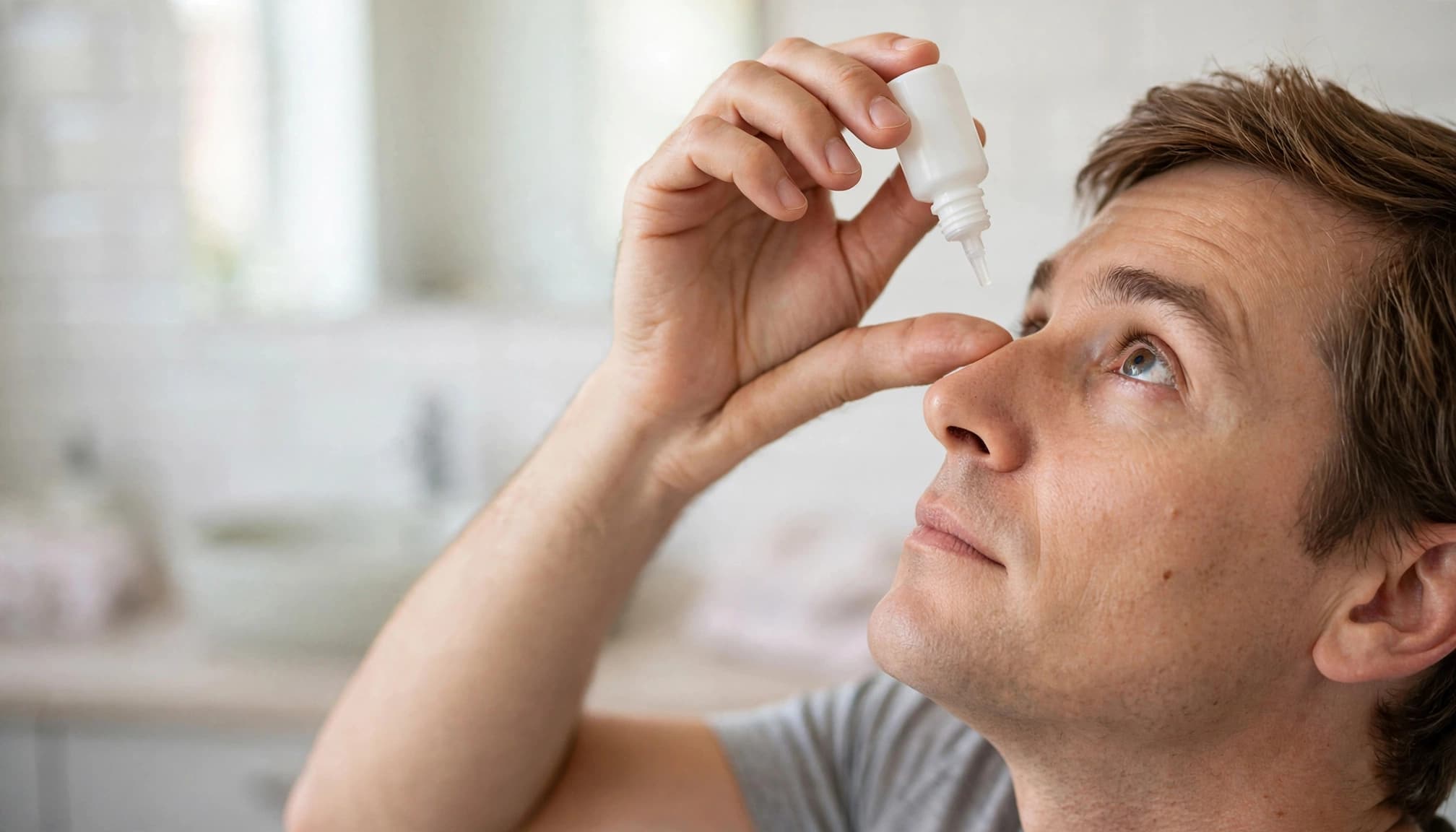
Prepare the hands, bottle, and position
First, wash your hands with soap and water, then dry them thoroughly. Check the bottle's product name, prescribed eye, expiry date, and opening-date limit. Shake it only when the instructions require it.
Contact lenses may need removal before using eye drops, depending on the formulation. The leaflet explains when they can go back in.
Sit or lie down for stability. Keep fingers off the nozzle when removing the cap, and don't touch the cap's inner surface or set it on the counter.
Aim for the pocket and close gently
Follow these steps:
- Tilt your head back and look upward.
- Gently pull down the lower eyelid to create a small pocket.
- Hold the dropper above the pocket, keeping the tip clear of lashes, skin, and the eye.
- Release one drop, unless the prescription or leaflet directs otherwise.
- Close your eye gently for about one minute without squeezing or blinking repeatedly.
- Replace the cap promptly without touching the nozzle.
If your prescriber recommends it, gently press the skin at the inner corner beside your nose to reduce drainage. Never press on the eyeball.
Wait at least five minutes between different medicines when using eye drops, unless their instructions require longer. Blot excess liquid from your cheek with a clean tissue.
Keeping the Bottle Clean Between Doses
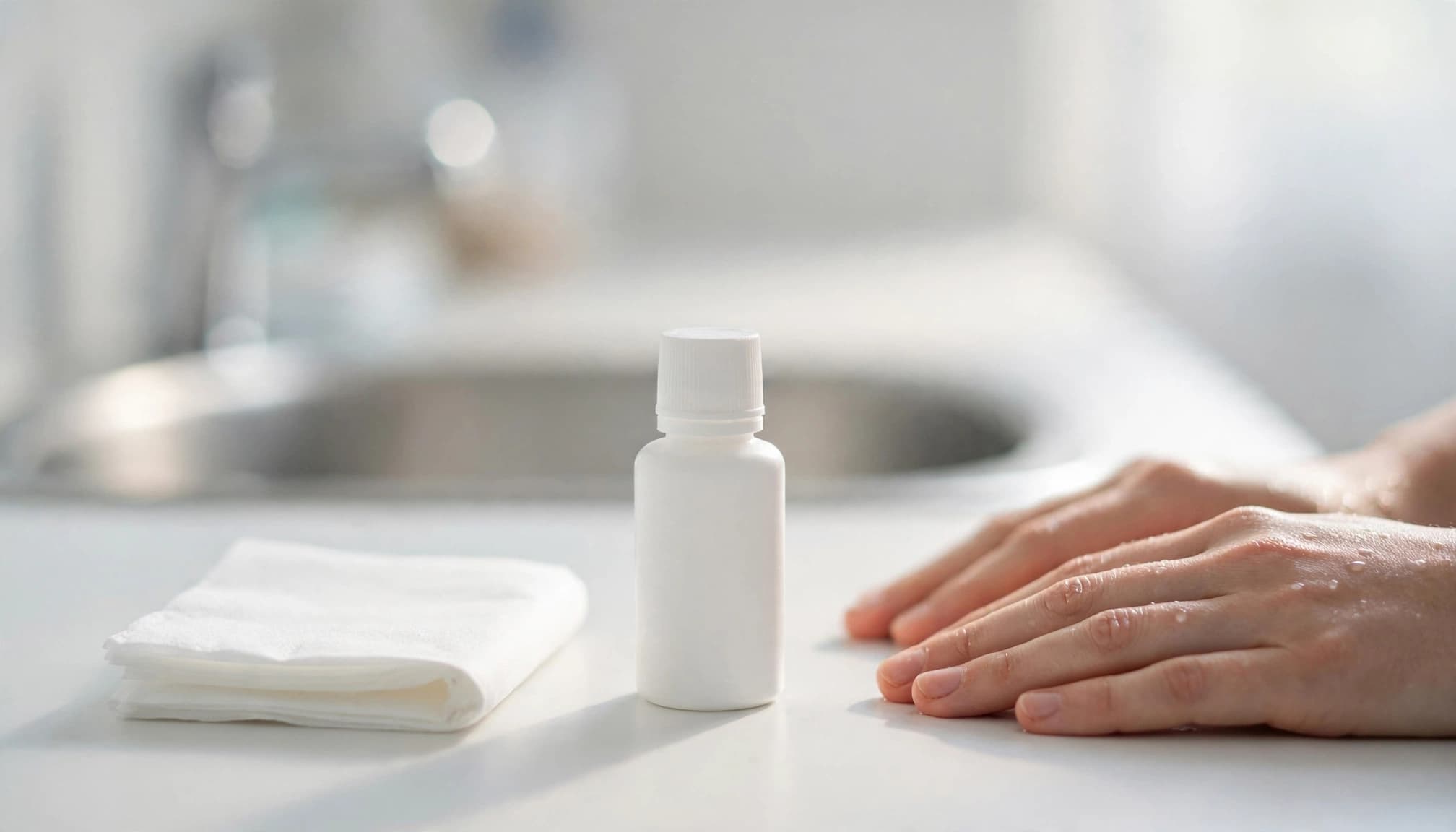
After using eye drops, return the container to its label-approved storage location. Heat, humidity, and splashes make bathrooms, kitchen sinks, and parked cars poor default choices. Refrigerate only if the product requires it.
Record the opening date. Although some products have a 28-day limit, there's no universal discard period. Guy's and St Thomas' dry-eye treatment guidance discusses disposal, but the specific product leaflet takes priority for eye health.
Single-dose containers usually need to be discarded after use. Products such as preservative-free multidose Systane Hydration have their own design and handling instructions. Preservative-free eye drops aren't automatically single-use.
If the tip touches an eye, finger, or surface, stop using that container and ask a pharmacist or eye-care professional whether replacement is necessary. Wiping the nozzle with a tissue, rinsing it, or applying alcohol doesn't reliably restore sterility.
A dropped cap also deserves attention. Its inner surface can transfer contamination back to the nozzle, even when the container stayed upright.
Managing Flinching and Overflowing Drops
A stable position reduces the blink response
The sight of eye drops approaching the eye can trigger an automatic blink. Looking upward while aiming into the lower-lid pocket helps keep your attention away from the nozzle.
Lying down may feel easier than standing at a mirror. Resting the bottle-holding hand against your forehead can also reduce movement, as long as the tip stays clear of your skin.
If you continue to have difficulty, ask an eye doctor, pharmacist, or other eye-care professional to demonstrate the technique. Arthritis, tremor, and limited vision can make standard bottles difficult to handle. A caregiver or suitable administration aid may help after instruction.
Drainage doesn't always mean the dose failed
The eye holds only a small volume of fluid, so some overflow is common. Repeated drops can increase spillover and wash out medicine already in the eye.
If a drop clearly misses the eye entirely, follow the product instructions or ask a professional whether to try again. If you're unsure whether the drop went in, don't repeat it unless the instructions or a professional advise you to.
Tears drain through openings near the inner corner of the eyelids into the nose. This explains the bitter taste some medicines cause. NHS chloramphenicol administration instructions recommend gentle pressure at the inner corner after dosing. Check product-specific guidance to see whether this technique is appropriate.
Choosing the Right Type of Eye Drop
Lubricants support the tear film
Artificial tears moisten the eye's surface and reduce friction during blinking. Common ingredients include carmellose, polyethylene glycol, and sodium hyaluronate, a form of hyaluronic acid. Hyaluronic acid binds water, helping the tear film retain moisture.
Preservative free eye drops are often appropriate for sensitive eyes, moderate-to-severe dry eyes, or frequent dosing. Products such as Systane Ultra single-use lubricant vials illustrate one packaging option. Whether a formula containing hyaluronic acid is right for you depends on symptoms and clinician guidance.
Lubricants don't address every cause of dryness. Eyelid inflammation or poor oil-gland function may require additional care to support eye health, such as clinician-directed lid care or warm compresses. These approaches may be part of treatment.
Redness relief and prescription treatment have different roles
Traditional "get the red out" products constrict surface blood vessels. They don't correct an unstable tear film, and prolonged use can cause rebound red eyes. The AAO's guidance on bloodshot eyes cautions against extended use of these decongestant products.
Prescription medicines work in different ways. Antibiotics target susceptible bacteria; corticosteroids suppress inflammation; glaucoma medicines lower pressure through effects on fluid production or drainage.
These medicines aren't interchangeable. Steroid formulations require clinician supervision because they can raise eye pressure and worsen certain infections. Persistent burning eyes, eye irritation, or blurry vision warrants a diagnosis before changing treatment.
Accessing Eye Drops Affordably and Safely
Costs for eye drops depend on formulation, pack size, prescription status, and country. A larger multidose bottle may cost less per usable dose than individual vials, but use frequency and discard limits affect the comparison.
For example, Tears Naturale artificial tears come in a 15 mL bottle. Bottle volume alone doesn't account for ingredients, tolerability, or how much remains by the discard date, all relevant to eye health.
Local pickup can avoid delivery charges. International sourcing may add shipping, import restrictions, or delays. Prices in the USA, UK, and Australia should be compared using the same formulation and total delivered cost.
For purchases through an Online Pharmacy, check prescription requirements, pharmacist access, intact packaging, expiry dates, and destination-country rules. Online medicine home delivery should support continuity of treatment; a lower advertised price doesn't justify an uncertain supply.
Confirm availability, delivery timing, and storage requirements before your existing prescription supply runs out.
Frequently Asked Questions
What happens if the bottle tip touches an eyelash?
Eyelashes carry microorganisms, so contact can contaminate the nozzle. Stop using the eye drops and set the bottle aside while a pharmacist or eye-care professional advises on replacement. Rinsing with water, wiping with a tissue, or using alcohol doesn't reliably make the tip sterile again.
Why do eye drops run down the cheek?
A drop can exceed the eye's available capacity, especially when several drops arrive together. Poor aim or tight eyelid squeezing also encourages overflow. A lower-lid pocket and gentle closure reduce waste. Some spillover is normal and doesn't automatically mean that the medicine missed the eye.
Can an eye bath replace eye drops?
An eye bath is intended for cleansing or flushing with an appropriate sterile eyewash. It doesn't replace artificial tears or prescribed medication. Homemade mixtures and reused cups introduce contamination concerns. Difficulty administering drops calls for a technique review or assistance, not an improvised substitute.
Are preservative-free drops always safer?
They avoid preservatives that can cause eye irritation, particularly with frequent use. However, they still require clean handling and correct disposal. Preserved drops remain suitable for many patients. Symptoms, dosing frequency, contact-lens use, and the particular formulation determine the most appropriate choice.
Which symptoms need urgent assessment?
Severe pain, blurry vision, marked redness, light sensitivity, or discharge require prompt medical assessment. A painful red eye in a contact-lens wearer deserves urgent attention. These symptoms shouldn't be managed simply by adding artificial tears or continuing a bottle suspected of contamination.
A Clean Tip Protects Every Dose
Safe use of eye drops depends on a repeatable routine: clean hands, a stable position, a lower-lid pocket, and a nozzle that touches nothing. Correct storage and product-specific discard dates help protect eye health and keep later doses safe.
The key distinction is between a container that still holds liquid and one that remains suitable for use. Remaining volume alone can't establish sterility, medicine quality, or safety.