
Kidney Disease Medication Doses: What Needs Review

Your kidney function can affect how some medicines are cleared, even when your dose hasn't changed. As renal function declines, some medicines may stay in your body longer and raise toxicity risk. Medication safety depends on current results and the specific medicine.
Reviewing kidney disease medication doses means checking current test results and the exact product label with a clinician or pharmacist. Bring your prescriptions and over-the-counter products, and mention recent illness or treatment changes. They may reduce a dose, lengthen the interval, or choose another medicine; don't change or stop a prescription on your own. The first distinction is between stable chronic kidney disease and a sudden loss of kidney function.
Table of Contents
- Key takeaways
- How medication doses change
- Kidney tests and dosing equations
- Medicines needing closer review
- When reassessment is needed
- The medication review
- Affordable and safe access
- Frequently asked questions
- Conclusion
Key Takeaways
- Dosing is individualized to the medicine, current kidney results, and clinical circumstances. No single adjustment rule fits every prescription or ensures medication safety.
- Recent dehydration, hospitalization, or new symptoms can make an established regimen unsafe.
- Lower doses aren't always appropriate. Some kidney-protective treatments need closer monitoring rather than automatic withdrawal.
This information is for educational purposes only. Consult a licensed healthcare provider before changing any prescription medicine.
How Kidney Disease Medication Doses Change
The kidneys remove many drugs and their breakdown products through urine. With renal impairment, reduced renal function can cause repeated doses to produce higher blood concentrations. Depending on the medicine and patient, this may call for dosing adjustments and can increase bleeding, low blood sugar, sedation, or other adverse effects.
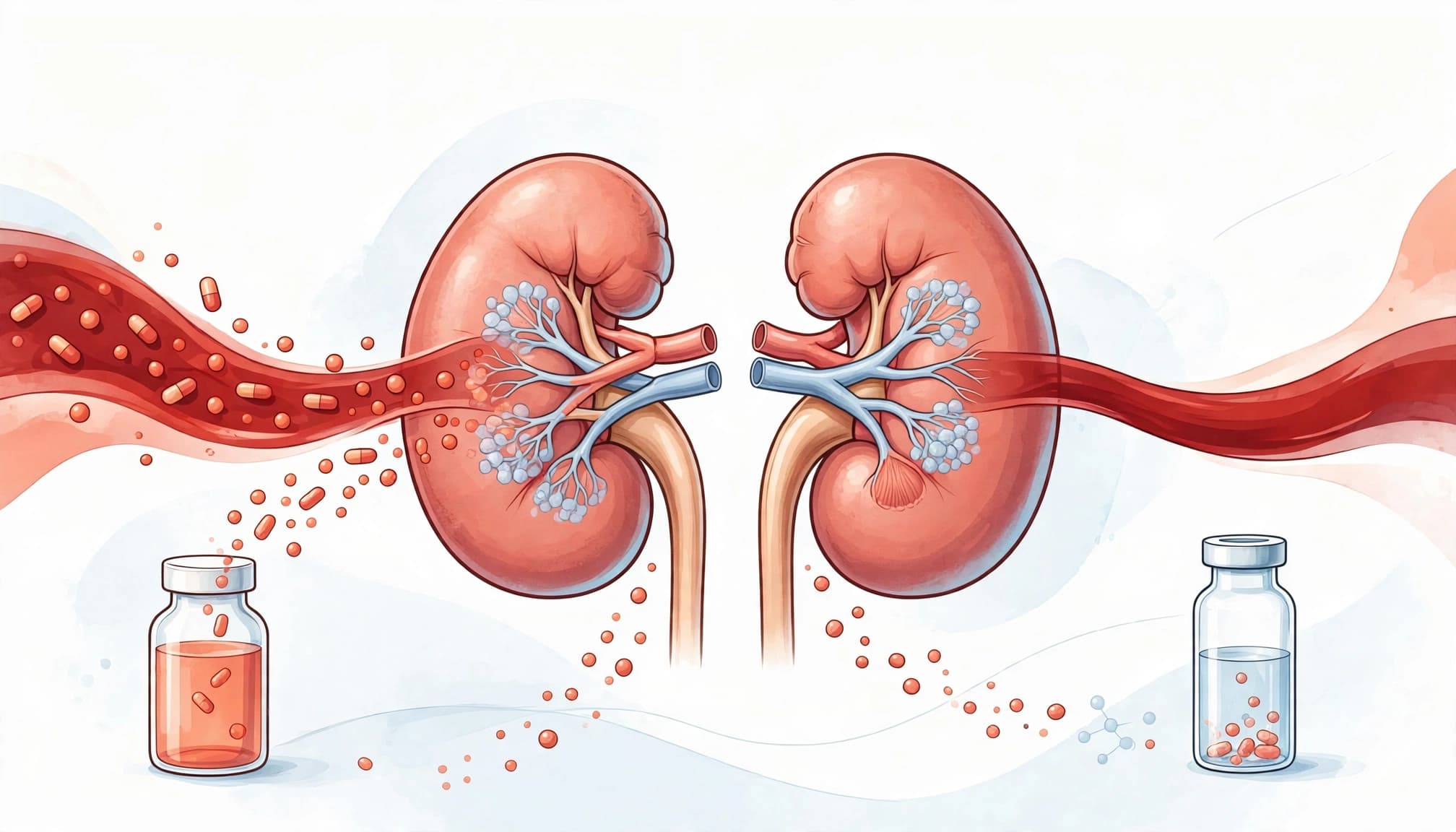
A medicine can accumulate without directly damaging the kidneys. Drug clearance and kidney toxicity are separate questions during a prescription review.
Clinicians may prescribe a smaller amount at each dose or leave more time between doses. Some medicines require an alternative because reducing the dose won't adequately address their risks.
However, kidney disease alone doesn't justify reducing every treatment. The decision also depends on the indication, formulation, interactions, and treatment response. Older adults need particular attention because low muscle mass can make creatinine-based estimates misleading.
Which Kidney Tests Guide Dosing?
eGFR and urine albumin answer different questions
Serum creatinine helps estimate kidney filtration, reported as the estimated glomerular filtration rate (eGFR). Laboratories usually report eGFR in mL/min/1.73 m², adjusted for a standard body size.
Urine albumin-to-creatinine ratio, or UACR, measures albumin leakage into urine and can help identify kidney damage. As NIDDK's kidney testing guidance explains, filtration and UACR provide different information about kidney health.
UACR helps identify damage, but it doesn't replace the kidney-function estimate needed for dosing. Persistent abnormalities, rather than one isolated result, establish chronic kidney disease.
Bring the dates and results of recent kidney tests to a medication review.
Why dosing equations differ
These estimates aren't interchangeable:
| Estimate | What it estimates | Dosing consideration |
|---|---|---|
| Cockcroft-Gault | Creatinine clearance, usually in mL/min | The Cockcroft-Gault equation uses age, weight, serum creatinine, and sex |
| MDRD | Body-size-indexed eGFR | Appears in older laboratory reports |
| CKD-EPI | eGFR, using creatinine or combined creatinine and cystatin C | Current race-free equations offer updated estimates |
The prescribing information determines whether clinicians should use eGFR or creatinine clearance. Body size also matters when converting indexed eGFR into an absolute estimate.
NIDDK's drug-dosing guidance recommends considering combined creatinine-cystatin C estimates near dosing cutoffs or when creatinine may mislead. Standard estimates may be less reliable when kidney function is changing rapidly.
Which Medicines Need Closer Review?
Metformin and gabapentin
Metformin reduces liver glucose production and helps manage type 2 diabetes mellitus. Because the kidneys eliminate it, impaired clearance increases the risk of metformin-associated lactic acidosis, a rare but serious complication.
The metformin prescribing information contraindicates treatment below an eGFR of 30 mL/min/1.73 m². Starting it between 30 and 45 isn't recommended. If an existing patient's eGFR falls below 45, only the prescriber should reassess the metformin prescription and that patient's benefits and risks.
Gabapentin, used for certain seizure disorders and nerve pain, also requires renal dose adjustment. Its dosing guidance uses creatinine-clearance categories and includes separate considerations for hemodialysis. Accumulation can cause excessive sleepiness or confusion.
These examples show why kidney disease medication doses require product-specific review rather than a shared percentage reduction.
Blood pressure treatment and interacting medicines
ACE inhibitors lower blood pressure by reducing angiotensin II production. They can protect the kidneys in appropriate patients, especially those with albuminuria, while also supporting cardiovascular risk management. However, they can raise potassium and change creatinine levels, so blood pressure medications may need monitoring rather than automatic withdrawal.
Diuretic therapy increases sodium and water excretion. Its review includes blood pressure, fluid status, and electrolytes.
Nonsteroidal anti-inflammatory drugs, or NSAIDs, can impair kidney blood flow. Over-the-counter NSAIDs such as ibuprofen or naproxen should be disclosed. Combining an NSAID with an ACE inhibitor and a diuretic raises concern, particularly during dehydration.
Potassium supplements and potassium-containing salt substitutes should also be included in the medication review. Dietary potassium restrictions require individual assessment; blanket restrictions aren't appropriate for everyone.
When Does a Dose Need Reassessment?
Stable CKD versus sudden change
For stable chronic kidney disease, a recent result is more useful than an old CKD stage when illness may have changed kidney function. Vomiting, diarrhea, infection, or poor intake can cause dehydration and acute kidney injury.
Clinicians should reassess medicines after hospitalization, a substantial laboratory change, or treatment initiation. During rapid change, kidney-function estimates may not accurately reflect current clearance.
The KDIGO 2024 CKD guideline supports kidney function monitoring with eGFR, electrolytes, and medication levels when indicated. Testing intervals depend on the medicine and clinical circumstances, in line with clinical practice guidelines.
A written illness plan should explain any temporary medicine holds and when to restart them. The care team should individualize these instructions. Without clear restart criteria, a short interruption can become an unintended long-term discontinuation.
Blood pressure and treatment response
Resistant hypertension means blood pressure remains above goal despite three appropriately dosed medicines, generally including a diuretic. It also includes controlled pressure requiring four or more agents.
Before adjusting antihypertensive treatment, clinicians should confirm adherence and rule out the white-coat effect with home or ambulatory readings. The American Heart Association's resistant hypertension statement emphasizes both checks.
Kidney disease and difficult-to-control hypertension commonly coexist. Hypertension management should consider readings over time and symptoms, not just one high clinic reading, especially when dizziness or low readings occur elsewhere.
What Should a Medication Review Contain?
The complete medication record
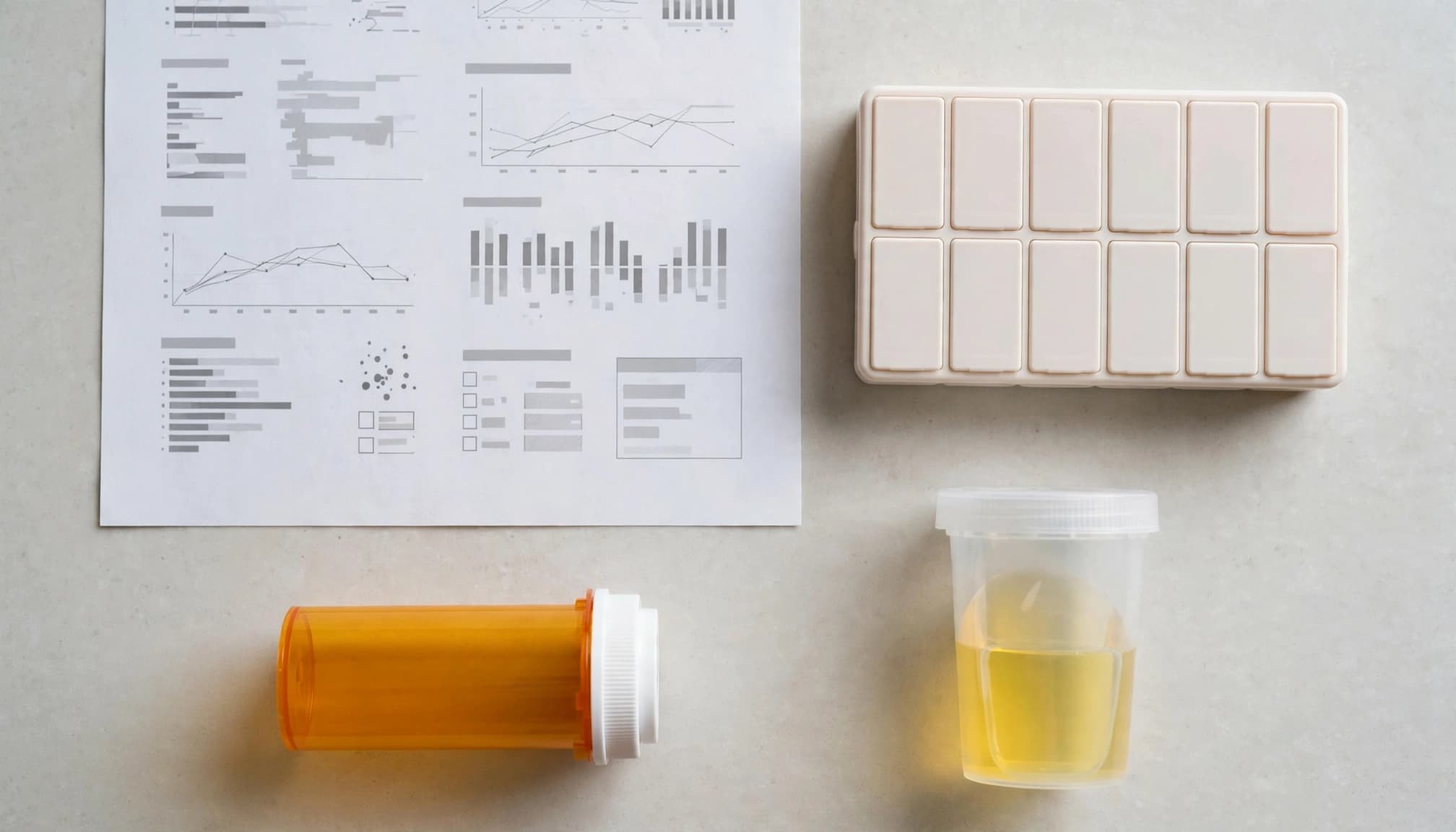
A useful review compares the prescribed regimen with what the patient actually takes. The record should include strengths, formulations, schedules, allergies, supplements, and non-prescription products.
An accurate medication list also identifies recent changes and each prescriber. Combination tablets need particular care because one tablet contains multiple active ingredients.
For medication safety, tell the pharmacist about over-the-counter NSAIDs, antacids, laxatives, cold remedies, supplements, and herbal products. Check active ingredients with a pharmacist instead of assuming a product is safe for you.
Caregivers should record missed doses, swallowing problems, and refill gaps. These details can distinguish an unsuitable dose from inconsistent access or administration.
Tests, symptoms, and the next prescription
The review should include dated kidney results, potassium measurements when relevant, blood pressure records, and recent illness. Contact a clinician promptly about new confusion, marked sleepiness, fainting, unusual bleeding, or substantially reduced urine.
Severe breathing difficulty or swelling of the face or throat requires emergency care.
A pharmacist-led medication review can identify discrepancies and questions for the prescriber. Ask which kidney result and date informed the plan, whether any prescription or over-the-counter product needs review, and what monitoring is needed.
Ask what to do with medicines during illness, including when to restart a medicine that was temporarily held. Don’t hold, change, or restart medicines without instructions from a clinician.
Any dose change should appear on the current prescription and pharmacy record. Otherwise, an automatic refill may repeat an outdated strength or schedule.
How to Access Medicines Affordably and Safely
Medication access affects adherence, but price alone doesn't establish suitability. A cheaper tablet with the wrong strength or release formulation can create a dosing error.
Costs differ across the USA, UK, Australia, and international markets because coverage, subsidies, and dispensing arrangements differ. A meaningful comparison includes the medicine, dispensing charges, shipping, and any monitoring appointments. No single international price applies to all patients.
Online medicine home delivery can help people with mobility limitations or limited local access. However, cross-border sourcing adds questions about prescription acceptance, product approval, import rules, and supply continuity.
Waldrugmart's prescription and shipping FAQs describe its prescription-verification process. Pharmacy acceptance doesn't itself establish that an imported product is lawful or appropriate in the destination country.
For medicines needing ongoing laboratory review, safe refill planning must allow time for clinical approval. Patients shouldn't ration tablets or change their schedule to offset delivery delays or cost.
Frequently Asked Questions
Does every medicine need a lower dose in kidney disease?
No. Kidney elimination, active breakdown products, the treatment indication, and the product label determine whether adjustment is necessary. Some medicines need smaller doses or longer intervals. Others remain appropriate at their usual dose, although laboratory monitoring or closer assessment of side effects may still be necessary. Review your results with a clinician or pharmacist, and don’t change a prescribed dose yourself.
Can a normal creatinine result rule out dosing problems?
No. Creatinine reflects muscle mass as well as kidney filtration. An older adult with little muscle may have a reassuring-looking creatinine result despite reduced clearance. Clinicians interpret eGFR alongside the patient’s circumstances and may request cystatin C when greater accuracy could change a prescribing decision. Review your results with your clinician or pharmacist.
Can dialysis patients use standard renal dose schedules?
Dialysis needs separate assessment. Different dialysis methods remove different amounts of medicine, and some treatments require doses timed around dialysis or supplemental doses afterward. A schedule intended for someone with advanced CKD who isn’t receiving dialysis may therefore be unsuitable. The dialysis team should coordinate prescribing, and patients shouldn’t change doses themselves.
Which over-the-counter medicines and supplements should I disclose?
Tell your clinician or pharmacist about all medicines and supplements, including pain relievers such as ibuprofen or naproxen, vitamins, antacids, and herbal products. Bring a full product list and your latest results to a review. Don’t stop or change prescribed medicines without guidance.
Which symptoms need prompt or emergency attention?
Contact your clinician promptly about new or worsening symptoms, such as reduced urination, swelling, unusual weakness, or confusion. Seek emergency care for severe breathing trouble, chest pain, fainting, or severe confusion. Don’t adjust your medicine doses while waiting for advice.
Is it safe to order prescription medicine online?
Safety depends on the pharmacy, the product, and the clinical review. A legitimate service verifies the prescription and provides access to qualified pharmacy support. For kidney disease, confirm that the current dose has been approved and that any required laboratory monitoring is complete before dispensing.
What costs should a medication comparison include?
The comparison should cover the exact product, strength, formulation, quantity, dispensing fees, and delivery charges. For international orders, import requirements and possible supply delays also matter. Monitoring remains necessary regardless of purchase price. A lower advertised price doesn’t demonstrate equivalent approval status or clinical suitability.
Conclusion
Safe prescribing in kidney disease depends on current kidney function, the exact medicine, and changes in the patient's condition. Bring your latest kidney results and complete medication list, including over-the-counter products, to a clinician or pharmacist for review. Don't stop or change prescribed medicines without professional advice.
The safest dose preserves treatment benefit while limiting accumulation and adverse effects. That balance requires the prescribing plan, monitoring schedule, and dispensed medicine to remain aligned.