
Rheumatoid Arthritis Medications: DMARDs and Biologics

Rheumatoid arthritis medications control inflammation, relieve symptoms, and help prevent joint damage. Methotrexate is a common first-choice disease-modifying drug for people newly diagnosed with moderate or high disease activity.
RA has no cure, so treatment usually continues throughout life, though prescriptions may change. The goal is remission or low disease activity, with less pain and a lower risk of disability. A clinician helps choose the right medicine based on each person's health and disease activity.
Table of Contents
- Key takeaways
- DMARDs and symptom relief
- How biologics work
- Injection and infusion schedules
- JAK inhibitor pills
- Changing treatment
- Monitoring and pregnancy
- Costs and safe access
- Frequently asked questions
- Conclusion
Key Takeaways
- Early DMARD treatment can slow disease and prevent permanent joint damage; methotrexate is usually the starting medicine.
- Biologics and JAK inhibitors target immune pathways, but their risks, administration and prescribing restrictions differ.
- Safe, affordable treatment depends on regular monitoring, prescription compliance and reliable supply, not the advertised medicine price alone.
How rheumatoid arthritis medications protect joints
Biologics are a type of disease-modifying medicine. JAK inhibitors are targeted synthetic medicines. Both modify disease, unlike painkillers that mainly relieve symptoms.
Why methotrexate usually comes first
Disease-modifying antirheumatic drugs, or DMARDs, reduce immune-driven inflammation that damages joints. Methotrexate has extensive clinical experience behind it and often remains part of treatment when another medicine is added.
For RA, methotrexate is taken once weekly, never daily. Prescribed folic acid helps reduce some side effects.
Other conventional options include hydroxychloroquine (Plaquenil), sulfasalazine and leflunomide. Hydroxychloroquine may suit lower disease activity. Methotrexate, hydroxychloroquine and sulfasalazine can also form a three-drug combination when one medicine is insufficient.
What painkillers and steroids can achieve
NSAIDs such as ibuprofen, naproxen and celecoxib reduce pain and swelling, but they don't prevent underlying joint damage. Kidney disease, stomach bleeding and interactions with blood thinners can limit their suitability.
A flare is a period of increased disease activity, often with worse swelling, stiffness and pain. Clinicians may prescribe low-dose prednisone briefly for severe flares or while a DMARD starts working. Long-term prednisone or other corticosteroid exposure raises risks including bone thinning, infection and diabetes.
How biologic treatments target inflammation
Biologics are manufactured proteins that act on selected parts of the immune system. Most are given by injection or infusion because digestion would break them down.
TNF inhibitors: the common first biologic
Tumor necrosis factor, or TNF, is an inflammatory signaling protein. TNF inhibitors block its activity.
These medicines include Humira (adalimumab), Enbrel (etanercept), Cimzia (certolizumab pegol), Simponi and Simponi Aria (golimumab), and Remicade (infliximab). They are commonly the first biologics prescribed, partly because insurers may require a TNF inhibitor trial before approving another class.
Other immune targets
Actemra (tocilizumab) and Kevzara (sarilumab) block the interleukin-6 receptor. Actemra is available in subcutaneous and intravenous forms; Kevzara is given subcutaneously.
Orencia (abatacept) reduces T-cell activation by blocking a co-stimulation signal. It is available in subcutaneous and intravenous forms.
Rituxan (rituximab) depletes B-cells and is generally used after an inadequate response to a TNF inhibitor or other targeted treatments. Medical history and infection risk, along with conditions such as heart failure, can affect which pathway clinicians choose.
How often injections and infusions are given
Schedules differ even among medicines targeting the same immune pathway.
| Medicine | Route | Typical RA schedule |
|---|---|---|
| Methotrexate | Oral or injection | Once weekly |
| Humira; Enbrel | Under the skin | Every 2 weeks; weekly |
| Cimzia; Simponi | Under the skin | Every 2 or 4 weeks; monthly |
| Remicade | IV infusion | Weeks 0, 2 and 6, then every 8 weeks |
| Simponi Aria | IV infusion | Weeks 0 and 4, then every 8 weeks |
| Actemra | Injection or IV | Weekly or every 2 weeks; IV every 4 weeks |
| Kevzara | Under the skin | Every 2 weeks |
| Orencia | Injection or IV | Weekly; IV every 4 weeks after starter doses |
| Rituxan | IV infusion | Two infusions 2 weeks apart, usually repeated around 6 months |
These are typical schedules, not individualized prescriptions. Loading doses and treatment adjustments can differ. Infusions also require appointment time, while home injections require training and appropriate storage.
JAK inhibitors: oral treatment with boxed warnings
JAK inhibitors block intracellular enzymes involved in inflammatory signaling. Xeljanz (tofacitinib), Rinvoq (upadacitinib) and Olumiant (baricitinib) are targeted synthetic DMARDs, not biologics.
These medicines provide daily oral treatment, although immediate-release Xeljanz is generally taken twice daily. Our explanation of Rinvoq benefits and risks covers upadacitinib in greater detail.
US prescribing information generally reserves these RA treatments for patients who have an inadequate response or intolerance to TNF blockers. Boxed warnings cover serious infections, cancer, cardiovascular events, thrombosis and death, so treatment choices should account for individual risks. The University of Illinois Chicago's review of JAK inhibitor safety explains the evidence behind these warnings.
The FDA approved baricitinib for RA in 2018. The current US dose is 2 mg daily, with reductions for certain kidney impairment. The 4 mg dose raised concerns about deep vein thrombosis.
What happens when the first treatment falls short
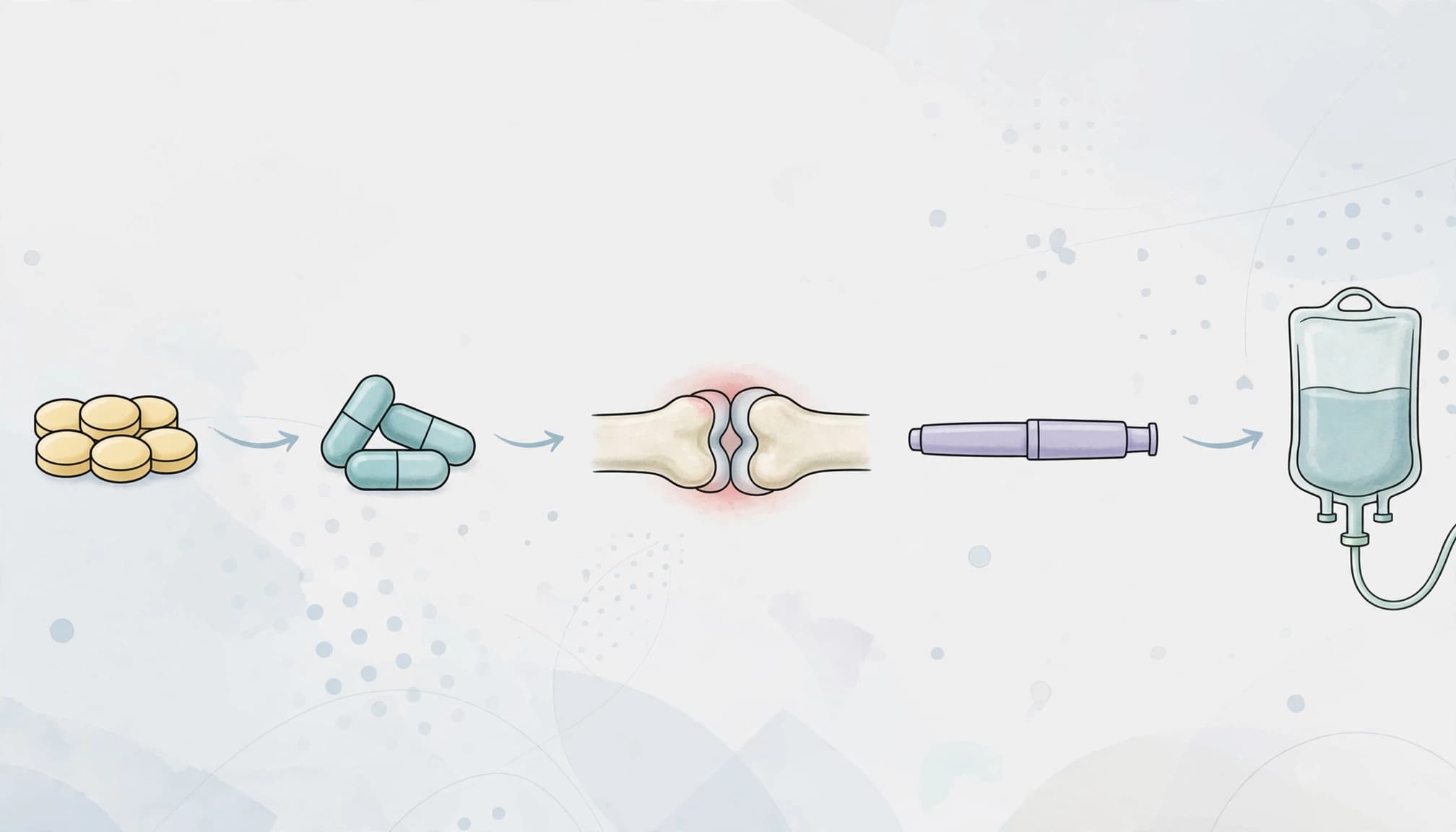
RA care follows a treat-to-target approach: clinicians measure disease activity and adjust treatment until remission or low activity is reached.
When methotrexate isn't enough, clinicians may increase its dose, change tablets to weekly injections, or add another DMARD. The American College of Rheumatology's statement on targeted treatment discusses adding a biologic or targeted synthetic DMARD when methotrexate doesn't achieve the treatment target; current FDA restrictions also guide JAK prescribing.
If a biologic loses effectiveness, switching to another immune target may help. Persistent pain also needs assessment because existing joint damage can hurt even after inflammation improves.
Unacceptable side effects warrant prompt clinical review. Dose changes, supportive measures or a replacement medicine can preserve disease control without continuing a poorly tolerated treatment.
Monitoring treatment and managing risk

Blood tests, infections and interactions
Checkups often occur every 2 to 3 months during treatment adjustment. Stable patients may have clinical reviews every 6 to 12 months, although medication blood tests can remain more frequent.
Assessments include morning stiffness, swollen joints, daily function and risk history, including prior thrombosis. Blood counts, liver enzymes and kidney function help detect toxicity. Declining kidney function can increase exposure to methotrexate, tofacitinib or baricitinib, even when the prescribed dose hasn't changed.
Many biologics and JAK inhibitors require tuberculosis and hepatitis screening. Vaccine review matters because live vaccines are generally avoided during substantial immunosuppression. Hydroxychloroquine requires retinal screening. Alcohol also needs review with medicines that can damage the liver, including methotrexate.
Pregnancy requires a planned treatment review
Methotrexate and leflunomide are unsuitable during pregnancy and require advance planning before conception. Leflunomide may require a drug-elimination procedure. Review any prednisone or other corticosteroid use with the treating specialist before conception.
Stopping all treatment can allow active disease to return. Hydroxychloroquine, sulfasalazine and selected biologics can be pregnancy-compatible under specialist care. The choice depends on the medicine, disease activity and pregnancy stage. Medication changes need coordinated rheumatology and maternity care, not abrupt withdrawal.
How to access RA treatment affordably and safely
Comparing the full cost
Generic conventional DMARDs usually cost less than biologics or JAK inhibitors. Biosimilars can offer lower-cost alternatives to some biologic brands without clinically meaningful differences from their reference products.
At Olumiant's 2018 US launch, Eli Lilly quoted an annual price of $24,930. That historical figure isn't a current cash price or an insured patient's bill.
US out-of-pocket costs depend on coverage, deductibles and assistance eligibility. UK NHS arrangements and Australia's Pharmaceutical Benefits Scheme create different pricing systems, so international advertised prices aren't directly comparable.
Infusion fees, monitoring and travel also affect the cost of rheumatoid arthritis medications.
Prescription fulfillment and delivery
Our Online Pharmacy supports prescription fulfillment through licensed partner pharmacies. International sourcing still depends on destination-country rules; a valid prescription doesn't automatically authorize importing a medicine into the USA.
For products such as prescription Rinvoq tablets, the formulation and strength must match the prescribed treatment. Higher strengths used for other conditions aren't interchangeable with RA dosing.
Safe online medicine home delivery requires appropriate packaging and temperature control when applicable. The total delivery cost to the USA includes shipping as well as the medicine price. Our guidance on safe online pharmacy ordering explains prescription requirements, pharmacist access and delivery safeguards.
Frequently Asked Questions
How long do rheumatoid arthritis medications take to work?
Conventional DMARDs usually need several weeks to show improvement, and full benefit may take months. Some biologics and JAK inhibitors act sooner, but responses vary. Clinicians assess symptoms, examination findings and laboratory results together before deciding whether treatment has had an adequate trial.
Are JAK inhibitor pills safer than biologic injections?
Pill form alone doesn't make JAK inhibitors safer. Tofacitinib can increase infection risk, and boxed warnings include cardiovascular events, cancer and thrombosis. A published review of JAK warnings explains how age, smoking and cardiovascular risk affect treatment decisions.
Can treatment stop after remission?
Sustained remission may allow carefully supervised dose reduction, but stopping treatment can trigger a flare. Rheumatoid arthritis has no cure, and symptom improvement doesn't prove the disease has disappeared. Clinicians usually consider tapering only after sustained control and continue monitoring for returning inflammation.
Do online pharmacies require prescriptions for RA medicines?
Legitimate dispensing requires a valid prescription for DMARDs, biologics and JAK inhibitors. Pharmacist review also matters because kidney function, interactions and previous treatment affect suitability. A low advertised price doesn't establish product authenticity, appropriate dosing, lawful importation or safe transport for temperature-sensitive medicines.
What is the least expensive RA treatment option?
Generic conventional DMARDs are usually the lowest-cost disease-modifying options, but clinical suitability determines the prescription. For biologics, biosimilars and insurance-preferred products may reduce spending. The least expensive acceptable plan accounts for disease control, laboratory monitoring, administration costs and reliable supply rather than tablet price alone.
Conclusion: Disease control and reliable treatment access
Treatment works best when early disease-modifying treatment accompanies regular reassessment. Long-term care balances joint protection against medication risks and the practical burden of treatment.
This information is for educational purposes only. Consult a licensed healthcare provider before starting, stopping or changing treatment; our pharmacy support team can address prescription-fulfillment questions.
The lasting measure of treatment is sustained control without avoidable toxicity or interruptions in supply.