
Targeted Therapy Blood Tests: What They Monitor
Written by: Waldrugmart Editorial Team
Reviewed by: Navdeep Singh, B.Pharm — Registered Pharmacist
Last reviewed:
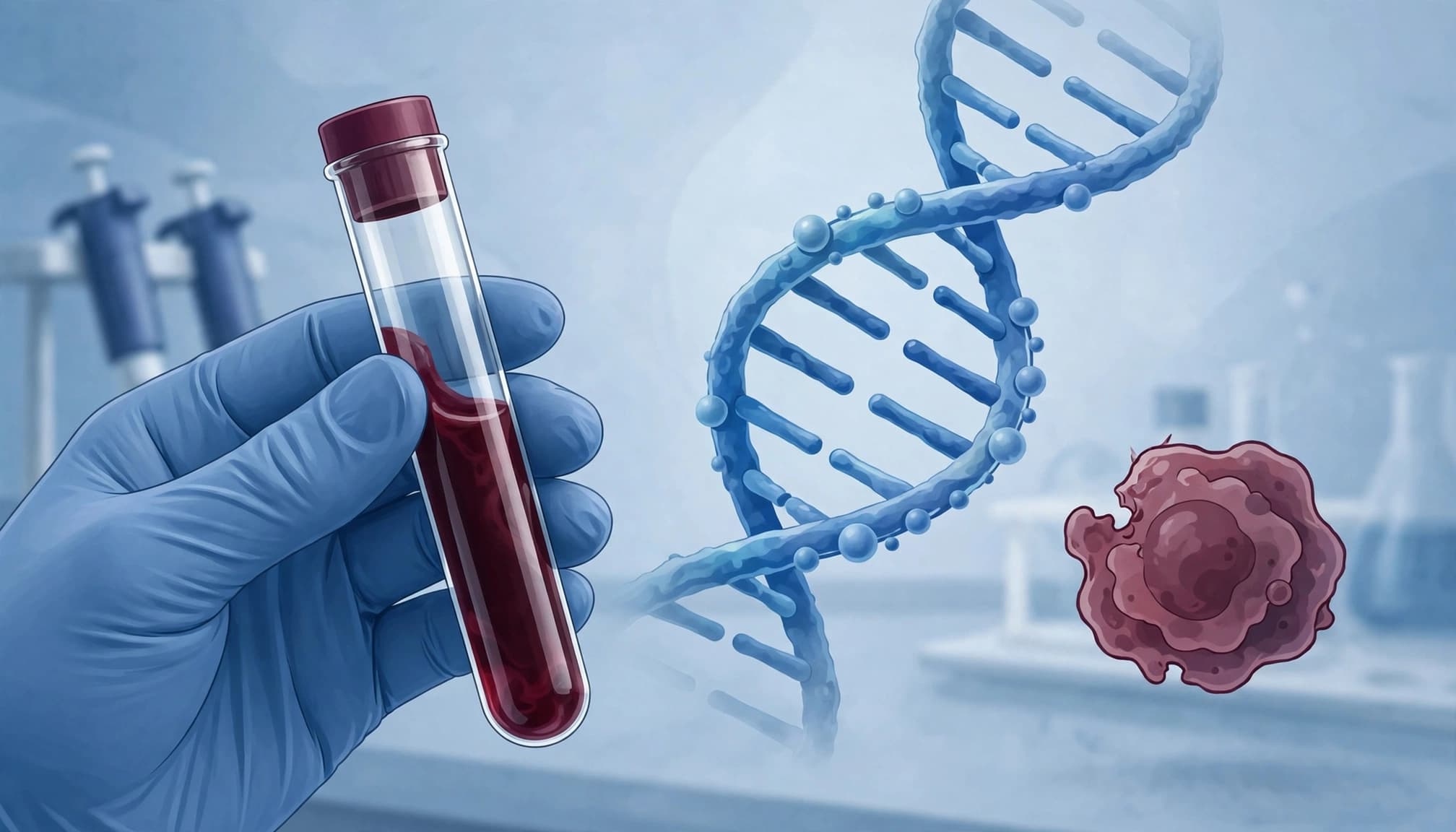
Routine laboratory monitoring for targeted therapy assesses blood-cell counts and organ function, while selected tests examine tumor-related genetic changes. Together, they help identify suitable medicines, detect side effects, and assess treatment response or drug resistance.
These tests answer different clinical questions. A normal blood count doesn't prove that treatment is working, and finding a mutation doesn't guarantee that a particular drug will help.
The distinction starts with routine safety monitoring versus tests that examine the cancer itself.
Table of Contents
Key takeaways | Routine monitoring | Matching biomarkers to medicines | Blood versus tissue testing | Testing schedules | Affordable access | Frequently asked questions | Conclusion
Key Takeaways
- Routine safety panels assess treatment risks; molecular tests examine cancer-related changes.
- A negative liquid biopsy doesn't exclude a targetable mutation.
- Testing schedules depend on the medicine, cancer type, and previous results.
- Home delivery of prescription medicine doesn't replace oncology supervision or laboratory monitoring.
What Do Targeted Therapy Blood Tests Monitor?
There isn't one universal monitoring panel. Clinicians select tests based on the medicine's prescribing information and the patient's health.
Blood counts and organ function
Routine laboratory monitoring can identify side effects or other complications that may require treatment changes, sometimes before symptoms appear.
The main categories answer different safety questions.
| Blood test | What it measures | Why it matters |
|---|---|---|
| Complete blood count | White cells, hemoglobin, platelets | Detects infection risk, anemia, or bleeding risk |
| Liver tests | ALT, AST, bilirubin | Identifies possible liver injury |
| Kidney tests | Creatinine and estimated filtration rate | Assesses kidney function and treatment suitability |
| Chemistry tests | Electrolytes, sometimes glucose or lipids | Detects drug-specific metabolic problems |
An abnormal result doesn't automatically mean treatment must stop. Clinicians consider its severity, previous results, symptoms, and other possible causes.
Unlike tacrolimus or lithium monitoring, most targeted-treatment safety tests don't measure the drug's concentration. Drug-level testing has selected uses rather than a universal role.
Tumor activity and treatment response
Molecular tests can measure cancer-associated DNA or other markers. In chronic myeloid leukemia, for example, quantitative BCR::ABL1 testing tracks molecular response.
However, blood results don't replace imaging, examination, or symptom assessment. Fever, unusual bleeding, severe diarrhea, or new breathing problems warrant prompt clinical assessment, even after reassuring laboratory results.
Our guidance on oral cancer medication safety also covers handling and symptom reporting between appointments.
How Do Biomarkers Identify a Suitable Medicine?
Targeted therapies interfere with proteins or pathways that cancer depends on. These targeted cancer drugs act on specific cancer-related targets. Most are small-molecule drugs, usually pills or capsules, or monoclonal antibodies, usually given through a vein. Monoclonal antibodies can bind specific proteins on or around cancer cells.
This targeted therapy approach differs from chemotherapy, which can affect a broader range of dividing cells. Immunotherapy helps the immune system recognize or attack cancer, so it works differently from targeted treatment.
Most tumors need biomarker testing before clinicians select a biomarker-matched targeted drug. Testing may examine DNA, RNA, or protein expression to guide precision medicine and precision oncology.
The FDA defines companion diagnostics as tests providing information essential for the safe and effective use of a corresponding therapeutic product.
Established examples show how a cancer feature can guide treatment.
| Biomarker | Cancer example | Associated targeted medicine |
|---|---|---|
| HER2 overexpression or amplification | Breast cancer | Trastuzumab |
| Certain EGFR mutations | Non-small cell lung cancer | Gefitinib or erlotinib |
| BRAF V600 mutation | Melanoma | Vemurafenib |
| KRAS G12C mutations | Non-small cell lung cancer | Sotorasib or adagrasib |
| BCR::ABL1 fusion | Chronic myeloid leukemia | Imatinib, a tyrosine kinase inhibitor |
These associations don't establish which medicine is preferred for every patient. Newer regimens, previous treatment, and the exact alteration also matter. HER2 testing, for example, commonly evaluates tumor tissue rather than a routine blood sample.
Some narrowly focused assays test only common cancer changes. Broader sequencing panels examine more alterations, but no test detects every possible cancer change.
Finding a target also doesn't guarantee benefit. Cancer cells can depend on several growth pathways, and different tumor deposits may contain different alterations. Treatment decisions combine laboratory findings with the cancer diagnosis and the drug's approved indication. If an appropriate approved option is unavailable or evidence is limited, clinicians may consider clinical trials.
How Does Blood Testing Compare With Tissue Biopsy?
A liquid biopsy searches blood for cancer-related material, including circulating tumor DNA, or ctDNA. Tumors release these DNA fragments into the bloodstream.
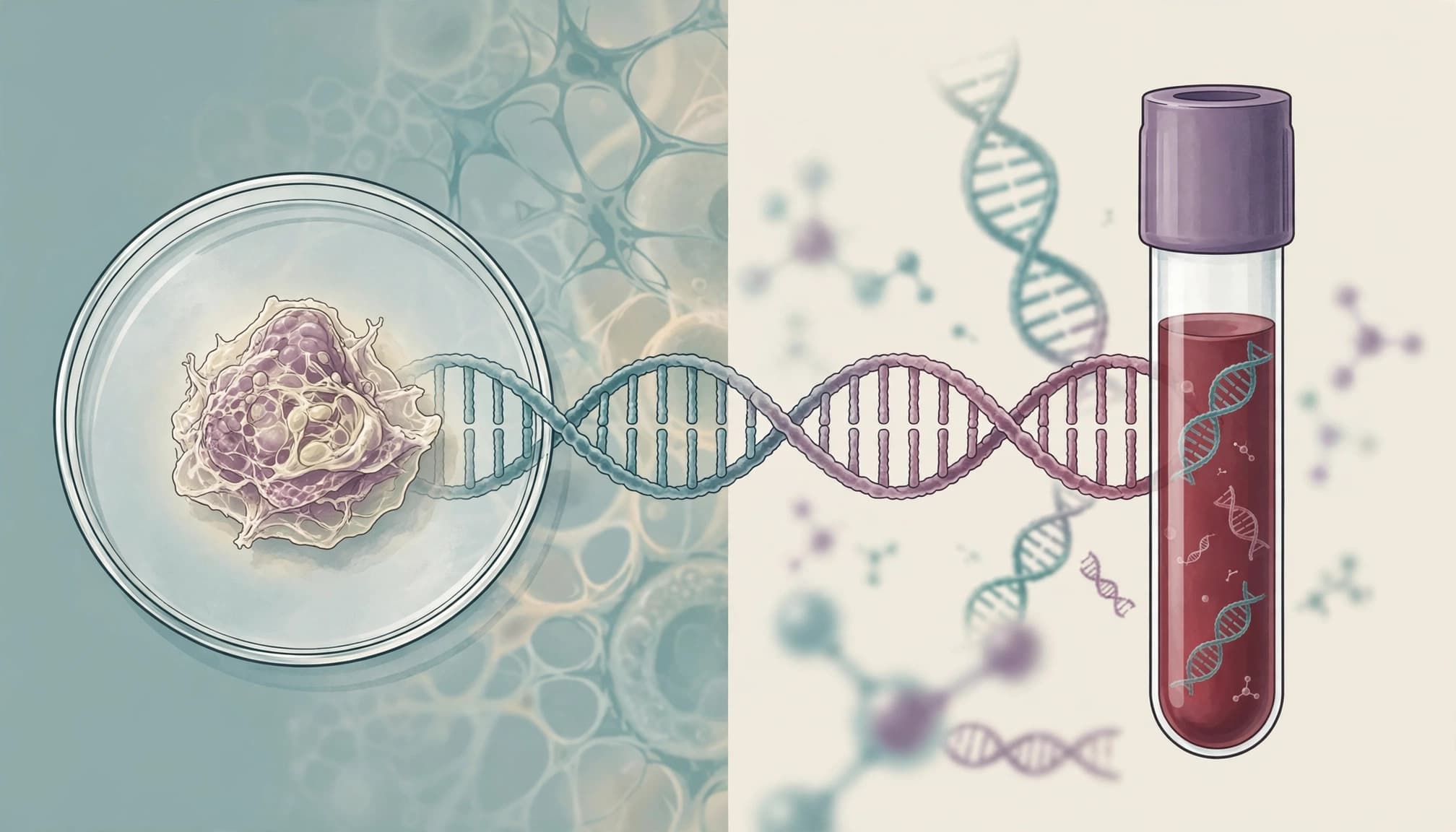
Tissue establishes the diagnosis
Tissue sampling generally remains necessary for the initial diagnosis of a solid tumor. Pathologists examine cell appearance and tissue structure, information that DNA sequencing alone cannot provide.
Procedure risks depend on the tumor's size and location, the sampling method, and the patient's condition. Bleeding and infection are possible complications.
However, blood cancers follow different diagnostic pathways. Blood and bone marrow testing can establish diagnoses and identify treatment targets.
Blood allows repeated molecular assessment
Blood draws cause relatively little discomfort and can sample tumor DNA shed by different tumor deposits. However, small tumors and some cancer sites release little detectable DNA.
There isn't one sensitivity figure that applies to every liquid biopsy. Performance depends on the assay, cancer type, disease burden, and alteration.
MSK-IMPACT primarily profiles tumor tissue, whereas MSK-ACCESS analyzes circulating DNA in blood. Guardant360 CDx and FoundationOne Liquid CDx also have authorized treatment-selection uses.
The NCI's biomarker-testing guidance distinguishes tumor profiling from genetic tests for inherited risk. Some actionable changes are inherited and detectable in normal blood cells; others arose only in the tumor. Inherited findings can affect relatives and may require genetic testing and counseling.
When Are Tests Ordered or Repeated?
Testing follows the treatment decision. Baseline safety tests, initial biomarker profiling, and later resistance testing have different schedules.
Diagnosis and first treatment
Targeted therapy can be a first-line treatment, including for certain leukemias. It can also treat selected early-stage or advanced solid tumors.
The Philadelphia chromosome creates BCR::ABL1, which produces an abnormal growth-driving protein. It occurs in about one-quarter of adult acute lymphoblastic leukemia cases and characterizes CML. Tyrosine kinase inhibitors are standard initial CML treatment.
CLL is different: BTK inhibitors are common first-line options, but treatment doesn't depend on the Philadelphia chromosome.
NPM1 mutations occur in about one-third of adult AML cases. NPM1 isn't a tyrosine kinase, so this finding alone doesn't justify a TKI.
During treatment and progression
Safety testing starts before treatment and continues at drug-specific intervals. Early treatment, dose changes, or abnormal findings may require closer monitoring.
Tumor profiling often begins once. When cancer progresses or drug resistance develops, clinicians may repeat profiling to identify acquired resistance. They may change medicines, combine treatments, or consider a suitable clinical trial based on the findings and the patient's situation.
Our pharmacist consultation service can address medicine-use questions, while the oncology team directs testing and treatment changes.
How Can Targeted Treatment Be Accessed Affordably?
There isn't one meaningful price for targeted therapy blood tests. Routine laboratory panels and broad genomic sequencing are different services, with costs determined by the assay, laboratory, and insurance coverage.
The American Cancer Society explains biomarker testing and coverage, including differences among insurance arrangements. California requires medically necessary biomarker-testing coverage through Medi-Cal and state-regulated private coverage under applicable criteria.
Medication costs also vary across the USA, Australia, and UK because reimbursement systems, generic availability, and eligibility differ. An overseas advertised price doesn't include every possible expense.
A useful comparison includes the prescribed formulation, delivery charges, monitoring, and lawful supply. Our guide to comparing prescription prices safely discusses these distinctions.
Global sourcing requires prescription compliance, licensed dispensing, traceable products, and appropriate storage. International shipping doesn't establish regulatory approval or make personal importation automatically lawful.
Affordability also depends on continuity: a cheaper supply loses value if delays interrupt treatment or separate dispensing from the monitoring plan.
This information is for educational purposes only. Consult a licensed healthcare provider about treatment suitability, substitutions, or abnormal results.
Frequently Asked Questions
Can blood tests detect cancer before a CT scan?
Sometimes, molecular evidence appears before a tumor becomes visible on imaging. UC Davis reported a bladder-origin urothelial cancer case detected through circulating DNA at least 18 months before conventional CT diagnosis during prostate-cancer surveillance. That individual case doesn't establish a typical detection interval or prove routine screening benefit.
Does a negative genetic blood test rule out a targetable mutation?
No. A tumor may release too little DNA, or the assay may not cover the relevant alteration. The NCI describes false-negative liquid biopsy results and the potential need for tissue testing. A negative result requires interpretation alongside the diagnosis, specimen quality, and available tissue.
Is there one specific blood test for cancer?
No single laboratory assay reliably diagnoses every cancer. Blood counts, tumor markers, molecular profiling, and multi-cancer detection tests answer different questions. Multi-cancer screening products aren't interchangeable with companion diagnostics, and abnormal screening results generally require further investigation before clinicians establish a diagnosis.
How long do results take, and must every patient have sequencing?
Routine counts and chemistry results often return the same day, while genomic profiling commonly takes one to several weeks. Not every patient needs broad sequencing. Testing depends on the cancer type and treatment decision; some situations require a focused gene test or tissue protein assessment instead.
Can online medicine delivery replace oncology follow-up?
Home delivery changes how medicine reaches a patient, not its monitoring requirements. Our Online Pharmacy offers prescription review and pharmacist support, but laboratory interpretation and treatment decisions remain with the treating team. Legitimate online dispensing requires a valid prescription and lawful supply arrangements; delivery doesn't replace clinical supervision.
Conclusion: Results Need Clinical Context
Targeted therapy blood tests connect treatment selection with ongoing safety assessment. Their meaning depends on what the assay measures and when clinicians order it.
The strongest interpretation combines laboratory trends with the cancer's biology, imaging, symptoms, and treatment history. A blood sample can provide important evidence, but no single result describes the whole course of cancer treatment.