
Warfarin INR Test: What Results Mean for Treatment

A warfarin INR test helps clinicians assess whether treatment provides enough protection against blood clots while limiting bleeding risks. The target INR range is individualized, though many patients have a target of 2.0 to 3.0.
An out-of-range result should be interpreted alongside symptoms, recent doses, illness, and medication changes. Treatment decisions depend on the patient's prescribed range and pattern of results.
An INR below the prescribed range may provide inadequate protection. An INR above it may increase bleeding risk. Patients shouldn't adjust warfarin without guidance from their anticoagulation clinic.
Table of Contents
- Key takeaways
- What a warfarin INR test measures
- Understanding the target range
- Testing frequency
- Laboratory testing versus home monitoring
- Managing unexpected results
- Food and medication interactions
- Accessing warfarin affordably
- Frequently asked questions
- Conclusion
Key Takeaways
- Your prescribed INR range depends on the reason for treatment.
- Testing is more frequent when treatment starts, medicines change, or results become unstable.
- Home testing requires training and a clear plan for reporting results.
- Consistent vitamin K intake supports stable treatment; avoiding vegetables isn't necessary.
- Serious bleeding symptoms may signal bleeding complications and require emergency assessment, regardless of your latest INR. Your anticoagulation clinic can guide monitoring and follow-up.
What a Warfarin INR Test Measures
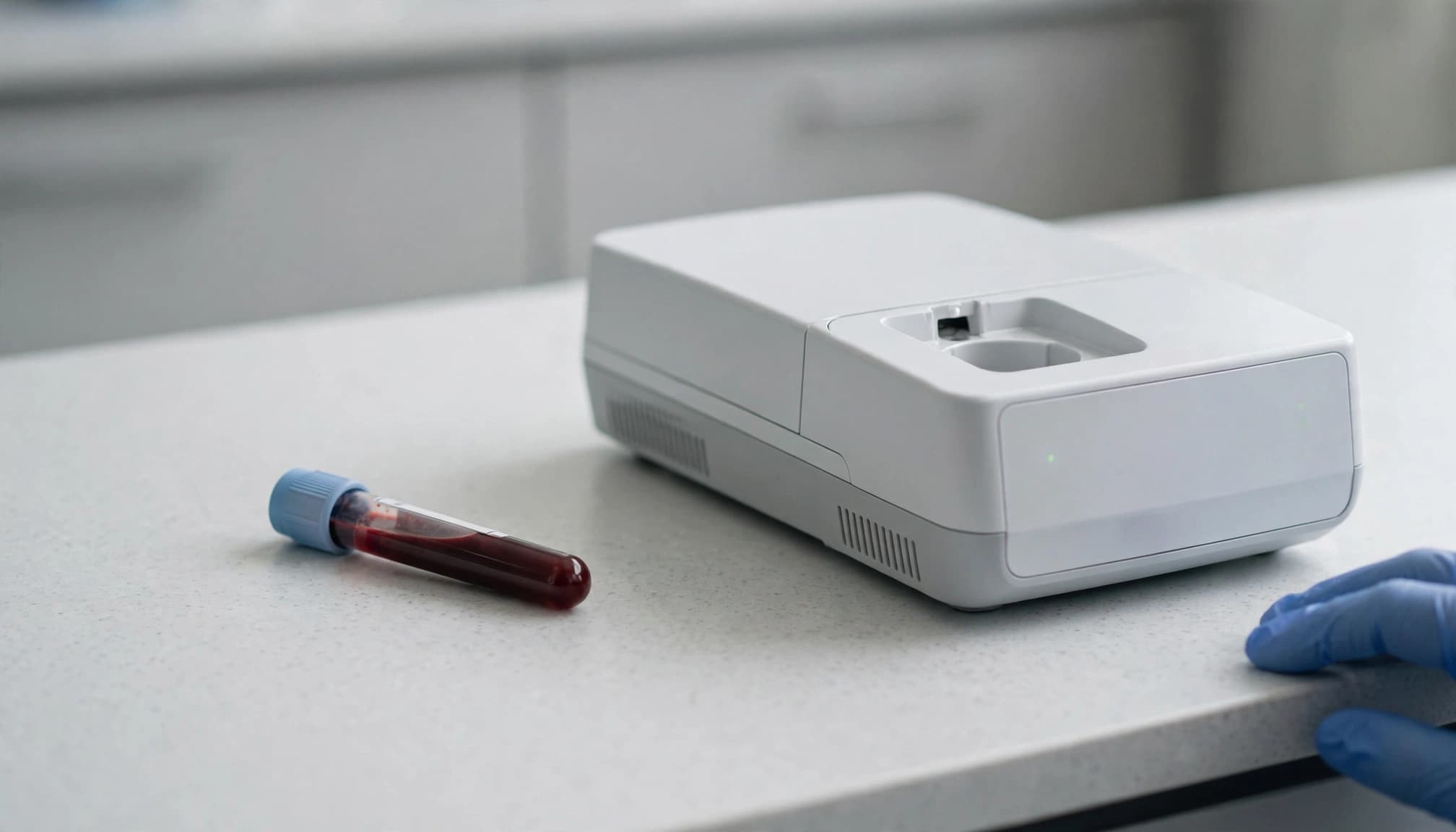
How warfarin changes clotting
Warfarin is an oral anticoagulant, commonly called a blood thinner. It reduces the activity of vitamin K-dependent clotting proteins, slowing the blood clotting process. It doesn't dissolve existing blood clots or physically thin the blood.
Prothrombin time, or PT, measures how long a blood sample takes to clot. The international normalized ratio, or INR, standardizes that measurement so clinicians can compare results across laboratories.
The American Heart Association's warfarin guide explains how blood-test results guide dosing within a prescribed range.
Who needs INR monitoring
Every patient taking warfarin needs monitoring. Common reasons for anticoagulation therapy include atrial fibrillation, deep vein thrombosis, pulmonary embolism, and mechanical heart valves.
The same tablet dose can produce different effects in different people. Illness, diet, liver function, and other medicines can also change its effect over time. Regular testing, often coordinated through an anticoagulation clinic, measures the response to treatment rather than assuming a previously effective dose remains suitable.
Understanding the Target INR Range
For many patients with atrial fibrillation or venous blood clots, the prescribed therapeutic range is 2.0 to 3.0. The documented target INR range depends on the reason for treatment. Mechanical-valve targets vary, so the treating team must specify the correct range.
The result's meaning depends on that documented target.
| INR result | General meaning | Clinical response |
|---|---|---|
| Below the prescribed range | Clot protection may be insufficient | Review doses, possible causes, and follow-up timing |
| Within the prescribed range | Anticoagulant effect meets the treatment target | Continue the clinician-directed plan |
| Above the prescribed range | Bleeding risk may increase | Assess symptoms, causes, and whether treatment needs adjustment |
A slightly abnormal result doesn't automatically require a dose change. Clinicians consider how far it differs from the target, whether previous results were stable, and whether a temporary cause exists.
A series of results provides more information than one measurement. Time in therapeutic range describes how consistently INR stays within the intended limits. It helps clinicians assess longer-term treatment control.
How Often INR Testing Is Needed
Testing is frequent when warfarin begins. FDA labeling calls for daily INR checks after the initial dose until results stabilize. The anticoagulation clinic determines the practical schedule.
For stable treatment, FDA labeling describes monitoring every one to four weeks. Testing may become more frequent after dose adjustments, illness, or medicines that can interact with warfarin.
The NHS warfarin monitoring guidance recommends an INR test three to five days after starting a potentially interacting medicine.
Missed appointments matter because warfarin’s effect can change without obvious symptoms. A refill, recent normal result, or absence of bruising doesn't replace the next scheduled test.
Laboratory Testing Versus Home INR Monitoring
Laboratory testing usually uses blood drawn from a vein. Home self-testing uses a finger prick test and a prescribed meter, such as Coaguchek XS. Remote INR monitoring lets patients send results to the anticoagulation clinic or clinician managing treatment.

Home testing can reduce travel, particularly for patients with mobility limitations or limited access to a laboratory. However, it requires training, reliable supplies, and an agreed clinical follow-up process. The National Blood Clot Alliance's guidance on INR self-testing describes its role in supervised treatment.
A safe routine follows the care team's instructions:
- Confirm the testing date, target range, and contact arrangements.
- Check test strips for expiration dates and storage conditions, and use only compatible test strips.
- Follow the meter's sample-collection instructions exactly.
- Record the result, current dosing schedule, and recent changes.
- Report results through the agreed channel and obtain dosing instructions.
Self-testing and self-management are different. Measuring INR at home doesn't authorize independent dose changes. Unexpected readings or symptoms require contact with the clinician, who may request laboratory confirmation.
Managing an Unexpected INR Result
Symptoms determine urgency
Serious bleeding requires emergency assessment, even if the last INR was within range. Warning signs include uncontrolled bleeding, vomiting blood, black stools, fainting, and a severe new headache. A significant head injury also requires prompt medical assessment. An INR reflects the blood clotting process, but doesn't capture every bleeding risk.
Sudden weakness, speech difficulty, chest pain, or unexplained breathlessness can indicate a clot-related emergency. These symptoms require urgent assessment rather than waiting for another INR test.
Without emergency symptoms, report an out-of-range result promptly to the anticoagulation clinic, following its plan.
Clinicians review causes before changing treatment
The review should establish the actual doses taken, missed tablets, recent illness, dietary changes, and new or stopped medicines. A complete list also supports a pharmacist consultation about new medicines.
Depending on the result and circumstances, clinicians may arrange earlier testing, make dose adjustments, or investigate another cause.
FDA guidance states that home-meter results above 4.5 are less reliable. The clinician may request a laboratory blood draw for confirmation. Patients shouldn't take extra warfarin, skip doses, or use vitamin K supplements to correct a result without instructions.
Food and Medicines That Can Change INR
Vitamin K consistency matters more than avoidance
Foods rich in vitamin K can reduce warfarin's effect when intake increases substantially. Conversely, a sharp reduction in vitamin K intake can increase its effect.
Green leafy vegetables can remain part of a balanced diet. A practical meal pattern keeps their portions and frequency reasonably consistent across the week. Sudden changes, such as beginning daily vegetable smoothies or avoiding green leafy vegetables during an illness, deserve discussion with the anticoagulation team.
Poor appetite, vomiting, or diarrhea can change vitamin K intake and disturb control. Clinicians need to know about these changes, including shifts in vitamin K intake, when interpreting an unexpected result.
Interactions can raise bleeding risk without raising INR
Antibiotics, antifungals, and corticosteroids can affect warfarin treatment and trigger additional monitoring. Ibuprofen, naproxen, aspirin, and other medicines can increase bleeding risk even when INR remains within range.
Repeated acetaminophen use can also affect control. Herbal products and high-dose supplements require review; a "natural" label doesn't establish safety.
Waldrugmart's guide to blood thinner interactions and supplements discusses these combinations. Prescribers need the names and doses of all products, including alcohol use, rather than only prescription medicines.
How to Access Warfarin Affordably and Safely
Warfarin's purchase price is only one part of ongoing anticoagulation therapy costs. INR testing, possible anticoagulation clinic fees, travel, and time away from work can add substantially. Home monitoring introduces equipment, test-strip, and service costs, although insurance coverage may change the patient's share.
Comparisons between local and international suppliers should include the medicine's strength, quantity, dispensing fees, and delivery charges. Prices and coverage differ across the USA, UK, and Australia, and no single international price guarantees savings for every patient.
An Online Pharmacy should require a valid prescription, provide access to a qualified pharmacist, and identify its regulatory authorization. International sourcing also requires attention to destination-country import rules. Website claims alone don't prove authorization or product authenticity.
Online medicine home delivery can help maintain supply, but shipping delays mustn't interrupt anticoagulation. Delivery costs to the USA also need consideration, along with customs requirements and expected arrival dates.
This information is for educational purposes only. Consult a licensed healthcare provider about individual INR targets, dosing, monitoring, and treatment changes.
Frequently Asked Questions
What should happen after a missed warfarin dose?
If the missed dose is remembered on the same day, standard guidance is to take it then. If it isn't remembered until the next day, it shouldn't be doubled. The anticoagulation service should advise on the schedule, particularly after multiple missed doses or an abnormal INR result.
Can a normal INR rule out bleeding problems?
No. INR measures warfarin's anticoagulant effect, but it doesn't capture every cause of bleeding, including medication side effects. Injuries, ulcers, platelet problems, and interacting medicines can cause bleeding despite an in-range result. Symptoms such as vomiting blood, black stools, uncontrolled bleeding, or a severe new headache still require urgent medical assessment.
Is home INR testing suitable for everyone?
Whether INR self-testing is suitable depends on the patient's ability to collect samples, operate the device, record results, and communicate with the treatment team. Caregiver support can help, though coverage and access vary. A healthcare provider should assess suitability and establish training, reporting arrangements, and follow-up.
What if INR results repeatedly seem inconsistent?
The clinician should review collection technique, strip storage, adherence, illness, and medication changes. A venous laboratory sample may help resolve an unexpected home reading. Repeated discrepancies need clinical investigation rather than repeated self-directed dosing changes. The treatment team decides whether additional testing or a different monitoring approach is appropriate.
Are there alternatives that don't require routine INR tests?
Apixaban and rivaroxaban don't use routine INR testing to guide doses. However, they aren't suitable replacements for every warfarin indication, particularly mechanical heart valves. Waldrugmart's Eliquis and warfarin comparison discusses monitoring differences. Selection depends on the condition, kidney function, interactions, bleeding risk, and access.
Conclusion: The Result Needs Clinical Context
A warfarin INR test connects a laboratory measurement with decisions about clot prevention and bleeding risk. Its meaning depends on the prescribed target, recent treatment history, and symptoms.
Reliable care combines consistent medication and food habits with scheduled testing and clinician-directed adjustments. Home monitoring can improve access, but clinical interpretation remains central to safe treatment.