
What to Include in a Medication Travel Kit for Longer Trips

A missed dose, blistered heel, or sudden stomach illness can disrupt a long trip faster than a forgotten charger. A well-planned medication travel kit keeps routine treatment, basic first aid, and destination-specific supplies within reach. Together, these items form a practical travel health kit when pharmacy access is uncertain.
For longer trips, carry essential medicines and first aid supplies in original labeled containers inside your carry-on luggage. Bring prescription documentation, account for storage needs, and verify destination-specific import rules before departure. Add a limited set of over-the-counter treatments and supplies based on your health needs and planned activities.
The most useful kit is not the largest one. It’s organized around daily health needs, realistic travel risks, and safe storage conditions.
Table of contents
- Key takeaways
- Build the medication travel kit around prescriptions
- Add over-the-counter medications and first aid supplies
- Prepare for travelers' diarrhea and dehydration
- Include prevention and altitude-specific items
- Keep medicines compliant and accessible in transit
- Plan refills, delivery, and safe storage
- Frequently asked questions
- Final thoughts
Key takeaways
Use this travel health kit checklist to prepare medicines, supplies, and backup plans for longer trips.
- Keep all prescription medications, medical devices, and essential supplies in a carry-on bag.
- Use original labeled containers, carry prescription copies, pack backup supplies, and check destination rules before departure.
- Include over-the-counter medications for pain, allergies, motion sickness, and stomach problems, plus wound care and oral rehydration solution.
- Add insect repellent, sunscreen, and blister protection for outdoor or remote travel.
- Prescription medicines for altitude illness, malaria prevention, or travelers' diarrhea require individualized medical advice.
- Protect medicines from heat and moisture. Avoid hotel bathrooms and hot cars, and plan safe storage during transit.
Build the prescription supply around daily treatment
Prescription medications form the foundation of any travel health kit. This is especially important for people managing diabetes, hypertension, asthma, transplant care, autoimmune conditions, or oral cancer therapy. Checked luggage can be delayed, lost, exposed to temperature swings, or separated from its owner.
The supply should cover routine treatment, a clinician- or pharmacist-approved reserve, and essential medical supplies or devices needed for the itinerary. The CDC Yellow Book travel health kit checklist recommends tailoring supplies to the traveler, destination, length of stay, and planned activities.
Carry daily medicines and a practical reserve
There is no universal number of extra prescription days for every international trip. A prescriber and pharmacist can help determine a reasonable reserve based on the itinerary, insurance rules, treatment stability, and destination laws.
Travelers should keep doses together in original pharmacy packaging. Loose tablets in an unmarked pill organizer can create confusion during an emergency or border inspection. A weekly organizer is useful during the trip, but it shouldn't replace labeled containers in the main supply.
Include documents that identify the treatment
Paper copies of prescriptions and a secure digital medication list can help identify the treatment. The list should include generic and brand names, strength, dosing schedule, allergies, prescriber and pharmacist contacts, and emergency contacts. A clinician's letter may be appropriate for injectable medicines, controlled substances, syringes, oxygen-related equipment, or treatments that require refrigeration.
Before crossing a border, travelers should review international prescription shipping guidance and destination entry rules. Requirements vary by destination, and a medicine permitted at home may face different restrictions abroad.
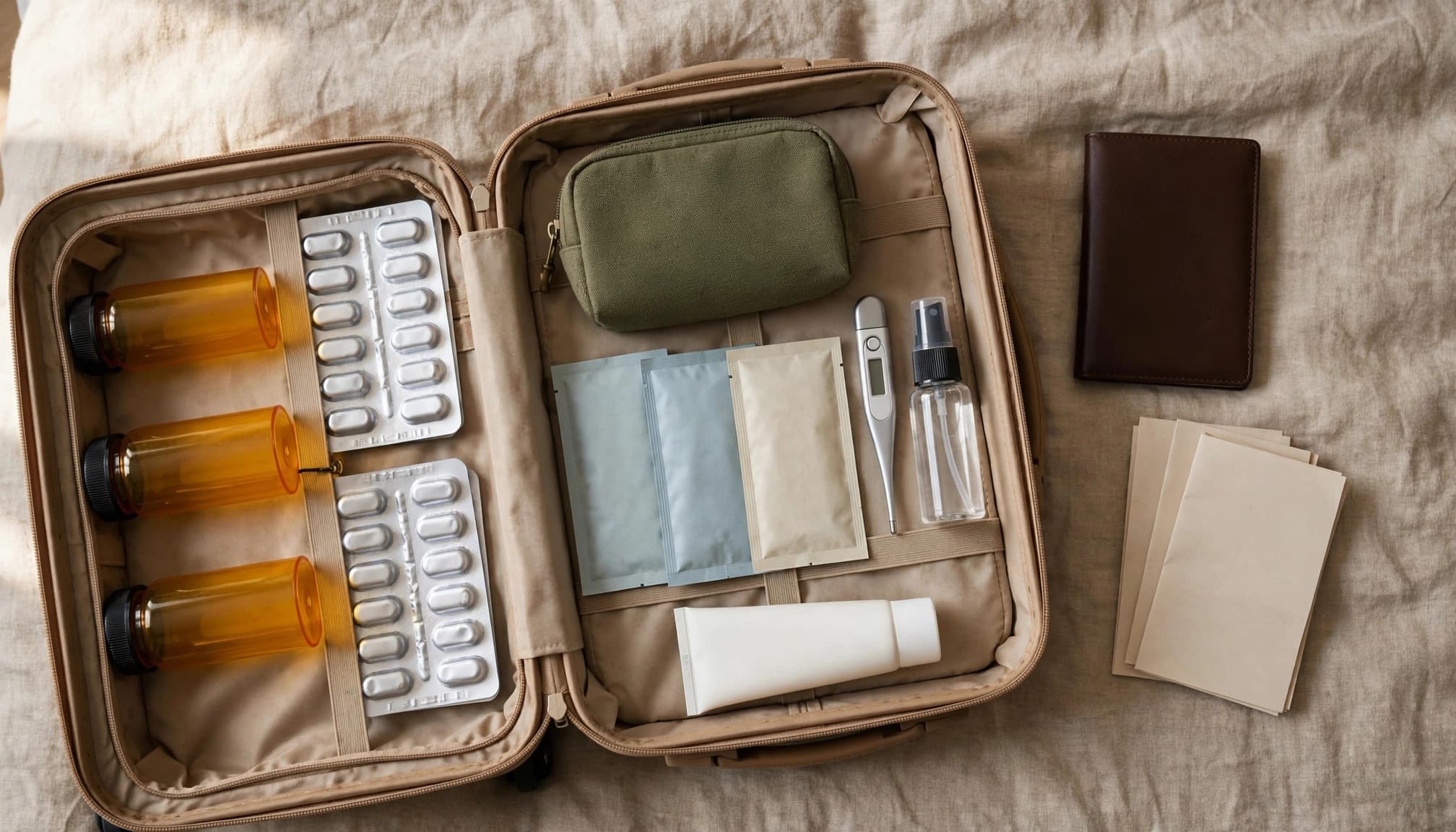
Add over-the-counter medications and first aid supplies
A compact kit can address common problems without turning luggage into a pharmacy aisle. Product choice depends on medical history, drug interactions, age, and destination. A pharmacist can review the final list when a traveler takes blood thinners, kidney medicines, sedatives, or multiple prescriptions.
| Need | Useful supplies |
|---|---|
| Pain relief | Acetaminophen or ibuprofen, if medically appropriate |
| Allergy symptoms | A non-sedating antihistamine and any prescribed allergy treatment |
| Upset stomach | Antacid or another clinician-approved stomach remedy |
| Motion sickness | A suitable motion sickness medicine |
| Minor injuries | Adhesive bandages, gauze, medical tape, antiseptic wipes, and antibiotic ointment when clinically suitable and used as directed |
| Skin irritation | Hydrocortisone cream for limited itch or bite irritation, if appropriate |
| Blisters | Moleskin or blister dressings |
The table provides a starting point, not an instruction to take every item. Labels and clinical advice remain the guide for product choice and dose.
Pack wound care for ordinary travel problems
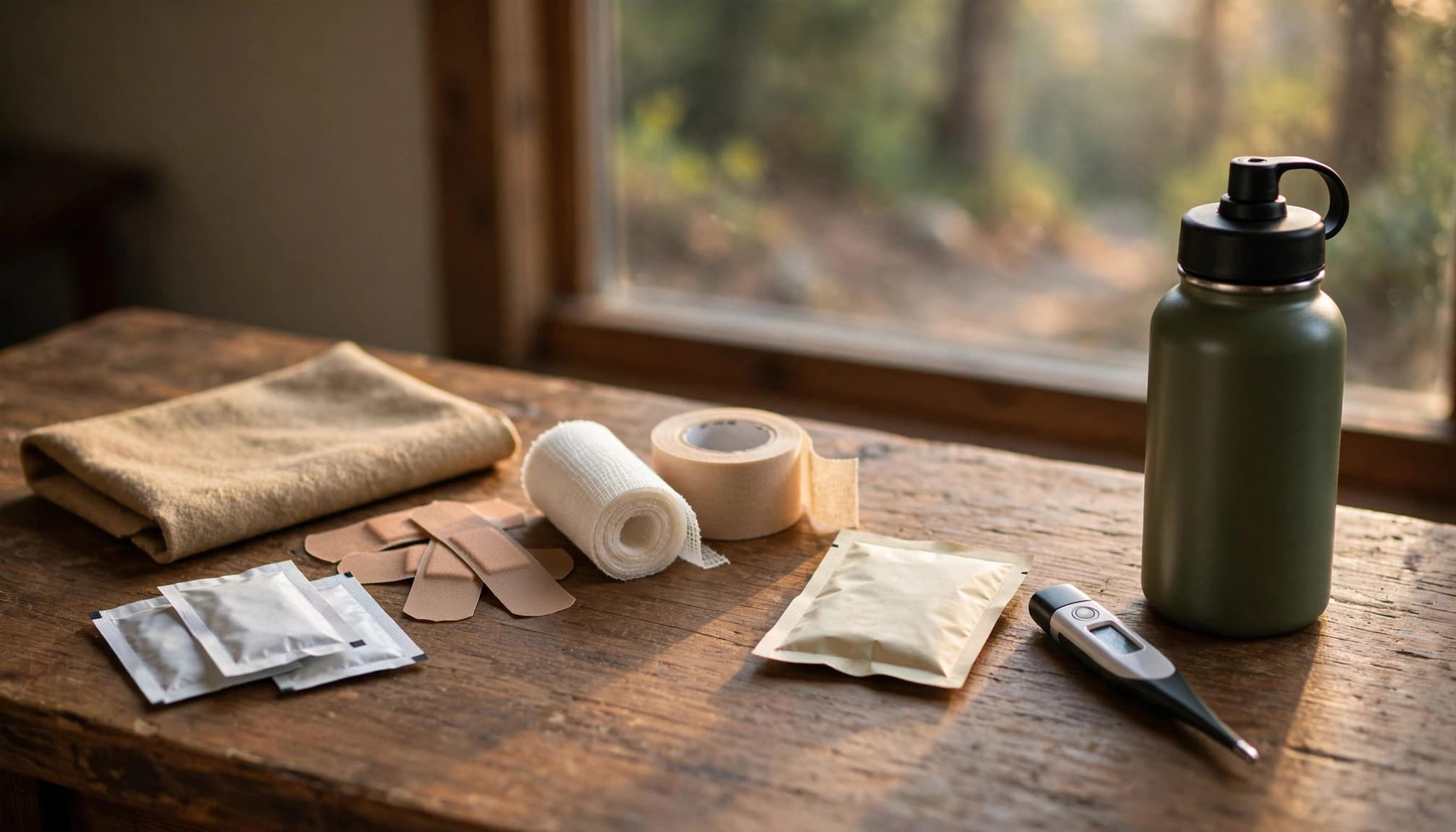
A compact first-aid collection handles small disruptions that become harder to manage after a long walking day. Adhesive bandages, sterile gauze, medical tape, tweezers, small scissors where permitted, and a digital thermometer cover many routine needs.
Blister care deserves space in a longer-trip kit. Moleskin, hydrocolloid dressings, and spare socks can prevent friction from becoming an open wound. Those with diabetes or poor circulation should ask a clinician for more individualized foot-care guidance.
Separate medications from liquids and toiletries
Medicines should stay dry, easy to identify, and away from leaking shampoo or sunscreen. Heat and humidity also matter. Never leave prescription medicine in a parked car, beside a steamy shower, or on a sunny windowsill.
For temperature-sensitive treatment, follow the manufacturer's storage instructions and ask the dispensing pharmacist about travel methods. Don't assume that a hotel minibar provides reliable refrigeration.
Prepare for travelers' diarrhea and dehydration
Travelers diarrhea is often manageable, but dehydration can become serious quickly in hot climates or remote areas. A small supply of oral rehydration solution packets takes little room and can be more useful than several unrelated remedies.
Bring rehydration supplies and symptom relief
Oral rehydration solution packets replace fluids and electrolytes. CDC guidance says to prepare each packet with the amount and type of safe water stated on the package.
For non-bloody diarrhea, loperamide or bismuth subsalicylate may be appropriate for some adults. However, these products aren't suitable for every traveler or symptom. They shouldn't mask symptoms that need medical evaluation. The CDC's travelers' diarrhea guidance advises seeking care for bloody diarrhea, high fever, dehydration, or symptoms that persist for 24 to 36 hours.
Ask about destination-specific treatment before leaving
A clinician may recommend destination-specific treatment before departure for selected travelers, including those at higher risk of severe illness or visiting remote locations. Any prescription treatment should be chosen before travel, not purchased casually after symptoms begin.
This information is for educational purposes only and doesn't replace professional medical advice. Travelers should consult a licensed healthcare provider before adding prescription treatment or changing a medication regimen.
Include prevention and altitude-specific items
Long stays outdoors increase exposure to sun, insects, altitude, and minor skin injuries, so adjust your travel health kit accordingly. Prevention supplies often save more trouble than medicines taken after symptoms appear.
Add insect and sun protection
Broad-spectrum sunscreen, lip balm with sun protection, and alcohol-based hand sanitizer belong in most travel medical kits. For areas with mosquito-borne disease, choose an insect repellent appropriate for the destination.
Travel health guidance recognizes repellents containing DEET or icaridin as common options. Those traveling with children, during pregnancy, or with skin conditions should review age and product directions carefully. Malaria prevention medicine, when indicated, requires a destination-specific discussion with a travel-health clinician.
Treat altitude planning as a medical decision
Rapid ascent can cause altitude illness. The CDC lists acetazolamide as an option for prevention, with a commonly used adult regimen of 125 mg every 12 hours beginning the day before ascent. That dose is not appropriate for every traveler, particularly those with allergies, kidney conditions, or relevant drug interactions.
Dexamethasone and nifedipine have limited, clinician-directed roles in altitude illness planning. Gradual ascent and symptom monitoring remain central, while prompt descent is essential when symptoms worsen. The CDC's altitude travel guidance makes clear that medication does not replace gradual ascent or prompt descent when serious symptoms occur.
Keep medicines compliant and accessible in transit
Airport screening rules and border-entry rules are separate issues. Keep a travel health kit with prescription medications and other essential treatments accessible throughout the journey.
Carry medically necessary liquids correctly
The Transportation Security Administration allows medically necessary liquids, creams, medical supplies, and medications over 3.4 ounces or 100 mL in carry-on bags under a TSA approved screening exception. Travelers should declare these items for separate screening and keep them accessible rather than buried under clothing.
TSA's medication guidance also supports keeping essential treatment close during the journey. Insulin, inhalers, injectable medicines, liquid treatments, and rescue medication should never depend on checked baggage.
Prepare for customs rather than improvising
A TSA approved screening decision applies only to airport security. It doesn't establish permission to import medication into a destination or transit country.
Border officials may ask about the medicine's name, quantity, and purpose. Original labels, prescription copies, and a clinician letter reduce avoidable uncertainty. Travelers carrying controlled medicines should contact the embassy or health authority of each destination and transit country well before departure.
A practical guide to travelling abroad with medication can help travelers recognize the legal questions that arise before packing day. Airline and customs policies can change, so current official requirements take priority.
Plan refills, delivery, and safe storage
Long trips require a refill plan that starts before departure. Review reserve quantities, prescription needs, over-the-counter medications, and backup supplies before the last dose is taken.
Build time into online ordering
People who order prescription drugs online should confirm availability, prescription requirements, and dispatch timing before travel. Online medicine home delivery can support continuity of care, but it shouldn't be timed to arrive at a hotel or short-term rental.
For international orders, the medicine delivery cost to the USA is only one part of the calculation. Travelers should also consider shipping delays, customs holds, storage conditions, and itinerary changes.
Use verified pharmacy standards
A legitimate online pharmacy requires a valid prescription for prescription-only treatments and provides access to pharmacist support. An Online Pharmacy should never replace clinical review, especially for high-risk treatments such as immunosuppressants, insulin, anticoagulants, or oncology medicines.
Questions about refill timing, documentation, storage, or international delivery are best resolved before tickets are booked. The Waldrugmart pharmacy support FAQs outline common prescription and delivery questions.
Frequently asked questions
What should be in a basic medication travel kit?
A basic travel kit should include regular prescription medicines, pain relief, an antihistamine, an antacid, and motion sickness treatment when needed. Pack adhesive bandages, gauze, antiseptic wipes, blister care, sunscreen, insect repellent, and a thermometer. The contents should reflect personal health needs and destination-specific risks.
How much prescription medicine should travelers bring internationally?
There’s no safe universal number of extra days. Ask the prescriber and pharmacist about a reserve based on the trip length, treatment needs, insurance coverage, and destination rules. Some countries restrict quantities or require documentation, especially for controlled medicines, so check requirements before departure.
Are medicines allowed in carry-on luggage?
Yes. Keep essential prescription and over-the-counter medicines in carry-on luggage, preferably in their original labeled containers. TSA allows medically necessary liquids above standard limits when declared for screening. International rules may differ, so check customs requirements for every destination and transit point.
What should travelers pack for diarrhea in remote areas?
Pack oral rehydration solution, a safe water plan, and clinician-approved symptom treatment. Loperamide may help some adults with uncomplicated, non-bloody diarrhea. High fever, bloody stool, or persistent symptoms need medical advice. Severe dehydration, breathing difficulty, confusion, or other urgent symptoms can signal a medical emergency and require immediate care.
Should altitude medicines go in every travel health kit?
No. Acetazolamide, dexamethasone, and nifedipine aren’t routine travel supplies. They have specific roles for certain itineraries and medical circumstances involving altitude illness. A travel-health clinician should determine whether they’re appropriate and explain how they fit with existing medicines, health conditions, and the planned ascent.
Final thoughts
A travel medical kit protects continuity of care when distance, time zones, and unfamiliar pharmacy systems complicate simple health needs. Keep medicines in original labeled containers, accessible in your carry-on, with copies of prescriptions.
For longer trips, careful preparation is more reliable than solving a medication problem after crossing a border. A complete travel health kit combines safe storage, destination-specific rules, backup supplies, refill planning, and a plan for urgent help.