
Insulin Storage Power Outage Guide: A Safe Emergency Plan

A power outage can turn a routine insulin refill into a time-sensitive medical concern. During a power outage affecting insulin storage, keep the refrigerator closed and protect insulin from heat and freezing.
\n\n\nThe immediate goal is to keep unopened insulin cold without freezing it. Protect in-use insulin from excessive heat and check the product label before deciding whether a replacement is needed. Room temperature limits vary by product, so consult a pharmacist or diabetes care team if exposure is uncertain.
\n\n\n> Quick answer: Keep the refrigerator closed at first. If the outage continues, keep insulin cool in an insulated cooler with wrapped cold packs, keeping unopened insulin away from direct contact with ice. Protect in-use products from direct sunlight, never use insulin that has frozen, and seek professional advice after heat exposure or uncertain temperatures.
Table of Contents
- Know the temperature limits for each insulin
- Act quickly when electricity fails
- Use coolers and emergency cooling safely
- Recognize heat and freezing damage
- Prepare supplies before storm season
- Plan refills and safe access
- Frequently asked questions
Key Takeaways
- Most refrigerated insulin should remain at 36 F to 46 F (2 C to 8 C) when that is the labeled requirement. Check each product’s safe temperature range.
- In use insulin may remain at room temperature for a defined period, but the exact limit depends on the product. This allowance doesn't permit storage in a hot vehicle, window, porch, or other uncontrolled environment.
- A closed refrigerator preserves cold air longer than an open one. Temperature monitoring is useful during an outage, but avoid repeated door checks.
- Insulin must never touch ice packs or frozen water bottles directly.
- Heat, bright light, and freezing can weaken insulin. A pharmacist, manufacturer, or licensed healthcare provider can assess questionable supplies.
Know the Temperature Limits for Each Insulin
Insulin is a temperature-sensitive protein medicine. Its ability to lower blood glucose depends on its molecular structure remaining intact. Refrigerated insulin should stay within its labeled cold range, because heat or freezing can reduce insulin's therapeutic effectiveness and cause unexpectedly high blood sugar levels.
Unopened insulin needs a controlled cold range
Most these supplies should stay refrigerated at 36 F to 46 F. Store them in their original cartons when possible, away from the refrigerator's cooling element, back wall, or freezer compartment.
Current carton instructions, package inserts, and manufacturer guidance override these generalized examples. During an emergency, reviewing prescription label instructions for new medicines can make later storage decisions less uncertain.
In-use insulin may have a room temperature window
Many in-use insulin products can remain at room temperature, usually at or below 86 F, for a limited number of days. That term doesn't mean a hot car, sunlit kitchen, closed porch, or uncooled room during a summer blackout.
The following examples are general references, not universal rules. Vials, pens, cartridges, concentrated formulations, and pump-related products may have different limits. Always follow current carton instructions, package inserts, and manufacturer guidance.
| Insulin product | Common temperature limit | Typical in-use period |
|---|---|---|
| Humalog, NovoLog, Lantus, Basaglar | At or below 86 F (30 C) | 28 days |
| Humulin R and Humulin N vials | Follow product directions | 31 days |
| Novolin R and Novolin N | At or below 77 F (25 C) | 42 days |
| Tresiba and Toujeo | Follow product directions | 56 days |
UF Health's insulin storage guidance emphasizes that the correct time limit depends on the insulin type. Write the date that a pen or vial first came out of refrigeration on its carton.
Act Quickly When Electricity Fails
The first decisions should support power outage safety while protecting the cold chain. Keep the refrigerator and freezer shut, then gather a thermometer, cooler, wrapped cold packs, medication information, and glucose supplies.

During the first few hours
Leave refrigerated insulin inside the closed refrigerator. Each opening releases cold air and shortens the time before temperatures rise. A household refrigerator may stay cold for several hours, but no universal time limit confirms that insulin remained in range.
Place a refrigerator thermometer inside if one is available. Temperature monitoring can guide decisions as conditions change. Record the outage start time, temperature readings, and any move to a cooler. The FDA's disaster medication storage guidance advises keeping a cooler, ice, or frozen gel packs ready before emergencies occur.
Check blood glucose and ketones according to the person’s existing sick-day plan. Don’t change insulin doses or ration medication without clinical advice.
When the outage will last longer
Move unopened insulin into an insulated cooler once the refrigerator is warming or the outage may push it outside the safe temperature range. Put a towel between the insulin and each cold pack. Wrapped gel packs and frozen water bottles can help, but they must not touch insulin directly. Keep the cooler in the coolest shaded indoor location, never in direct sunlight or a vehicle.
An opened pen or vial that is within its labeled room-temperature period may not need to go into the cooler. In hot weather, however, its temperature still needs active protection.
A cooler is only safe when insulin stays cool without freezing. Direct contact with ice can damage insulin as seriously as heat can.
Use Coolers and Emergency Cooling Safely
Coolers work best as controlled environments, especially for temperature-sensitive medications. A simple digital thermometer supports temperature monitoring better than adding extra cold packs without checking the internal temperature.
Build a protective cooler setup
Use a hard-sided or high-quality insulated cooler. Arrange insulation and ice packs as barriers, placing wrapped cold packs or frozen water bottles around the sides. Insulate them with towels, then put insulin in a sealed container at the center. Keep a cloth barrier between the insulin and every cold or frozen surface.
A travel cooler isn't safe merely because it feels cold. Keep its contents within the product's labeled range, and never allow insulin to freeze.
Open the cooler only when necessary. Replace melting ice or warmed packs without allowing the medicine to sit against fresh frozen items. These safe medication storage guidelines also apply after power returns, since a refrigerator's cold spots can freeze medicines near vents.
Consider non-electric backup options
An evaporative cooling pouch, including FRIO-style cases, can help during evacuation, car travel, or short outages. It cools through evaporation after soaking, so performance changes with humidity and airflow. This evaporative cooling pouch can reduce heat exposure during short-term travel or outages, but it generally doesn't replace refrigeration for unopened stock.
Battery-powered medical coolers and a portable medical mini-fridge can help during extended emergencies. Use backup power sources when available, including a generator-supported refrigerator. A portable unit is suitable only if its specifications and temperature controls match insulin's required range without freezing the contents.
Recognize Heat and Freezing Damage
Insulin isn't a medication to judge by appearance alone. Its appearance can't confirm the medicine's therapeutic effectiveness. Heat can reduce potency, which may lead to unexpectedly high blood sugar levels even when injections continue as scheduled. The CDC's insulin emergency advice warns against heat, direct sunlight, and freezing.
Frozen insulin must not be used, even after it thaws. Isolate any insulin that froze, faced high heat, or remained at an unknown temperature. Don't try to restore it by chilling or thawing. Photograph the label, then contact a pharmacist, manufacturer, or healthcare provider for replacement advice. Discard questionable or expired insulin rather than using it as a substitute.
Cloudiness is expected with certain insulin types, including NPH, after proper mixing. By contrast, clumps, frosting, particles, discoloration, or an insulin product that looks different from its usual labeled appearance require prompt pharmacist or manufacturer guidance. Don't change insulin doses to compensate for suspected damage without clinical advice.
This information is for educational purposes only and doesn't replace care from a licensed healthcare provider. Persistent high glucose, ketones, vomiting, confusion, or signs of severe hypoglycemia require urgent medical assessment.
Prepare Supplies Before Storm Season
An emergency supply kit limits the pressure to make storage decisions after the lights go out. Keep it near the exit or with other household emergency supplies, and check dates before extreme weather events.
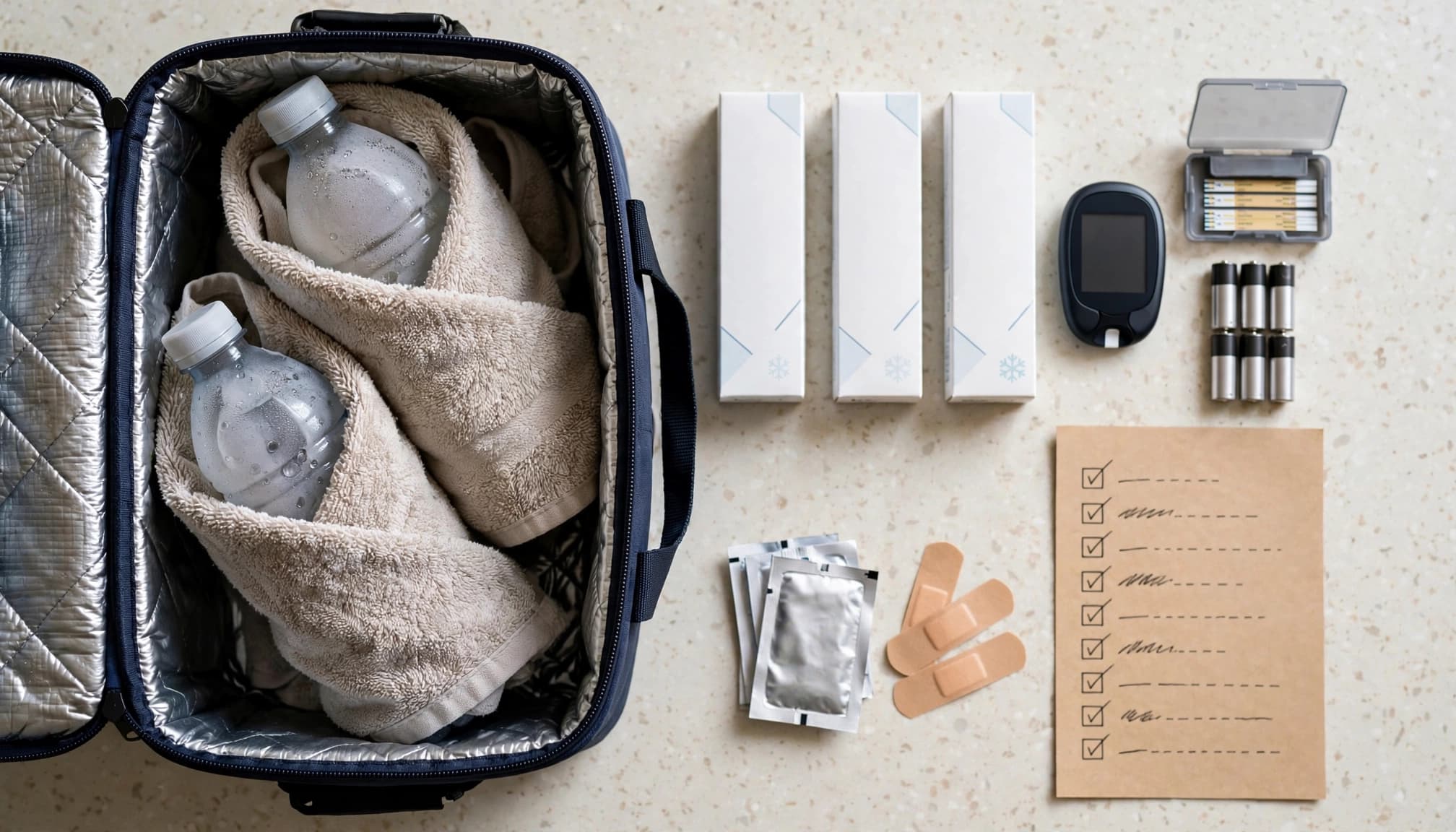
Include enough diabetes supplies
A practical kit should contain:
- A written medication list, prescriptions, prescriber details, pharmacy phone numbers, and paper copies of medication information.
- Insulin delivery devices, needles or pen tips, and insulin pump supplies such as infusion sets, reservoirs, or backup delivery supplies, when applicable.
- Meter strips, lancets, and a continuous glucose monitor's backup supplies, if applicable.
- Ketone testing supplies, glucose tablets or another fast-acting carbohydrate source, and glucagon if prescribed.
- An insulated cooler, thermometer, gel packs, towels, a sharps container, batteries, and a flashlight.
- Backup power sources for charging a glucose meter, CGM receiver, pump, or phone. A portable battery pack is one option, but use manufacturer-approved equipment.
- Contact information for emergency diabetes assistance and other urgent supply or replacement support.
Charge devices before predicted extreme weather, and arrange approved backup power sources in advance. Keep a written plan for monitoring blood sugar levels, recognizing ketones or illness, and knowing when to seek urgent care.
People with type 1 diabetes should plan for an adequate insulin supply, although people with other forms of diabetes may also use insulin. Repaglinide, for example, stimulates the pancreas to release insulin around meals, yet it does not replace prescribed insulin during an emergency. Diabetes sick-day medication guidelines can help families prepare questions for a clinician when illness and disrupted access overlap.
Keep a rotation and evacuation plan
Rotate emergency insulin before expiration, remove expired insulin, and keep all supplies in their original packaging. Review the emergency supply kit regularly, replacing items before they expire.
Before leaving, follow an emergency evacuation plan that identifies where the cooler and medicines will go. Check cooling center locations, shelter refrigeration, transportation options, and whether reliable refrigeration is available at your destination.
Take photographs of labels and insurance information, then store them securely on a phone and in paper form. Record usual blood sugar levels or trends for the care team if a device or routine is disrupted. These records help a pharmacy or emergency clinician identify the correct formulation and strength when a replacement is needed.
Plan Refills and Safe Access
Refill planning is part of power outage safety. People with type 1 diabetes shouldn’t wait until their final pen or vial, especially before storm season, travel, or planned utility work.
A legitimate online pharmacy requires a valid prescription, identifies its dispensing pharmacy, and offers pharmacist review. Online medicine home delivery can support routine continuity, but it can’t solve an immediate insulin emergency or replace urgent medical assessment. Confirm delivery timing, cold-chain handling, and how refrigerated insulin will be packaged and temperature-protected. Shipping time, destination temperature, package handling, and package size matter for temperature-sensitive medications and can affect medicine delivery cost to USA addresses and international locations. If insulin arrives warm, damaged, or delayed, seek emergency diabetes assistance from a pharmacist, diabetes care team, or local emergency service. Don’t rely on routine delivery, and don’t assume safe storage is guaranteed after the package arrives.
For people using Mounjaro alongside other type 2 diabetes treatment, its storage requirements also need a separate review because it isn’t insulin. Check Prices for Mounjaro Online only after confirming the prescribed strength, refill timing, and delivery plan with the dispensing pharmacy.
Frequently Asked Questions
How long can opened insulin stay at room temperature?
Many opened insulin products remain usable at room temperature for 28 days at or below 86 F, but limits vary. Novolin may differ, while Tresiba and Toujeo may allow longer labeled periods. Check the carton, package insert, or manufacturer before relying on any storage window.
Can insulin go in a cooler with ice packs?
Yes, travel coolers can help keep insulin cool when medicine is insulated from direct contact with cold sources. Wrap cold packs or frozen water bottles in cloth, keep them away from the medicine, and place insulin in the center. This protects unopened insulin too, but freezing makes insulin unsafe.
What happens if insulin gets hot or freezes?
Heat can weaken insulin's glucose-lowering effect, while freezing can damage its protein structure. Don't use insulin that froze, thawed, or shows heat damage. Dispose of it and arrange a replacement rather than using expired insulin. Ask a pharmacist or healthcare provider before relying on uncertain product.
How long will a refrigerator stay safe after a blackout?
It varies, so there’s no dependable number for how long a refrigerator stays safe. Keep the door closed and use temperature monitoring with a thermometer and written readings. Follow the insulin label's safe temperature range. If the outage continues or temperatures rise, transfer unopened insulin to a protected cooler.
What belongs in an insulin emergency supply kit?
An emergency supply kit should include insulin, delivery supplies, meter or continuous glucose monitor backups, fast-acting glucose, prescriptions, contacts, a cooler, wrapped cold packs, and a thermometer. Add paper medication records and numbers for emergency diabetes assistance, since phones or internet may fail during an outage.
A Calm Plan Protects Insulin and Blood Sugar Control
Power outage safety starts with temperature, timing, and documentation. Keep the refrigerator closed initially, keep insulin cool without freezing it, and follow the product label. For unopened insulin, use cold storage; in-use insulin follows its labeled room-temperature period.
When a cooler is necessary, use wrapped cold packs and check the temperature. Document exposure times and temperatures, and monitor glucose according to your established care plan. Seek pharmacist or clinician guidance before using questionable supplies, because emergency guidance doesn’t replace individualized medical advice.